
Translated material
Amur blurred the border
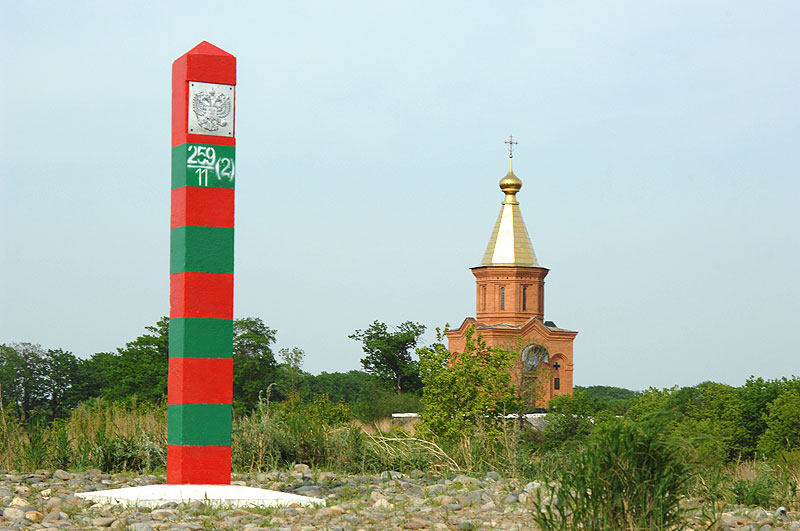
What will happen to the Russian-Chinese border after changing the Amur channel?
The water in the Amur falls slowly, but the scientists say that people will feel the first consequences for the flood for the river: in the places where the depths used to be, shallows will arise, rifts will be shown. In winter - on thin ice and wormwood - these new, unknown places can play a dangerous joke with a person. But these are not the most global changes that can be expected after the summer flood.Alexei Makhinov, Doctor of Geographical Sciences and Deputy Director of the Institute of Water and Environmental Problems of the Far Eastern Department of the Russian Academy of Sciences, believes that on average Amur - below Khingan to Khabarovsk - the channel may change. And this may lead to a change in the border with China:
"It so happened that the Chinese shores on this site are well protected - by dams, coastal fortifications, and even such a powerful flood on them did not affect them. Although there is evidence that the Chinese dams were destroyed, but this is not such a great change in these conditions. Therefore, the Amur will shift mainly in our direction, blur the left bank. The left -handed shores - left -handed ones - can already be obtained and can already be obtained and can already be obtained. They received more water, and they began to increase in size?
This is primarily about the island of the Big Ussuriyan. In 2005, a demarcation of the Russian-Chinese border took place, and part of the island-to the displeasure of many Khabarovsk and Russians as a whole-went to China. However, changes in the riverbed have yet to be carefully studied, notes Alexei Makhinov:
"The commissions will be created that will evaluate all this on the basis of scrupulous, accurate measurements of the depths, water expenses will come to the conclusion about who these islands belong - to whom they should belong. Only after that an agreement will be signed by which they can go there. So this danger exists, and this danger is largely due to the fact that the Chinese side carried out such great work on the amorous to strengthen its shores. And They do not forbid us to do this - but we have, since the activity of economic activity on the banks is much less than in China, therefore, the protection of the coasts has no serious reason. ”
The coastalization program in the Khabarovsk Territory has existed for several decades, however, the low water level in the Amur Amur has "reassured", and this program was not implemented, the scientist says and calls for the lesson from the past flood:
“This flood should push and remind us that we are constantly living in the territory that is regularly flooded. We must not build some protective structures for some specific flood and such a pace as it was now. We must build long-term structures that, having built once, we could fix it every 10-20 years-strengthen, strengthen, as done in China.”
According to the scientist, the first conclusions about what kind of changes occurred with the riverbed can be drawn in late February - early March, however, expeditionary work will be required, especially in the places potentially dangerous for residents of the Far Eastern villages and cities. Specialists of the Institute of Water and Environmental problems do not expect additional money for these studies:
“Unfortunately, there are no additional money for this, our institute works according to our plans. We have some funds for conducting such research ... Of course, I would like to conduct such research more, that is, using more people, more time for expeditionary work. If it is, it will be useful not only to us, but also to the authorities who will know, what is the situation after this flood.”
Meanwhile, scientists warn, it is too early to relax. Amur entered the so -called "period of increased water." A similar flood can be expected in the next 10-12 years.