Date
Author
Татьяна Вольтская; Андрей Шарый
Source

Preserved copy
Translated material
Timic lyrics
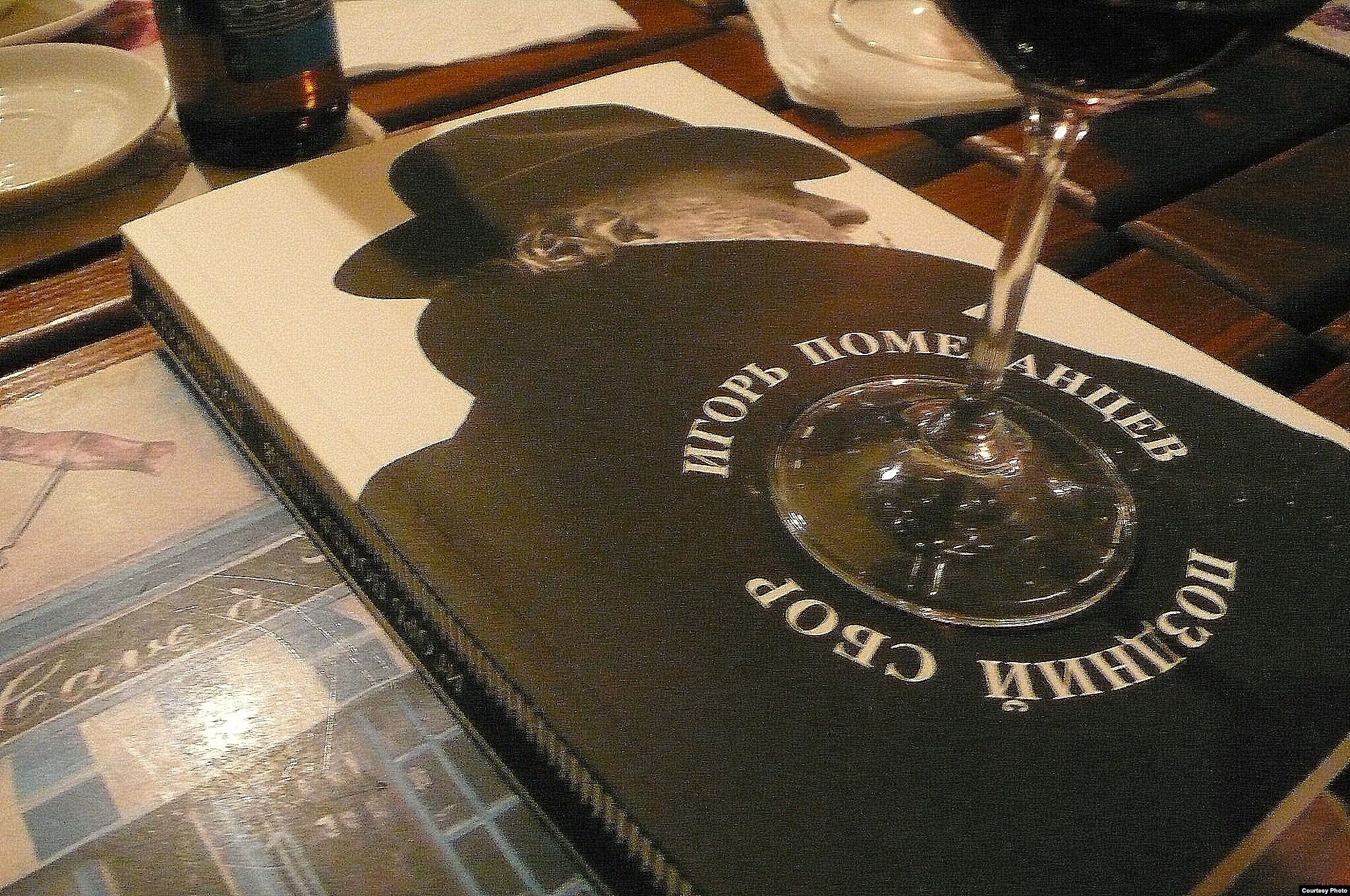
- "Late collection" - is this summary?
- It is difficult to predict when you drink the last bottle or the last glass of wine in your life, so I can not rush. Nevertheless-yes, this book is still the result. After all, the main secret of the wine lies in the process of fermentation. It turned out that in me for decades, for a quarter of a century this very fermentation took place - poetic, artistic, prosaic fermentation. As a result, this book turned out to be an aged, it was a quarter of a century. And I hope that my wine pages have a bright, interesting flavor, and a wine smell, and a tart taste.
-Did you collect in the book only selected texts or is there something new at all, written specifically in order to put it under this cover?
- For the past two years, I collaborated with the Kyiv edition of Forbes magazine, I had a column dedicated to wine theme there. I wrote for the “red dry” Friday release for the heading on top of the barriers on the RS. These are really favorites, since I am not all written on wine topics, included in the "late collection". I included in this book only what I consider worthy. It’s like wines: there is only loafer - prose, and poems, and an essay. These are not cheap dining wines.
- The book is dedicated to Lina and Peter. These names are well known to me, but please explain to readers, who is this?
- Lina is my wife. I think she was not so easy to withstand my wine 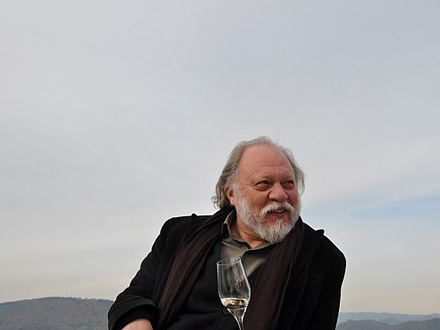
- "If the son wrote poetry" - this is the name of the last chapter of your book. Did Peter adopted your wine tastes?
-God has an irony, and this is one of the reasons why I still believe in the creator. The irony of God in this case lies in the fact that Peter has an allergy to red wines, but no allergy to white wines. He does not drink red, but became a big expert in white wines, and I am proud of them as an amateur or even almost a professional in the field of white wines.
- Igor Pomerantsev’s work is the personification of some grace. And this book is very large, it is not elegant, it is heavy. Why did you (or is it the fault of the publishing house?) Choose such texture and texture of paper, such format and cover?
- The place and space for wine can be completely different. It can be a really elegant glass, better transparent, but there are barrels, there are also cellars. This book is rather a wine cellar. The dwelling of the winemakers in France, in Italy, differs from the dwelling of other farmers; This is, so to speak, the dwelling of the aristocrat farmer, in which there is a huge first floor, where barrels are rolled up, a huge cellar, intricate stairs leading to small rooms upstairs. Wine loves to breathe, so there is a lot of air in the winemaker's house. This book also has a lot of air so that the wine can breathe.
-The book is decorated in black and white aesthetics, but it has quite a lot of color interspersed, illustrations, old engravings. Who thought out the concept of design?
- The designer of this book is an architect and an artist, and I emphasize the word "architect". This is Andrei Kurochkin, he loves my prose and my poems; He reacted to the book as an architect and builder, he built it. Hence - such volumes, large fields, this is a spacious book. The book is really made with love for the very subject of my research, for my prose and poems. I was just lucky.
- You have been studying wine culture for several decades, writing in Russian for the Russian -speaking reader. Are the Russian -speaking space now better understood in wines?
- Russian culture was and remains vodka, it is a climatic fact. Nevertheless, Russia is a huge country, in which in recent decades, lovers of wines appeared, connoisseurs and collectors appeared, and finally, wine criticism appeared. When I wrote the story "Basque Dog", which was published in 1991 in the Paris magazine "Syntax", there was no wine criticism in Russia at all. But it appeared! And I am very glad that I made some kind of contribution to Russian wine vocabulary, to the Russian understanding of wines.
- Is there good Russian wine?
- Even when it comes to Georgian wine, who has a good reputation, and then professionals often express skeptical remarks. As for Russian wine, yes, it exists. But this is as if they had chosen the highest pygmies and invited them to play basketball. So far, Krasnodar wines, the wines of the south of Russia, are not competitive.
- Do you remember the best glass of wine that you drank in your life?
- Such memories depend on the circumstances, on the people with whom you divided the wine, on the climate, from food. There are people who can answer the question
Gradually, the book is swelling, everything becomes tart and ends with free verses about wine- Who is your favorite poet? - And other people just love poetry.
I remember a few delightful glasses. Well, let's say, I love pink wines, both French, Italian, and even Moravian, from grapes of the variety of Cabernet Sovignon. Pasternak has such a line: "Do not fix the day with strengthening luminaries." So I like to drink a rose at five o’clock in the afternoon, so that it renews the life of the sun a little, delayed the sunset. We are already talking about fault as a cosmic phenomenon; I quote the Spanish philosopher Jose Ortega-i-Gasset, he considered the wine a cosmic phenomenon.
- “Late collection” is a conceptual book, it was not written in one sitting from the first page to the last, but was compiled from texts of different years. How to read your book correctly - from the beginning, from the end, from the middle? What would you advise?
- This book has its own composition. I started with essays, with my speakers, because the reader, who first picks up this kind of book, should not be frightened, he should not stutter at the sight of the first text ... I slowly involve the reader into the process: the first throats should be easier. The first part of the book is essays, the introduction of a wine culture. Gradually, the book is swelling, everything becomes tart and ends with free verses about wine.
-Read one of the last chapters?
- I will read not a very romantic poem, it is called "Strategy":
Blows should be applied
In different directions.
Zones are such:
liver,
The kidneys,
heart.
Suddenly the liver will bend,
The kidneys do not pump up
Then maybe the heart.
But keep the liver
In permanent shock:
Let himself swim
then in white
then in red.
The kidneys -
beer.
Heart -
alcohol.
And all at the same time.
Yes, he will give up something.
Main,
Do not lose heart.
October 18 - according to the prevailing tradition, on the eve of the next lyceum anniversary - the twentieth, anniversary presentation of the Tsarskoye Selo Art Prize will be held in the Tsarskoye Selo Imperial Lyceum. Laureate in the nomination "For contribution to poetry" - Igor Pomerantsev. Among the 15 laureates are also film director Karen Shakhnazarov, theater director Lev Dodin, writer Arkady Arkanov, poet Yuri Kublanovsky, actress Lyudmila Makarova and other cultural and art figures. Here is what the art director of the award Nikolai Yakimchuk told the RS.
-Our prize is already a story for Russia, because in our country, if there are two decades in our country, you can already celebrate the anniversary. At the origins of the prize were the poet Viktor Krivulin, the poet and composer Alexander Dolsky, 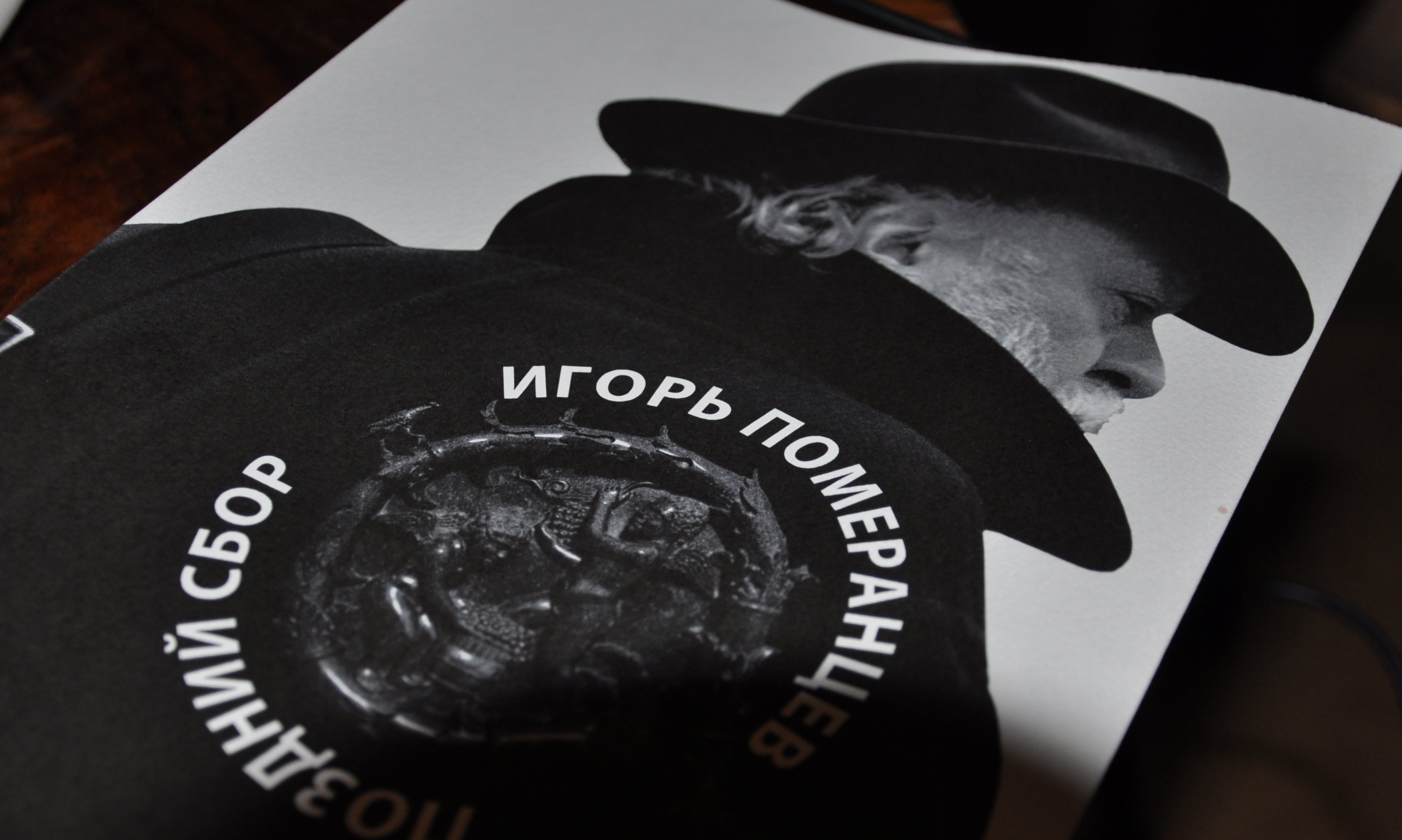
Igor Pomerantsev, the prize was awarded for a unique poetic voice and innovation. Igor Pomerantsev is a wonderful poet, a radio journalist, I enjoy remembering our meeting in Munich, probably twenty years ago. Pomerantsev’s poems seem unique to me, this is an unexpected verlibr, Igor's voice is not like any other, he exists in Russian literature apart.
It is important for us when there is such an original and interesting creative person, even if without a loud name - every laureate is indispensable for us.
Therefore, this year we present the award not only to celebrities. Among the laureates are Lev Scheglov (for the creation of socially significant educational television programs), Gordon Lankton (for creating a museum of the Russian icon in the United States), Ekaterina Vasilieva (for many years of contribution to the cultural life of St. Petersburg), Ivan Lopatin (for the creation and successful promotion of Russian films at international film festivals), the artistic director of the Tsarskoye Selo -Selska said the RS. Art Prize Nikolai Yakimchuk .