
Translated material
Who needs movie stars?
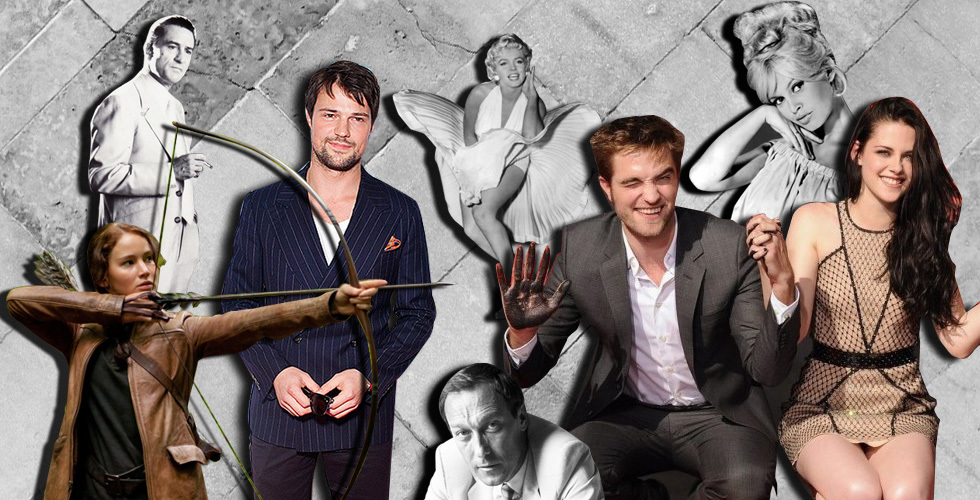
At the end of August, Colta.ru and the Fraulic Festival "End of the World" held two round tables in Yuzhno-Sakhalinsk. We bring to your attention the transcript of the first of them, dedicated to the crisis of the Institute of Kinopovets. Participation: actress Victoria Tolstoganova, film artist, wife of Alexei Balabanova Nadezhda Vasilieva, director Alexander Velensky, film critic and acting agent Dmitry Savelyev, General Producer of the festival Alexei Agranovich, film critics Olga Sherwood, Vladimir Zakharov, Vasily Stepanov, editorial director Konstantin Shavlovsky, deputy chief editor of COLTA.RU Mikhail Ratgauz, chief editor of the Cinema section Colta.ru Vasily Koretsky.
Mikhail Ratgauz: Today we will try to talk about such a thing that the conversation is just beginning in the Russian space, while in the international space, especially related to large film business, it has been going on for the past five years: this is the question of how the cinema movie star has changed. Who is a movie star, everything is clear to everyone. But I would like to recall that two types of actors fall under this broad concept. The first goes beyond the limits of the profession, the second remains within its borders. Perhaps this will come in handy, because we are also talking about two types of need for a star. These two types I would roughly call the "star as a person" and "star as a virtuoso." A star as a person (a thing invented in the 1920s) grows a creature from the actor, more than himself, and, of course, more than life. Marketing mechanisms developed about 20 years after Lumiers worked to create an image around an actor who suppressed him himself. This person of the stars was based on the principle of its basic invariability. Changes, as a rule, meant her collapse (as happened with Dietrich and Garbo). This character concentrated certain needs of time and cast them in a pattern, in a role -playing model, an object to follow. Examples of stars of this type are obvious, these are the brightest of the luminaries: Dietrich, Monroe, James Dean, Orlova. And so on up to Renata Litvinova. The second type of star actors is arranged differently: they offer us not their immutability, but their variability. Such actors love cardinal reincarnations for which honed skills are required. We look at these achievements in the same way as sports, and admire their quality. That is, we look at the actors in the same way as they looked at them in antiquity or in the XVIII century: as at super -marks. We do not expect role models from them, they are part of the spectacle. These are virtuoso actors who are also recorded in the stars, although there is no radiation around them. These are Miril Streep, Robert de Niro or, say, Evgeny Leonov. So - closer to the point: recently, the need for both the images and in the masters of their business has been greatly reduced. Since the actor in the cinema is inscribed in the business chain and his person or his skill should extract money from wallets, the easiest way to show it on the box office. Forbes magazine this year published a note "Death of the movie star?" It can be seen that in the last year’s box office there were only three among the 10 most successful films where the highest paid actors in America played from the so-called A-List : Robert Dauni Jr., Will Smith and Denzel Washington. But in third place in the training camp was the film “Hunger Games”, in which newcomers played, young professionals who do not have virtuosity or charisma. Even earlier, in 2009, the same Forbes decided to calculate how much actors return the money to the studios in the ratio with their fees. It turned out that in the male race there was not a single person from A-List . And the first line was taken by Shaya Labaf from the Transformers, an actor who is practically no. The female list was headed by Naomi Watts, which A-List only dreams of. Somewhere below the list was still Meryl Streep. And this is a clear sign that the star in both of her hypostations ceased to be the reason for buying a ticket. I propose to discuss why neither the need for role -playing models, nor the need for a star’s skill, does not bring people to the cinema anymore. What do you think? Let's start with Mitya Savelyev, who works as an agent of famous Russian actors and should know the situation like no one.
Dmitry Savelyev: The situation does not seem so dramatic to me. If people stopped going to actors, but go to films with these actors, then everything is not so scary-they go to films with actors, and not without them. Then, I understand the term "star" a little different. For me, a star is a man whom they look at with lust, with mass lust. Therefore, Evgeny Leonov is not a star for me, he is just a grand Russian artist. And there is nothing surprising in the fact that stellar cinema had to come to. This is the result of the redistribution of the general cultural situation when the movie ceased to play the role that once played. Exactly for the same reason, a mass magazine about cinema is impossible today. The magazine "Session" is possible, and the magazine "Empire" is impossible, and the magazine "Premiere" is impossible. A “poster” is possible, which offers a movie in the line of other entertainment, like “Timeout” . The movie is inscribed in a wider space of show business, a television shaft with its ability to produce the so-called star in a short period and for a short time. Therefore, the star in the cinema also ceased to attract that volume of national interest. This is a completely natural process.
The star is a man who is looked at with mass lust.
Victoria Tolstoganova: As a spectator, I would never go to the film just because some star plays there. If a star plays there, which I do not like or which I consider a bad actor, then I am happy to note this for myself and confidently do not go to this movie. For me, the stars recently - this is an occasion in order not to go to a bad movie. Nevertheless, if some star plays in a good film, then this is a happy combination. But it seems to me that in general a star - even if it is a wonderful actress like Meryl Streep - does not determine the quality of the movie. There is a good movie in which there are no stars. These are not related things at all. And it seems to me that the star is not without reason called a star - in our country this means a quick ascent and a quick fall. This is happiness when the actor managed to play an excellent role that turned out, and thus he becomes something significant for us and nothing more. Everything is measured by roles.
Ratgauz: But you understand that this situation has changed a lot. In the Soviet Union, she was different. Say, Yankovsky concentrated in himself those features that were needed by the end of the 1970s. He embodied expectations. And now it is not at all like that. I even began to remember what acting we talked about in the last couple of years most in a wide circle. And he realized that they said the most about Bezrukov in Vysotsky, which in itself is an extreme point of lack of interest in the actor as such. Because they talked about how much the cyborg was a success.
Konstantin Shavlovsky: It seems to me that we need to share the processes taking place in Russia and abroad. Such a powerful institution of movie stars, which has existed since the 20s in Hollywood, did not exist even during the Soviet Union. In 2006, when we participated in the rebranding and reconstruction of Kinotavra, we talked with distributors, producers, and in the process of this conversation it turned out that, for example, the participation of a Russian actor affected the decision on going to the cinema last. But for the Russian artist, the Institute of Stars is extremely important, since it provides additional sources of income. The star can spend a corporate evening, go to the regions, to speak somewhere, the tabloids show her increased attention, therefore, the actor can star in advertising. A person may not go to the film with Gosha Kutsenko, but they will go to the performance with Gosha Kutsenko. And this becomes a source of the life support of the artist.
I would still like to give one incident. A year ago, the film “Three meters above the sky was released in the Russian rental. I love you". He became a rolling hit in two countries - in Spain, where he comes from, and in Russia. Moreover, the Russian distributor received this picture in a package with other films, he was not going to purchase it; It was a sequel to the film "Three meters above the sky." Quite unexpectedly, cinemas began to call the distributor and say: “Do you have a picture about some kind of sky and meters, could you give it to us?” It turns out that the audience began to come to the cinemas - both in the regions and in Moscow - and say: "You know, we heard that this picture came out, could you find out if it would be at the Russian box office?" This is a completely ordinary romantic melodrama where artist Mario Casas plays. As it turned out later, this artist has a huge fan club among Russian girls 14+. The film earned at the box office, it seems, 3 million dollars, although it cost a 10 thousand distributor. It was a super -profitable story that no one expected. This happened in the 90s with Santa Barbara, when the actors of the series came here, they could collect stadiums.
So, I think, there are some things that simply coincide with the audience expectations; How this demand works - I do not know. It seems to me that recently we also received the phenomenon of the artist Kozlovsky in Russian cinema, when people went, obviously, not to the adaptation of Roman Minaev, but specifically to Kozlovsky in the lead role. I directly heard from different people that yes, we will go to look at Kozlovsky.
And one more small observation. Such a trend appeared: at large festivals, awards for the best male and female roles suddenly give unprofessional actors - for example, it happened with the “hunter” Bakuraudze.
Our artists are very seriously falling in price if they want to act with a specific director.
Ratgauz: I wonder what examples you gave. One story is about teenagers, and the second, although from the 90s, is now very relevant-about the TV star. The first reminds us of the well -known fact that the film span was abruptly younger. According to polls of 2011, most people who go to cinemas are now, adolescents aged 15-18 years. As for the TV star - also interesting. On the Great website of Ruskino there are user acting ratings. Do you know who is the most popular Russian actor? Grigory Antipenko, the hero of the series "Do not be born beautiful." In the first place among the ladies - Nelly Uvarova from there. And this is not Russian curvature. I watched the statistics of sales of world glossy magazines last year, on the covers of which there were different villages. Covers with TV stars and reality show stars were best sold. Vanity Fair was best sold in a year.
Alexander Veledinsky: A small addition. After all, there is still such a phenomenon - new people in the cinema, new stars. A few years ago, we were all witnesses that they went to the artists in the cinema. Spectators of the “best films”, “eggs of fate”, etc. We went to real artists - if these people can be called artists. It is clear that this is a television party, which to some extent won the movie, it is clear that the first weekend is prohibitive, the second is a drop in fees four to eight times. Nevertheless!
Shavlovsky: It doesn't always work. The first film with Nastya Zavorotnyuk failed already on the first weekend. And those films that you are talking about - there were failures there ...
Veledinsky: And yet - talking about the star, I'm talking about professionalism. As a professional, I will make a choice in favor of a famous actor: he does not need to explain anything, in most cases we speak the same language with him. Like from Kostya (Khabensky. - Ed. ) - Why did I need to look for an unknown artist and shoot 20 takes with him, if there is Khabensky and he is interested, is he burning?
Ratgauz: But, by the way, in America, with a star casting, a significant role is played by a fee. Therefore, the most cunning directors of the old hardening switched to low -budget newcomers. Like George Lucas, who called to the Avatar Sam Wartington. Lucas understands that he saves money on this, without losing anything. A lot of money. Because Brad Pitt costs 20 million per role.
Veledinsky: Our artists are very seriously falling in price if they want to act in this particular picture or from this director. To become a star, you need to star in a pair of shitty films and in one really good, and then they begin to talk about you.
Shavlovsky: It seems to me that in the old days in Hollywood the creation of a star worked not only and not so much the cinema industry, but also glossy magazines, fashion worked, and a makeup worked. People dressed like Greta Garbo, like Marilyn Monroe. The mighty film industry of France also worked-we all remember how in the Soviet Union we went with the hairstyle a la Brishit Bardo, Katrin Denev, and so on. In the Soviet Union, this was also, remember what was happening after the exit of the “amphibian man”, as Vladimir Korenev became famous overnight. Or Oleg Strizhenov. These were stars more or less close to European, American. And then the audience began to rejuvenate sharply, and the phenomenon of Twilight happened when suddenly Robert Pattinson and Kristen Stewart became megazvezes among 14-year-olds overnight. And then the producers simply calculated: if the production budget of the film is giant, why increase it by 50 percent due to acting fees? What is the point if people have already gone? Then they tried to create a second such pair in “Hunger Games”. As Lucas and Spielberg say correctly, the movie turns into an attraction, and the classic in our understanding of the movie will go on television. How David Fincher or Gus Van Saint went there, which shoot TV shows.
The absence of a common hero means the inability to agree on what good and evil are.
Vladimir Zakharov: I think that so far people are interested in watching films not only about robots and animals, there will be some famous actors who become stars. A good example is with “hungry games”, where Jennifer Lawrence gathered a large cash register in the title role, then she received an Oscar after another film, now she was a star, she starred in advertising and so on.
Even in the situation with stars and fees there is one subtlety. Michael cited the statistics of how much every dollar invested in a star earn. But there were only box office fees - but in fact, the film often receives financing under the star, preliminary distribution transactions for the star are concluded, and there are already completely different numbers. That is, all these Hollywood fees are not entirely due to cash fees, it is just part of the conditions of the industry. Tom Cruise receives its tens of millions and still producing percentage, because it gives money and a distribution transaction. That is, we are dealing with a star as with Business Property .
Another example is Jia Zhanke's film “Touch of sin”, which we had just watched at the festival. Jia Zhanke always used unprofessional actors, his wife, his friends, and made semi -documentary films. Everything was fine until he concluded a deal with Shanghai Film Group , and now in his film - movie star. A young man with a gun who, in a “touch of sin” in a black hat rides on a motorcycle, is a large Chinese star Van Baocean. And yesterday, at Q&A, the young man who asked Jia Zhanke, in Chinese questions, asked about this actor-that is, he is also known outside China.
Shavlovsky: I just have a question for Volodya. There is a Korean accent at this festival, there is a “Korean suspect” program, and Alexey (Alexey Medvedev, the program director of the Fraud of the World. - Ed. ) All the time suggests that the Korean industry is unique, there is a share of the national cinema in the rental of 60 percent. How are things in Korea with the Institute of Stars? It differs from the Hollywood industry, Russian?
Zakharov: In Korea, in fact, a large institute of movie stars, but the popularity of the star there is measured by advertising contracts, not films. Stars advertise cosmetics, televisions, refrigerators, this is a lot there. At the same time, the stars affect the popularity of films in which they are shot. In the spring of this year, the Koreans conducted a survey of two and a half thousand moviegoers, asked what they were guided by, choosing which film to go to. Result: 74 percent go to an interesting story, in second place - the genre, in third place - the opinion of people on the Internet, and then only actors. But all the same, we see that a star also leads to a fraction of the audience-for a small independent film, this is important. Kim Ki Doc uses stars in his production projects that his students shoot, even television stars are filmed by Hon San.
Shavlovsky: What is the ratio of television stars and movie stars in the traditional sense in Korean cinema?
Zakharov: In this sense, in Korea, television and film industry are very intersecting. Back in the late 90s, television stars went to the cinema, and this coincided with the growth of the industry, they became movie stars. Lee Bun Hon, who is now working in Hollywood ( Gi Joe , Red-2), is a former star of television series. There are some stars that are now filmed only in the cinema, for example, Tsoi Min Sik, but there are units of such actors.
So far, people are interested in watching films not only about robots and animals, there will be some famous actors.
Vasily Koretsky: I want to bring one remark to the conversation about TV star. Мы говорим о телевизионных звездах и о кинозвездах, но нужно понимать, что это два довольно сильно различающихся рынка. Телерынок очень сильно фрагментирован. Каждый сериал заточен под определенную аудиторию. Поэтому, когда мы говорим о телевизионной звезде, мы должны понимать, что это звезда среди очень узкой группы. Поскольку и в кино тоже, на самом деле, происходит очень сильное разделение на ниши, то этот кризис института звезд связан с тем, что не только в кино, а вообще в масскультуре исчезает массовый общественный консенсус по поводу того, что хорошо, что плохо, что мы все слушаем, что мы все смотрим. Ведь то, что мы сейчас замечаем в кино, уже случилось в поп-музыке. Нынешние поп-звезды — это фигуры, которые были созданы в 1980-е.
Ратгауз: А Джастин Бибер?
Корецкий: Его аудитория — подростковая. Это та же самая ниша, поколенческая. А что происходит в кино с кинозвездами? В Голливуде женщина-звезда после 35 лет вынуждена уходить из кино, потому что она не может так ловко сниматься в экшен-сценах. А ведь актер — возрастная профессия! Идет естественная убыль актерского состава из кино, он уходит в сериалы. Мы уже говорили здесь о том, что кино молодеет, и там работает феномен «бойз-бенда»: появились свежие лица, они отработали свой сезон, выросли, состарились и либо канули в небытие, либо ушли на телевидение.
Шавловский: Получается, что среди подростковой аудитории этот консенсус существует, у них есть некая универсальная доминанта: красивый мальчик в белой рубашке на мотоцикле...
Корецкий: Конечно, потому что именно этим людям и нужны ролевые модели!
Ратгауз: Да, кино очень сильно стратифицировано и начало растекаться на много отдельных потоков для определенных аудиторий. И это расслоение основного потока на страты — одна из причин того, что звезда начала исчезать. И общество, тоже разрозненное и стратифицированное, как сказал уже Вася Корецкий, не может договориться об общих ценностях, которые раньше персонифицировались в каких-то фигурах. Поэтому звезда в ее прежнем виде не нужна, ничего воплощать консенсусно она не может. Очень хороший пример — Хабенский, который относится как раз к числу актеров-персон, какими были Янковский и Даль. Но что он нам рассказывает? Что он в себе концентрирует, чьи ожидания? Мне кажется, на эти вопросы нет ответов. Александр, вы как думаете, есть какие-то группы, которые могут себя идентифицировать с Хабенским?
Велединский: Я абсолютно убежден, что идентифицируют. Было три показа нашей картины — и люди говорят все: кино про меня. Мне звонит известная актриса и говорит: «Я посмотрела твой фильм. Служкин — это я!». Я думаю, что Косте удалось воплотить архетип, понятный в нашей стране, внятный, и вызвать сочувствие. Мне кажется, Костя и персона, и в то же время виртуоз. По крайней мере, плохих ролей я у него не помню.
Алексей Агранович: Я хочу вернуться к вопросу, кому нужны звезды. Есть еще и другая сфера, в которой звезда играет огромную роль, — спорт. Звездность, скажем, футболиста определяется его достижениями в профессии. Месси, Роналдо — их знает весь мир. И не потому, что они носят особые марки трусов или особым гелем мажутся, а потому, что дают уникальные результаты. В российском футболе тоже есть свои звезды: Кержаков, Аршавин. Уникальность их достижений имеет субкультурное значение, и оно не конвертируемо нигде, кроме этой узкой сферы, но тем не менее есть и такие звезды. В чем самая главная проблема сегодняшнего института кинозвезд? В переоценке их достижений. Сейчас снимают очень много, каждый фильм должен вернуть вложения, в результате достижения актеров-звезд намеренно преувеличиваются инвесторами. Появляется огромное количество людей, называющихся звездами, но уникальность переживания, которое они дают аудитории, имеет субкультурный характер. Это нишевый, маленький, несерьезный результат. И так как этот успех несерьезен, то долго он и не живет. Поэтому вопрос «кому нужны звезды» имеет два ответа. С одной стороны, они нужны тем, кто в них инвестирует, — как гарантия возврата средств, и это ответ, который дает нам рынок. С другой стороны, они нужны потребителю, зрителю, потому что они способны дать уникальное переживание, произвести уникальное впечатление. А вот что это за переживание и почему сегодняшние звезды именно такие — на этот вопрос уже отвечает весь наш предыдущий разговор.
Звезду должны рвать на клочки. А рвали одного Бодрова.
Василий Степанов: Мне кажется, что сегодня имеет смысл говорить о звездах именно как о маргинальных звездах-фриках. Их чем дальше, тем больше... Хоакин Феникс отрастил бороду, сказал, что уходит из кино, и стал читать рэп, а потом выпустил об этом фильм «Я все еще здесь» — и о нем начали говорить. Хотя я не уверен, что на фильмы с Фениксом так вот ходят; ходят на фильмы, которые известные режиссеры с ним снимают. Или сериальные примеры: есть такой актер — Мэтт Леблан, снимавшийся в сериале «Друзья», у него была куча поклонниц, потом он куда-то исчез, а в прошлом году всплыл в сериале «Эпизоды» и получил «Золотой глобус», сыграв самого себя. То есть звезда постоянно должна сама себя как-то обрабатывать, и только в таком состоянии она может существовать в современном мире. Потому что индустрии, которая поддерживает звезд в этом их качестве, уже не существует.
Владимир Лященко: Очень интересно, как меняется звезда с точки зрения зрителя. В сериале же не появляются новые кинозвезды, в сериале ты не становишься звездой, которая получает возможность идти в кино. В сериалы уходят очень хорошие, но известные узкому кругу актеры, и, если это удачный сериал, тут они становятся звездами. На большое кино это не влияет. Хью Лори, который вообще не был известен американцам, стал героем в «Докторе Хаусе». Брайан Крэнстон, играющий в большом кино заметные роли, но для более узкого круга (например, в «Драйве»), — он не звезда кино, но при этом в сериале «Breaking Bad» он — большая звезда. И этот список можно продолжать. Чарли Шин — кто помнил его до того, как он вернулся в сериал «Два с половиной человека»? Какой из этих примеров можно сделать вывод? В условиях сегментированности носителем ролевой модели является не актер, не актер-звезда — она выстраивается сценаристами, создателями сериала, разные ролевые модели для разных зрителей. Звезда же является скорее транслятором этой схемы. То есть она не сама по себе, а именно попав в это пространство, выстроенное под нее, в том числе в сериале, становится звездой сегодня.
Надежда Васильева: Для меня звезда — это дива, а дива у нас одна — Рената Литвинова, у которой есть все составляющие дивы. То есть что такое дива: у нее должны быть дом, экстравагантное поведение, марка одежды, экономка, ассистентка, которую она все время бьет. Вот у нас из всех она и есть звезда. А остальные — хорошие, энергичные артисты либо никакие артисты. Звезду должны рвать на клочки. Я помню Смоктуновского, мы ходили по городу, и его никто не рвал, к нему подходили и вежливо спрашивали автограф. Машкова никто не рвал, и Миронова никто не рвет. А рвали одного Бодрова, с которым нельзя было вообще никуда выйти. Для него специально в Нижнем Новгороде закрыли музей, чтобы Леша (Алексей Балабанов. — Ред. ) мог ему показать «Венеру» кустодиевскую, которую сам видел в молодости, когда там учился. Мы посмотрели «Венеру» — а выйти уже не могли, потом нашу машину останавливали на постах ГАИ и рвали его на части, буквально отрывали куски одежды. Но он не был звездой, потому что у него не было других составляющих.
Мы живем в мире, который стремится переломать все вертикали.
Ольга Шервуд: Мы вот полтора часа сидим, и никто не сказал слово «роль». Нет ролей — поэтому артистам негде себя проявить. Тот набор звезд, который мы имеем сейчас... они почти все получили свои роли в кинематографе старших мастеров. А ролей нет, потому что нет честных фильмов. И пока не будет содержательного кино в массовом масштабе — такого, как Сашин фильм («Географ глобус пропил». — Ред. ), — не будет и новых звезд.
Савельев: В поддержку того, что сказала Оля: сейчас все убеждены, что Данила Козловский расписан до 17-го года день за днем, в итоге вот он закончил съемки в «Академии вампиров» и в принципе с августа мог бы уже сниматься. Но нет предложения, которое было бы интересным!
Ратгауз: Под конец я еще хочу сказать такую вещь. От того факта, что на место кинозвезд пришли телезвезды, можно раздраженно отмахнуться, но стоит подумать, почему это произошло. Чем актер в сериале отличается от кинозвезды? Тем, что в сериале — грубо выражусь, неполиткорректно — это домашнее животное, с которым ты какое-то время живешь. Это уютное, не поднимающееся над тобой, находящееся в твоей плоскости лицо. И мне кажется, что это связано напрямую с тем известным фактом, о котором мы еще не говорили: все иерархии порушены. Мы живем в мире, который благодаря интернету стремится переломать все вертикали. И поэтому не нужны ни паттерны, ни виртуозы, да и само мастерство сильно потеряло в цене. Ценится не совершенство, а несовершенство. Это уже произошло в музыке, когда появились простые способы записывать музыку дома. И как есть звезды home video с комьюнити в сотни тысяч человек, так и более крупные формы, фильмы можно будет снимать, не вставая с дивана. Да это уже происходит. Время устроено так, что внушает человеку: настоящими героями являются он сам и ему подобные — как раз телезвезды и звезды реалити-шоу. Что означает, что мы хороним очень важную вещь — производство мечты. Потому что все эти большие актеры, все эти настоящие кинозвезды воплощали вертикаль не только потому, что они были огромными на экране, c ноздрей размером в два человека. Они формировали пространство невозможного. Современность стремится к тому, чтобы воспроизводить себя. И это печально, потому что это очень душный, сугубо реалистический, замкнутый в себе мир. И в этом смысле то, что сделали Расторгуев с Костомаровым в фильмах «Я тебя люблю» и «Я тебя не люблю», — прямое отражение полного цикла, в котором люди сами себе звезды. И это отсутствие потребности во взгляде наверх и, наоборот, потребность смотреть на уровне глаз, даже ниже уровня глаз — это новая черта современности. Мы все за демократизацию, за то, чтобы каждый имел свои пять минут славы. И каждый их имеет, и ему не нужна конкуренция. В этом смысле мы переживаем настоящий закат богов. But! Надо сказать, что исторический маятник может качнуться и в противоположную сторону. И есть уже смутное ощущение этого движения назад: снизу — снова вверх. Так сказать, к звездам.
Шавловский: Миша, ты абсолютно прав, но мне кажется, что та реальность, которую ты описал, не исключает потребности во взгляде вверх. И фестиваль, участниками которого мы все являемся, — это же тоже в каком-то смысле эксперимент, это как раз попытка опровергнуть то, что ты говоришь. Реакция людей, которые приходят сюда и смотрят фильмы Саши Велединского, или Бори Хлебникова, или Виталия Манского, говорит о том, что в человеческой природе невозможно уничтожить желание смотреть вверх и говорить с высоко поднятой головой. Просто изменились, наверное, какие-то реалии. Я не верю в то, что у людей пропала необходимость в каком-то разговоре с чем-то, что выше, сильнее и красивее их. Просто это заложено в человеческой природе, это существовало во все времена, какими бы страшными они ни были.