
Translated material
The European Union demands to free Tymoshenko by November 18
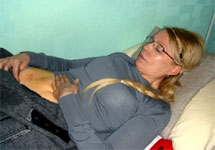
In order to sign an agreement on the Association and Free Trade with the European Union at the Eastern Partnership summit, Ukraine must by November 18, when a meeting of the Council of Foreign Ministers of the EU will be held in Vilnius and release the ex-Prime Minister Yulia Tymoshenko. According to RIA Novosti, such a statement was made by the Minister of Foreign Affairs of Poland, Radoslav Sikorsky. “There is no time for bluff,” he remarked after a meeting with Ukraine President Viktor Yanukovych.
A similar opinion was expressed by the Minister of Foreign Affairs of Sweden Karl Bildt. According to him, Ukraine has already seriously advanced in fulfilling the requirements of the European Union and the only thing that remains before signing the agreement is to free Tymoshenko. “Then there will be a green light for Ukraine in Europe,” Bildt concluded.
Earlier on Tuesday it became known that Tymoshenko supported the project of “partial pardon” - one of the options for its liberation, which European politicians discussed with the Ukrainian leadership. “She clearly noted this that she was taking a serious step - she is ready to take partial pardon for the fate of Ukraine,” said Arseniy Yatsenyuk, head of the Fatherland faction in the Verkhovna Rada.
There is no official information about the conditions of this plan. However, in mid -October, the Polish European deputy Marek Sivets wrote about him on his blog. "Partial pardon means a reduction in Tymoshenko’s conclusion from the age of seven years old. Due to the fact that Madame Prime Minister has already served more than half of the abbreviated term, there is reason for her parole," his Ukrainian media quoted him.
At the same time, Tymoshenko, according to the Eurodepa, in exchange for freedom will have to pay a fine of $ 200 million. In addition, she will lose civil rights for three years, that is, she will not be able to participate in the upcoming elections of the President of Ukraine, scheduled for 2015.
Later, the head of the Committee on Foreign Affairs of the European Parliament Elmar Brock denied this information. He said that the Sivets "distorted the political message that the special settlers of the European Parliament Pat Cox and Alexander Kvasnevsky handed over to the Ukrainian leadership." “In no way, these two envoys indicated that Tymoshenko should abandon his legal rights and positions,” the politician emphasized.
Tymoshenko’s case is one of the obstacles to European integration of Ukraine. EU representatives have repeatedly demanded the release of the ex-Prime Minister, arguing that the fate of the Association and Free Trade Agreement with the European Union, which official Kyiv intends to sign in November depends on the solution of this issue.
The Ukrainian authorities have recently discussed the option with Tymoshenko’s departure for treatment abroad (the ex-prime minister has been in the Kharkov hospital for more than a year in connection with the disease of the spine), which, according to observers, would actually mean its release. Especially for this, several bills were registered in the Verkhovna Rada, allowing to send prisoners for treatment abroad, but not one of them has been considered yet.
Yulia Tymoshenko was arrested in 2011. The ex-Prime Minister was accused of abuse of powers when concluding gas agreements with Russia, the court sentenced her to seven years in prison. In relation to Tymoshenko, other criminal cases are currently being investigated. She herself rejects all the accusations against her, stating that the authorities were pursuing her for political reasons.