
Translated material
Following the Chinese, the South Koreans went to the Northern Sea Route
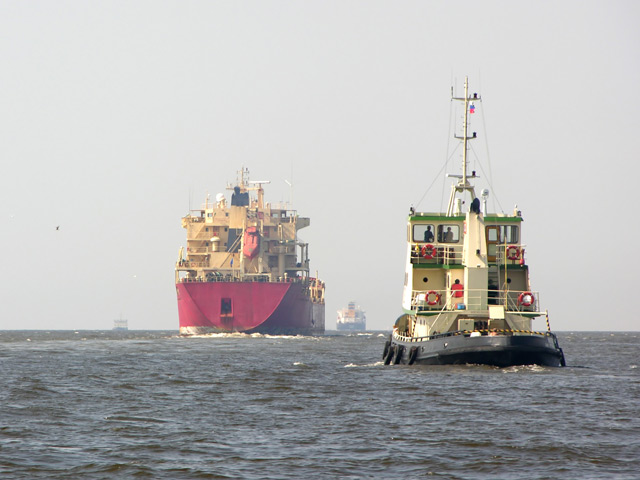
The cargo ship of the South Korean logistics company Hyundai Glovis Co. On Tuesday, it successfully completed the first flight along the Northern Sea Route (SMP), having arrived in the port of Kwan from the Russian Ust-Lug on the Baltic Sea, ITAR-TASS reports with reference to the Ryonhap agency.
The Stena Polaris tanker, transporting 44 thousand tons of oil products, made a path of 15 thousand km, being ten days less at sea, compared to the traditional route through the Suez Canal, which takes about 45 days. The new route will reduce the time and costs of transportation of goods.
Hyundai Glovis intends to become the first South Korean shipping company to deliver goods through the Arctic region. However, since South Korea has no ice class ships, the tanker is rented from the Swedish transport company Stena Line Group. In addition, as noted in the message, South Korea currently has only one icebreaker intended for research and rescue work.
The Northern Sea Route is the shortest sea route between the European part of Russia and the Far East. Its length is about 15 thousand kilometers, which is almost 4.5 thousand kilometers shorter than the path through the Suez Canal. Against the backdrop of climate warming in the Arctic waters, there has become noticeably less ice than in recent decades, and the volume of transportation along the Northern Sea Route is growing rapidly.
In 2012, 46 vessels took place along the NSR - against 34 in 2011 and only four in 2010. This year, the Russian authorities were able to allow 400 flights along their shores. The route is open from July to the end of November.
SMP, in the past exclusively a Russian patrimony, today is actively mastered by foreigners, and above all the Chinese. The first Chinese icebreaker went through the Severomorput in 2012, and in September this year, along the coast of the Russian Federation in the Arctic through the Bering Strait and the Strait of Vilkitsky under the flag of Hong Kong, the Yong Sheng was carried out, belonging to Cosco controlled by the Chinese authorities.
However, the northern path can be used only five months a year, while additional costs for icebreaking operations are required.
Earlier it was reported that after China, not only South Korea, but also India and Singapore are going to send their vessels along the NSR. In addition, European countries demonstrate the willingness to accept goods from Asia in SMP. So, Iceland, with the support of Germany, is going to build a large port on the northeastern coast. Scotland expressed a desire to create a special port for refueling ships arriving at the NSR, and further delivery of goods to Rotterdam, Havr, Liverpool and London.