
Translated material
Made in FSIN
Who Russian prisoners work for
How the prison economy works - The New Times asked convicts, jailers and entrepreneurs
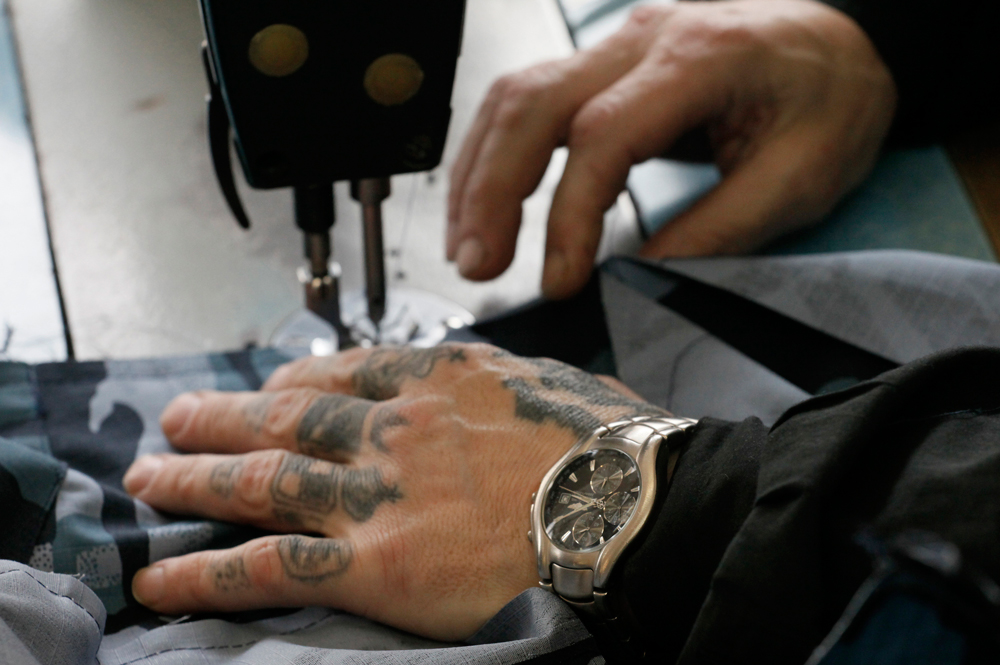
It is almost impossible to evaluate how much money in reality earns a prison system. Despite the fact that for several years human rights activists have been going to the zones for several years and in almost all colonies the convicts have mobile phones, the Russian prison system is still extremely closed. Especially with regard to production in the colonies. It is only known that in the Zonovsky factories they produce about one hundred thousand items, from souvenir products and ending with auto -zats.
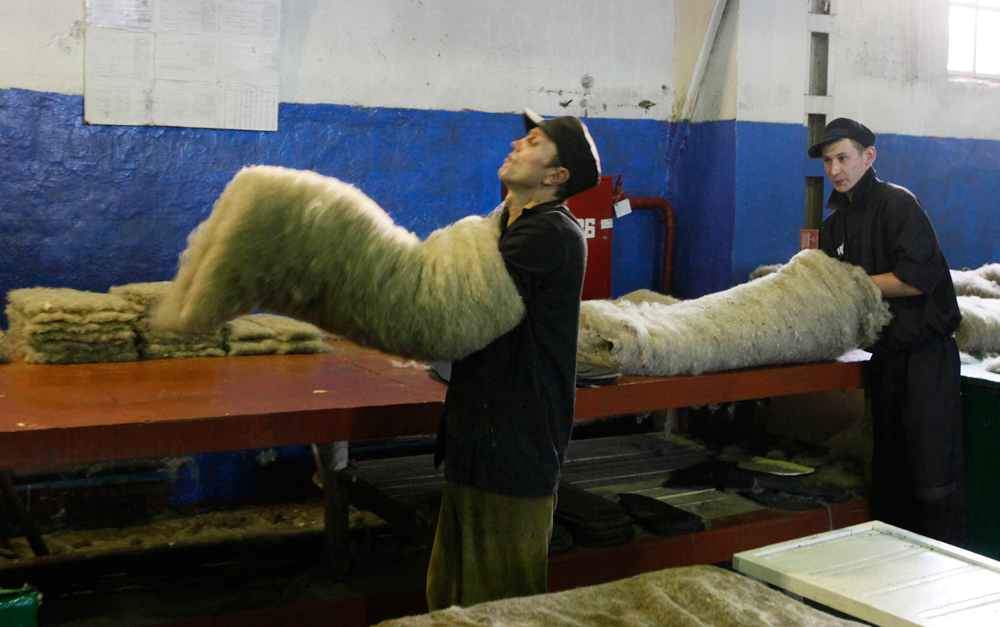
The share of products made for the prison system itself is slightly less than half of the total prisoners. The rest of the product goes into the wild. The convicts make nails, school and office furniture, paving slabs, rolled and process the forest, make plastic windows, children's sledges, sew overalls, bedding and chipped coffins. Production exist at the expense of state orders and orders of commercial enterprises.
According to the FSIN, today 219 thousand prisoners work in the colonies - this is about 30% of the total prison population*. In the official comments, the responsible persons of the FSIN say that all convicts receive a salary not lower than the minimum wage. However, dozens of convicts, with whom the New Times managed to talk, give examples of meager salaries that they transfer to the personal account.
Attempts to demand a worthy salary for many are turned into penalties and penalties that close the possibility for parole: most convicts prefer not to complain. So it was until recently. Until businessmen convicted of fraud and other “economic” crimes appeared on the zones. Some of them tried to “download the rights”, some even tried to organize a successful business in the zone. But it turned out that in their councils, the prison system, accustomed to working on the patterns of the Soviet Gulag, does not need.
Forest
“For example, the convict comes to the colony. It turns out that his profession is not interested in anyone. The tractor driver will cook Balanda, and the cooks will put a forest or travel on a tractor - this is the businessman Dmitry Barmin, who has served three years in different Russian colonies, explains the specifics of the prison economy. - The head of the colony believes that a person who thoroughly knows the area in which he has to work is a potential threat. Such a person is able to raise a rebellion among convicts, explaining to them that the production is arranged incorrectly. ”
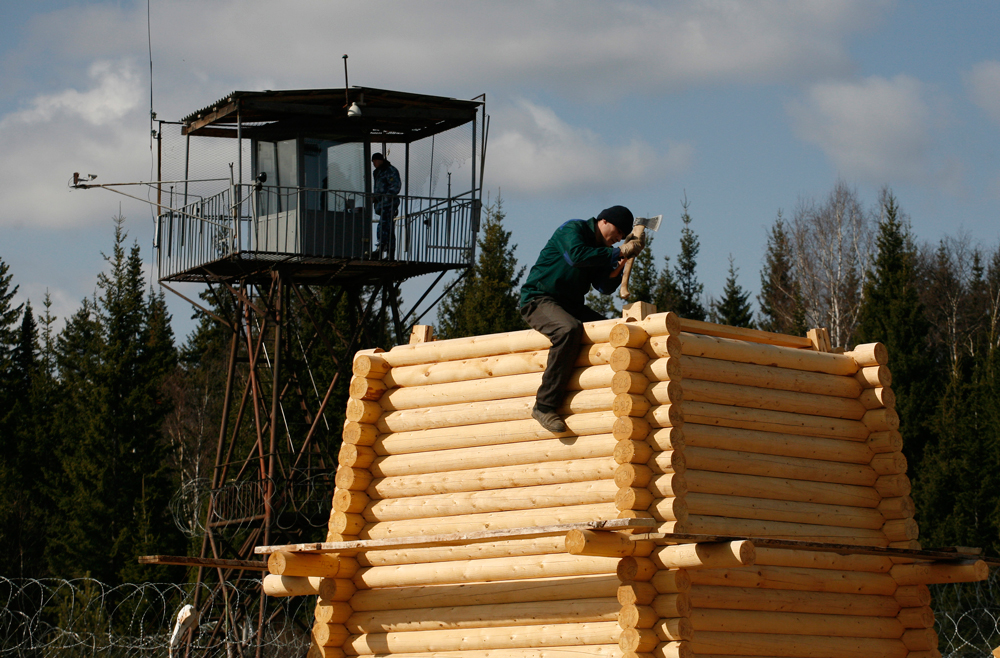
The last year of the imprisonment, Dmitry Barmin worked at the forestry in the colony-settlement in the Kirov region. In winter, I had to work there for 12 hours with one weekend. Those who were engaged in the primary processing of the forest were not at all laid.
“This is the so-called voluntary-compulsory work,” Barmin explains. “You can’t refuse and complain: complainants are offered a different job as an alternative - for example, wash toilets.”
There are no conditions for safe labor in Lesopoval, if the prisoner is injured, then he is crushed in every possible way so that he would write that he fell somewhere in the hut-if only it did not slip anywhere, that the injury is industrial. The tools are old, if something breaks down, the convicted person is always to blame, relatives have to bring everything-from screwdrivers to chainsaws.
“We were taken to forest plots in the car in which they usually carry cattle. Development plans are taken from the ceiling, but you can fulfill the plan if you work for 12 hours or more, ”recalls Barmin. - That is, with a violation of absolutely all labor standards and current legislation, the convict could receive 15 thousand rubles a month “clean”. Dmitry says that the plan, most likely, was overestimated so that the prisoners could not fulfill it, and for the failure to fulfill the plan, the leadership of the colony was not obliged to pay the prisoner at the minimum wage level.
Attempts to demand a worthy salary for many are turned into penalties and penalties
Barmin, who, before the arrest, graduated from the economic department of the forest institute, tried to explain the colony to the leadership of how to organize production so that the work was not so hard and could be obtained two to three times more products. “I showed them how to do it all, on the schemes, on the formulas,” says Dmitry. - They listened to me, and then said: "Then you will have to pay properly, but we are unprofitable for us."
“The colony-settlement of our region is really littered with work,” says Igor Khodyrev, a former employee of one of the Kirov colonies. - These are very profitable orders that the local Federal Penitentiary Service distributes between the colonies. For example, the head of the department calls two executives of zones and offers them an order. Competition arises between them. It often happens that the order is received by the one who will give more products at the lowest cost. And it happens in a different way: this peculiar tender will win that colony, whose boss will set a higher price for work, but will share with the authorities. ”
Without normal
Entrepreneur Igor Kroshkin, who had spent six years in IK-1 of the Ryazan region, like Dmitry Barmin, tried to fight in a zone with low salaries, but he was fired from the industrial zone for violation of labor discipline. Now he suits the FSIN, demanding to return the money unpaid to him.
“Working on Schweik for three and a half years, I received 74 rubles per month, that is, in three and a half years I earned only 9498.17 rubles, and only 2374.56 rubles were credited to my personal account,” says Kroshkin. Having sued the FSIN, the entrepreneur is now not so much fighting for his money as he wants to create a precedent.
Armed with the calculator, Kroshkin calculates: “The same low salary as me, in our colony, the convicts received at least five to seven years, that is, only several thousand convicts robbed in the IK-1 of the Ryazan region.”
The head of the financial and economic department of the FSIN Oleg Korshunov does not agree with Kroshkin: his response to the complaint says that, according to information from IK-1 of the Ryazan region, the convicted person fulfilled the norm only by 17.6%-hence such a low salary. Kroshkin is outraged: no one in the colony told him that he did not fulfill the norm, on the contrary, he had 12 rewards for conscientious work.
“The most amazing thing is that there are no general production norms,” explains Chelyabinsk human rights activist Nikolai Schur. - I asked prisoners in different industries, from foundry to sewing, the same question: what is your norm? ” They answered: “They say to us: you must perform so many operations or do so many products. We are doing, and then the boss says: you haven’t fulfilled the norm, and there will be no mrot for you. ”
Forced labor
Can I refuse to work in a colony?
“In the first place as the revenues of the budget of the colonies are deductions from the salaries of convicts. Therefore, the leadership of the colonies is beneficial for them to go to the "prom" as many convicts as possible. So far, 75%** is subtracted from the convict’s salary, he has no incentives to give birth, ”says human rights activist Andrei Babushkin. “Three categories of people work carefully: who cannot sit idle, who dreams of parole and those who have no material support from their will, and even 200 rubles for them is money.”
The convicts argue that they do not conclude any employment contracts with them; upon release, they issue certificates of seniority and the specialty received in the zone. Somewhere pension cards are being started, but there are also such colonies, where they have not heard of any pension deductions. In the FSIN, to the question of The New Times, whether from the salary of convicted deductions to the Pension Fund of the Russian Federation and the Social Insurance Fund, they answered in the affirmative: everything is done on a common basis.
"The order receives that colony, whose boss will set a higher price for work, but will share with the authorities"
“Our colony took a lot of orders, we fed the entire eagle and the Oryol region, sewed costumes for both the army and the Ministry of Internal Affairs,” recalls Oksana Faskhuldinova, who had been sitting eight years in Shakhovskaya IK-6. - The price was clearly underestimated: they told us that the costume that we sewed costs 300 rubles, and when I was freed, I saw such a costume in the market of 6 thousand rubles. In order not to complain, they paid us a minimum wage, but they overshadowed the norm. We sewed Vatin, and he - like glass wool: when you cut it, flakes fly everywhere. And several girls fell ill with tuberculosis: after all, when you spend almost all the time in the factory and you constantly breathe it, the lungs are not ventilated. When there were urgent orders, I had to work in excess of the norm, for example, from four o’clock in the evening until five to six in the morning. The factory worked almost continuously. "
Marina Kolyakova, another convicted from the same colony, says that they did not let go of good seamstress: “It was beneficial to the head of Promka that seamstresses were working there, which have already been full of a hand in five to eight years, there is speed and who know all the operations. There were rumors that the colony was negotiating with the judges so that good seamstresses would not be let go home. ”
The convicted person from Yukos’s affairs, Alexander Goldman, who was serving his term in Bashkiria, recalls that it is almost impossible to refuse to work: “In February 2010, when the IK-7 in the city of Meleuza was brought to the“ Schweika ”in the city of Meleuz. They were beaten by the prisoners themselves, the so -called “woolen” (cooperating with the administration), put on “stretching” right in the industrial zone. ”
Only business
Trying to figure out how the most closed industry of the Russian economy is arranged, we are faced with the lack of information about commercial firms working with the colonies. The regional controls of the FSIN on their sites willingly place products catalogs, but almost never write who orders it.
However, from convicts it is known that the main customers in sewing production in the zones are Vostok-Service, Sirius, Technoavia and Legion. All of them work in the workwear market.
One of the largest is East Service. Its annual turnover is more than 18 billion rubles. The company has several foreign partners, in particular, ANSELL, who specializes in hand protection, UVEX - a manufacturer of protective glasses, the scientific and industrial corporation DU Pont, JSP - a leading European manufacturer of a wide range of labor protection and safety. Vostok-Service has more than 200 branded stores in Russia and abroad.
Do Western partners of Vostok-Service know that the company earns on the forced labor of prisoners? The New Times contacted the representative of JSP in London. “East-Service” is our exclusive partner, ”said Elena, a specialist in working with Russia (she refused to name the surname). - But our business is in no way connected with the zones. Vostok-Service simply sells our products and makes us profit. Everything else does not concern us. ”
The company "Vostok-Service" has several foreign partners. Do they know that the company earns on the forced labor of prisoners?
The New Times tried to talk with other Western partners of Vostok-Service. Vladimir Sarah, the procurement director of the Prague office of Cerva, was not more talkative to his London colleague. “Vostok-Service” is our maternal company, ”he confirmed and asked to send questions by e-mail. He never answered the letter, but, as it turned out, he talked with his colleague from Copenhagen Jan Lund, director of the OssafetyCenter-TtosHacyner, also working with Vostok-Service. And Jan Lund, who first agreed to the interview, a day later sent SMS that he could not say.
However, Vladimir Golovnev, president of the Vostok-Service group of companies, unexpectedly abstained comments on the prison business. Back in September 2013, in an interview with Izvestia, he confirmed that for 20 years he has been working with Mordovian colonies, and admitted that in the zones he liked “serious discipline and excellent quality”. But after the whole month, the spokesman for Vostok-Service Irina Dymch, answering the new Times questions, disavowed these statements of her cartridge, saying that Vostok-Service does not place the orders directly on the zones: “You can check the documents in any colony, not a single agreement with the East Service. I do not claim that the products of Vostok-Service were not sewn there, I say that our company has no contractual relations with correctional colonies. ” This amazing information of The New Times was also confirmed by the press service of the Federal Penitentiary Service of the Russian Federation: "Currently, there are no direct contracts for the production of overalls between the company" Vostok-Service "and the institutions of the penal system."
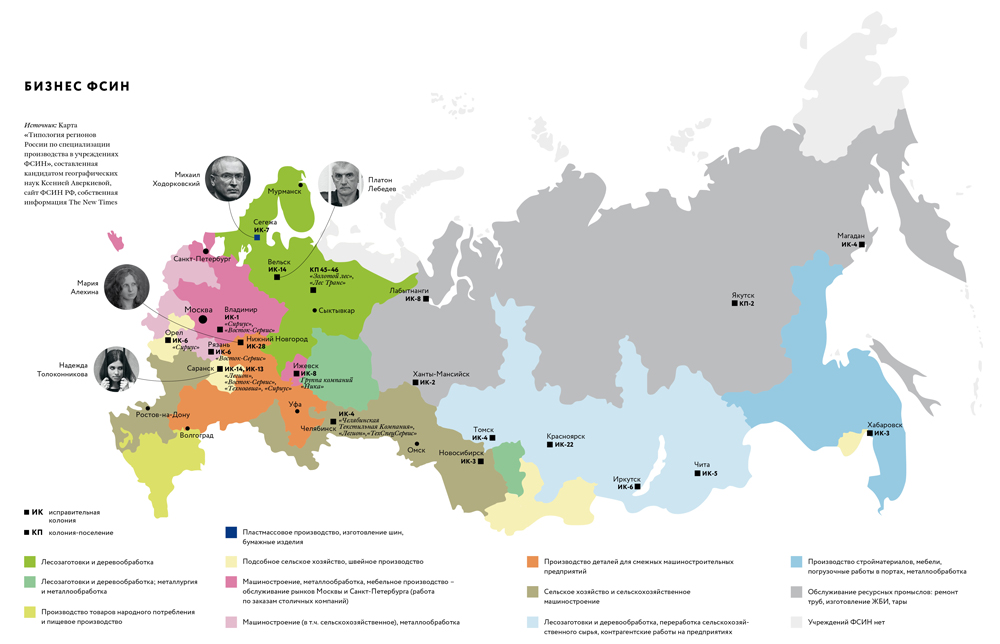
True, unlike Golovnev and his spokeswoman, the regional department of the FSIN does not forget forgetfulness. Their marketers confirmed in telephone conversations with The New Times that in the Mordovian, Ryazan and Vladimir colonies are still sewn for the East-Service ( see map ***).
What are businessmen afraid of?
“All companies selling overalls operate in colonies, 50 % of the products are sewn there, 50 % in a citizen,” Yuri Savelov, a member of the Presidium of the Rossiya Russian Presidium, told The New Times. “I don’t understand what East-Service is shy about.” The colonies today are the same business subject as factories in the wild. You have two enterprises: civilian and Koloti. For example, we order a product, in a civilian factory, sewing it costs 200 rubles, and the colony offers for 150. We think: the civilian factory is better than quality, and this factory does not break the deadlines, as it happens in the colony. If I need quality and my terms are burning, it is better to place it in a civilian factory. And if the deadlines are not burning, well, let them be a little like there, it's okay, it will do for workwear - then I place it in the institution. Pure business. If they increase prices and salaries to prisoners, then they will not have orders, merchants will be unprofitable to work in these institutions. But for them, the main thing is to bring people to work, because it is very difficult to serve his sentence in a closed room without working. ”
“I do not claim that the products of Vostok-Service were not sewn in the zones, I say that our company has no contractual relations with the colonies”
“Why should they pay good salaries? - Savelov is surprised. - They sew low -quality things that do not wear long. For example, it is impossible to sew a robe of Byazi for 200 rubles, at best it will cost 30-50 rubles. Two years ago, the colonies suddenly took and raised prices: so we sewed them for 150 rubles, they raised the prices of products to 200, and the firms refused to place orders from them. ”
When asked how the Western partners of the Russian company will relate to the fact that products made in the zone, where the work of prisoners is, in fact, slave, Yuri Savelov replies: “And our partners do not ask for which factory the products are sewn, we supply our products both to the Baltic states and in Belarus. What do you think, they do not use the work of prisoners? We are not socially directed, this is a business. ” Does Savelov know that in Western prisons prisoners only work voluntarily?
In a telephone interview for The New Times, Yuri Savelov asked him to introduce him as a member of the Presidium of Russia and not to mention that he is the president of the Sirius Group of Companies, which, like Vostok-Service, produces workwear. But the next day in The New Times, the spokesman for the “support of Russia” Alexei Solovyov suddenly called. He categorically stated that his chief was misunderstood and that Sirius did not work in the zones.
Shadow economy
Why was Yuri Savelov scared after Vladimir Golovnev? Why do companies hide their commercial activities in colonies?
“Some firms, working in areas, use one-day companies, opaque schemes, underpaying taxes. They are afraid to glow, ”said the entrepreneur and former ZEK Igor Kroshkin.
As evidence, he cites a story that occurred in IK-6 Ryazan, where he was serving his sentence: “Having connections in the sewing business, I invited the colony leadership to cooperate with the Schelkovo Silkhtosk Factory, which makes the armor from Kevlar. They offered IK-6 to fulfill an order worth 1,500 rubles for body armor. Hit hands. Then suddenly an intermediary company appeared, the so-called “gasket”, which offered the customer: do not work directly with the colony, but through me.
As a result of the colony, another price was proposed: 500 rubles. For the body armor. I wrote a statement to the prosecutor’s office and said that the colony agrees to a loss -making order and the prisoners will not receive a normal salary again. ” Of course, I received no answer from the prosecutor’s office.
“Our partners do not ask which factory the products are sewn in: we supply goods to both the Baltic states and to Belarus. What do you think, they do not use the work of prisoners? "
Entrepreneur Alexei Kozlov, also a former seat, is sure that it is profitable for commercial enterprises to work in colonies not only because of the kickbacks that are possible here, as in any other branch of the Russian economy. Most of the businessmen are attracted by the meager salaries of prisoners and the conditions under which the colonies receive commercial orders.
And the conditions, according to the proposal posted on the UFSIN website in the Astrakhan region, are the most profitable: "relatively low level of overhead costs, a special regime for the protection of enterprises and their material values, minimal expenses for the development of the social sphere."
Vostok-Service, Sirius and Technoavia, operating in sewing industries in the zones, the Golden Forest and Lestrans, buying a forest from the colonies of the Komi Republic, where the working conditions are the same as on the foresters of the Kirov region, is just a small part of the Russian business that uses slavish labor of prisoners and considers it quite normal. We tried to shed light on this part of the domestic economy and apply the names of at least some firms that do not disdain such a business on a map of the Russian zones.
We ask our readers who know the names of other companies cooperating with colonies, where forced labor was built to normal, send information about them in The New Times.
* According to the 103rd article of the Criminal Executive Code, "each convicted person is obliged to work in places and at work determined by the administration of correctional institutions." The administration has the obligation to employ the convicts. In 1997, the forced labor colonies (ITK) in Russia were abolished. They were replaced by correctional colonies (IR), in which labor, nevertheless, remained forced.
** For housing and communal costs, food, clothing, hygienic and sanitary support plus deductions in civil lawsuits.
*** The map presents detailed information on the most famous colonies.
Photos: Reuters