
Translated material
A nut is stitched on a tooth
How the Church besieges the famous fortress
Over the 700 years of existence, the Slisselburg fortress of Oreshka withstood a myriad of siege - both Swedes and Germans. Now it is besieged by the Russian Orthodox Church
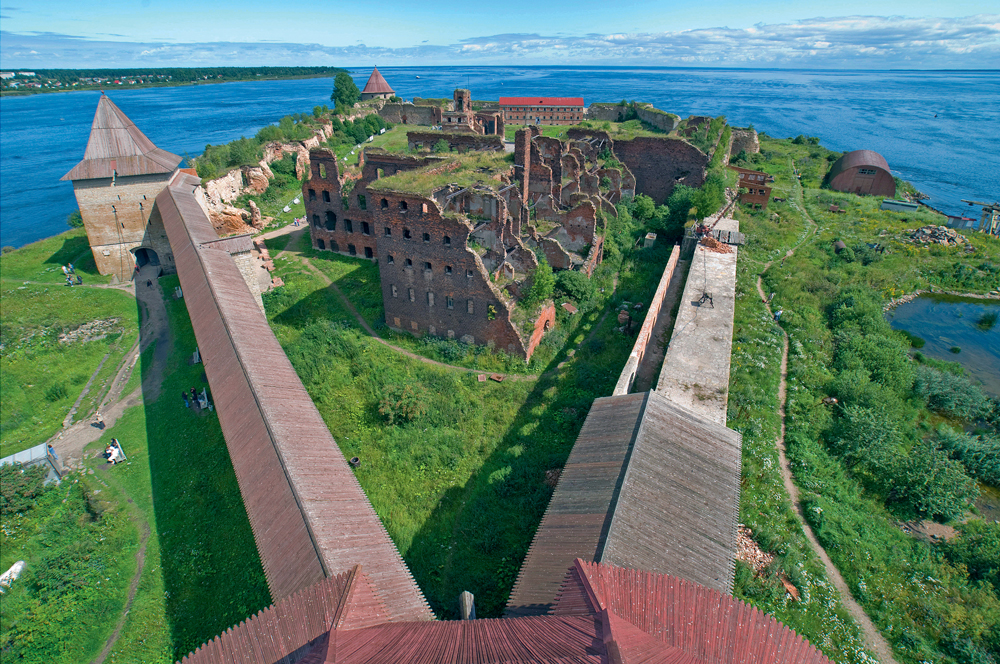
Fortress Oreshka: Defense Follow, Prison, Monument of Military Glory
The initiative group, led by Abbot Evstafius Zhakov, gathered a press conference in St. Petersburg and proposed to put a glass dome over the Church of St. John the Baptist. The statement shocked the public. The surprise, as you know, determined many military victories. Will a unique monument of history with good intentions withstand a unique monument of history?
Cap over ruins
“In my opinion, there is nothing to discuss here,” says Oleg Polukhin, director of the fortress-museum (which is characteristic, neither he nor other representatives of the museum was invited to the press conference). - A glass cap in the center of the fortress will become a dominant and violates the integrity of the monument. And he is federal and is under the protection of UNESCO. ”
The church was destroyed during the Great Patriotic War, the ruins of the temple were part of the memorial complex. Several years ago, the Russian Orthodox Church was allowed to serve at the ruins, soon the clergy proposed to recreate the temple, and actually build a remake. They were called all the reasons why it is impossible to do. And now - a new turn.
"
A glass cap in the center of the fortress will become a dominant and violates the integrity of the monument
"
Church services take place in the fortress three times a year, about two dozen believers come to them. “We do not see the point of prohibiting the service, and those who came to it are allowed into the fortress for free,” says Oleg Polukhin. - But the church already considers the ruins as its arrival with the abbot Igumen Eustathius and indicates the island of Orekhovi, where the fortress is located, as its legal address. And this is already serious. The island is a civilian object. The only legal entity prescribed on it is the State Museum. If we share any spheres, it must be clarified. ”
State vandalism
The proposal of the Russian Orthodox Church affected the burning topic-how to preserve and how to use ancient fortresses, which are many in the northwestern region. In St. Petersburg in the Museum of the History of the City, the International Conference "Restoration, Conservation and Museum of Historical Fortresses" was held. Against the background of the scandal, the discussion has gained even greater relevance. Museum workers from Russian cities, from Belarus, Finland and Estonia arrived, so there was an opportunity to compare how “we have” and how they have. If the neighbors have the problems are mostly professional - the fight against dampness and so on, then Russian directors unanimously spoke about external problems.
“The situation with fortresses is state vandalism,” says Svetlana Abdullina, director of the Vyborg Castle Museum. “We can do damage to the monument to us, you can stop funding when restoration work is in full swing, you can not notice that the explosions on private quarries in the neighborhood are shaken by medieval walls.” The Gdovskoy fortress on Lake Peips, who closed the line of defensive structures of the Pskov land from the 15th century, loses visitors: the places here, on the lake, are marvelous, the most tourist, but last year trains stopped going to the gds, local airlines were closed even earlier, the issue of water message with Estonia was not settled, the bus to St. Petersburg began to go much less and less. With the Koporskaya fortress, a monument of defensive architecture of the XIII century, generally trouble. In April of this year, it was officially closed for visits due to an emergency state.
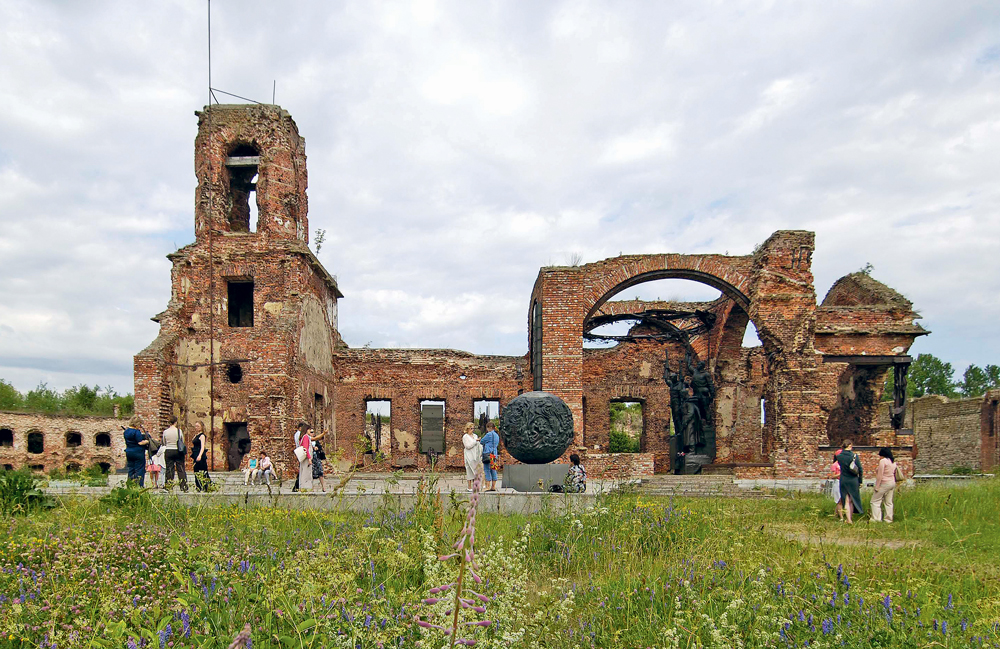
The ruins of the Church of St. John the Baptist are part of the memorial complex, which is offered to cover with a cap
The past and future
Now, after the attack by the Russian Orthodox Church, the future of the History Monument on the Orekhov Island also causes great alarm.
A nut, he is a Shlisselburg fortress - a living witness 700 years of our history. The fortress was founded in the XIV century by the grandson of Alexander Nevsky by Prince Yuri Danilovich. The stone wall of the Novgorod period has been preserved. The towers and the fortresses sprouted, what they admire from the ships, is the Moscow reign of the XV - XVI centuries. The Royal Tower is the memory of the 90-year stay on the island of the Swedes. Curtains of the bastions - Peter's time.
Then, under Peter the Great, the prison period of the fortress began. The first celebrity, exiled to the island, was the disgraced sister of Tsar Maria Alekseevna, he sent his wife Evdokia Lopukhin here. In what conditions they lived - scary to imagine. (By the way, there is still no sewage on the island.)
The fortress walls are today delighted not only with reliability and power, but also by picturesque
"
Emperor John Antonovich ended his earthly path here. At the beginning of the XIX century, Pushchin, Kuchelbecker, Brothers Bestuzhev and other Decembrists were sent to a nut. At the end of the XIX, Vera Figner, Nikolai Morozov and other Narodnaya Volya were “shook” here. Next to the “secret house”, a wealthy apple tree is at the place of the execution of Alexander Ulyanov and his comrades.
The memorial with the ruins of the temple, which offer to cover with an absurd glass cap, is located in the center of the fortress. For 500 days, Soviet soldiers kept the defense here to prevent the blockade ring around Leningrad and protect the road of life. If, God forbid, they will give in to the pressure of the church, not only the general view of the historical and architectural monument will be distorted, but you will also have to revise the concept of restoration of the fortress, which have been working since the 70s of the last century.
Fateful visit
Nuts are reconstructed slowly. Museum workers say that there is one way to accelerate the matter: to attract an important person into the fortress.
Ten years ago, Vladimir Putin visited the Tobolsk Kremlin - the only stone Kremlin in Siberia, a monument of architecture of the 16th century. All printed and online publications circled the photograph of the president with the then governor of the Tyumen region Sergei Sobyanin against the backdrop of the Sofia-Uspensky Cathedral. Going around the Kremlin, Putin spent those present: beauty, they say, must be protected. He gave the Tobolaks two landmarks: to develop the petrochemical industry and make the city a tourist center in a Russian scale. And he ordered to allocate funds. The life of Tobolsk and the Kremlin, I must say, has immediately changed. It’s not that there were no problems left, but the museum workers hoped to solve them: in the summer of this year the news spread to the city again.
And now - it happened. On October 16, Putin flew in, circled by helicopter over the Tobolsk Kremlin and flew to open the polymer plant. But, they say, he was satisfied with the look, even said - at least on a card.
I did not know, it is clear that there is already a “postcard”. Dmitry Medvedev, who came to Tobolsk in 2008, took a panoramic picture of the fortress from the helicopter. This species was placed on the banner of the museum. The photograph bought a photograph at the 2010 Christmas Fair charitable auction member of the Board of Directors of the INIM group of group Mikhail Zingarevich - for $ 1.7 million (51 million rubles). At the same auction, the picture drawn by Putin left cheaper: Medvedev was then the president, and Putin was the Prime Minister. The museum did not even receive a percentage of the sale of photos.
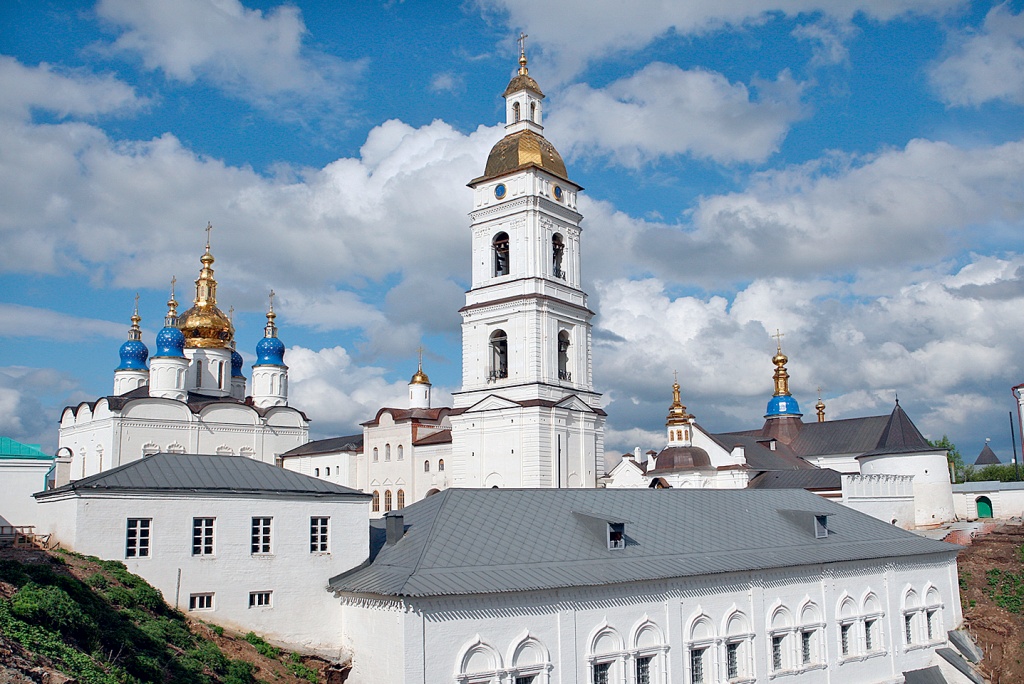
View of the Tobolsk Kremlin, restored after the arrival of President Putin in 2003
The abroad will help us
In the early 2000s, the National Council for preserving the historical heritage of Finland proposed to Russian colleagues cooperation. “Our story has many common pages,” explains Kari Nikonen, a leading specialist in the National Council. - The fortresses passed from hand to hand, and each period left his mark. Together, you can better study the fortification science from the deep Middle Ages to the 19th century, preserve and support unique monuments. ”
So the project appeared "From the castle to the castle - from the fortress to the fortress." It included five Finnish castles in the south-east of the country and six fortresses of the North-West of Russia: Ivangorod, Ladozhskaya, Koporskaya, Shlisselburg, Korela and Vyborg castle. The project began in 2011 and will end in April of next year. The benefit of cooperation: new guidebooks and books, intermoving seminars and exhibitions, exchange trips, holidays - the days of the fortress - with the involvement of travel agencies, small businesses, municipal enterprises. The European Union is financed, the budget is € 1.3 million.
Thanks to this project, our museum workers perked up. The idea arose to combine all the fortresses of the North-West of Russia as a single European route, as in Finland. There, this brought to museums not only the popularity and increase in the number of tourists, but also considerable investments from the same EU.
How to do it
The National Council for preserving the historical heritage of Finland is a state organization. It is in charge of 85 objects, about ten of them are now restored. First of all, computer diagnostics, a thorough study of the object: what can be preserved. The main task is authenticity.
“The Council is financed by three departments - the Ministry of Education and Culture, the Ministry of Labor and the Ministry of Justice. The Ministry of Labor is beneficial that we give jobs, because in some places there is a very high level of unemployment. Almost all defensive monuments are financed by the EU, ”says Kari Nikonen. The director of the Fortress Suomenlinna Mayre Mattinen admits that Sumenlinna, which we know more like Sveaborg, has its own specifics: “This is not a very monument of culture and architecture, it is an ordinary city. Shops, kindergarten, school, various conferences, fitness centers. And all this feeds us. ” Small but stable income - from restaurants, workshops, small private firms. The museum gives everyone to earn. And they help the museum save history in the best possible way. “I went to the ruin,” says Meira Mattinen when he goes to his office. Even administrative premises in the museum retained their historical appearance.
Suomenlinna accepts 800 thousand vacationers and tourists per year. This is where you remember about the Miracle Lake and the Gdovskoy fortress ...
The construction of the fortresses was a utilitarian matter - to protect yourself more carefully. Often they built hastily when the enemy was already close. But the fortress walls today are delighted not only with reliability and power, but also by picturesqueness. Even in the ruins, the spirit of time lives.
In Russia, the restoration of ancient fortresses began in the middle of the 19th century. Then they understood that it was necessary to save as much as possible. Because not the cramming of the history textbook teaches patriotism.
Photos: Alexander Roshchin/ITAR-TASS, Yuri Belinsky/ITAR-TASS, Alexander Nikolaev/ITAR-TASS