
Translated material
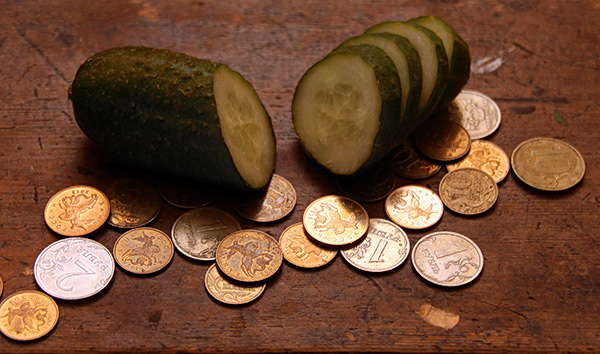
Cut the last cucumber
Information about the threatening growth of the debt of Russians to financial institutions has recently appeared with enviable regularity. So, in June, the Equifax credit bureau shared the results of the analysis of its own base.
Oil painting: more than a quarter of borrowers have obligations to 3-4 banks, while in 2007 there were less than 5%of them. The number of Russians with five or more loans increased to 3.5%, although before the crisis it fired 0.1%.
Bank of America Merrill Lynch (BAML) published recently, added several curious strokes here.
On the one hand, the situation does not look like a disaster: on average, Russians should only 17% of their average income, while, for example, in Poland the figure is more - 23%. It turns out that if the average temperature in the hospital is still normal, then in separate “chambers” patients are almost beaten in a dying fever. The most serious problems have the least wealthy borrowers who earn no more than 20 thousand rubles per month, of which, according to official statistics in Russia, more than half of the total economically active population. They have to give to banks more than half of their monthly earnings. But not everyone will be able to pay off: the debts of about five million people, according to BAML, are hopeless. In fact, the situation is even worse - the study was evaluated only to banks, while, for example, the debt to pawnshops and microfinance institutions was not taken into account.
Here, the sacramental question suggests itself: who is to blame?
According to BAML, the main responsibility for the fact that the Russians were in debt to the ears, lies with credit organizations - they too aggressively imposed loans to the population, which in itself, neither dream nor spirit.
From the presumption of the guilt of banks, apparently, Russian regulators led by the Central Bank, for some time, have been concerned for some time, who have been concerned about the rapid “risk accumulation” in the overheated retail lending sector.
It would seem that yesterday the authorities had nothing against credit paper. On the contrary, they looked at peppy domestic consumers only as the most important driver of economic growth. And no one was especially swayed that the Russians who enthusiastically with the illusion of wealth mainly support someone else's economy, drawing in debt for the purchase of imported consumer goods.
Only recently, with the advent of Elvira Nabiullina, the regulator began to openly recognize the problem of the castle of the population, which, in addition to unpleasant social consequences, is easily broadcast into a full banking crisis. For banks and set about.
In the summer, the Central Bank and the Ministry of Finance began to discuss the mechanisms of fixing the marginal rate on the consumers, which were agreed at the end of September. At the same time, the regulator began cleaning the sector from banks leading too risky credit policy and noticed in “dubious operations”.
The process of shooting “bad” banks will go even faster if the DIA manages to achieve the right to publish the names of organizations to which the Central Bank limits or prohibits the receipt of population deposits (now the information is closed) until violations are eliminated.
No one argues: cleaning the market from banks that violate the legislation or pose a threat of stability to the system-including because of a too risky credit policy-the regulator is acting correctly. However, the stiffness with which the state acts in relation to financial institutions contrasts too clearly with the loyalty with which it also refers to the customers that have longed for them.
No further than last week, Gennady Onishchenko, who had a separate line, spent the banks for the irresponsibility of consumers with a separate line, with his own rebuke to the greedy.
Why not complain, Gennady Grigorievich?
In the end, borrowers are adults who studied at school (in the sense that elementary arithmetic should be trained). And none of the bankers, it seems, have not yet been caught with a red -hot iron, requiring the client to sign a loan agreement.
Attempts to entrust all the blame for the credit market for banks-and completely remove it from the borrowers themselves-nothing more than the next phenomenon of the Russian state in the role of a good pater, who liberates people-we are talking about the very economic and active part of society-from responsibility for their decisions and their consequences. The absurdity of such a provision also in the fact that in fact the responsible behavior in the credit market becomes punishable (banks are forced to raise bets on loans to conscientious borrowers in order to compensate for losses from unscrupulous), while irresponsible. What for the sake of carefully to read the loan agreement and really evaluate his own financial capabilities, if good Onishchenko does not give offense?
But everything would be fine if the problem did not go far beyond the banking sector. Indeed, why take care of your own health in the country with free medicine for everyone (though appropriate quality)? Or insure property, because if something happens, the state will pay “compensation” and build a new house (well, yes, also bad), or even bury the state account?
On the contrary, manifestations of responsibility are not encouraged. Say, you decide to think in advance about the future pension, so the state will find where to attach your savings.
For power itself, paternalism is a very effective tool for manipulating society. Managing the poor and completely dependent on you the population is much easier than wealthy and self -sufficient people. The trouble is that the lion's share of the population is still the same economic and active half-willingly accepts this paradigm, agreeing to work for a beggarly salary, and, hating officials, dreams of a career of an official. And having outlined plenty, under the Old Russian “we will live, we will walk, but how death will come, we will die” the last cucumber cuts and goes to the bank for the next loan.
Photo by hedgehog