
Translated material
Talking with birds
Giotto Project exhibition in MMSI
On October 28, the Moscow Museum of Contemporary Art on Tver Boulevard opens the Giotto Project exhibition Evgeny Dybsky - the artist represents the series of Translation of Time XVI
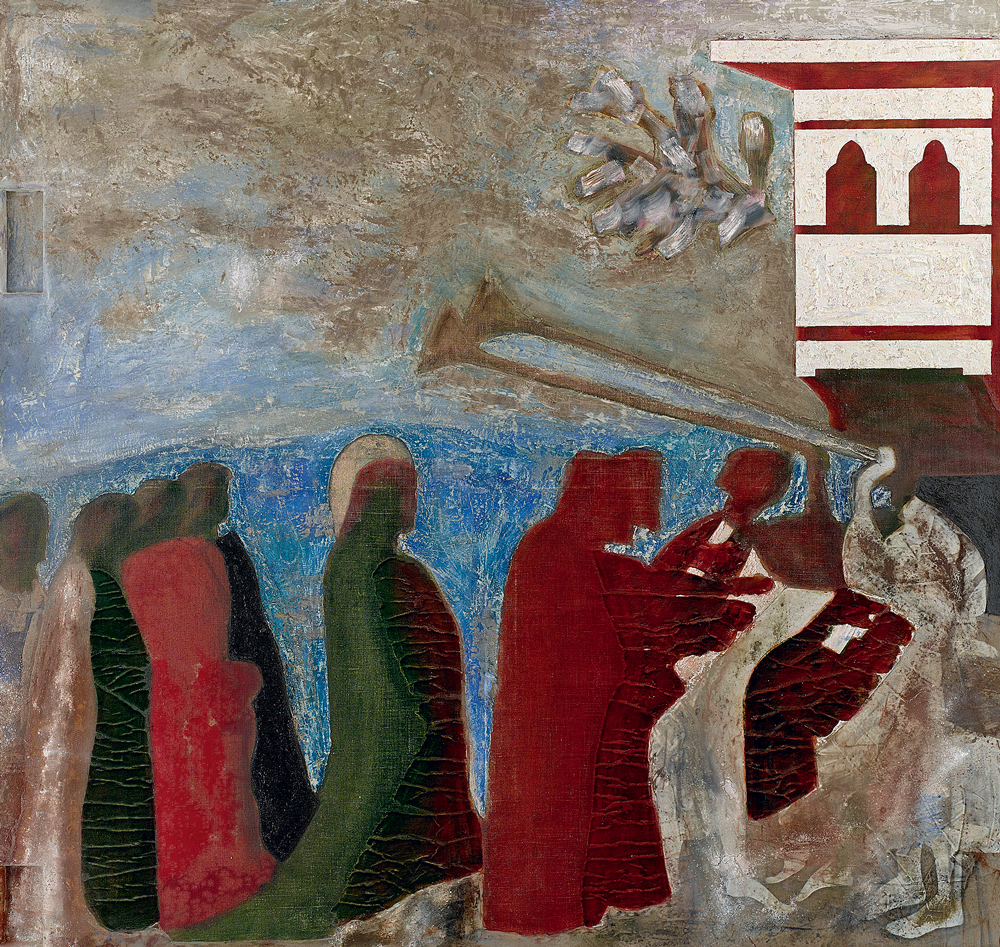
Translation of Time XVI #5, 2008
Translation of Time - so Dybsky calls a series of his works since 1992. The meaning of the name is that the images of the past emit energy that the artist uses and transmits to us. The paintings of Dybsky are fascinated by multilayer metaphors, they are alive, breathe, magical power explodes in them, like in the body. In the landscape from the nature of Tuscany-a cobalt-blue meadow, and the slopes of the mountains are the colors of the pink lipstick with cream, so it is naive to describe one of the work of the Translation of the mid-90s. Stones, hair and mysterious substances in the craters of canvas are found in the series Translation of Time in the 2000s: rough volumes and surfaces in the folds of mica tissue. The artist uses an alchemical technique that makes the paintings live and get old. If Dybsky was engaged in portraits, he would write Dorian Gray in oozing craquelure - cracks in the colorful layer, and turning the plot would give birth to a new galaxy.
The poet Alexei Parshchikov said that he was charging from paintings by a friend - a metarelist in painting. Parshchikov’s last lifetime book “Earthquake in the Bay of the 2009” was illustrated by the works of Dybsky from Giotto Project, which then began an exhibition at the Ludwig Museum in Koblents and had a continuation in Moscow today.
Harmony in conflicts
You take the work of Giotto as a reference point and write your picture. Is this a symbolic story or your own?
All together. Symbolic-because Giotto for me, when I was a student and wrote an abstract about him, was a kind of distant-distant symbol that was never destined to see. But ten years later, in 1988 I got into the chapel of Skroveni in Padua painted by Giotto. The symbol approached reality. The chapel was almost empty, and to reality it was possible to touch literally - to touch the walls. No one followed this, I did not touch, but, I think, many - yes. I was shaking, as it shooks us when we are in love ... Butterflies in the stomach - so sometimes they say in some cities. I write until I feel awe. As before the abyss. Sometimes it lasts a very long time, the process is unpredictable and beautiful. And in this in all - Ommage Jotto, but first of all - my own story.
"
I write until I feel awe. As before the abyss
"
Work on the project has changed the attitude towards it. When I was in Padua in 2011 (by that time I worked on the project for six years), I saw that our searches for the “abstract” (stupid word: all art abstractly) forms, accents, pauses and centers are close. I, like Giotto, want to overcome already familiar and skillful, what happened yesterday. He is an iconic tradition, I am a pictor. I see the picture as a body - with a face, sides and insides, where I want to start a finger like a Thomas, stroke, smell it ... On the one hand, harmony is important to me, but my own, consisting of conflicts: colors, planes and volumes, scale. On the other hand, I constantly destroy it, cut, pick it. And in this picking I sometimes find diamonds ...
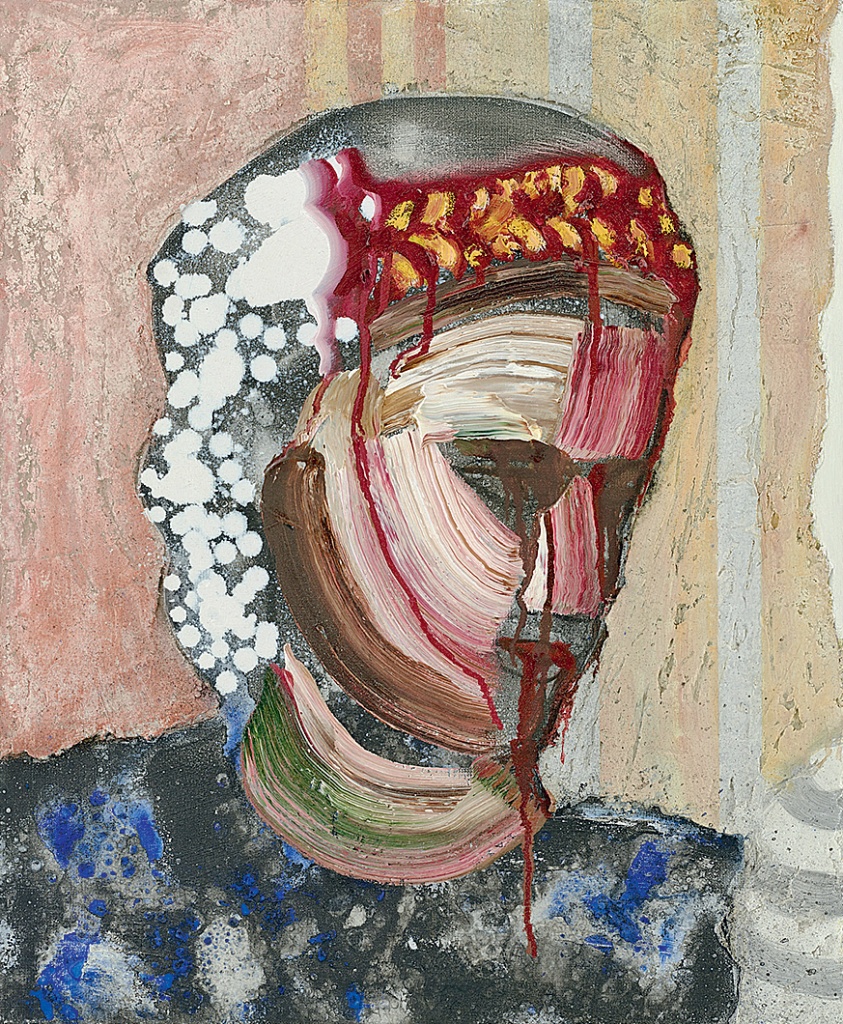 |
| F-Translation of Time XVI #33, 2011 |
Giotto shares you 700 years. How is he close to you?
According to Vasari, Giotto was a student of Chimabue. But the story that Chimabue saw the little shepherd Giotto, drawing a sheep, and was delighted with his talent, modern researchers consider it a legend. However, the drawing sheep Giotto visually sets me up immediately on his hero: Francis of Assisian, talking to birds. Giotto also talked with birds. And with whom to talk with? The human language is so quickly existent, it becomes banal that conversations about the weather are often the most metaphysical. This also applies to painting.
Fleet from the canon
Why do you avoid drawing the faces of your common heroes?
We all know and appreciate that Giotto was the figure of a transition, an outcome. From the canon - to escape from him. A primitiveist who is still not yet led by his means to jump beyond the scope of his skill acquired in the Chimabue class. We studied this on the history of art. Giotto sought to convey the pathetics with the expression of faces. This is a step of separation from primitivism, where the faces are frozen - and now there is an author who is trying to revive them. I suspect that he could be interested in psychology in faces. I am no longer.
Can you say to yourself that your work is growing from Giotto?
It grows from Giotto in the same way as from a landscape. With landscape motifs, I have been working all my life. With the motives of Giotto - about seven years. But he is with me since the abstracts. And it will be further, I hope to raise me, despite the fact that the project is finished. Now something else is brewing: a rather long period of physical picturesque idleness is suitable, I hope, by the beginning of the new topic.
Evgeny Dybsky - graduate of the Moscow Art Institute named after V.I. Surikova. Since the 1988, a member of the Moscow Union of Artists, in the early 90s, he went to Italy, in 1996 he moved to Germany. The works are in the meetings of the Tretyakov Gallery, the Russian Museum, the Ludwig Foundation (Germany), the Tsimmerly Museum (USA), in private collections. Lives and works in Berlin and Moscow.
Photos provided by Evgeny Dybsky