
Translated material
Bailis case: Political Tsushima
Exactly 100 years ago, Mendel Bailis was acquitted
100 years ago, on October 28, 1913, the jury acquitted Mendel Bailis, accused of ritual murder. But anti -Semitism in Russian society has not been convicted and continues to live to this day
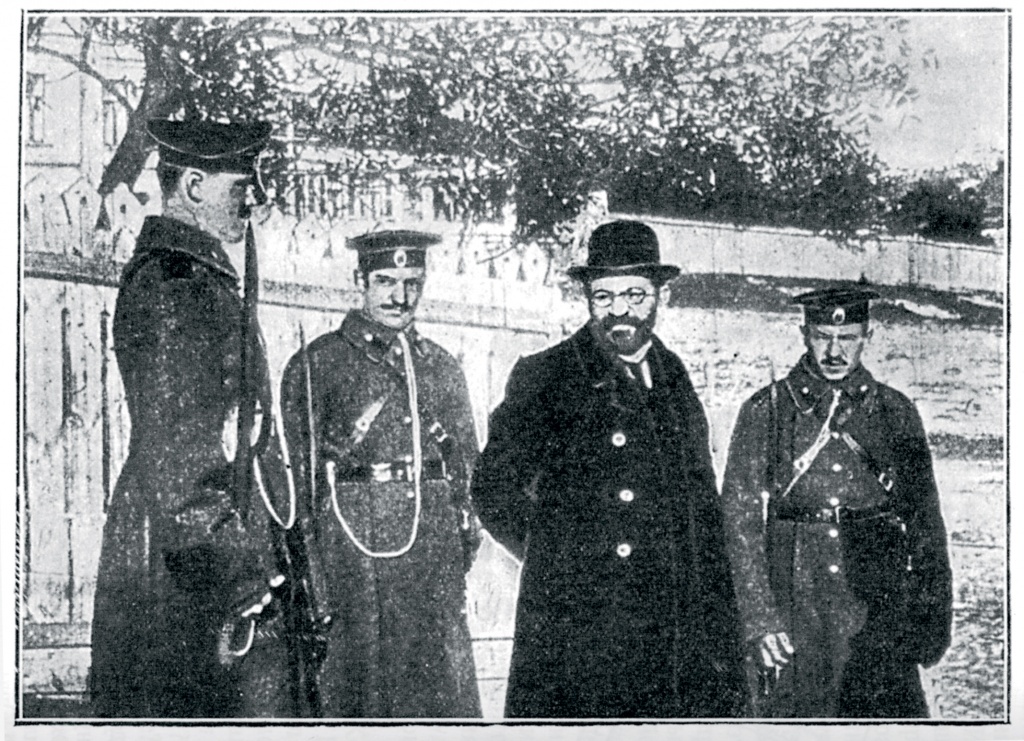
Mendel Bailis in custody
On March 20, 1911, in a cave near Kyiv, playing children discovered the dead body of a boy with many stab wounds. The murdered person was identified as Andrei of the Yushchinsky, twelve -year -old student of the preparatory class of the Kyiv Theological School. The investigation was entrusted to an ordinary criminal investigator. But a few days later the events took an unexpected turn. Local Black Hundreds announced that the murder was ritual and committed his Jews to extract blood, which is allegedly used to make Matsa to the Jewish Easter.
Blood libel
This murder would happen at another time and in a different place, the attempts of supporters of the “bloody loan”, who have been pursuing the Jews for centuries, would not be taken into account by investigators and judicial authorities. However, the beginning of the 20th century in Russia was a time of deep social, economic and political shocks. In such eras, anti -Semitism is often used by the authorities to remove the dissatisfaction of the masses. In Russia, anti -Semitism at the beginning of the last century covered a significant part of society. Before Kyiv, there were already accusations of Jews of ritual murders in Vilna (the Blondes process in 1900), in Bessarabia (1903 Dubossary business). In 1903-1906, a series of bloody Jewish pogroms occurred. Black -hundredth organizations - the “Union of the Russian People”, the “Union of Mikhail Archangel” and the likes of the dark and ignorant masses of the likes were used by him. For the right parties, in the wake of the revolution of the State Duma, anti -Semitism became the cornerstone of ideology.
A strange murder in Kyiv was a gift for the Black Hundreds. Already at the funeral of Yushchinsky’s teenager, a leaflet went in the arms: “Russian people! If your children are dear to you, beat the Jews! .. Avenge the innocent sufferers! It's time! It's time! " Ignoring the first conclusions of the investigation, the Black Hundreds on each corner shouted about the ritual nature of the murder and cited heartbreaking details. The criminal case quickly risen by political rhetoric and myths and attracted the attention of the metropolitan authorities. The Minister of Justice Shcheglovitov, who was under the strong pressure of the right, was already sent a telegram to the prosecutor of the Cup of Chaplinsky: “I instruct ... to have a personal observation of the investigation about the murder of the boy Yushchinsky. I expect detailed periodicals. ” There are no words about the ritual crime, but the beginning is laid - the ordinary criminal case was allocated in special proceedings.
Evidence and "evidence"
A specially created group of investigators took up the business. It was found that the murder of the boy was not committed in the cave, the corpse was brought there. Experts came to the conclusion that there were several killers. On the head and chest of Yushchinsky, more than 40 wounds were counted, applied by some stabbing tool, the body was bloodless. The latter circumstance gave the Black Hundreds new food for conclusions about the religious ritual. Nevertheless, the investigators put forward and consistently studied other versions - in the crime they suspected the father of the boy, then standing by a camp near the cave of the gypsies. But these versions did not find confirmation.
"
Black Hundreds shouted about the ritual nature of the murder and cited heartbreaking details
"
Meanwhile, both in Kyiv, and especially in St. Petersburg, the situation was heated. At the end of April 1911, the extreme right in the Duma made a request for the progress of the investigation. During their own investigation, the leaders of the Black Socialists Purishkevich and Markov “proved” that the method and instruments of the murder indicated in the medical imprisonment “absolutely coincided” with the methods of ritual murders, which were indicated by the literature on the “bloody guide” since the Middle Ages. Forty members of the State Duma submitted a request: “What measures does the government intend to take to investigate and prevent the Jewish ritual murder in the future?” The threat sounded especially ominously that if “there is no way to expose Judea, cutting a Russian child and pumping blood from him ... There will be Jewish pogroms.” This was a warning not only to the Jewish population, but also to the local administration. To control Kyiv, a senior official from the Ministry of Justice was sent to control over the investigation, who himself was connected with the leaders of the “allies” and believed that Jews killed Yushchinsky. The Minister of Justice himself did not doubt the ritual, and his opinion became known in Kyiv. Members of the Black -Hundred Organization of the Black -Holded Orient connected to clarifying the circumstances of the murder. It was her head Golubev that drew the attention of the authorities to the fact that the brick factory of the Jew Zaitsev is located near the crime scene. And he pointed to the "killer" - the clerk of the factory Mendel Bailis.
Zaitsev’s estate did not find anything suspicious and informed Petersburg about it. However, the criminal had to be found as soon as possible. At the end of August 1911, Nicholas II was waiting in Kyiv.
Tagar version
The investigators had another version. It was she who was represented in the classical work “Tsarist Russia and the Bailis of Bailis” by the historian and lawyer Alexander Tagar, who himself in 1938 was arrested in the fabricated case of the “conspiracy” in the Moscow advocacy and shot at the Lubyanka immediately after the verdict was issued.
This version to this day is the most reasonable and in demand for modern historiography. According to a number of evidence, on the day of the murder, Andryush Yushchinsky was seen in the company of his peer of Zhenya Cheberyak. His mother Vera Cheberyak was a container of the thieves' brothel. There for nothing could be bought a lot of stolen things. According to some testimonies, Andrei Yushchinsky threatened to expose the criminal affairs that took place in Zhenya’s house in the heat of the quarrel, this was the reason for the reprisals against him. One of the witnesses of the Shakhovskaya lantern saw boys on the day of the murder playing on the street. It turned out that the trace of Yushchinsky broke off at the house of Cheberyak. However, during interrogation, Zhenya Cheberyak denied everything. Shakhovskaya was confused in the testimony, “recalled” more and more details, and he, referring to the words of Zhenya, who had died from an incomprehensible illness by that time, pointed to Beilis, at the insistence of which Zhenya Cheberyak allegedly lured Yushchinsky to him. Shakhovskaya refused testimony, but rumors about his story quickly spread around the city. The influential Black -Hundred "Public Opinion" demanded to look for a "Jewish trace."
Arrest
Preparing for the arrival of the sovereign, Kyiv switched to a special security system. Taking advantage of this and in order to reassure the intensity of passions, the authorities on June 22, despite the obvious deficiency of evidence, were arrested and brought to prison of Mendel Bailis, a poor employee of 39 years, the father of a large family, a non -religious Jew. He categorically denied his guilt.
The course of the investigation was also influenced by the tragic events in Kyiv: on September 1, the chairman of the Council of Ministers of Russia Peter Stolypin was mortally wounded. The killer was Dmitry Bogrov, a native of a Jewish family wealthy and famous in the city. The Kiev authorities, who was completely at a loss, fearing dismissal and punishment, began to investigate Bailis's case with double energy.
Meanwhile, journalist Brazul-Brushkovsky and displaced by that time (supposedly for negligence, and in fact for unwillingness to fulfill the will of the authorities), the police bailiff directly accused the Construction of Cheberyak of a crime. The police arrested several members of the gang, the names of the direct killers were named. The lift of the corps of the gendarmes Ivanov recognized this version as the most reliable and offered to free Bailis and arrest Cheberyak and her brother Singaevsky - one of the alleged killers. However, the prosecutor Chaplinsky, for whom the “ritual” has already become a matter of life, resolutely opposed this.
In Russia and in many countries of the world, a protest campaign has unfolded. On November 30, 1911, a letter was published, entitled "to Russian society (regarding the" bloody slander "on Jews)." It said: "In the name of justice, in the name of reason and philanthropy, we raise a voice against a new outbreak of fanaticism and dark untruth." The authors recalled that initially the “Bloody Libete” was built on the first Christians, that the Greek Patriarch Gregory called the legend about the use by Jews of Christian blood “an aversion to the prejudice of people inquiring in the faith of people”. Under the appeal were signatures of 82 famous writers, public figures, scientists, among them were Vladimir Korolenko, Zinaida Gippius, Dmitry Merezhkovsky, Alexander Blok, Maxim Gorky, Fedor Sologub, Leonid Andreev, Vyacheslav Ivanov, cadet leader Peter Milyukov, academician Vladimir Vernadsky.
"
The investigation was also influenced by the tragic events in Kyiv: on September 1, Peter Stolypin was mortally wounded
"
In March 1912, in Germany, more than 200 outstanding representatives of the German intelligentsia, including Thomas Mann, Gerhardt Gauptmann and Werner Zombaret, signed another protest appeal. Following this, a protest of 240 English public figures appeared, signed including the Archbishop of Canterbury. The French protest collected 150 signatures. As a sign of indignation, the Bailis affair arranged strikes, student gatherings and demonstrations.
The split occurred in the right camp itself. One of the most insightful and influential figures from nationalist circles, the editor of the newspaper Kievanin Vasily Shulgin understood that the process could strike an irreparable blow to the monarchy itself. You do not have to be a lawyer, you must just be a sensible person, he noted to understand that there is a petal against Beilis, who was joking any defender. He was afraid for the reputation of Russian justice, which decided to appear on the court of the whole world with such wretched baggage. The Minister of Justice Scheglovites also understood this, in response to warnings, he was justified by the fact that "the case received such publicity ... that it was impossible not to put him on court, otherwise they would say that the Jews bribed me and the whole government."
Process
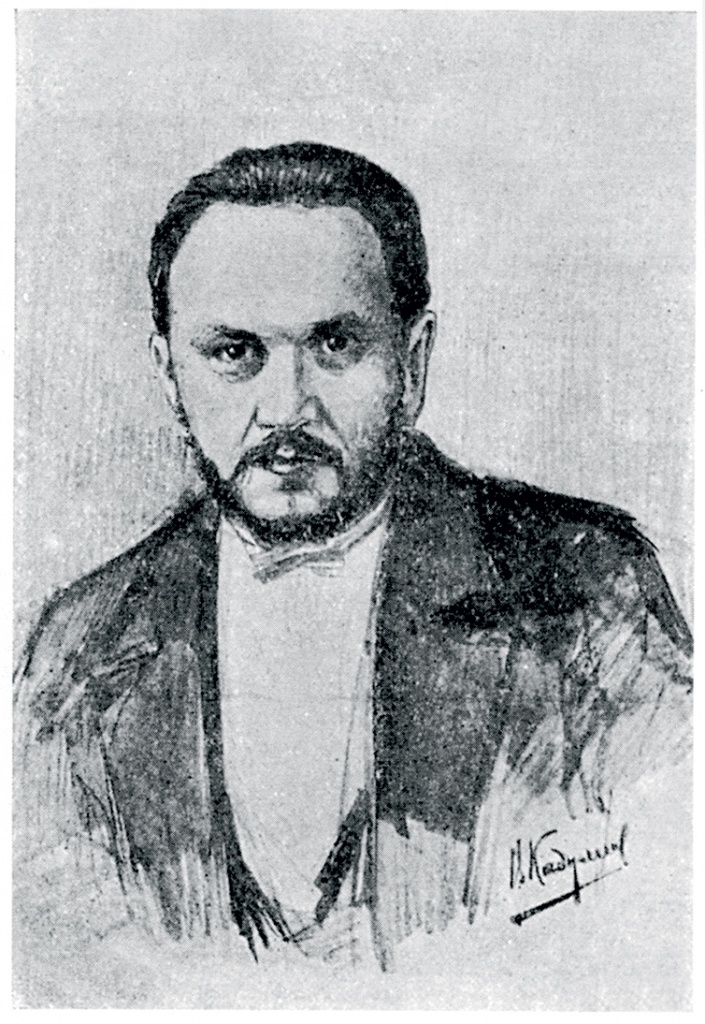 |
| Lawyer Vasily Maklakov, central defense figure |
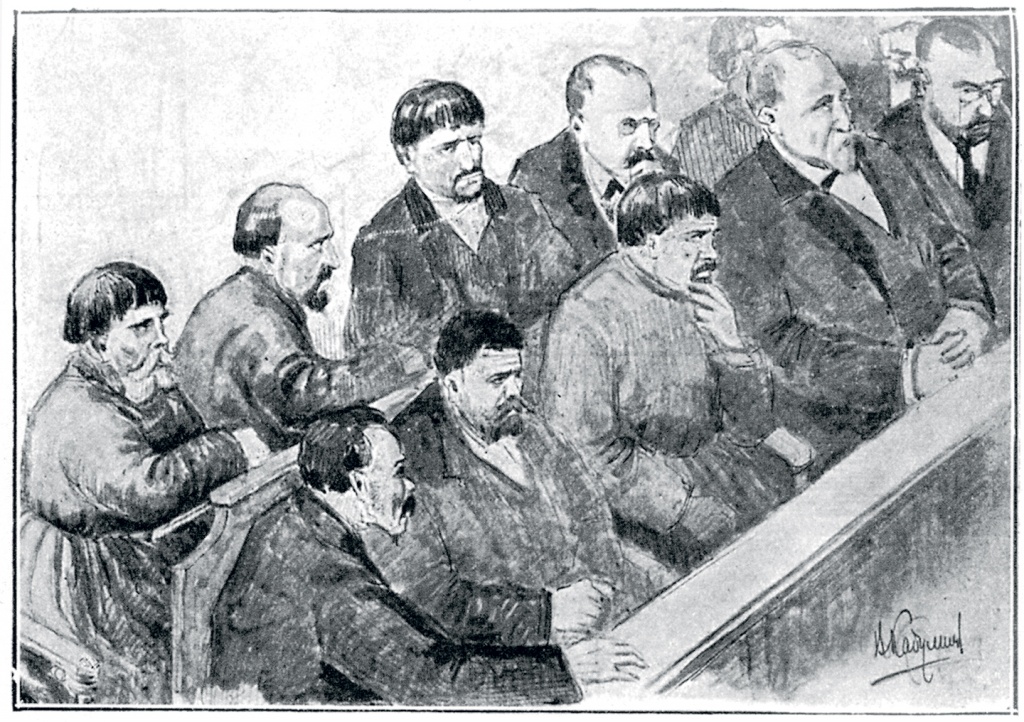
On September 25, 1913, a hearing began in the Kiev District Court. The process that lasted five weeks was focused on the public of the entire cultural world. About the chairman of the judicial board of Boldyrev, the Kyiv governor GIRS spoke about the "person of a certain right direction." The prosecution was represented by a comrade of the prosecutor of the St. Petersburg Judicial Chamber of Vipper. Shmakov and Vymyslovsky became dudes to civilian plaintiffs. The first was known as an expert on the Jewish secrets and the fearless exposure of the Jewish conspiracy. And the second, even against the backdrop of his colleagues-nationalists in the Duma, stood out by zoological anti-Semitism.
The authorities paid special attention to the selection of jury. Kyiv is a university city, with a fairly high cultural and educational level. The writer Korolenko, who was present at the process as a correspondent of the newspaper “Russian Vedomosti”, argued that “the composition of the jury is selected tendentially,” excluded representatives of the intelligentsia from the list. Among the assessors were seven peasants, three trades and two small officials. The foreman is the scribe of the control chamber.
The defense of Beilis was taken by outstanding representatives of the liberal advocacy of Russia Grigorovich - Barsky, Karabchevsky, Gruzenberg, Zarudny and Maklakov. The accusation made two, in fact, interconnected tasks: to prove the guilt of Bailis and for the first time in the new century (and not in some barbarian medieval court) to confirm the reality of the myth of the existence of ritual killings among the Jews.
To do this, it was necessary to remove suspicions from the thieves' gang of Cheberyak. However, those who were planted in prison cells to the suspect were able to find out from them not only recognition of the crime, but also his terrible details. Although the thieves denied everything at the trial, the testimony against them sounded extremely convincingly. Vera Cheberyak, answering questions from lawyers, was completely confused and actually admitted to the crime. Then the prosecutors, not having achieved success in the accusation of Beilis himself, threw all their strength to prove the ritual nature of the murder. However, the arguments of the doctors against the charge were defeated by defense experts, among whom was Professor Vladimir Bekhterev. Having met a tough professional rebuff, the expert Sikorsky abandoned the medical side of the case and began to quote anti -Semitic brochures. The “scientific” justification of the ritual went into oblivion.
The theological examination was even more complicated to charge. It is significant that an expert was invited to anyone who was not driven by priests with a criminal past from Tashkent. He brought down numerous quotes from the Talmud and Jewish medieval books to the heads of the public, proving the hatred of the Jews to Christians and the existence of their ritual killings. The Orthodox Church was distanced from the process, but authoritative Orthodox theologians, professors of theological academies, scientists Glagolev, Trinity, Kokovtsev, Tikhomirov and the Moscow rabbi Mazes opposed the Catholic priest. They demonstrated the jury that the priests pranaitis did not speak the Hebrew language, but fired his arguments from incorrect translations and anti -Semitic works.
When the turn of Vipper prosecutor came, he said that he was not going to blame the entire Jewish people - only Bailis. Oscar Vipper complained that the nature of the global confrontation between good and evil was unjustified to this case. In general, all this “noise”, in his conviction, was a real Jewish conspiracy. As a person is undoubtedly smart, the prosecutor, perhaps, was one of the first to feel that frenzied anti -Semitism, expressed by accusation and his experts, would lead to the opposite result and cause irritation among jury. Therefore, he has repeatedly emphasized that we are not talking about condemning all Jewry, but only Beilis.
It is paradoxical that due to the lack of evidence of the guilt of Bailes himself, the prosecutors were even ready to admit his connection with the gang of Cheberyak. Thus, the accused shared his “guilt” for the “ritual murder” with Christians.
Following the prosecution, the defense took up the refutation of the “ritual”. But the situation saved Vasily Maklakov, one of the most brilliant lawyers of his time. He stated that the issue of the ritual leaves scientists and experts, and devoted a significant part of his speech to a thorough consideration of the evidence against Beilis, demonstrated their complete far -fetchedness and emphasized that their interpretation was the fruit of anti -Semitic views of the nasty side. Thanks to this brilliant speech, Maklakov became the central figure of protection. The deputy of the Duma, a prominent figure in the Cadet Party, and, indicatively, the brother of the Minister of Internal Affairs of the Empire, Maklakov, ending the performance, turned to the jury: “When they understand ... that Bailis is innocent, your sentence will never be forgotten. And that's why ... we all have to ask you about one thing: beware of condemning the innocent. If you do this ... it will be the sin of your conscience. This will be a shame for Russian justice, and this shame will never be forgotten. ”
Sentence
On the 34th day of the process, on October 28, 1913, two questions were posed before the jury: 1) whether the murder was proved and 2) Is the defendant Bailis guilty of, “out of the motives of religious savagery” deprived of Andrei Yushchinsky?
The jury consulted an hour and a half. A huge crowd was waiting for the court’s building, the whole cultural world, all thinking Russia, waited for the verdict. Dozens of correspondents who illuminated the process were ready to break off and notify their newspapers about the court decision. Finally, the jury appeared, and the foreman announced the verdict. When asked about the provenness of the fact of the crime, the jury answered: "Yes, proved." To the second question - whether Beilis is guilty of a perfect crime - the jury answered: "No, not guilty."
"You are free!" - announced the presiding Bailis. The convoy, guarding the defendant, put the sabers into the scabbard with a single wave. Vladimir Korolenko at the same moment telegraphed to Moscow: “For about six hours, reporters are rapidly running out. The news is carried by lightning that Bailis is justified. Suddenly, the physiognomy of the streets is changing. Numerous piles of people are visible, congratulating each other. Russians and Jews merge in general joy. The pogrom spot near the cathedral immediately loses its gloomy meaning. The nightmares fade. The exclusivity of the jury also emphasizes the importance of justification. ”
"
The trial of Beilis was the culmination of an ongoing anti -Semitic campaign
"
The local worker in Lukyanovka, according to the religious scholar Bonch-Bruevich, “met with the greatest joy to lead from the court. Of course, Mendel is not to blame, Beilis-an honest man-rushed everywhere ... Bailis is justified-here they are, peasants, they feel the truth ... "
However, there was no particular despondency in the Black -Hundred camp. In the verdict of the jury, the "ritual" was not buried. Погрома, который готовили черносотенцы на случай признания Бейлиса виновным, удалось избежать, но, опасаясь расправы, Бейлис, забрав жену и детей, вскоре эмигрировал.
Суд над Бейлисом был кульминацией непрекращающейся антисемитской кампании. Лидер фракции правых в Думе Хвостов, надеясь на осуждение Бейлиса, заявил одному из корреспондентов: «После дела Бейлиса революционные выступления в России станут невозможными, по крайней мере, в течение трех лет». И все же реакционные круги в стране вынуждены признать свое поражение. Как писал в своем отчете Департаменту полиции один чиновник: «Процесс Бейлиса — это полицейская Цусима, которую нам никогда не простят». Но то была не только полицейская и судебная, но и общеполитическая Цусима.
Shadows from the past
На десятилетия отступив, «кровавый навет» не ушел из массового сознания. В XX веке в целом ряде стран мифом о ритуальном убийстве пользовались в полном объеме.
Антисемитская зараза не обошла и Советский Союз с его идеологией интернационализма. По сути, схема «кровавого навета» была использована сталинским режимом в 1953 году при фабрикации «дела врачей».
То и дело всплывает миф и сегодня в России. И не только в воспаленном сознании политических маргиналов. Во второй половине 1990-х годов при новом расследовании убийства Николая II и его семьи на Урале Святейший синод РПЦ поставил перед следствием среди прочих вопрос о признании или непризнании этого преступления ритуальным убийством.
| *Средневековый иудейский кодекс, который был использован обвинением на процессе Бейлиса. |
В январе 2005 года 20 депутатов Государственной думы обратились в Генеральную прокуратуру с требованием «официально возбудить дело о запрете в стране всех религиозных и национальных объединений, основанных на морали «Шулхан аруха»* как экстремистских». Подобные еврейские группы названы антихристианскими и негуманными, практикующими насилие «вплоть до ритуальных убийств». Это обращение известно как «Письмо пятисот».
После исчезновения весной 2005 года группы школьников в Красноярске некоторые российские националисты заявили, что дети убиты членами иудейской секты с ритуальными целями. Некто М. Назаров в брошюре «Жить без страха иудейска», ссылаясь на дело Бейлиса, обвинил евреев в ритуальном убийстве детей.
Процесс Бейлиса все еще не закончился, и в нем как в капле воды отражается политическая и нравственная атмосфера не только царской России сто лет назад, но и, увы, современной России в наше время.