
Translated material
Absurd. At best
On the hearings on the appeals of crew members and activists Greenpeace, who are in the regional court of Murmansk
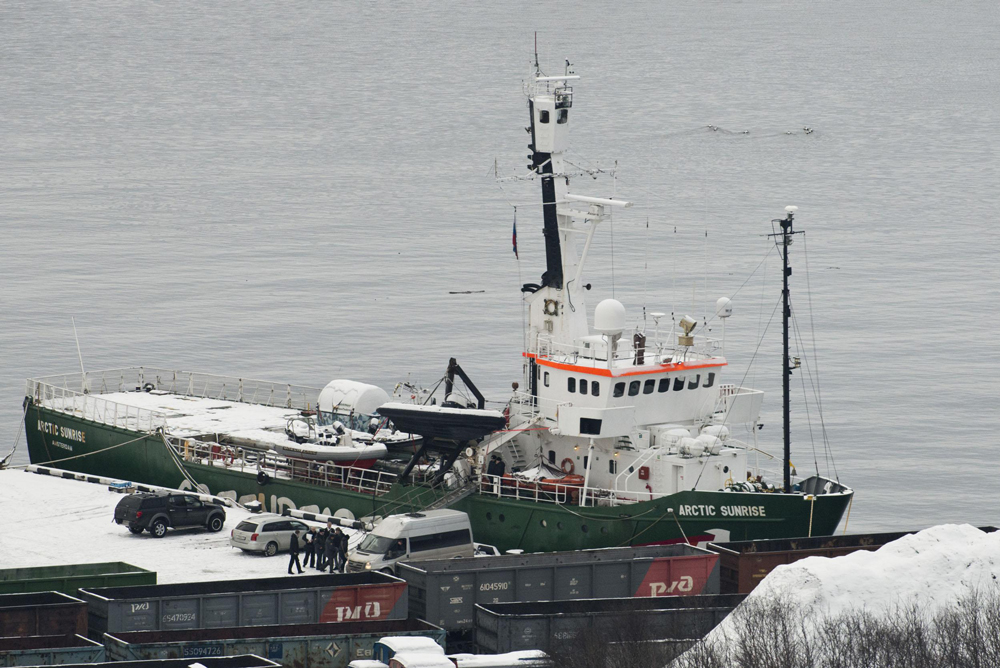
The icebreaker Arctic Sunrise is still under arrest. Murmansk. October 24, 2013
In the best case, the following will happen: in the next few weeks, criminal cases against thirty prisoners from the Arctic Sunrise vessel under the retraining sauce will be launched on brakes, foreign citizens will be allowed to bail consuls, Russian will be released on bail, the case under the article “hooliganism” will be concerned as quickly as possible and give all conditional terms. It may be worse: they will not be released to the court, for example, and this, whatever one may say, is a few more months, because you need to write the case for 30 accused-the deadlines will be given real (according to the 213th article, the usual term is three years), foreigners will deport, and Russian citizens will sit. It may be even worse: for the 213rd you can wind up to seven years, and may not deport anyone. But everything is better, of course than 15 years for piracy.
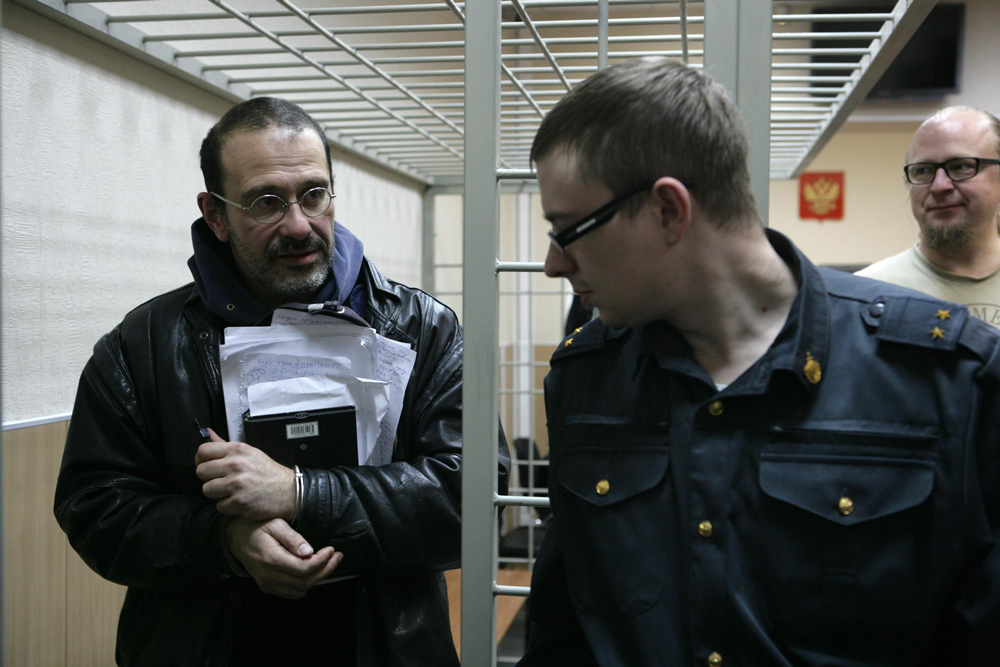 |
| Greenpeace activist Dmitry Litvinov (left) in the Murmansk court. October 24, 2013 |
Such arithmetic is now in the head of anyone who monitors the Arctic Sunrise case, and there are many like that: friends and relatives of 30 people from 19 countries, Greenpeace activists and sympathetic around the world. And behind this arithmetic, the story of what has already happened with the crew of the Arctic Sunrise ship is naturally lost. And this happened.
On September 19 of this year, a landing from Russian border guards landed on the deck of a ship in international waters. They drove everyone-or everyone they could find-in the wardroom, where they kept the crew for the next few days. After some time, the ship was towed to the port of Murmansk, and the crew was carried out to the investigation at the address: st. Karl Liebknecht, d. 18. This address is well known to all crew members, because, according to the documents, it was there that they were detained on September 24. How exactly citizens of foreign states who do not possess Russian visas fell on Karl Liebknecht Street - is not specified in the criminal case.
Having detained the suspects on the evening of September 24, the Murmansk investigators, prosecutors and the court of the Leninsky district managed to stretch more than 48 hours before deciding on the arrest of the suspects. Here three problems appear at once. Firstly, according to the law, a person may be detained before the arrest of no more than 48 hours, and the crew not only had been locked up since September 19, even more than two days have passed since the official detention. Secondly, the courts do not have the right to sit at night-and the trials of the arrest of the Greenpeisers were held exactly at night. Thirdly, it is generally not clear why this case was considered by the Leninsky district court: none of the suspects in the territory of this region was living, they were actually detained not on Karl Liebknecht Street, but in international waters, but the Pri con Persistan Platform, in the pirate attack on which they were eventually accused, registered in the Naryan-Mar.
"
As citizens of foreign states who do not have Russian visas, they got to Murmansk, in the criminal case is not specified
"
Speaking of waters and platform. Piracy, according to the Criminal Code, is an “attack on a sea or river vessel in order to seize other people's property”. Not only was there no question of the seizure of property, but there was no ship: “shudders”, according to the documents, is a “stationary ice -resistant platform”, but not a vessel. And it is located, although in the exclusive economic zone of the Russian Federation, but outside the territory of the Russian Federation. Actually, for this, a piracy accusation was invented to justify, retracting people in international waters - this is almost the only crime for which can be detained outside their own state (but not on Karl Liebknecht Street).
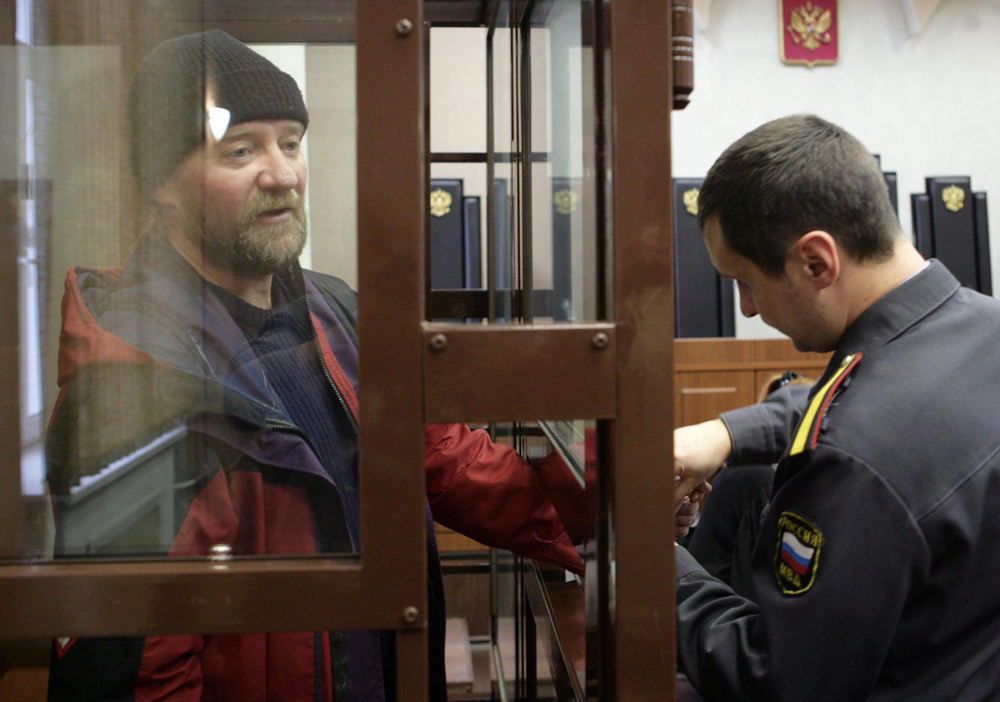 |
| Greenpisis from Canada Paul Ruzitski is freed from handcuffs after entering the cage. Murmansk. October 24, 2013 |
All these arguments and several more were expressed in the regional court of the city of Murmansk at least 28 times in October, and different judges ignored them 28 times and left the decision to detain Arctic Sunrise suspected of piracy. They could leave only two more decisions, when the Investigative Committee decided to change the charges from piracy of hooliganism in order to avoid proceedings in the international tribunal under the law, where the government of the Netherlands sent the lawsuit.
With a change in the prosecution, a meaningless judicial machine will start a new one. Lawyers will again talk about a violation of the Code of Criminal Procedure, as well as that a crime called “hooliganism”, by definition, cannot be committed outside the territory of the country. The judges will stamp the next standard decisions. In the best case, these will be decisions to change the preventive measure. In the best case.
And someone for joy, and someone from the reasons of diplomacy, but everyone will forget in one way or another that 30 people were abducted by Russian border guards in international waters and were illegally kept in inhuman conditions for weeks. This is in the best case.
Photos: Dmitry Sharomov/Greenpeace, Igor Podgorni/Greenpeace