
Translated material
The authorities of the Omsk region recognized Halloween with an extremist holiday
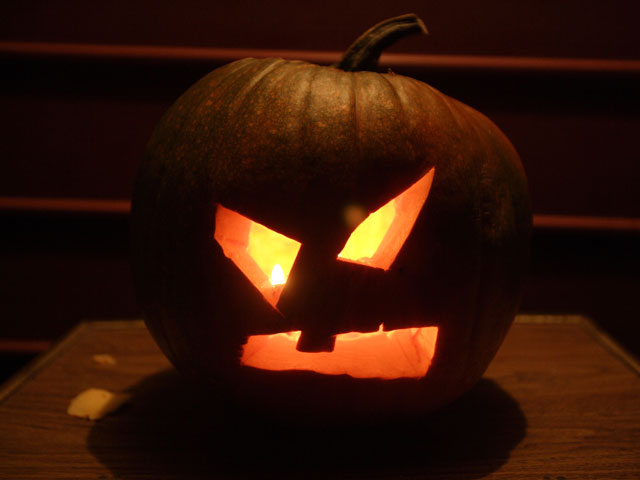
Against the background of the celebration of the old Celtic festival, the government of the Omsk Region, who arose annually on the eve of the celebration of the ancient Celtic festival, decided to prohibit the celebration of it in schools. Halloween is celebrated on the eve of all saints day on the night of October 31 to November 1. It is celebrated by parties with dressing in characters in evil spirits both in the USA and Canada, and in Europe and Russia.
As it became known to the Sib.FM radio stations, in the Omsk region to counteract Halloween under the sign of the fight against "extremist sentiments" and aesthetics containing "a certain propaganda of the cult of death." It is such arguments, according to journalists, are given in the relevant statement of the regional Ministry of Education.
The document explains that the government decided to "take measures to stop measures dedicated to the celebration of Halloween" in connection with the appeal of the regional public organization "Omsk Parental Assembly".
Regional Minister of Education Sergei Alekseev confirmed the radio stations that the decision to ban Halloween was made as part of the "prevention and inadmissibility of extremist sentiments in children and youth." It is recommended that schools are held in accordance with the "basic values of the culture of the peoples of Russia," he said.
The Ministry of Education, as evidence of the harmfulness for children of this holiday, refers to the research data of the Institute of Pedagogical Innovations of the Russian Academy of Education and the Institute of Family and Education, supposedly indicating that the celebration of Halloween has "negative consequences that affect the educational process and its participants," and potentially carries "destructive consequences for the mental and spiritual health of students."
There will be no Halloween in Moscow schools
It should be noted that in Moscow schools, Halloween celebrations will also not - the authorities did not release any additional directives on this subject, but secondary educational institutions continue to be guided by a letter from the Moscow Department, which was not recommended for this holiday "in any forms."
Halloween rises to the traditions of the ancient Celts of Ireland and Scotland and is traditionally celebrated in English -speaking countries. According to the beliefs of the Celts, the sun god in winter is captured by Samhein - the Lord of the Dead and Prince of Darkness. On the night of November 1, Samhein opens the gate into the past and future, summer is replaced by in winter, day - at night, life - death. Spirits and demons protecting the gate come to the material world. By tradition, people who celebrate this holiday dress in costumes of characters from the other world and go home, asking for food for the peace of evil spirits.
Only in the last decade, Halloween fashion also arose in Europe, Russia and the CIS countries. However, almost every year, representatives of the traditional religions of the Russian Federation explain to parishioners that this holiday alien to Russian culture is dangerous games with evil spirits, suitable only for unbelievers.
This year, the chairman of the Synodal Department for the relationship between the Church and Society, Archpriest Vsevolod Chaplin, warned how dangerous it is to play unclean power - you can fall under its "serious influence" . In the Muslim community, Halloween was called "a godly action." In turn, the chairman of the Congress of Jewish religious organizations and associations of Russia (Keror) Rabbi Zinovy Kogan said that Halloween is a holiday "for young atheists and cheerful youth", who wants to "blow in".