
Translated material
Belarusian against a woman with a beard
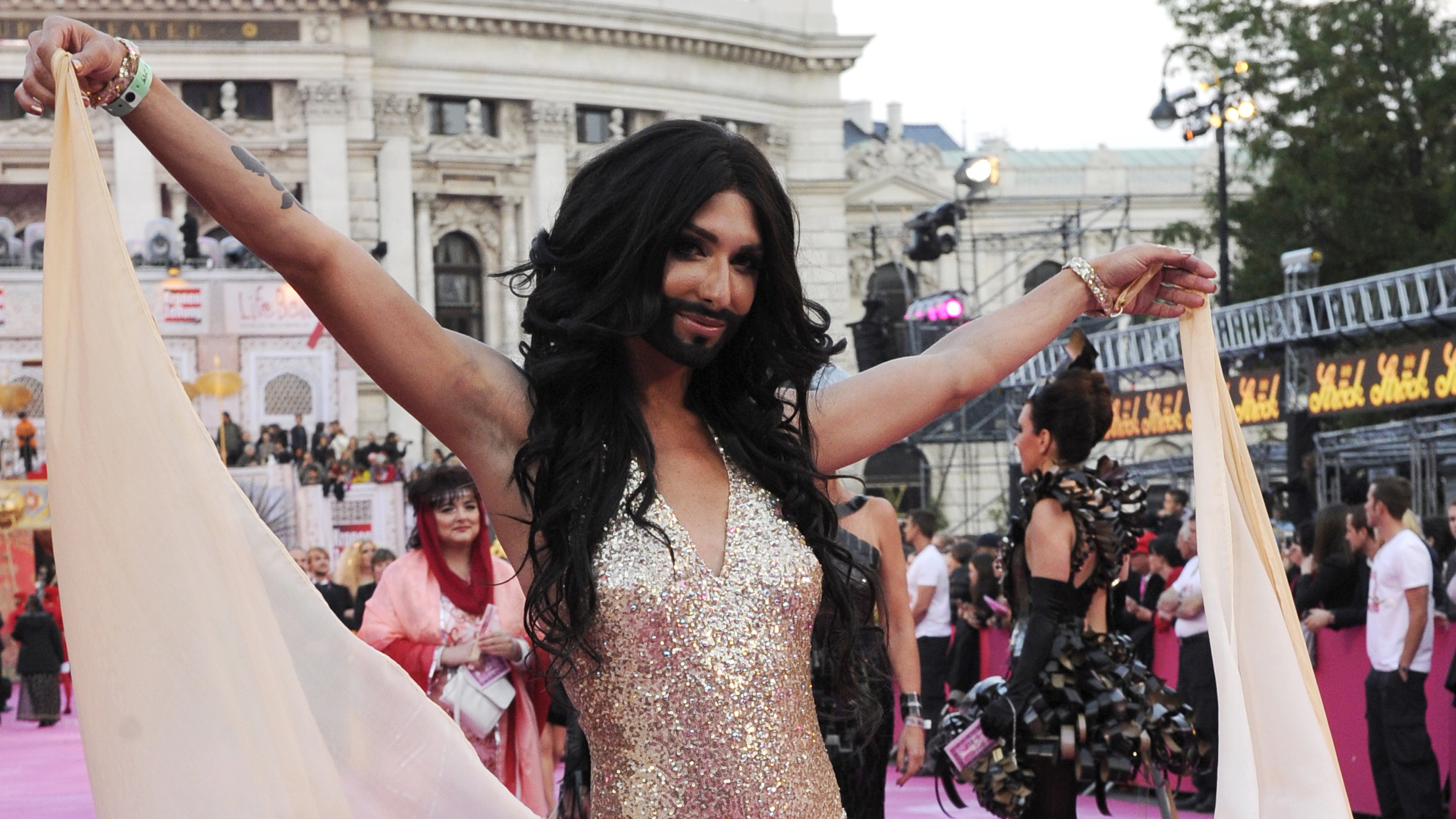
The first scandal at Eurovision 2014 arose a few months before the start of the competition itself and was far from music
Conchit Vurst is an extravagant pop-performer from Austria, who should represent this country at the 2014 Eurovision Song Contest (it will be held in Denmark). Its nomination, however, caused an ambiguous reaction in some countries - participants in the competition. In Belarus, due to Conchita, VURST has even begun a campaign to cancel the broadcast of the upcoming Eurovision.In September, the Austrian public television ORF announced that the 25-year-old conchit Vurst (real name-Tom Neuvirt), known for his performances in tight short dresses and with a dense beard, will represent Austria at the Eurovision Song Contest. While in the image of Conchita VURST, Tom Neuvirt prefers to talk about himself in a female gender.
The decision to send to Contain to “Eurovision” caused in Austria the turbulent approval of part of the public, which considered it a bold gesture in support of tolerance. Critics, however, spoke that the alleged provocative appearance of the singer will discredit both Austria and the musical competition itself. The VURST opponent page on Facebook scored almost 40 thousand "likes". More than four and a half thousand Austrians signed a petition, demanding not to send a performer to Eurovision.
The indignation, however, went beyond Austria, which, according to the puns that arose in this regard, "steamed" (wurst in German means "sausage"). In Belarus, approximately two thousand signatures were collected under the appeal to the Ministry of Information demanding not to broadcast the Eurovision-2014 contest in the country, which, according to the signed, became the "nursery of sodomy."
The initiator of the petition, Artem Kirashov, says that he is “physically bad” from the only type of Austrian singer. He describes the selection process for Eurovision as an attempt by European liberals to impose their values of Belarus and Russia.


The first scandal at Eurovision 2014 arose a few months before the start of the competition itself and was far from music
The text of the copyWidth PX Height PX
The url has been copied to your clipboard
No Media Source Currently Available
0:00 0:02:13 Download the media fileThe end of the wurst, however, is not very upset:
The musical debut of Tom Neuvirt took place in 2006 at the Austrian television course of the musical talents of Starmania. Then he played in one pop group for some time, and the end of the wurst "became" only in 2011, gaining fame thanks to the performance in another television show-Die Grosse Chance ("big chance"). Despite the giggling of part of the public, the performance of the VURST was met by a standing up and brought her second place following the contest.
In 2012, she claimed a trip to Eurovision, but according to the results of the qualifying competition was the second.
Vurst describes his stage appearance as a "work suit". Removing it, she turns into Tom Neuvirt, which responds to as "an incredibly boring young man."
This young man grew up in a small Austrian town and says that in childhood he was abused. Therefore, he hopes that fame that has fallen on him will help other children and adolescents get rid of the bonds of excessive social conventions and prejudices.
Conchita VURST fans believe that the propaganda of the tolerance that she leads is especially important now, when the homophobic sentiments in a number of countries of the former USSR have noticeably intensified - just where the Eurovision Service contest is very popular.
Conchit Vurst knows that Russia adopted a law on the ban on the so -called propaganda of homosexuality and is preparing another - on deprivation of gays of parental rights . According to her, "this is a violation of human rights that should not be in the 21st century. Given what the history of our world was, such things cannot be allowed."
The Eurovision Contest proclaims its official goal to unite people from different countries with the help of musical culture. However, the case of the end of the VURST is not the first example of the competition in the history of the competition how disputes that were far from music arose around its participants. In 1998, Israel at Eurovision was represented by a transsexual singer Dana International, which also did not appeal to everyone, including in her own country. Representatives of the Israeli conservative public demanded to withdraw Dana from the competition. This did not happen, and the singer then won, speaking with her hit Diva. Later, almost half a million copies of this single was sold in the world.