
Translated material
Why did Tchaikovsky die?
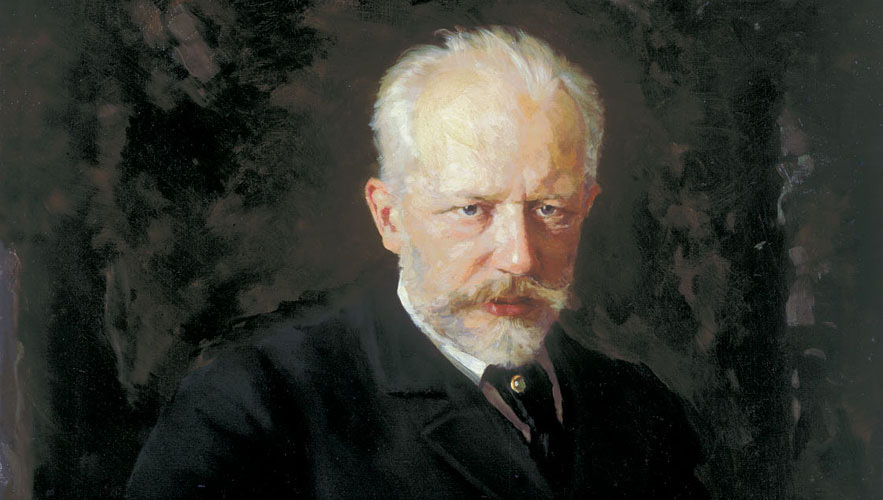
November 6 marks the 120th anniversary of the death of Peter Ilyich Tchaikovsky. The circumstances and causes of his death at the age of 53 are still the reason for all kinds of hypotheses and speculations of varying degrees of boulevardiness, the range of which extended from the murder or suicide (associated with the composer's homosexuality) to reproach in negligence (drank a glass of raw water in the presence of cases of Holeric disease in St. Petersburg).
What did Tchaikovsky die from? To put all points over I , Colta . RU received permission to publish an article by Valery Sokolov, written for the Tchaikovsky encyclopedia preparing for the publication. The Encyclopedia is a joint project of the State Institute of Art of Art and House-Museum of Tchaikovsky in Klin, it will include articles covering all spheres of the composer’s biography and all his creative heritage (both musical and literary).
The death of the composer on the night of October 25 / November 6, 1893 (the dates according to the old style are given.- Ed. ) At the 54th year of life-an event that deeply shocked contemporaries. The bitterness of irreparable loss was strengthened by a feeling of its irrelevant: a person passed away, full of creative strength and plans, in the zenith of glory and artistic successes. Naturally, the causes and circumstances of the death of Tchaikovsky immediately became the subject of increased public attention.
The details of the tragic event were in detail in the press in detail, actively extended orally rumor, and later they were reflected in memoirs. But a number of conflicting evidence were adjacent to accurate information, which led to the emergence of the most ridiculous rumors and hypotheses. Some of them were so rooted that over time they began to claim the role of “truth in the last instance” (allegedly hiding through the fault of the relatives of the Tchaikovsky, Soviet power, etc.). The data of the latest studies, however, allow, with a large share of certainty, to recreate the picture of the last days of the composer’s life, as well as to show the nature of the emergence of various speculations and prove their failure.
Since October 10, 1893, Tchaikovsky was in St. Petersburg in connection with the preparation for the first execution of the sixth symphony (October 16). Planning to go to Moscow by October 23 (for one of the concerts of the Imperial Russian Musical Society), he temporarily settled with M.I. Tchaikovsky and V.L. Davydova, in an apartment rented by the composer's relatives shortly before his arrival (the corner of Malaya Morskaya and Gorokhovaya Streets, No. 13/8, apt. 21). The whole first week of stay in the capital was busy with rehearsals with an orchestra, and in free hours - with the help of a brother and nephew in the arrangement of an apartment. Days after the premiere were filled with communication with relatives and friends, business negotiations and correspondence, visiting theaters and restaurants.
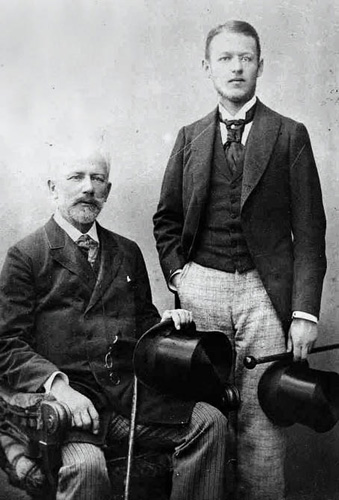 P.I. Tchaikovsky and V. Davydov
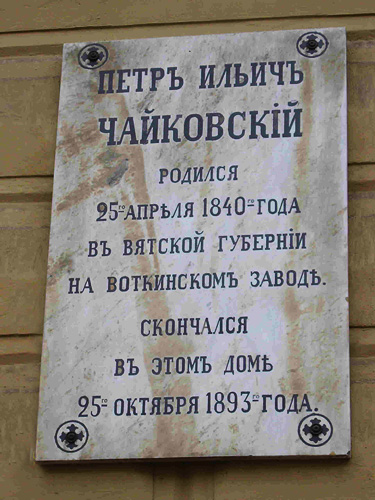
On the night of October 20 to 21, having returned from a friendly dinner from the Leiner restaurant (most often visited by Tchaikovsky), the composer felt a stomach disorder. By morning, it worsened, but it was accepted for the usual “malaise”, as a rule, quickly passed for Tchaikovsky. This time, the condition continued to deteriorate, self -medication did not give results, and by the evening M.I. Tchaikovsky was forced to invite a doctor - a friend of the family V.B. Bertenson. Without making a final diagnosis, but convinced of the patient’s extremely dangerous position (continuous diarrhea and vomiting, extreme weakness, chest pain and abdominal cavity), the doctor turned to his more experienced older brother, a famous St. Petersburg physician L.B. Berthentson, and upon arrival, immediately stated at the Tchaikovsky Asian cholera in a heavy (algid) stage. By this time (about 23 hours) there was a direct threat of the patient’s life: convulsions, blue and limbs, and a drop in temperature began. The most energetic measures (constant rubbing of the body by the efforts of several people, musk injecting, campars and other drugs recommended by the medicine of those years) were undertaken during the night, but by the morning of October 22, Tchaikovsky’s state improved. On the same morning, the police were reported about the composer’s illness (the next day, an official notice of Tchaikovsky cholera appeared in the press).
Left from St. Petersburg and did not take part in the future treatment of V.B. Bertenson was replaced by two other doctors - A.K. Zander and N.N. Mamonov, who alternately on duty at the patient's bed between the visits of the attending physician, L.B. Bertenson. The latter was alarmed by the development of the disease - the cessation of the functioning of the kidneys, but the remedy that was considered effective in such cases - the warm bath - did not dare to apply due to the superstitious fear of Tchaikovsky and his relatives: the composer’s mother died of cholera and died precisely during the adoption of the bath. All other ways of treating the result did not bring the result, and if on October 22, Tchaikovsky considered himself saved, then the next morning, a fracture was indicated in his moral state: he ceased to believe in the possibility of recovery. Uremia (kidney inactivity) led to the inevitable consequence - gradual poisoning of blood. In addition, the paralysis of the intestine came: the ongoing diarrhea became involuntary, the patient was more and more weak. On October 24, the situation became so critical that the doctors finally resorted to a warm bath twice. But this means of cardinal action did not take. During the day, Tchaikovsky repeatedly fell into oblivion, raved; By evening, the pulse began to slow down and breathing was difficult. After 22 hours, the patient's condition was recognized as hopeless. Almost without consciousness, as a result of swelling of the lungs and weakening of cardiac activity, the composer died on October 25 at 3 hours 15 minutes. The witnesses of his last minutes were the brothers, M.I. and N.I. Tchaikovsky, nephew Davydov and doctor Mamonov.
In the morning of the same day, a number of newspapers printed short messages about Tchaikovsky’s death . In the apartment where he died, subject to disinfection measures from 14 hours, access to the body of the deceased, who was in an open coffin, was opened. During the day, the flow of visitors constantly increased, two requiem took place here. After 21 hours at the insistence of sanitary services, the coffin was closed and the next two days no longer opened. During this time, hundreds of people came to say goodbye to the deceased, dozens of wreaths were delivered, several more memorials were served. Newspapers published reports on Tchaikovsky’s illness, interviews with doctors, relatives and friends of the deceased, the texts of numerous telegrams of condolences.
On October 25, at the direction of Emperor Alexander III, it was decided to hold a funeral in St. Petersburg, and the sovereign took all the costs of mourning events to the treasury account. On October 28, after Tchaikovsky’s funeral in the Kazan Cathedral and the grandiose procession along Nevsky Prospekt (dozens of delegations from different cities, organizations and institutions took part in the procession), the composer’s body was buried in the Tikhvinsky cemetery of the Alexander Nevsky Lavra. Three years later, a sculptural tombstone made by P.P. was installed on the grave. Kamensky.
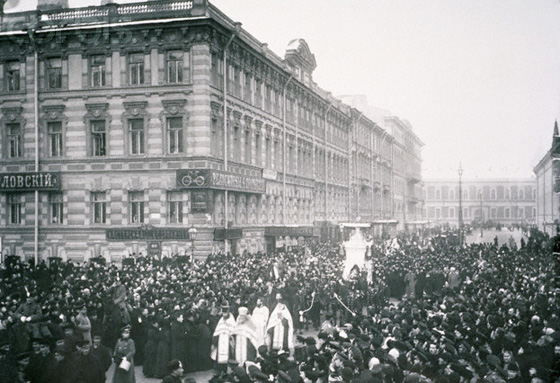 Funeral of P.I. Tchaikovsky
Tchaikovsky’s death caused an acute public reaction, which was expressed primarily in the accusations addressed to the doctors treating him. The very fact of cholera (although quite rare for a privileged class) in the city, which was at that time one of the foci of the cholera epidemic, was not surprising. In addition, it became known from the newspapers that the composer was generally prone to gastric diseases, in the summer transferred to the cholerain (light form of cholera), in St. Petersburg he often drank raw water (ordinary source of infection), and on the morning of October 21, in the order of self -medication, he took (as a laxative) Guniadi alkaline water, which increased the development of pathogenic microbes. The question was only where Tchaikovsky could become infected - in the restaurant of Leiner or at home, because, according to various evidence, he drank raw water both there and there. But this question was not so fundamental (even taking into account the harsh criticism of the restaurant orders that allowed the use of non -fed water): the composer's fatal carelessness was obvious.
Another thing is the treatment of the patient. Here, all responsibility fell on the shoulders of specific doctors, and the tragic outcome of the disease of the world celebrity could not but cause waves of indignant attacks in their address. L.B. Bertenson and his assistants were accused of incompetence (the lack of practical experience of treating cholera, the belated use of the bath, ignorance of modern means, etc.), as well as in the criminal arrogance expressed in the unwillingness of the consultation of colleagues, in the refusal of Tchaikovsky’s placement in a hospital, etc. M.I. Tchaikovsky, who twice addressed the newspaper “New Time”: the first time - with a detailed description of the course of the disease, the second - with the assertion that everything possible was made to save his brother and the family of the deceased has no complaints to the doctors who treated him; At the same time, deep gratitude was expressed for their "heart and impeccable-protrusive attitude."
Another wave of emotions arose in connection with the new performance of the sixth symphony in the Tchaikovsky memory concert on November 6, 1893. The audience shocked by the recent tragedy with particular sensitivity took the “funeral” mood of some episodes of the symphony. It is not surprising that many of the listeners (including journalists who gave a report on the press in the press) made the impression that Tchaikovsky wrote to himself the Requiem. Soon, after this, the first rumors appeared about the possible “self -poisoning” of the composer, and they existed only in oral form: not only those days, but also more distant times, not a single such hint was found in the press.
Options for legends about the voluntary departure of Tchaikovsky from life, rooted in subsequent decades, can be conditionally attributed to two main directions: 1) hidden suicide - as a result of a deep mental crisis, the composer allegedly intentionally searched for death and specifically drank raw water, hoping to get a cholera, and the illness of the doctors until he was convinced that the disease had not been convinced that the disease went too far And there is no chance of recovery; 2) forced suicide - under the threat of a loud scandal (and even the trial) due to the inevitable public -related homosexual contacts of Tchaikovsky with a person from the emperor’s entourage: the composer saved his and family honor, taking a slowly acting poison, the impact of which is similar to the characteristic symptoms of cholera, thanks to which doctors and relatives got the opportunity to explain everything to death from the disease.
For a long time, the legend was that the “order” about suicide came from Alexander III himself. In the 1980s, another version of “forced suicide” gained wide fame: Tchaikovsky allegedly fell victim to the “court of honor” of former classmates-legal scholars who sentenced him (in view of the same “homosexual scandal”) to commit suicide ( Orlova a . Tchaikovsky : the Last Chapter ). The main arguments of the author of the publication turned out to be controversial and shaky, but from that moment the question of the cause of the death of the composer, having gone beyond the scope of the Culuar gossip and literary fantasies, became the subject of acute discussions in the press and stimulated a number of fundamental research.
Since the basic provisions of the new version coincided with the traditional substantiations of Tchaikovsky’s suicide (along the line of motivation - the fear of exposing the criminally punished vice; along the line of medical - contradictions in a number of evidence of the composer’s disease, farewell to the open coffin, etc.), the reasons for such justifications were subjected to critical analysis, and at the same time the whole range of problems was considered and the whole range of problems was considered and at the same time. The ambiguities that are reflected in various versions of legends about the death of Tchaikovsky. So, A. Poznansky, in the course of studying the social characteristics, sexual morals and legal practice of Russia of the 2nd half of the XIX century. He came to the conclusion that any scandals or repressions against Tchaikovsky were poorly re -relevant - both due to his high social status, and because of a completely loyal attitude to the manifestations of homosexuality in royal circles. The question of poison, which the composer could apply, imitating Holer, also turned out to be far -fetched: not one of the toxic funds available then met the necessary “requirements”.
Microbiologist N.O. Blinov (descendant of Archpriest V.E. Blinov, who baptized Tchaikovsky) paid special attention to the medical side of the problem. For the first time, having examined in detail the existing in Russia at the end of the XIX century. ideas about the nature, prevention and treatment of cholera, as well as the biographies of all doctors who participated in the treatment of Tchaikovsky, Blinov found that the doctors acted strictly in accordance with the recommendations of science of that time. They managed to save the patient directly from cholera on the very first night, at the stage when, according to statistics, up to 90% of death. But the treatment was not started through their fault, and to protect the patient from inevitable complications (uremia, blood poisoning, etc.), which resulted in death, did not succeed; Only the means of modern medicine could save him.
It was because of Tchaikovsky’s death that not from cholera , but as a result of its irreversible consequences (the final stage - swelling of the lungs and the cessation of heart activity), access to the body of the deceased in the open coffin, and this was not conflicting with the principles of the prevention of that time. It was believed that the action of cholera microbes was discontinued two days before his death, besides during the illness and during farewell to the composer, various sanitary and disinfectment measures were constantly taken in the apartment. The fact that none of the relatives communicated with the patient, the servants and friends became infected is the best proof of the effectiveness of such measures.
Touching upon the theoretical possibility of “conspiracy” of doctors in order to conceal the composer’s self -poisoning, Blinov studied in detail the biography of Tchaikovsky’s doctors and came to the conclusion: such a conspiracy for these people was unthinkable. Poznansky came to the same conclusion, considering the purely logical side of events.
A painstaking study of newspaper publications and a number of memories of the illness and death of Tchaikovsky made it possible to explain most of the known contradictions in the testimony of witnesses of the tragedy. Along with objective factors (the difference in the perception of the picture of the disease among doctors and close composer, the psychological difference between the momentary assessment of events and a few days later, etc.), many subjective reasons were also revealed, which at one time affected the formation of distrust of the official (“cholera”) version.
First of all, it is a reporter hype around the illness of the famous composer, the pursuit of “hot” news, so that the newspapers got inaccuracies, distorted information and direct disinformation: the emotional statements of Tchaikovsky’s friend, singer N.N. Figner, issued for the "opinion of Dr. Bertenson"; Interview with L.B. Bertenson was given in such a program that the day of Tchaikovsky’s death was 24, and not on October 25, etc.
On the other hand, the venerable authors of the memoirs that appeared later on the creation of the confusion was “attached” to the creation of the confusion. V.B. Bertenson, who had not been in St. Petersburg since October 22 (and sent only the telegram of condolences from Moscow on the 26th), represented the case so that all days were at the bed of the dying man, and the details for “refresh memory” (memories were written in 1911) asked M.I. Tchaikovsky (letter dated 11.I.1911).
The nephew of the composer Yu.L. Davydov and artist Yu.M. In the 1940s, Yuryev jointly composed memoirs about their stay with Tchaikovsky in the restaurant of Leiner, colorfully describing the details of the “fatal dinner” on October 20, while a number of evidence already existed: Davydov and Yuryev were not in the restaurant. The psychological motives of such “liberties” are easily explainable: in both cases, people close to the great composer found it possible to distort the truth in order to give a greater weight of their own role as eyewitnesses.
Davydov, unfortunately, plays a special role in the "myth -making" of the last decades of the XX century. Approving in memoirs and public lectures that there was no suicide, he nevertheless reported in private conversations repeatedly that his uncle had accepted the venom. The authority of the main keeper of the funds of the Tchaikovsky House-Museum (since 1945) and the only composer surviving closest relatives was so great that such “secrets” were easily accepted on faith, strengthening oral rumor. On the other hand, it was Davydov who expressed a rather bold, but psychologically sound assumption that the very first rumors about Tchaikovsky’s suicide could arise not without the participation of Dr. L.B. Bertenson, who tried in such an original way to “cover” him from attacks for supposedly improper treatment of the composer.
Different options for rumors about the “royal anger” turned out to be nothing more than a colorful fiction. Alexander III highly honored the talent of the composer. Его оперы и балеты часто посещались членами царской семьи, а выходившие из печати новинки исполнялись при домашнем музицировании. Отдавалось должное и выдающимся заслугам Чайковского как гражданина: он был награжден орденом Св. Владимира IV степени, пожалован пожизненной пенсией, имел также личный подарок от государя — ценный перстень. Смерть его, по свидетельству вел. Prince. Константина Константиновича (Романова), «очень огорчила Царя и Царицу». «Как жаль его и что за досада!» — писал император министру двора И.И. Воронцову-Дашкову 25 октября по получении известия о кончине Чайковского. В тот же день государь отдал распоряжение об организации торжественных похорон композитора и лично корректировал план траурных мероприятий, представленный ему на рассмотрение И.А. Всеволожским. Сомнительно, что подобных знаков высочайшего внимания был посмертно удостоен человек, впавший при жизни в царскую немилость.
Весомым подтверждением исторических, психологических и медицинских обоснований ложности версий о самоубийстве Чайковского стал ряд документов, выявленных за последние годы. В то же время документов, подтверждающих подобные версии, так и не найдено. Смерть Чайковского от холеры зафиксирована в церковном свидетельстве от 28.Х.1893. Брат Чайковского Н.И. Чайковский, делая хозяйственные пометки на листе со списком траурных венков, записал: «Лечило от холеры — 3 доктора». В 1898 году В.Л. Давыдов в одном из писем к М.И. Чайковскому (оба — непосредственные свидетели последних дней жизни Чайковского) вспоминал: «Ведь у дяди Пети был страшный катар желудка, который в мои годы был, очевидно, слабее, но дошедший до крайности и наконец послуживший почвой для смертельной болезни». О начале заболевания Чайковского вспоминал и В.Б. Бертенсон: «он заболел только вследствие погрешности в диэте и питья горько-щелочной воды на тощий желудок». Сам М.И. Чайковский еще за день до смерти брата телеграфировал о ходе болезни уехавшему из Петербурга В.Б. Бертенсону: «Первый период миновал полная задержка мочи состояние тяжелое». Л.Б. Бертенсон 25 октября писал тому же М.И. Чайковскому: «Страшная болезнь, от которой погиб Ваш незабвенный брат, сроднила меня с ним, Вами и всеми теми, кому он был дорог. Я не могу придти в себя от страшной драмы, которую мне пришлось пережить, и решительно не в силах передать Вам всех мук, которые я испытываю!». Эти свидетельства из клинского архива композитора положили конец старым слухам и новым фантазиям сторонников версии о «неестественном» уходе Чайковского из жизни.
Остается теоретическая возможность «преднамеренного самозаражения» композитора холерой. Полностью отмести ее, безусловно, нельзя, так как никому не дано знать, что таилось в глубинах души Чайковского осенью 1893-го. Но, с одной стороны, обилие творческих, артистических и житейских планов, излагавшихся им в письмах и разговорах, а с другой — факт перенесения им в июле того же года легкой формы холеры, бациллы которой способны сохраняться в организме при определенных условиях до нескольких месяцев, — все это говорит скорее о том, что заболевание Чайковского было вызвано роковым стечением обстоятельств: предрасположенный к болезни организм в какой-то момент мог чутко среагировать на инфицированную петербургскую сырую воду.
Одно обстоятельство остается неразрешимым и вряд ли может иметь какие-либо материалистические толкования. Это предчувствие или предощущение композитором в 1893-м своей грядущей смерти. Оно явлено в музыке его «наиискреннейшей» (по словам самого Чайковского) Шестой симфонии, сочиненной в феврале—марте, угадывается в настроении последнего романса «Снова, как прежде, один» (апрель—май). Дважды встречаются и письменные упоминания Чайковского о возможной смерти — в обоих случаях при займе денежных сумм у близких знакомых (у Е.И. Ларош — в августе, у Ю.Э. Конюса — в октябре). Кроме того, есть свидетельства А.А. Брандукова и С.И. Танеева в прессе — о высказываниях композитора по поводу места своего будущего захоронения (Фроловское под Клином или Данилов монастырь в Москве), сделанных в октябре, перед отъездом в Петербург.
Интересные наблюдения можно найти в малоизвестных воспоминаниях В.Л. Сапельникова, видевшегося с Чайковским в июне: «В нем не было и тени желания рисоваться: этот человек был — сама искренность. Тем загадочнее, конечно, является предчувствие близкой смерти, которое появилось у него за несколько месяцев до кончины. Это предчувствие как-то сразу охватило все существо Петра Ильича и сделало его неузнаваемым... Из веселого и жизнерадостного он сразу превратился в человека, подавленного мыслью о близкой смерти. <...> Раздался второй звонок. Пора было занять место в вагоне. Мы встали. Петр Ильич взял мою руку и долго держал в своей руке. “Прощай, — сказал он наконец, — может быть, мы видимся уже в последний раз”. В звуке его голоса я почувствовал как бы последний привет дорогого мне человека. На его добрых глазах показались слезы».
Даже с учетом известной доли субъективности автора (воспоминания относятся к 1909 г.) это свидетельство не может быть полностью проигнорировано, тем более что оно явно перекликается с наблюдениями самого близкого композитору человека — его брата Модеста Ильича: «Он словно перестал принадлежать себе и нехотя должен, не может не подчиниться чему-то мощно и неотразимо овладевшему им. Что-то захватило его волю и распоряжается вопреки ему. <...> Это таинственное “что-то” было безотчетно тревожное, мрачное, безнадежное настроение, ищущее успокоения в рассеянии, какое бы оно ни было. Я не объясняю его предчувствием близкой смерти: для этого нет никаких данных. Да и вообще отказываюсь от непосильной задачи разгадать эту последнюю психологическую эволюцию глубин духа Петра Ильича, но, указывая на нее, не могу не указать на параллель с тем, что предшествовало всякому резкому повороту в его жизни. Как перед избранием музыкальной карьеры в начале 60-х годов, как в Москве перед женитьбой, как в 1885 году, перед тем, что из уединения он выступает “на показ людям”, — так и теперь чувствуешь, что “так продолжаться не может”, что готовится новый перелом, нечто кончается и дает место чему-то новому, неизвестному. Смерть, явившаяся разрешить положение, имела характер случайности, но что она предстала, когда так больше не могло продолжаться, — для меня несомненно, и я не могу отделаться от впечатления, что 1892, 1893 годы в жизни Петра Ильича были мрачным кануном какого-то нового, светлого обновления».
Данные выводы, сделанные автором биографии Чайковского на последних ее страницах, видимо, и следует считать самыми взвешенными и объективными: случайность оборвала жизнь великого композитора, но была она проявлением непостижимой для других и ведомой лишь одному ему закономерности...