
Translated material
About prisons that do not need fences
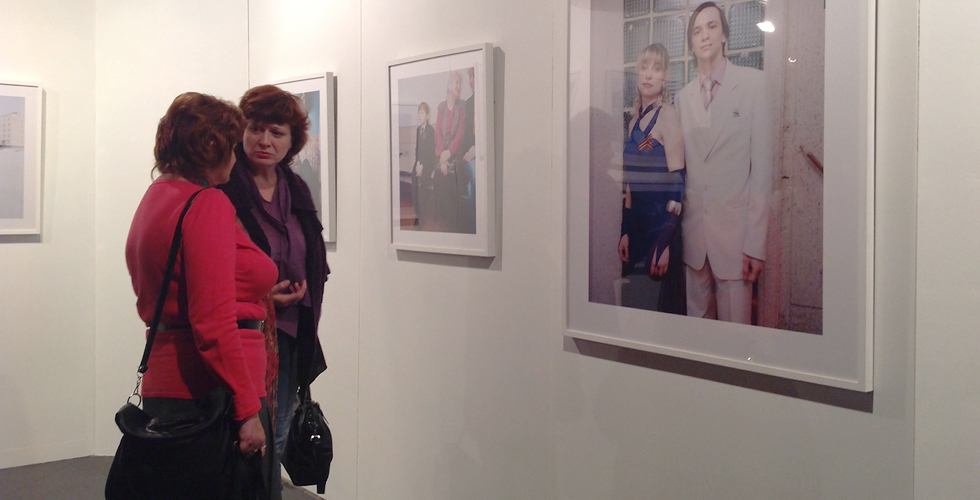
At the Krasnoyarsk Fair of Book Culture, which recently ended, one of the main guests was Switzerland. As part of the SWISS program Made in Russia in Krasnoyarsk read Swiss plays, discussed literature and compared the Russian and Swiss experience of cultural memory.
Meanwhile, in the Krasnoyarsk Museum Center , where all the walls of the exposition space are black, they were somewhat repainted into white. Project Beat Schweicera and Ursa Mannhart "Dixon Gen / Ice Borders" Could be shown only against a white background. Mikhail Kaluzhsky talked with the photographer Beat Schweitzer and writer Urs Mannhart.
- This is your second project in Russia, and again in the Far North (the first, “boiler room, or slowly completing coals on the coasts of Teriberka,” was created in Teriberka in the Murmansk region. - Ed. ).
URS Mannhart: These projects began completely differently. I moved to a new apartment, which was heated by gas. And, sitting at home, I thought about where this gas came from. He found out that he was delivered to Switzerland in a gas pipeline from Russia. So we had the idea to go to Teriberka. This is a village on the Kola Peninsula 150 kilometers from Murmansk. Teriberk was supposed to become the capital of the Shtokman project .
Beat Schwizer: The construction of a gas processing plant will begin a few years later, while it is frozen. But it was interesting to work on this project. After all, gas in a natural state is a substance that is invisible and does not even smell, so this is excellent - to explore that you cannot see and even smell.
Mannhart: And this says the photographer! And Dixon is a completely different idea, and she was born with Beat.
Schwizer: I looked at the map of remote areas of Russia - I am generally interested in distant villages - and saw that there was a settlement, north of which there is nothing. So the idea took shape-to go somewhere really far away. This is what cannot be done in a small and very densely populated Switzerland, where you can get to any place in a few hours. So, the idea was to see how people live in a place where one plane arrives per week, where trains do not go.
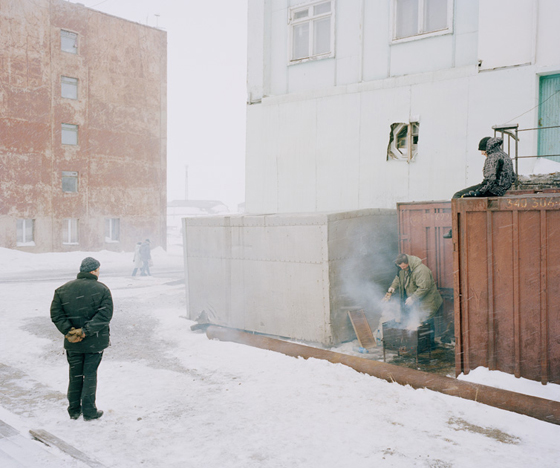 © Beat Schweizer
- Do you explore small and distant villages as the opposite of everything Swiss?
Mannhart: No, I'm not ready to make such generalizations. This is a comparison of personal experience. I have grown in a village where there are more cars than people.
Schwizer: Our first such project was done in Ukraine, at the Vadul-Siret railway station. This is a village on the border of Ukraine and Romania, in which trains are rearranged to a narrow European track, without releasing passengers from wagons. The railway in Vadul-Siret is the main employer for local residents, and there are border guards and customs officers there. Twice a day there is a train there, and nothing else happens. The real border in all respects. After Vadul-sore, we began to work in small villages. And my interest in Eastern Europe arose when, even during my studies, I shot gypsies in the Serbian part of Kosovo. I am still friends with people from the powder. I recently, just a few days ago, became the godfather of a little boy - I was there two days after his birth. After working in Kosovo, I was very interested in the Balkans, and then all of Eastern Europe.
- But Dixon - beyond the ideas about what "Eastern Europe" is. This is the real border not of empires, but the inhabited world.
Mannhart: Teriberka shocked in some ways more than Dixon. Here is Teriberka on the edge of civilization. And Dixon is a completely separate world, the world itself.
Schwizer: The road still leads to Teriberka, you can come there by car. And in Dixon - only fly by helicopter once a week. This is loneliness, separateness - the most important thing that we found in Dixon.
Swiss well -being is based on the dysfunction of places such as Teriberka.
Mannhart: It is good that on the way to the north we had to linger in Moscow to arrange official papers. We acutely felt contrast.
Schwizer: Our limited experience in Russia does not affect the general idea of what this country is. Dixon is a very special place. And it cannot be said that all of Russia is the same, I understand it perfectly.
- Thus, you still compare Russia and Switzerland, and not only work with personal experience.
Mannhart: And those people with whom we talked are also compared. The most important differences between us are the perception of time and space. Residents of Dixon very mixed our stories about public transport in Switzerland. We explained that if the Swiss is late for the train, for example, on the way home after work, then he is terribly upset and calls home: “I'm late! Damn! ” Although in 26 minutes there will be another train. This story to the inhabitants of Dixon with their difficulties and their ideas about space seemed a lie or a joke.
Schwizer: We spent three weeks in Dixon, which lasted a very long time in an isolated space. And during this time we recognized people. And this is very important for the photo project - not to quickly photograph, but to get acquainted with the heroes.
Mannhart: We were shocked by the length of the landscape, where the earth passes into the frozen ocean. This open endless space fascinates. One could leave to the north, where there is absolutely no human presence, skiing, but the locals advised us not to do this - the ice was weak. I had no experience, and I did not dare.
Schwizer: Oddly enough, it was not bored there. Nature itself is the main entertainment there. Once we went for a walk, for a long walk. It was a very cloudy day, and the horizon was not visible. And it was a stunning sensation - a long way through a completely white space.
Mannhart: I read about the history of Siberia and knew that in the north there were camps without fences. After a few hundred meters of the journey, I physically felt how it was easy to arrange a prison in these parts without any fence. I have good vision, but it was impossible to understand what the physical structure of the surface is. I stumbled, walked like a drunk. In order to go, it was necessary to make serious efforts. I could not go more than one kilometer. I was exhausted, and my body understood before my consciousness what a prison without a fence is.
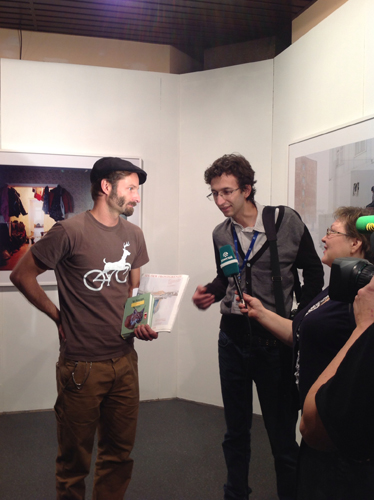 © Pro Helvetia
- You are not afraid that, speaking of the North as a place of conclusion or link, do you exploit too consuming a stereotype? The memory of the Gulag is important, but now for many of us the ideas about the North, the Arctic is increasingly associated with environmental problems.
Schwizer: It is not easy to decide if there is no cliche, especially when you and those you are taking off, different habits, methods of perception. Honestly, I was nervous before showing photos from Dixon in Russia, and at first showed them to Russians living in Switzerland. And only after I received their approval, we took this project to Russia.
Mannhart: Unfortunately, the environmental topic itself was not covered with us. Our Swiss well -being is based on the dysfunction of places such as Teriberka. And the fact that Russian cities such as Norilsk exist on the verge of an environmental disaster, there are our faults. We buy this energy or these materials at the existing price, but it would be worth paying more so that some of the money goes to solve environmental problems.
- Is this not a very wide idea of responsibility? The gas is bought by some Swiss energy company, not you.
Schwizer: And yet. But we visited there, we know this place, we have some kind of connection with the locals. And this is very important. I try to photograph only those who I like with whom I have a connection. It is important for me that people understand what I am doing.
I have good vision, but it was impossible to understand what the physical structure of the surface is.
Mannhart: For me, it is also important to get acquainted with people. But at the same time, I, as a rule, try not to take an interview. And in general I try not to talk.
- And how do you write?
Mannhart: I'm watching. It is convenient to observe the heroes at the very beginning, when people agree to shoot and there is time to install the camera, charge the film. And look around. If instead I will climb with questions like: “So how is your name?”, I will spoil the shooting. I will watch better.
Schwizer: Urs - an excellent observer.
Mannhart: Perhaps this is because I taught history poorly at school. I always had bad grades. And there was always a feeling that I did not see people behind the lines of the textbook. So my writing work is a kind of compensation for poor knowledge of history in its school understanding.
- Your projects with Beat - part of the writer's work, not journalistic?
Mannhart: Well, sometimes you have to call myself a journalist, but I'm still a writer. I have two novels published. For the third 10 days ago, I found the publisher. Will be released in 2014. The first book, “Lynx”, was very Swiss - at least geographically. The action takes place in the Alps, in the center of the novel - disputes around the return of lynx. Once the lynx was the inhabitant of the forests, but 120 years ago it was exterminated. In the 70s, politicians and activists returned a lynx to Switzerland. But for this century, the country has changed, and no one knew how to behave with this animal. Lynx now hunted sheep, livestock. Which led to the conflict between the townspeople who loved the symbol of wonderful wild forests in lynx, and farmers who lived in the direct proximity from these forests. Unfortunately, nature as an arena of social conflict until recently was not a topic for Switzerland.
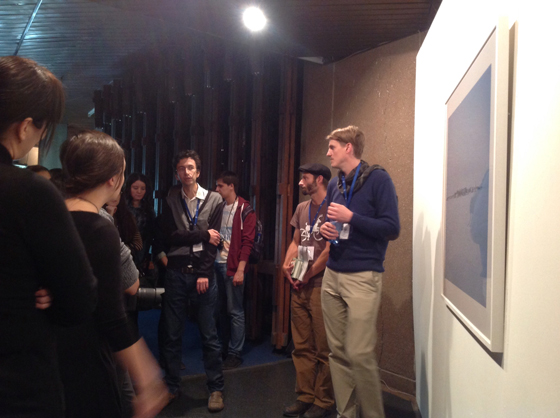 © Pro Helvetia
- Do you focus on the Swiss audience? Or world?
Mannhart: Well, maybe it will sound stupid, but still the main audience is ourselves. We ourselves ask questions, and we have enough energy to find an answer to them ourselves. And we just invite others to look at the result. I always perceived the birthplace of a person as a pure accident, but what happened once and for all, which cannot be changed more. And when I write prose and invent heroes, I always think about how I would become if I was born elsewhere. Who would I be now born in Dixon?
Schwizer: And I am not interested in myself, but by others. I am not going to Dixon in order to open something new in myself. And when we show our work, we are thanks to the fact that people saw how difficult the life of others can be. Very few can assume how others live.
- But what about information technologies, what about the news 24 hours a day?
Mannhart: And yet, few people represent real life away from their habitat. Maybe this is a problem of imagination. Technologies do not solve anything.
- Sometimes I miss the typewriter.
Mannhart: I don't. I use it, I write letters on it. I spend a few days a week in the village, in a house where there is no Internet. And there I write on a typewriter, most often letters. When you hit the letters "o" strongly on the key, then holes remain in the paper. It looks like an object of contemporary art.