
Translated material
Pins, needles, threads and photography
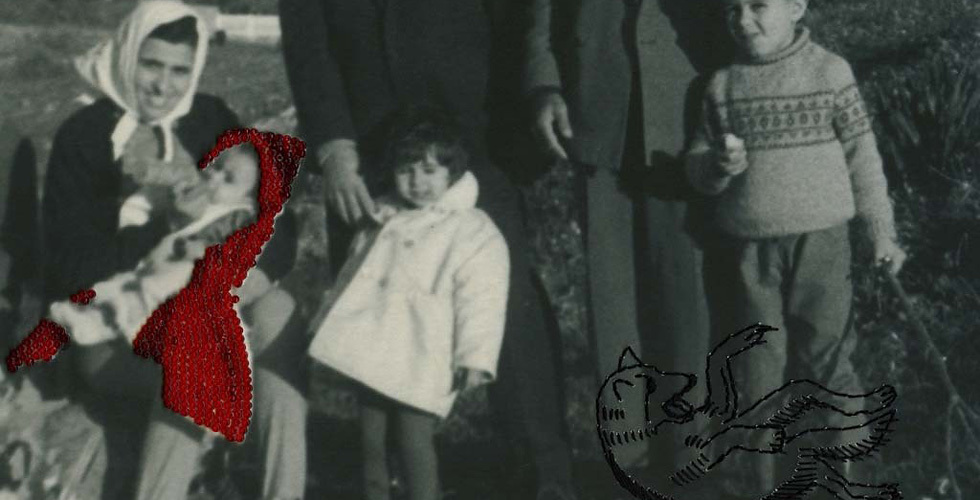
Pins, needles, threads, photography. These items became possible to observe together only in the last decade, when something mysterious-mass and artists began to actively embroider, using pictures instead of fabric. It is interesting that the needlework epidemic struck in the same period not only a photograph, but also art as a whole. For example, the New York Museum and Design held exhibitions “Pierced: Extreme embroidery”, “Radical lace and subversive knitting”, in which 75 artists participated in total.
Of course, there is a background. The epithets “extreme”, “radical”, “subversive” is a curtsy reference to the practices of the seventies, when the artists-feminists turned the needles into weapons against traditional female roles, as well as against the hierarchy in which “female art” (embroidery, sewing, knitting, ceramics, etc.) was automatically below the art of “high”. It is important that the embroidery was only one of the classes who were interested in feminists: they brought all the “female” because of the closed doors of kitchens and bedrooms into the public space of art, whether it was washing floors, ironing, cooking or menstruation and female body as such. The installation of the “dinner party” Judy Chicago perfectly illustrates this situation: three tables set by a triangle, “dinner” on them, designed for 39 important women important for the history. There are several obligatory elements of the “liberation of female” in the table setting: embroidery and sewing - for each guest there is a separate tablecloth where her name is embroidered; ceramics and painting on dishes - plates, glasses, devices; Vagina - sculptures placed on plates and reminiscent of flowers and butterflies, if you do not know what to do export , Karoli Schneeman and Hannah Vilka .
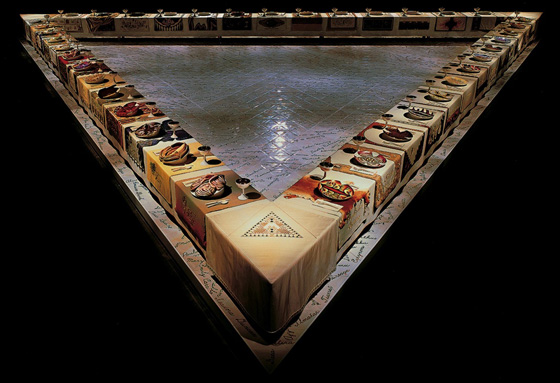 Judy Chicago. Party at dinner. 1979
Femininist artists openly stated that their main goal is to make “female art”. The plan was implemented, and the theme and technology taboo conquered their territory. The practice of mass embroidery as a hobby, which still existed in the 60-70s and to which artists could appeal, almost disappeared to two thousandths. Thus, the context of protest and feminism as a whole in connection with embroidery ceased to be relevant. It is unlikely that anyone will now carefully embroider Virginia Wulf on a tablecloth. Now completely different names are connected with embroidery, and therefore problems: from Barack Obama and Saddam Hussein to Paris Hilton and Buddha. Politics, religion, mass images (for example, gay porn or magicians of famous actors ), girlish experiences and fetishism ( pillows embroidered with the hair and eyelashes of a former lover ), folk wisdom and superstitions ( 48 scarves with phrases that my mother say )-the list can be continued. The embroidery made the incredible and turned from the topic, even subtans, into an independent medium.
The phenomenon of thread paper is interesting in itself. But the phenomenon in the phenomenon related precisely with the photograph is also interesting - the authors embroider mainly according to archival and borrowed pictures: found random personnel, vintage portraits of stars, cards from their own home collection and, in the end, pictures from FLI C KR .
A simple explanation of this trend is “Archive fever”, which struck art back in the 70s and flared up with renewed vigor in modern photography. Photo archives is Hot . However, the universal hobby of a borrowed photograph does not look like a purely formal phenomenon: there is something in the “found” cards themselves, which so attracts artists.
In amateur photographs, this is the surface of the pictures. She is invisible, unconscious. The gaze passes through it and focuses on what is “inside” the image. The window opens into reality: the characters in the frame are more real. You can talk to them; They are to speak. Living far (up to the other world) live closely - built into the interior. It is convenient to arrange pocket relatives under the glass, plug up behind a mirror frame, squeeze in a chest of drawers between a glass and a sauce, eternal life and an eternal feast.
For mass photography, to maintain memory, to indicate integration into the family (see: Pierre Burdier “Photography: Art of the Middle Hand”, Veronika Nurkov “Mirror with memory”, etc.), assign a landscape or cultural monument. This is not to say that aesthetics are not important here. However, it is not so important. The photograph will be more likely to talk about and make up about self-replacement than the material for creating an art object. Of course, you can recall beautiful albums - with inserted cards, inscriptions, collages of overlapping pictures, drawings, especially in demobilian albums: a woman reduced under trapping, soldiers in helmets, tanks in stars, all in the colors of the coloring of Andy Warhol. In an amazing way, nothing happens to the photographs themselves: they still have grandfather Semyon and Uncle Vasya. Art “happens” around them, but not with them, and pictures, their matter and surface remain unnoticed.
Embroidery, on the other hand, attracts, takes attention precisely to the surface. And thus reduces the indexal nature of the personnel: the upper layer comes to the fore, and the “real” portraitable turns into an abstraction.
Most often, artists embroider the character of the character, which is associated with the popular technique in art and in photography in particular: cut the face from the picture, stick something strange on it, put on the mask on the model or, in extreme cases, ask it to turn away. The pattern works simply: minus face is plus an art object. "Highness" automatically adds a certain symbolic value to the image. In the case of mass photography, any manipulation with a person depersonifies the character, deprives a picture of the binding to a specific story, from the maximum “real” material makes the most “unrealistic” picture.
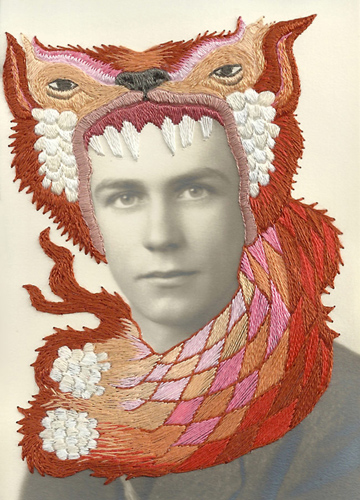 Staisi Page. Tod. 2011
We still see faces in the pictures of Staisy Page . But these faces are framed by a masquerade. It is unclear, embroidery here is a suit or mask? The Chinese dragon, Indian feathers, scraps of "traditional" ornaments ... Maybe the heroes themselves began to be photographed in the slots of embroidered Page Tamaresok? Or Tod, Staisi, Leonard and Jess, heroes with these artist everyday names, forever celebrate the act of photography?
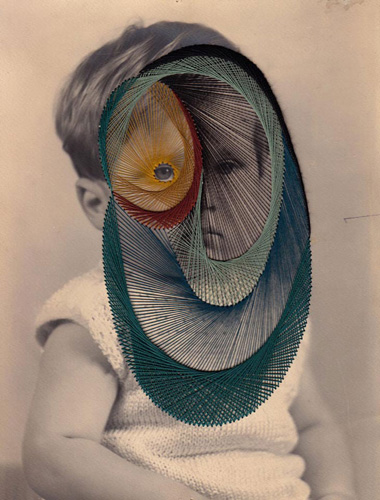 Maurizio Andzeri. Penny. 2009
 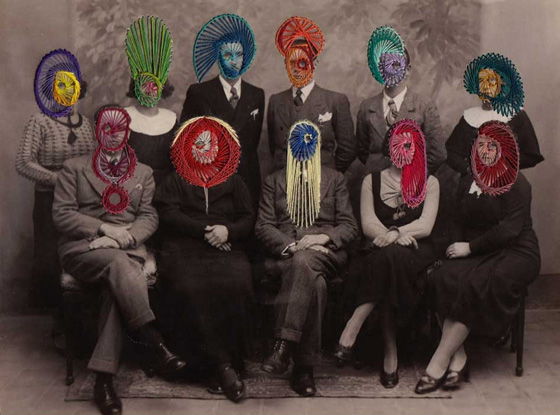 Maurizio Andzeri. From the series "Family Day"
At least one, but the eye is left. The characters of Maurizio Andzeri look from under the threads with an unsuccessful look; carry on themselves (themselves?) Nimbo -like, auro -like design; Looked, black and white-vintage, in color.
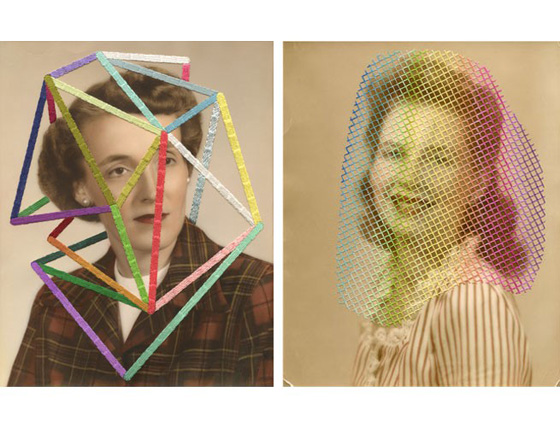 Julia Kokburn. On the left: a teacher of history. 2012. Right: Green strip. 2012
The heroes of Julia Kokburn almost do not hide behind embroidery. The teacher of the story, the queen of the disco, the beekeeper - on all the mask of the lines, the mesh, the cloud of crosses. Faces are read. Abstract compositions hint at the volume in the picture, lead to the space “behind the back”, always both present and absent in the frame.
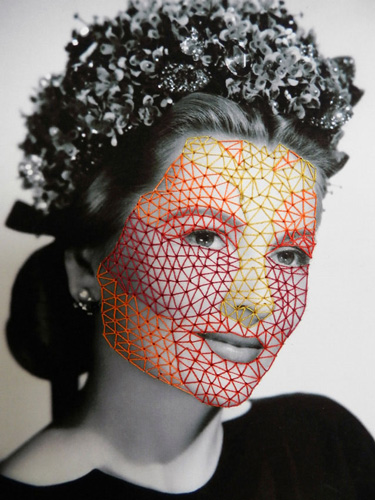 Hagar Vardimon van Hummen. Joan (from the series "New Glory"). 2012
Andzeri is pushed away by a needle from the features, rhymes the squares of the lords with the squares of the cheekbones and the ovals of faces. Cockburn proceeds from the general contour: shape of the head, hairstyle, shoulders. Hagar Vardimon Van Hummen in the New Glory series follows each line of each face line: either he prepares the stars of the past for plastic intervention, or he is overlapping, reviving paper divas.
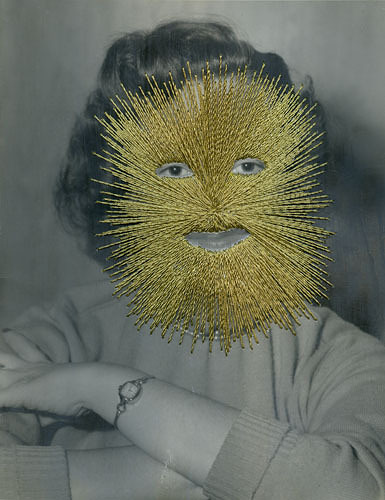 Jessica Vol. Embroidery with a gold thread (from the series "embroidered drawings"). 2011
 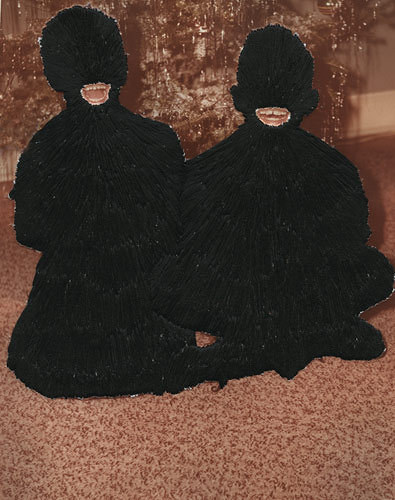 Jessica Vol. Small monsters (from the series "embroidered drawings"). 2011
 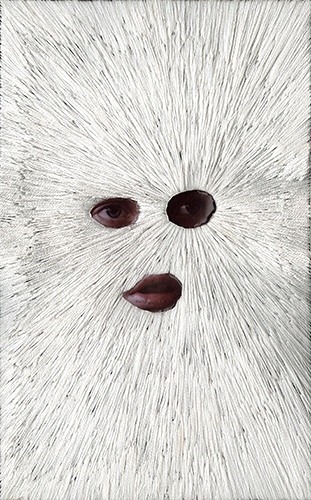 Jessica Vol. A smeared typo (from the series "embroidered drawings"). 2012
The least you can see people in the pictures of Jessica Vol . The young lady who has treated hands becomes a woman-beard. Even if your hair is cast with a gold thread, but to drive with a circus - the decisive moment is missed. And the circus is not the same. Only Cheshire smiles remained from the "little monsters". Their body is everything sewn up. The stitch behind the stitch, and the surface covers the face first, then the figure, and then the whole picture.
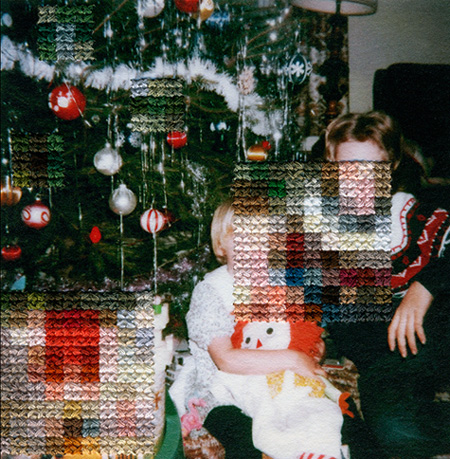 Diana Mayer. New Jersey (from the series “Time spent, which could be forgotten otherwise”). 2012
 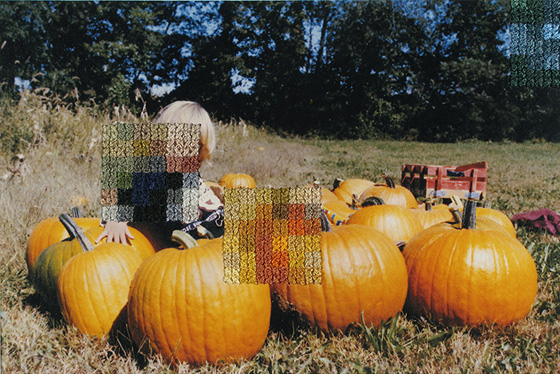 Diana Mayer. New Jersey (from the series “Time spent, which could be forgotten otherwise”). 2011
Neither a hint nor the eye remains in the images of Diana Mayer . In lifting and tasted children from the digital archive, pixels are instead of a head. The embroidery is affected by space: sky, snow, water. Not only do not see persons. But people - never see.
All thread portraitists play the same game - a hide and seek. Artists working with space embroider wider.
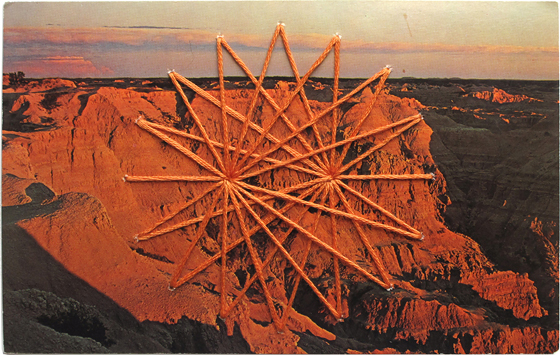 Shaun Cardinal. Coordination 37 (from the series "Coordination"). 2013
 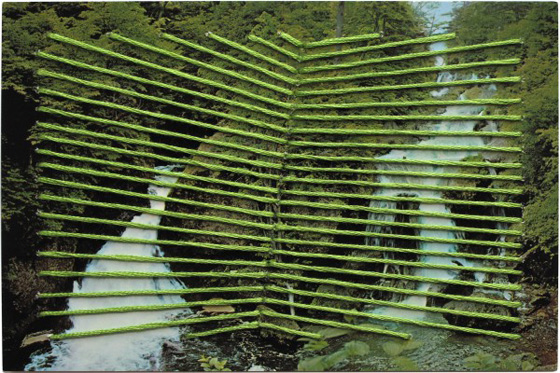 Shaun Cardinal. Coordination 1 (from the series "Coordination"). 2013
Shaun Cardinal in Coordination fills with abstract figures the perfect landscapes of postcards. The embroidery similar to the drawing calculates what the ideal consists of: the geometry, a verified, “correct” composition and monochrome of the “species” itself.
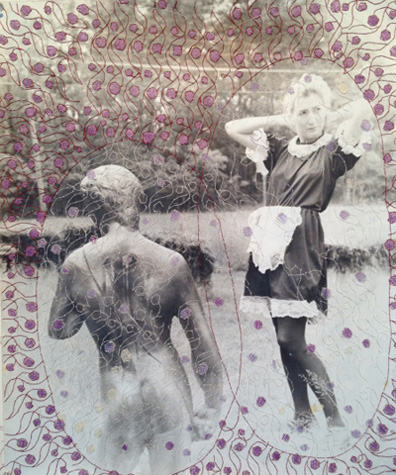 Melissa Zekster. 2013
For the lemon balm Zekster, space in photographs is a void, and photography itself is primarily a plane. There is no prospect, no volume, the border between plans is blurred. Only a Canva card remains-the basis for decorative patterns and ornaments. Finally, the surface becomes the main "hero" of the photograph.
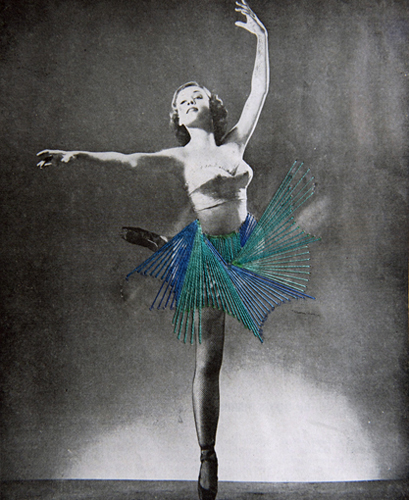 Jose Romussi. Ballerina (from the series "Dance"). 2012
The main heroes of Heroini Jose Romussi -ballerina. Here is not a photograph - matter for embroidery, but a matter, the fabric from which the clothes of girls are made. Everything is very easy - light ballerinas, airy, simple embroidery, bright colors. Instead of dressing paper dolls in paper dresses, the artist dresses them in embroidered patterns.
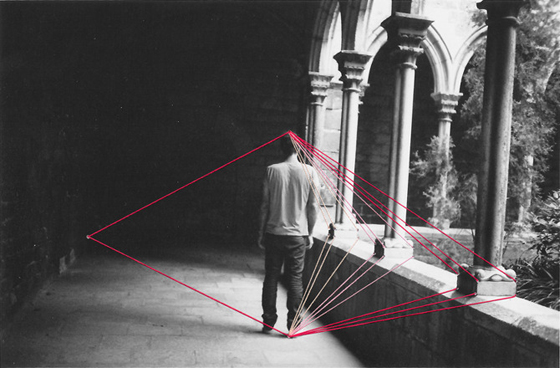 Maria Aparichio Puentes. Photo by Claudio A. Troncosco Rohas
 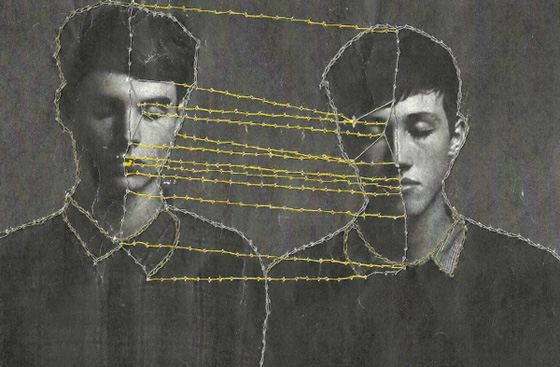 Maria Aparichio Puentes. Photo from Flikrakh Hedi Sliman
The human figure is the beginning of the coordinates for the construction of the embroidery schedules of Maria Aparichio Puentes . How does a person correlate with space, what figures they form together and what will these figures break up with if a person suddenly begins to move in the picture? The paradox of the images of Puentes is that they look like an axiom illustrations for geometry lessons and at the same time remain lyrical.
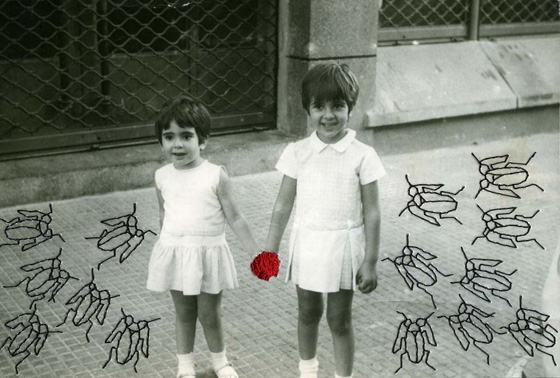 Karol Benita. Cockroaches (from the series "Photo Supply")
 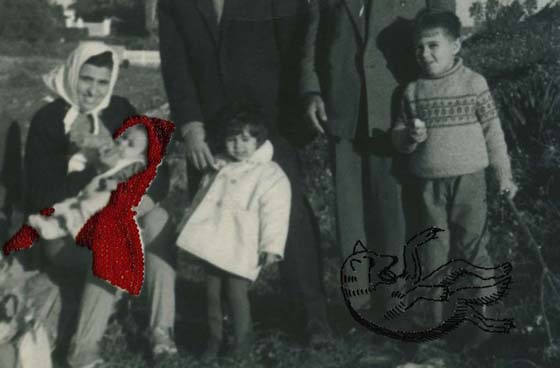 Karol Benita. Wolf (from the series "Photosouns")
In the photographs of Karol Benites, a lugged gray wolf and a red cap appear - a baby; cockroaches the size of a human head; black crows hanging with a garland in a cozy living room; Hair resembling the hairstyle of the gorgon of the jellyfish. So, probably, it happens when you read a fairy tale for the night, and at this time you are looking at family photos.
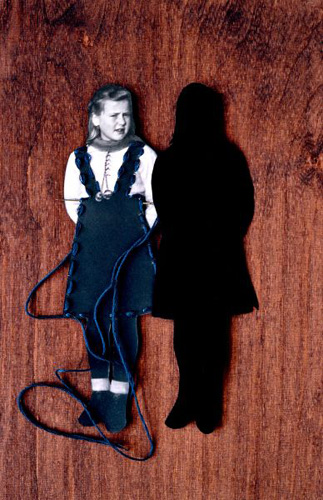 Ulla Yokisalo. Silhouette. 1997
 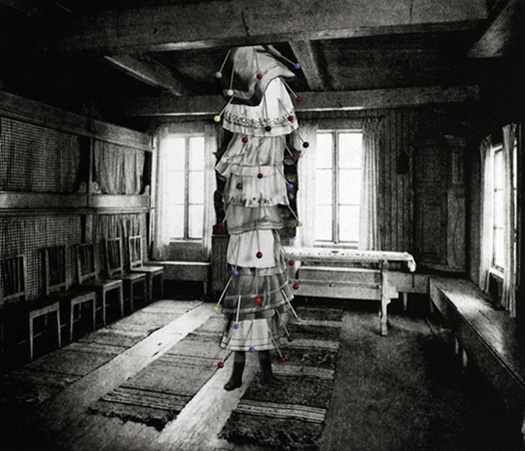 Ulla Yokisalo. Growing years. 2009
The same “fairy -tale” effect - the pictures of Ullla Yokisalo . There is a heroine - a girl. She is still not a sleeping beauty playing with a spindle. She is the same paper doll that the dress was finally sewn (just what a disturbing silhouette is nearby?). It is the size of a thimble - smaller than a needle. And somehow too often she has no head. Maybe this is not a girl at all, but a ghost dress of what has already been and will be? No wonder the artist so desperately sticks pins in photography. In addition to the ghosts of time, Yokisalo is interested in sewing itself and its attributes: threads, needles, scissors, girls pierced by pins.
It is not surprising that Ulla finds inspiration in the idea of needlework. Embroidery is an initiation, and meditation, and a magical rite. Magic definitely is that embroidery, once a mass lesson, makes with appropriate and again mass photographs: turns an amateur picture into an art object. However, this is not just magic. This is also a kind of protest. Not as radical and pro-articulated as it was in the case of French artists who struggled with mass and stereotypical ideas about women and art. However, this is the same protest against the bourgeois, but in the aesthetics and ideology of amateur photography. The embroidery, which once made an incredible breakthrough in art and in the discourse about society and Gender, pushes an amateur photograph on the same breakthrough: why amateur photography automatically, according to the laws of some conventional hierarchy, should be lower than the “high photo”? Is it really that how they build their family representation in home albums is related to real families? Is the indexal connection of the portraitable with a photograph so non -labymim? Amateur photography and embroidery are certainly similar. They have an aura of innocence and connotation of bourgeois, but also expose the laws by which society and art function. And even if in the photo a protest in a bright, manifesto is hardly possible, it is read between the stitches: change space, demonstrate the structure of the image. Delete a “person of a particular” from the image.