
Translated material
Boris Eifman commented on the situation in Vaganovka
Boris Eifman commented on the situation in Vaganovka
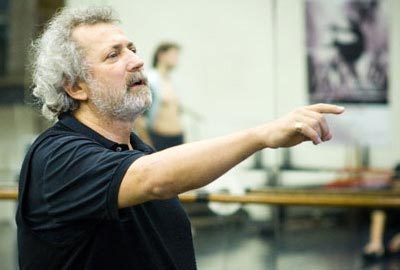
The artistic director of the St. Petersburg State Academic Academic Ballet Theater Boris Eifman made a statement in connection with the situation around the appointment of Nikolai Tsiskaridze by the rector of the Academy of Russian Ballet named after A.Ya. Vaganova.
Colta.ru publishes the text of the application completely.
Dear colleagues!
Recently, many media outlets are asking me to comment on the appointment of Mr. Tsiscaridze N. M. Acting the rector of the Russian Ballet Academy named after Vaganova. Watching what passions flared up in connection with this purpose, I understand that any comment will cause love for me some and the hatred of others. But “those” and “others” are my colleagues, friends. And therefore, instead of any comment, I decided to publish the text of my speech, which was prepared for the meeting of the Council under the President of the Russian Federation on Culture and Art, held on October 2 of this year. In it, I give a personal assessment of modern choreographic education in Russia.
Artistic director
St. Petersburg State
Academic Ballet Theater
Boris Eifman
The text prepared by Boris Eifman to speak at the Presidential Council on Culture and Art on October 2, 2013:
“Today we are talking about culture as an important beginning, strengthening the unity of the country. I want to draw your attention to the consolidating potential of choreography, which is enclosed in the uniqueness of the dance language, which is understandable to people of different national cultures and religious faiths. Dance is a universal language of spiritual communication, carrying eternal values and beloved by millions. And what like not love brings people closer?
Ballet is one of the few types of art with which Russia is associated in the world. The triumph of the Russian ballet at the end of the 19th century, its flowering in the Soviet period turned our country into a ballet power. But today we are faced with problems that destroy our art. Let me designate the main, in my opinion, pain points of Russian ballet reality.
First of all, no one today is studying the problem of personnel deficit of ballet artists. Only in Moscow and St. Petersburg 8 (!) State ballet troupes. In Russia, more than 25. Ballet schools do not cope with the task assigned to them and do not provide these troupes with professional artists. The dance academy should prepare 2-3 times more ballet dancers. A state order is needed that would balance the needs of theaters and the possibilities of ballet schools.
An equally difficult situation has developed with choreographers. Over the past 20 years, the country's universities have released about 1000 certified specialists. What is the name of at least one choreographer who could be a successor and heir to our glorious past.
The highest achievement of theaters is the invitation of Western choreographers who will transfer some of their old ballets to our scenes. I do not condemn the very fact of an invitation of Western choreographers. But where are the following generations of domestic choreographers? They will not appear without our support, without a special state program.
The absence of artistic leaders even in the leading troupes of the country, the lack of talented choreographers creating a ballet repertoire of modern Russia, the absence of ballet stars (2-3 names - like grass breaking asphalt), personnel hunger of theaters - all these are problems bringing us closer to the crisis of Russian ballet.
The state is investing in great funds today in our theaters. Is it time to move from a sluggish unpromising process to specific results, the purpose of which is to create highly artistic works of Russian art?
On September 2 of this year, we opened the Academy of Dance in St. Petersburg, where we will solve not only professional tasks-the training of universal artists of the new generation ballet-but also social ones. We will attract talented orphans, children from dysfunctional families, introducing them to high art and help us to live a happy creative life.
I am personal responsibility for the trust of the city and money invested in this project. But there are in our ballet power a state -level problem and they are urgent.
I consider it advisable to create a commission under the Ministry of Culture of the Commission, which would analyze the alarming situation in the domestic ballet and develop a set of measures to overcome it. It is necessary to act now, while the emerging crisis has not led to irreversible consequences.
Thank you for your attention. "
Boris Eifman