
Translated material
What is the music of the verse?
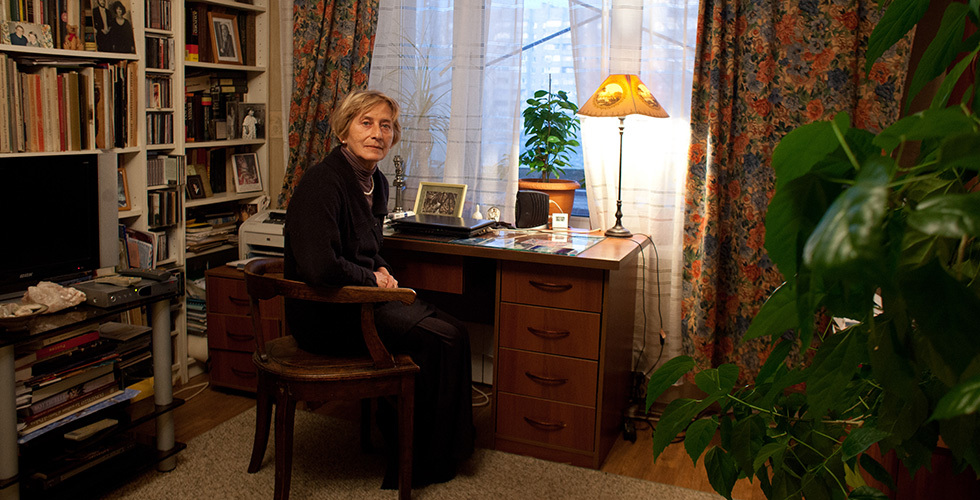
Colta.ru continues the heading "Likbez", in which experts share with us their views on the fundamental concepts and phenomena of culture. The poet, prose writer and translator Olga Sedakova is the author of many essays about the secrets of the verse. For colta.ru, she kindly agreed to answer once again to the seemingly naive and at the same time difficult questions that interest the widest audience - about what distinguishes poetry from prose, about rhyme and its absence, about the sound laws of the verse and how to learn to perceive poetry.
-Now it is somehow customary to believe that a free verse has won or is about to win regular. What do you think about it?
- Statistically Verlibr - a verse without a regular metric organization and without rhyme - prevails. But from this victory in the world they are tired, and quite a long time. He was late for us: in Soviet times, Verlibr was not just forbidden, but not welcomed. Therefore, here he is still more in a novelty than in Europe. In Europe (and I know poetic Europe well) for twenty years now think that a free verse has been depreciated and we must do something about it. And something is looking for: different forms of a “semi-free” verse-or, conversely, old tough forms of stanza organization like a canzona, a wreath of sonnets, etc.
A free verse, I think, gave us a new opportunity: we can now relate to traditional regular forms in a different way. For example, hearing them as a quote: so fragments of the old Russian chorea or iamba sound in the polymetry of Elena Schwartz. A rhythmic quote from classics - after all, it is much more interesting than a quote in words!
- There is no music in a free verse?
- Why? A good free verse (remember at least Ts. Eliot) a very thin sound organization, it’s just much more difficult to describe it, find a scheme in it. But the reader directly perceives it. If it is, verses are easy to remember. Otherwise, this is some kind of dump from words. But in the regular verse of one follow -up, the meter and rhyme are not enough for us to call the poems “musical”.
- And the rhyme - can it amorsate or even become obsolete?
- I think the question of rhyme (like all questions about private moments of form) is greatly exaggerated. They talk about the exhaustion of the stock of accurate rhymes in the language, that in Russian, say, “love”, “blood” or “again” (and in Italian, respectively, for “ amore ” - “ Cuore ” or “ Dolore ” ) will certainly follow. And this means: the poet’s thought will go to a familiar way. But even with this fatalness you can play! Like Pushkin with “roses” and “frosts” - “the reader is waiting for rhyme rhyme.” By the way, he quietly offered his reader another, richer and composite rhyme: not “frosts” - “roses”, but “frosts” - “(reef) we are roses ”.
 © Julia Ryzhenko
Yes, at some time-in the 70s in Europe-writing a regular verse was risky. Such an author would be considered hopelessly outdated, “reactionary”. One of the rare meetings in my life with what is called “a living real poet” (that is, with the verses from which the heart freezes), just a little explained this position to me. It was the Danish poetz Inger Kristensen (she died two years ago). We met in Germany, at the meeting of poets dedicated to her anniversary. She read poetry at Danish - but I do not know Danish and followed the German interlinear. But according to the very sound of her poems (“Valley of butterflies”) - along with the tallow, of course, it was clear to me: this is the poetry that, in the general opinion, “in our time” is no longer. The same muse that Dantu dictated. So, these verses (late verses) were written in the form of a wreath of sonnets, that is, in an extremely strict, very artificial old form. The sonnet itself is a rather stringent shape, but a wreath of sonnets is already stiffness in a square! And I asked her: "How so, because now they don’t do that?" She replied: “Yes, in my youth I would not dare to do so, I wrote only Verlibra (otherwise, you look, they will laugh). But now I can afford it. ” That is, seriously, not for parody, to turn to a classic form - this requires a certain courage. But - "Now you can afford it." The question of the “obsolete” of one or the other in the technique of verse is a matter of common opinion, always not free. "In our time! ..", etc. Who, one wonders, knows what “our time” is? “Talent is the only news that is always new,” as Pasternak said. Incornsity is what is forever outdated, no matter what experiments it starts.
As for the rhyme, our thoughts about the rhyme gave, I think, an exaggerated meaning. From everything that enters the sound structure of the verse, they paid attention only to rhyme: to the edge of the layer, the consonance of the last words in the line. But in the sound, not only the ends of the lines are compared, not only, say, “cat is a bow”, but all that is in the verse that in front of the “cat” and in front of the “bow”. There are much more interesting moments in the sound composition of the verse: the organization of vowels, for example (I wrote a separate work about this), a kind of analogue of “melody”. We have seen rhyme in separation from everything else. I remember how all the poetic innovations of the sixties-Yevtushenko, Voznesensky, Akhmadulina-were mainly reduced to the fact that they introduced a new rhyme, inaccurate (assonance) and inventive. At that time, it was simply on this basis to distinguish “progressive” poets from “retrograde”: progressive youth poets write with inaccurate rhymes, and old retrograde - accurate. But there was another contrast: Moscow and St. Petersburg schools. Inaccurate rhyme such as “white” - “running” was the name of the Moscow school. Leningraders shunned this. Thus, the young Brodsky used the poor, trivial rhyme (as “inexplicable” - “nonsense”, “decay” - “garden” and similar in “Christmas romance”) - as if in contrast to Muscovites, Yevtushenko, Voznesensky and their sound ingenuity. And although Brodsky himself in his Russian verses was never particularly focused on rhyme, she meant a lot for him: in his “letter of Horace,” there is a characteristic reproach of ancient poetry for not knowing rhyme. In the history of the verse, the absence of rhyme extends not only forward, in the era of Verlibra, but also back. And the diff era of poetry is huge. Mandatory rhyme at the end of the line - looking historically - a relatively recent poetic form (generally speaking, the rhyme does not have to be located at the end; they can rhyme and the beginning of poems, but now this is a forgotten technique). In different poetry - folklore, ancient, liturgical - other forming principles. The rhythmic pattern is important here, not consonance. The length of the lines, the number of syllables in the line, the location of the cesur, the alternation of strong and weak - or long and short - syllables. Unlike Brodsky, I do not miss the rhyme at Horace or Homer at all. The pleasure of stanza is stronger. True, if we recall, then in childhood, poems without rhyme seemed to me as if colorless, they seemed to be painted yet.
 © Julia Ryzhenko
Of course, rhyme is a magical key to poetry, one of the keys. First of all, it changes the trajectory of thought. The poet, fulfilling the obligation of the rhyme, must think, as it were, in two directions at the same time, “there” and “back”. The rhyme knocks down the thought from its usual path - from beginning to end: the end of the phrase here is known in advance, and now the path to this end - this must be sought. Mandatory sound repet is a strong tool for turning on imagination. You should not just say what you have planned, but to fulfill some rules. Their performance changes the content of the original message. A kind of verbal choreography. This is not a random image: some traditional terms of poems are “foot”, for example, a trace of the fact that the whole body once participated in poetry: repelling the rhythm with their foot, say. The author’s virtuosity is expressed in how “naturally” he moves, performing these difficult figures. The rhyme - like other sound conditions facing the poet - changes the word, its semantics. This is not a mechanical increase to the language, but - the words of Yu.N. Tynyanova is a constructive factor. The poetic language is not a language of prose, “painted” with rhymes and alliterations.
- How would you describe the difference between the language of poetry and the language of prose?
- You know, I wrote a lot about it. It is somehow not accepted to refer to myself, but I wrote better than I could hastily say now. The whole volume of my four -volume, “Poetics”, is devoted to the actual analysis of the poetic form. And rhyme, and sound system, and rhythm. It seems especially interesting among these works to me an attempt to describe the organization of vowels in the verse. Rather, even - draw this high -rise line of vowels, like notes on a nototon carrier. This work is done by the poet unconsciously, in contrast to rhyme. But retroactively, drawing a line of vowels of some poem, we see whether the poet has turned on, so to speak, a “melodic mind”. For myself, I call these graphs of lies detectors. They talk a lot about the poet.
Of course, this “melody” is not an accurate semblance of a musical melody itself, like the rhythm of the verse is not an actual musical rhythm. The musical rhythm works with physical time, it divides physical time into comparable segments: a quarter, eight, etc. And the poetic rhythm does not have the same physical significance: we can the same line - it is especially clear in a regular verse - to read more slowly, faster, we can make a slowdown or pause among the line. You can even, in the end, do the wrong place to make a cesura. But the rhythmic structure is preserved with all this. Because this alternation of strong and weak shares is “restored” in the mind, despite any distribution in the pronunciation time. These shares cannot be measured by a metronome, as in music. They can be said relative.
You can recall that poetry from music (sometimes from the dance, as we said) separated quite late. Dante was probably one of the first poets of the Middle Ages, who himself did not compose music for his own poems, but handed them to professional musicians. The troubadours still sang poems with the music of their own composition. But what is called “music of the verse” is another, not quite acoustic music.
-Can I designate some milestones in the development of rhyme-or to single out individual innovators?
- I am not a poet, not a rhyme historian. Poets often not without pride report that they are not familiar with the poetic nomenclature - iambic, chorea, etc. I will not pretend, I know something in this area-I know not only the word “chorey”, but even “Anakarus” and “Clausula”! But in general, I usually determine the sound system and a verse with instinct-by ear, taste, for color. So what I can say about the history of rhyme requires great professional clarifications.
Well, let's say, during Dante, a division into “poets” and “rhymes” was accepted. Poets - Poeti - were called those who wrote in Latin, classic meters and, therefore, without rhyme. And those who wrote in the folk language and with rhymes were called Rimatori , "rhymachis." The hierarchy is clear: those who wrote without rhyme were placed above. It is assumed that the rhyme appeared not in Latin poetry, but in prose - as one of the rhetorical figures. Why in prose? For poetry, this technique seemed rude. Poetry required more complex moves, more subtle roll calls. In difficult stanzas, the rhyme would sound like some kind of rattle. And in the folklore of the rhyme, it does not appear in high genres (epics, ballads), but rather in comic, grassroots. For us, Russian readers, classical poetry (XVIII, XIX century) is a rhymed poetry and written by a regular verse. We no longer feel, if we are not historians, that the rhyme comes from low genres ... We loved it from childhood in the best Russian verses.
Pushkin sang rhyme as a muse, as a sister Aonid.
Rhyme, sonorous girlfriend ...
He created the mythology of rhyme - as many as two myths about her birth. According to one version, the rhyme is the daughter of Mnemosina (the goddess of memory) and Apollo and is to the light when the punished Apollo rings the herd in King Admet. This myth is stated in rhyme. Another version of the divine genealogy of the rhyme in Pushkin is presented by an elegiac dystich. Naturally, uniform. Here is the mother of the rhyme - the nymph echo, her father is Phoebe Apollo, the recipient is Mnemosin. And here is the image of the rhyme - the daughter of an echo, which no one has described Pushkin more precisely:
Mother is sensitive, obedient to strict memory,
Museum Mila; On Earth, it is called rhyme.
The rhyme of the Golden Age was accurate (that is, the sound of rhymed words, if possible, coincided, if possible). But there was no that Krokhoborsky accuracy that they began to achieve in post -war Soviet poetry. “My” - “love” completely passed. For the editor of the translations in Khudlit in the 70s, it was already too bad rhyme. “I love” - “I pray”, that's how it should be.
- And how did the poets of the beginning of the 20th century participate in the development of rhyme?
- The Silver Age regarding poetic forms was the richest. But, as it seems to me, the main field of innovations was not so much a rhyme as the rhythm. It was an explosion of a regular verse, the phenomenon of an alarming shareholder:
Your high shoulders -
My madness!
The rhythmic portrait of the era. And stanza ... M.L. Gasparov investigated all this.
You can notice some pattern: in the post -Peter Russian culture, the update of poetry forms is usually associated with close contact with European literature. The metric, rhythmic horizon expands. So it was when creating a Russian poetic system in the 18th century (appeal to Polish, German models). In the second half of the XIX century, in Nekrasov and Peresnokrasov time, Russian poetry closes, becomes local. And there is a large rhythmic inertia. And now the Silver Age again opens the doors to poetic Europe - and what the 19th century has already done in the Russian verse: imitation of antique stanzas, like Novalis and Helderlin, and many other, mostly rhythmic experiments. A new rhythm sounded. Whoever we take-the extreme avant-garde or in a general conservative block with his almost Pushkin Yamba-the “right” meter retreated. We cannot but semantize these new, complex, “wrong” rhythms, hearing anxiety in them, the same “wind, wind” from the late block.
All these stripic and rhythmic experiments, all the wealth of the Silver Age was discarded and almost forgotten, and in official Soviet poetry a normative Soviet verse was established for decades, which knew two of the forms of stanza - quatrains and double -hearted ...
- How strict were these standards?
- They did not directly prescribe anywhere, as well as standards for socialist realistic painting. They were caught from the air. Each author, who wanted to join the official literature, complied with these rules. There was such a poor-forth metric repertoire, and rhyme too. Even those who started in a completely different rhythmic and sound (like young Pasternak) come to a conservative verse in later verses. This is also the air of the era, like a symbolist donkey. In my opinion, the rhythm speaks the most time. Sound cast of the era.
-And now there are any rules that are customary to follow?
- About now I can say the least ... But I have not finished the “brief history” of the Russian verse in Soviet times. I will touch on her little-known even in our days of the episode-unofficial poetry of the 60-80s, relatively speaking, starting with Brodsky. This “second”, samizdat, literature (to which I belonged) resolutely diverged from the official - and in the poetic, version also. She was not engaged in rhyme, like the sixties, but with rhythm and stanza. Brodsky came to his stanza work, probably in connection with English metaphysics who cultivated complex stanzas. But Viktor Krivulin had the most interesting stanza experiments. What stanzas he did not invent or did not take from some old samples! By the way, it was in the field of strict style, sophisticated stanzines began to look for a change in Verlibra European poets. At Elena Schwartz and Sergey Stratanovsky, we will see the continuation of Khlebnikov’s Polyritme: a kind of mosaic from fragments of traditional meters. Two lines with a iamb, the next four - with a chorea, etc. It was impossible to imagine all this in published poetry. It was a different sound - the sound of free and new speech. How much was it learned in the future? It seems to me very little. That's what was learned and dispersed by many poems - this is the new type of verse that appeared in the late Brodsky. As if a broken, almost free verse, but retaining rhyme. The verse that is convenient to speak is almost like prose: it withstands complex syntax - very difficult for regular meters. In such a “Brodsky” verse you can transfer, almost without changing, domestic phrases, and they will be there in place. This is a find that seems inexhaustible. But for some reason, when you read any thing written by such a verse, it immediately seems to be the epigonism of Brodsky. And not only rhythmic epigonism: this is followed by a syntactic system, intonation, and even a meaningful mood. The poets of the "Brodsky Wave" are certainly skeptical, wise people. They are as ecclesiastes, you will not surprise them.
 © Julia Ryzhenko
-Does the sound system have something like a national character? Are there any unique features in the Russian verse - and is it possible to maintain this musicality when translating without loss?
- The sound laws of the verse, generally speaking, are non -western. Язык не требует от словесного высказывания ни ритмической организации, ни звуковых перекличек — никакой язык этого не требует. Бродский не раз говорил, что поэзия — это служение языку. Но язык в поэзии поставлен в трудное положение! Он должен не идти, как в обыденной речи, а танцевать. Но, конечно, этот танец связан со свойствами каждого языка. Если в русском языке нет различий долгот и краткости, у нас ударение силовое, то, передавая античный стих, мы, естественно, заменяем длительность на силу, а это уже другая вещь. Есть и иные особенности языка, которые, приходя во взаимодействие с этой музыкально-математической структурой стиха, тоже меняют ее. Та же длина слов. Русские слова очень длинные — по сравнению с английскими или даже с итальянскими. У нас свободное ударение, а во французском и польском — фиксированное: всегда на последнем и соответственно предпоследнем слоге. И на ритме это будет отражаться. В русском стихе за три его века можно заметить, что неязыковые условия стиха смягчаются, приноравливаются к просодике языка. Двусложные стопы «труднее» для русского языка, чем трехсложные. Трехсложный «некрасовский» стих звучит поэтому демократичнее. Еще удобнее для русского языка сдвинутые ритмы, дольники… и т.д.
— Насколько важна точность перевода и можно ли пожертвовать точностью ради музыки?
— Кто-то сказал, что переводчик выбирает, как проиграть. Что потерять — и ради чего. И этот выбор зависит от каждого отдельного поэта и от каждого отдельного стихотворения, которое переводится. В одном случае лучше пожертвовать музыкальной структурой, чтобы как можно меньше потерять смыслов. Это случай Данте. Я бы — понимая всю красоту построения в терцинах — предпочла, чтобы у нас был подстрочный перевод «Божественной комедии». А случай Пушкина противоположный. Если Пушкина переводят свободным стихом, как я убеждалась не раз, от него почти ничего не остается. Здесь счет на слог, на звук. Перескажите чуть-чуть другими словами «Я вас любил» — что останется?
— А в наше время что-то может повлиять на строение стиха? Фольклор или народный стих?
— Живого фольклора давно уже нет. Народный стих — музейная вещь. Воздух времени, я думаю, — но внутренний, глубинный его ритм, не тот, что слышен повсюду.
— В музыке очень много стилей и подстилей, а музыкальность стиха можно как-то разложить?
— В отличие от музыкальной теории, которая огромна, хорошо разработана и очень технична, теории стиха такой нет. Традиционное стиховедение сочинителям, боюсь, мало что даст. Недаром поэты обычно не любят стиховедения. А «авторского анализа» нет.
— То есть музыка стиха — то, что человек должен почувствовать сам?
- Probably. Впрочем, я думаю, что должна быть какая-то пропедевтика. Хорошо бы учить уже в школе слышать стихи, чувствовать их строй... Но этому у нас не учат и филологов в университете. Может быть, «Анализ поэтического текста» Ю.М. Лотмана может стать такой вводной книгой в строение стиха.
— Человек, не сочиняющий стихи, может услышать музыку стиха, что называется, в полном объеме? Насколько она доступна человеку неподготовленному?
— Конечно, доступна. Наше, позднейшее, время, я думаю, впервые открыло по-настоящему фигуру читателя. Он становится существенной фигурой поэзии — точнее, существенность этой фигуры наконец оценили. Есть «одаренный читатель». Эта читательская одаренность сродни поэтической. Причем такой читатель может совсем не быть филологом, не получать никакого особенного литературного образования. Я встречалась с этим не раз. Это не вопрос эрудиции и специальной подготовки.
— Бывают песни, навсегда остающиеся хитами. Есть ли секрет создания идеального стиха?
— Ну, стихов таких, я думаю, побольше, чем хитов. Какой-нибудь отрывок Сафо уже сколько веков живет! Однако такой «случившийся» стих для меня — это не просто культурное, но в каком-то смысле космическое событие. Когда такая вещь удается, то что-то случается в мире. Может быть, что-то приходит в порядок. S.S. Аверинцев говорил, что он переживает любимые стихи как обереги. Они разгоняют подступающее зло. Я всегда чувствую такую — не социальную, а природную — роль поэзии. В ней происходит какая-то «очистительная» работа, что-то очищается. Или так: она пробивает замкнутость. Открывает вид на Другое.
Теории поэзии Нового времени начинают с технических моментов: с жанров, метров, рифм и т.д. А средневековая поэтика начинала с поэта и с его даров. L.V. Евдокимова изучила эти старинные «Поэтрии». Первый вопрос: кто может быть поэтом? Не тот, кто умеет рифмовать и хорошо владеет языком, — а тот, у кого есть некоторые определенные свойства. Среди этих даров, например, — «легкое сердце». А что такое «легкое сердце»? Это способность из печальных тем и сюжетов сделать прекрасное сочинение. Соответственно чем печальнее тема, с которой справляется поэт, тем этот поэт больше одарен «легким сердцем». И дальше даются признаки, по которым можно узнать, есть ли у человека «легкое сердце». Например, тот, у кого оно есть, легко принимает подарки. Еще один обязательный для поэта дар — «нежная дума». Это умение видеть перед собой отсутствующий предмет — и глядеть на него, любуясь. Говоря проще, это способность созерцания. Универсально ли это требование «даров» — или оно остается в Средневековье? Посмотрим на Пушкина: почти все его стихи — посвящения дамам написаны вдали от них. Перед ним, как он часто говорит, «встает образ». Вот это как раз и есть «нежная дума». Нежная не в тривиальном смысле, а в том, что она возникает как умственное видение, он его не касается, а любуется и описывает. Все, что требовалось от средневекового поэта, мы видим в Пушкине. Он прекрасно отвечает этим старинным требованиям. Я хочу сказать, что в исходном представлении поэзия — не просто словесное ремесло, а прежде всего душевный дар. Это хорошо знали и в античности, и в Средневековье. Этого, вообще говоря, никогда не забывали. И Гете, и Пушкин, и Пастернак — это душевно одаренные люди, и они передают читателю дары своей одаренности. Но на «качества поэта» (особые качества) все меньше и меньше обращают внимание, а при воспитании и обучении об этом и вовсе не говорят.
— Как можно научить человека воспринимать поэзию? Одаренный читатель, наверное, встречается нечасто?
— Да, тот, кто сам может дойти до тонких и глубоких восприятий, может быть, редок. Можно ли помочь другим? I think yes. И я бы начала не с литературной теории, не со словесности. С психической практики. Чтобы человек воспринимал поэзию, необходимы некоторые ментальные и даже психические навыки, которым очень мешает бытовая реальность — шум, торопливость, отсутствие навыка созерцания. Человек просто не может остановиться — и подумать ни о чем. Все у него сразу «для чего-то», все прагматично и опредмечено. А поэзия может восприниматься только умом, способным видеть вещь, которая «ни для чего», которая ничего определенного не «значит». Она есть — и все. Попробуй общаться с вещью, из которой ты ничего не выведешь. И это необходимый навык для читателя, так же как и для поэта.
— Внешний мир (и то, что происходит в нем) — воздействует ли он на поэзию?
— Или она на него. Здесь вектор может быть обратным. Поэзия воздействует если не на мироздание, то уж на историю точно. Она не «отражение» времени, как часто думают, а ответ ему. О «своем времени» столько предрассудков! Л. Толстой где-то в «Войне и мире» заметил, что ограниченные люди особенно охотно говорят о «нашем времени», потому что думают, что они-то понимают его в совершенстве. А наше время, как и любые другие времена, полно вещами, невидимыми для обывателя, такими, о которых он и не предполагает. Думаю, большинство современников Данте (за редкими исключениями) не знали, что они современники Данте, и, говоря «наше время», имели в виду время, в котором нет Данте. А для нас это «время Данте».
— Что же делает поэзию исключительным явлением?
— Вы знаете, для меня поэзия — совсем не исключительное явление. Пластика, музыка, мысль говорят мне не меньше. Они происходят из одного источника. Для меня поэзия не противопоставлена радикально ни другим искусствам, ни другим видам человеческого творчества. Но каждое искусство работает со своим медиумом, и поэзия — с языком, приведенным в несколько неестественное для него положение, с языком, который движется под дирижерскую палочку совсем других, звуковых законов. И внутри каждого из искусств есть разные пути и скрещения. Рембрандт-живописец почти говорит словами. А Блок — это почти музыка. Можно забыть все, о чем он говорит, и только слушать:
Вновь оснеженные колонны,
Елагин мост и два огня…
Это сама музыка языка. И музыка жизни. Неакустическая музыка.
Беседовала Юлия Рыженко