
Translated material
1918. The end of the First World War
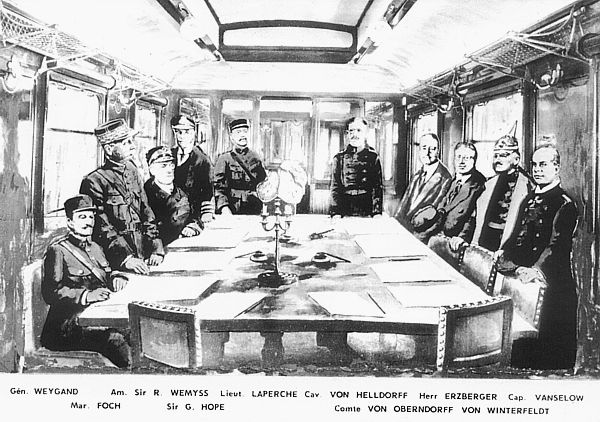
95 years ago, November 11, 1918, the First World War ended.
In the Comtensky forest in the railway carriage of the French Marshal Fosh, the German delegation signed a truce, which actually meant the surrender of Germany. Under its conditions, Germany was supposed to begin and within 15 days to complete the evacuation of all its troops from France, Belgium, Luxembourg and Alsace-Lotaringia. Then, within 17 days, all German troops were evacuated from the territory on the western bank of the Rhine plus, within a radius of 30 km from bridges on the east bank of the Rhine in the cities of Minz, Koblenz and Cologne, followed by the occupation of these territories by the troops of the Allies. All submarines and other modern German warships were subject to internation, but the marine block of Germany remained in force. Germany abandoned the Brest-Litovsk peace treaty with Russia and the Bucharest Peace Treaty with Romania. The German army was supposed to give out to the allies in good condition 5,000 guns, 25,000 machine guns, 3,000 mortars, 1,700 aircraft, 5,000 locomotives and 150,000 wagons.