Date
Author
Евгения Назарец; Ирина Лагунина
Source

Preserved copy
Translated material
Domodedovo: From explosion to sentence
On Monday, the Moscow Regional Court announced a verdict in the case of a terrorist attack at Domodedovo Airport on January 24, 2011
The victims of the explosion made by the suicide bomber in the arrival hall became 37 people, 117 were recognized as victims. There are four in the dock, none of them is the organizer of the crime, everyone goes as accomplices. Three of them - the Brothers Islam and Ilez Yandiev, as well as Bashir Khamkhoev - were sentenced to life imprisonment in a special regime colony, Akhmed Yevloev - to 10 years in prison in a colony of general regime.
It was after the terrorist attack in Domodedovo that the Russian authorities once again strengthened transport safety measures by equipping infrastructure facilities with special means of monitoring and detecting weapons and explosives. The effectiveness of these multi -billion dollar costs is not obvious.
The court in the case of a terrorist attack at Domodedovo Airport began at the end of August 2012. Four defendants are accused under the articles “Participation in the criminal community”, “Banditism”, “Terrorism”, “Employment to commit a terrorist attack”, “Murder” and “attempted murder”, “Illegal turnover of weapons” and “illegal production of weapons”.
Bashir Khamkhoev, according to investigators, participated in the preparation of Magomed Evloev, who committed an explosion in Domodedovo, while he himself died. Ahmed Yevloev is the brother of Magomed Evloev, according to investigators, he wore militants to the forest camp, where Magomed, products and medicines were preparing, and then bought a ticket from Nazran to Moscow to his elder brother. Islam and Ilez Yandieva, according to the materials of the criminal case, participated in the preparation of the attack, accepting Magomed Evloev in Moscow: they rented an apartment, brought a bomb, on January 24, 2011 they put in a taxi to Domodedovo Airport.
From the mean information that came in the course of the investigation, it is clear that this four is only part of the chain that led to the terrorist attack. Six are on the federal wanted list, including Dok Umarov , who, after the investigation named the name of the suicide bomber, took responsibility for the explosion in Domodedovo, publishing a pre -recorded video message . The investigation calls the “Imrat Caucasus”, led by Doku Umarov, which included about 35 people, including the defendants. 17 people, according to official reports of NAC, Russian special services killed during the so -called “special operations” in Ingushetia, two more - Rustam Altemirov and Zaurbek Amriev - presumably, the organizers of the attack in Domodedovo, unknown people shot in Istanbul in September 2011. There is almost no one to judge, but nevertheless, Russian justice made the process as closed as possible under the pretext that several of the dozens of volumes of the criminal case contain information that cannot be made public by law. The participation of the jury, which the defendant Ilez Yandiev wanted, also did not talk. Since 2010, Russian legislation has not actually allowed the participation of jury in cases of terrorism.

Refusal is the most predictable result of all attempts to figure out what is directly or indirectly associated with the terrorist attack in Domodedovo. In August 2013, the court rejected the lawsuit of the victim Elena Krivolutskaya , she demanded 15 million rubles from the airport, whose aviation security officers, in her opinion, did not fulfill their duties, as a result of which the militants were able to commit the attack. In April 2012, the Investigative Committee of Russia closed the case of violations of transport security at the Moscow Domodedovo Airport, excited after the terrorist attack. The employees of Domodedovo and the Department of the Ministry of Internal Affairs of Russia on transport were transferred to the category of witnesses. The requirement of President Medvedev to establish the real owner of the airport in order to determine his measure of responsibility for ensuring security at Domodedovo Airport, also initially met a refusal. The fact that this is Dmitry Kamenchik officially turned out in September 2013, when the owner no longer threatened to become guilty of the death of 37 people.

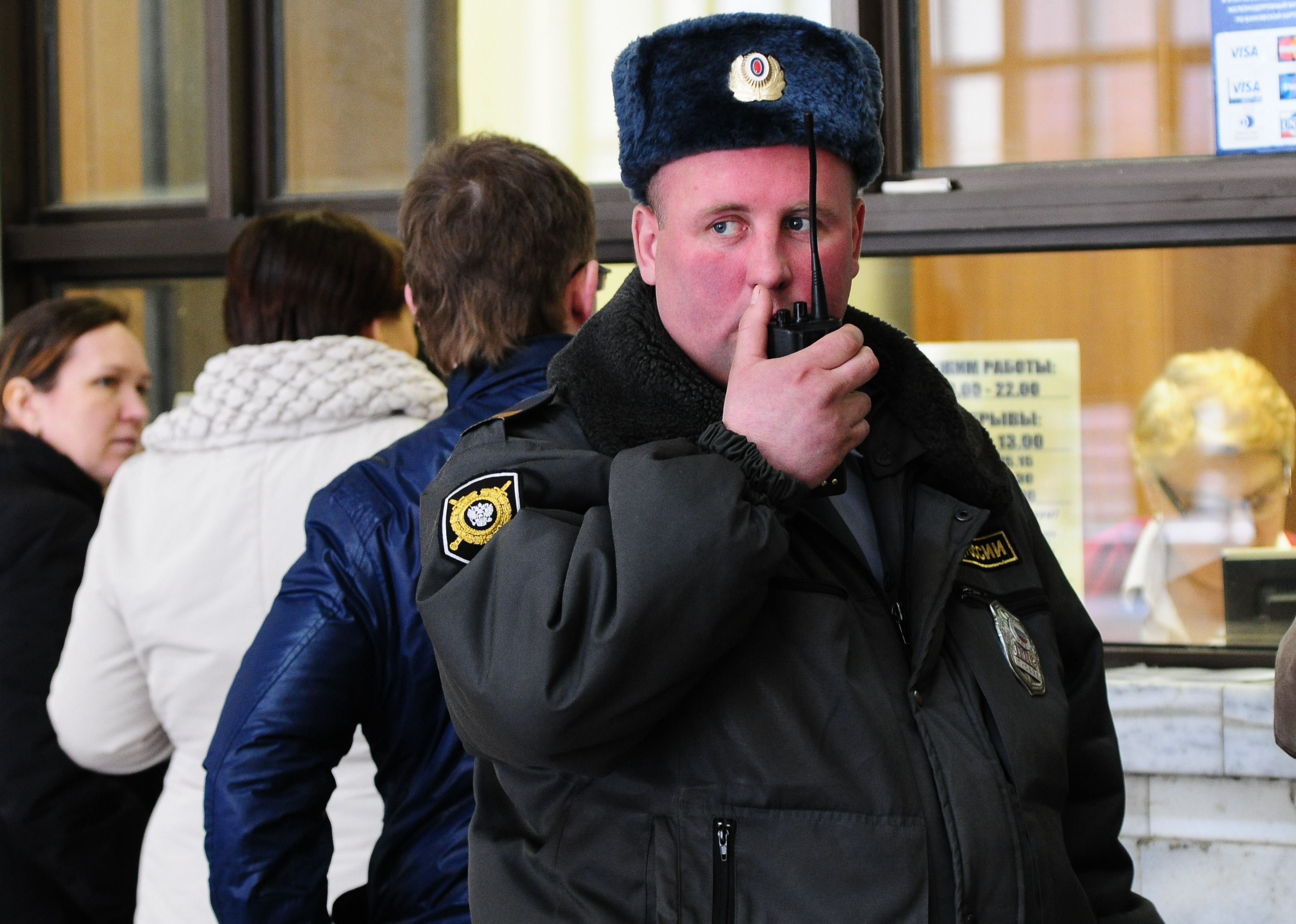
The terrorist attack in Domodedovo is called unprecedented at the facilities of the air transport infrastructure of Russia. The day after the explosion by special decree of the President, one hundred percent inspection of all passengers was introduced in all Russian harbor at the entrance to the airport buildings. Additional security measures began to be immediately introduced at railway stations, in the subway. But all the measures taken after the explosions of the aircraft in 2004 and after the attack in Domodedovo are aimed at bringing out transport infrastructure facilities from the threat of terrorist attacks-not to let the terrorist into the airport, the building of the air terminal, the railway station, the aircraft, and the train. People dozens stand in lines in front of the framework of metal detectors and scanners at the entrance to the station or airport building . A crowd is created - what the organizers of the attack for a large number of victims need. The priority of human life and human rights does not form the basis of the Russian concept of the fight against terrorism. We are talking about this with the international radio observer Radio Freedom Irina Lagunina :
The imperceptibility of Russian politics, when the value of human life is not taken into account, and we are talking about the value of some material objects
- To withdraw the transport infrastructure from the field of possible activities of terrorists. Let's start with this. Because in fact, from the very origin of aviation, it has always served as an object for a terrorist threat. And not even necessarily terrorists. This began with criminal groups in the 30s, when criminal groups blew up planes to get out of their enemies. There was also household terrorism in aviation. There was even one case when her husband blew up his wife on an airplane, putting her explosives in order to take advantage of her insurance of life. There were different situations in the air industry. Since the 50s, a terrorist threat arose quite serious. Aircraft used to capture and intimidate the threats of explosions and Algerian terrorist groups, and then Palestinian terrorist groups. Transport aviation has suffered quite seriously in recent years. And this affected the measures that were taken at airports in aircraft to check passengers. After September 11, 2001, in the first 10th anniversary after the terrorist attacks against the World Trade Center and Pentagon, in which more than 3,000 people died, the US government spent $ 57 billion on airport safety infrastructure in the United States. Of course, in large cities such as Moscow, it is quite difficult to create infrastructure so that there is no line. On the other hand, in Russia, it seems to me, there is only a weak understanding of what is concern for a person, and not caring for a building from an explosion. And the fact that the queues accumulate in Domodedovo is a general reflection of the ill-conceived Russian politics, when, in fact, the value of human life is not taken into account, but we are talking about the value of some material objects.
- With the adoption of well -known measures at stations and at airports, in the subway do you feel safer in Russia?
- No, there is no such sensation in general, because the nature of terrorism is not eradicated. What causes terrorism to life is not eliminated. But, on the other hand, a rather curious phenomenon when, for example, was included in Sheremetyevo Airport several years ago, when translucent chambers were already put there, which were considered the last word of equipment at that time, indeed, it became a little calmer in the soul. Although some time after taking similar measures at US airports, for example, they caused a discussion about human rights and about the very close view of the special services at a person. In general, such a technological solution was perceived by society very negatively. In Russia, there are no such ceremonies, as well as talking about human rights, about what is called personal life. Nevertheless, sometimes you feel a little more safe.
The explosion at the Domodedovo Airport occurred 10 months after the president’s decree was released to ensure security on transport, which Dmitry Medvedev signed after explosions in the Moscow metro on March 29, 2010 . In December 2013, the comprehensive program for ensuring the security of the population in transport should be completed.
The total funding for 2010-2013 is more than 46.7 billion rubles. Of these, more than 12 billion are spent on video surveillance, explosion -protective containers, and inspection equipment in the subway. Four billion rubles from the federal budget were planned to be spent, in particular, for the equipment of the Sapsan High-Speed Trains for Speaking Passenger Zones and the engineering and technical security of the 35 largest stations in Russia, one and a half dozen railway bridges. To ensure a sufficient level of safety by road, it was planned to spend more than half a billion rubles. But the share of aviation accounted for two billion. This is only from the federal budget. More than a quarter of this amount - 600 million rubles ($ 20 million) - cost additional safety measures to the Domodedovo airport itself . Such numbers are indicated in the prospectus to the Eurobonds Domodedovo. By the way, in the summer of 2011, Domodedovo planned the primary placement of his shares on the exchange, which did not take place. Other countries spend significant funds for transport safety. Israel such measures at Ben-Gurion Airport cost a quarter of the country's entire budget for security. About three billion dollars annually - for two airports in the country.
An ordinary person, exceeding several orders of its own cost, do not say anything, therefore passengers can judge the effectiveness of these investments only by their own sensations and apparent result: there are terrorist attacks or there are no. A recent terrorist attack on a passenger bus in Volgograd shows that half a billion rubles for the safety of vehicles that were spent under the federal program did not help prevent a new attack by terrorists. Attempts by the Russian authorities to impress citizens, measuring the effectiveness of anti -terrorist measures by billions of rubles or dollars, can hardly be considered successful, the international radio observer of Radio Liberty Irina Lagunina argues:
- In the West, you will not make a particular impression. Because in the West there is always an idea of who in reality pays for these security measures. Where does this money come from? This money is from the budget, that is, this is the money that came from taxes. People react quite painfully to such numbers. Air carriers also react rather painfully to them,
In general, the best security is the safety that we do not notice
Which in the USA are private companies. And in 2006, a situation arose when, due to safety measures that companies were forced to introduce after the attacks on September 11, 2001, out of ten, in my opinion, six airlines were on the verge of bankruptcy, were forced to go to negotiations with the government and receive some subsidies from the government. In addition, the fight against terrorism or security measures for many seem to “after” measures, the reaction to what has already happened. Although in fact this is not entirely true. Because there is something that we do not see. In general, the best security is the safety that we do not notice. These measures that were not noticeable to the public, which were premature, concern, for example, radioactive materials, chemical, nuclear. Programs of protection against this threat were created precisely from fears that these materials would fall to the terrorists. And these measures were taken even before it turned out that al-Qaeda "played" at one time with chemical weapons and tried to acquire split materials in Africa. What seems important to me in this case is what is the nature of terrorism. When we are talking about security measures, we must say that, in fact, it causes danger. In the modern world, experts distinguish two types of terrorism: ideological terrorism-such as, for example, "al-Qaeda" when murder is carried out for the sake of murder. This is not a civilizational conflict. This is not a conflict for something. This is a conflict for murder. The second type of terrorism is terrorism, which is most often based on ethnic conflicts or separatism. If the first, al-Qaeda terrorism cannot be solved by negotiations, then the problem of terrorism of the second type is solved in political means through negotiations. Of course, it is difficult to say that Palestine and Israel will now be able to solve the terrorist problem through negotiations, although it is still necessary to move to this, simply because that problem is very
... the nature of the conflict that causes terrorism in Russia is not destroyed
Deep, develops for a very long time. And it seems that it is impossible to solve it, although on Sri Lanka, for example, the problem of terrorist danger, despite the prolonged conflict, was practically nullified by negotiations. Russia deals with the Chechen conflict, which also dragged on, is also very difficult, but nevertheless it has not yet acquired such a form as the Palestinian conflict. Therefore, taking security measures, trying to show the public what has been done and report to the successes achieved, it seems to me that the Russian government is still trying to veil the fact that the nature of the conflict that causes terrorism in Russia has not been destroyed.
In today's Russian reality, the verdict in the case of a terrorist attack in Domodedovo will be political in any case, since the nature of Russian terrorism is political, human rights activists are talking about this after each new terrorist attack.