
Translated material
Audio guide: Modern Classical
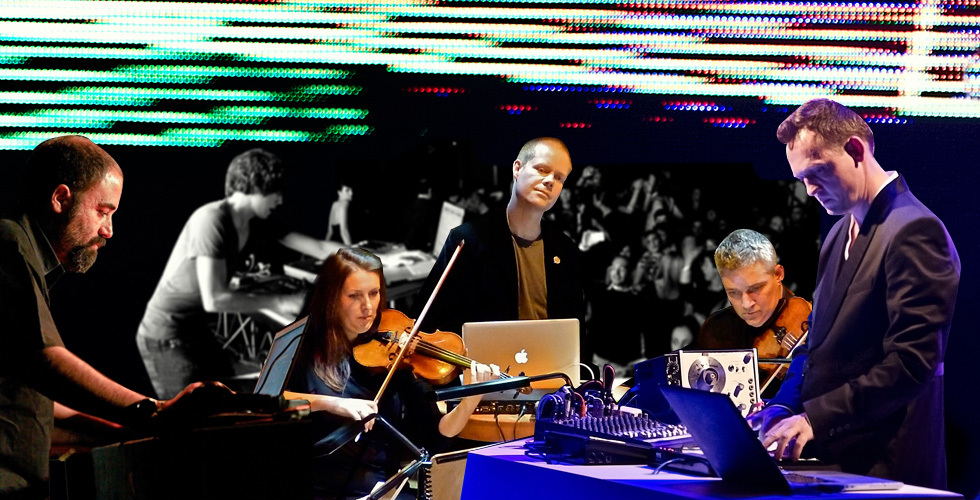
The image of the young composer, or rather, the young composer-academicist in the last decade has changed dramatically. Until this moment, young writers, whether it was avant-garde or neoconservatives, strictly followed the established laws of the closed world and with pop culture crossed the minimum (a rare outlet for the penetration of classics into pop culture was the film industry). The zero suddenly came to us a whole generation of composers working precisely according to the laws of pop culture-not in the sense of music itself (it is appropriate to talk more about the influence of avant-garde electronics), and in the sense, so to speak, business processes. The fruit of their work is not “compositions” (i.e. books with notes), but albums and singles, which are often published on the same labels as rock with electronics. These new composers not only compose music and perform it themselves, but also go to large tours, and in clubs they perform no less willingly than in concert halls and art galleys. And most importantly, in the iPods of numerous listeners, their records are perfectly adjacent to Radiohead , Florence And The Machine or Arcade Fire . And, it seems, to popularize classical music, these musicians have made more than expensive educational and educational programs. We will observe how and where the “classical music of the new generation” moves, on the example of nine records of the Modern genre Classical .
1.
Max Richter
"Memoryhouse" (130701, 2002)
Passion for electronics and even “electronic roots” is an almost obligatory part of the biography of the musician engaged in Modern Classical . Max Richter, by education - a classic pianist, began his career, working with FSOL (the track " Max " with the album " Dead CITIES ” is named in his honor), and in 2002 he finally decided to sign up as solo, and the start turned out to be simply brilliant. Despite the noticeable presence of electronics (you can hear noise, voices, and even a synthetic bit on the disk), Memoryhouse , recorded along with the BBC Philharmonic Orchestra, is a neoclassical record in every sense. Sensual, emotional and built according to traditional musical canons, i.e. Available to those who grew up on Chopen, Debussy and Tchaikovsky. Well, the play " Maria The Poet ” with Tsvetaeva's voice - almost the best that the musicians managed to record in the 21st century. Not only classic.
2.
Murcof
"Martes" (Leaf, 2002)
Mexican Fernando Crown is a man with unusually wide musical tastes. In his phonotext, IDM is adjacent to the records of the works of Guretsk, Gubaidulina and Schoenberg, and the Dum-Metal-with New Age. As expected, with such a background Fernando grew up a postmodernist. Its debut disc is a bizarre combination of confused electronic percussion, synthetic noise and electrostatic cod, behind which a gloomy apocalyptic orchestral action develops. The most amazing thing is that when recording this disk, the Mexican did without live tools at all. The entire orchestra texture is a painstakingly assembled collage from the scraps of the works of Morton Feldman, Arvo Pyart, Giya Kancheli and David Martinez.
3.
Alva Noto + Ryuichi Sakamoto
"Insen" (Raster-Noton, 2005)
In about 20 years, Ruyty Sakamoto from the Star of Electropopa (at the turn of the 70-80s, his group Yellow Magic Orchestra had a great international success) turned into a serious composer of a wide profile and even managed to participate in one of the films of Bernardo Bertolucci. His duet with the German electronic operator Karsten Nikolai, the Boss Label Raster - Noton , looks like the struggle of opposites. The Japanese plays the piano distant, but in his own way fascinating plays (somehow the collection of piano sketches of Brian Ino could sound like that). The German is carefully trying to destroy the harmony and harmony of these plays-he is annoyingly buzzing with oscillators, clicks electrostatics and makes up the tender sounds of the piano with the effect of a “scratched CD.”
4.
SWOD
"Sekunden" (City Center Offices, 2007)
Music of the duet Swod It leaves at the same time to Eric Sati and John Cage. On the one hand, a delicate taste to “laconic” (from three to five notes), but expressive melodies. On the other hand, the passion for the preparation of everything and everything. The second group of the group’s disk is no longer piano plays, but not yet an emboss: the piano seems to be coming from the next room, slightly muffled by the swaddling of industrial sounds (as if office equipment is quietly working nearby), fragments of votes and the rustle of percussion.
5.
Jhann Jhannsson
"Fordlandia" (4ad, 2008)
You can easily write a separate article about the new Scandinavian composers, so we will dwell on only one of them, Icelander Johan Yuhanson. The harsh bearded man managed to work with a dozen groups and musicians of various kinds, from Haffler Noisoists Trio to Mark Almond, and solo records rather traditional neoclassics. The Fordlandia album was created based on the history of the failure of the utopian project Henry Ford to build a rubber plant on the Amazon. And if it were not for the electrihitar (which is inscribed in the orchestra no worse than the flute or goboy), this work would perfectly fit into the symphonic canons of the century in the century. Monumentally, majestically and beautifully to stupid.
6.
Goldmund
"Malady of Elegance" (Type Records, 2008)
And again piano, this time - almost in its pristine glory. Despite the fact that Keith Kennif, a graduate of the famous Berkeley music college, is not at all alien to a synthetic sound and is even better known thanks to his electronic Helios project, in Goldmund The case does not without sound designs. " The Malady of Elegance ” - a collection of short and bright plays. We can talk about the influence of Eric Sati, or you can also recall the noktyurna Frederick Chopin. In short, distilled neoclassicism, most convincing precisely in the performance of an artist who adheres to at all conservative views on art.
7.
Aufgang
"Aufgang" (Infine, 2009)
The Aufgang formation is headed by the Luxembourg pianist Francesco Tristano, in whose solo discography the albums, where he performs the works of Bach and Cage, are adjacent to variations on the techno-classic of Jeff Millza and Derrick Meya. Aufgang group can be considered as a successful attempt by Francesco to combine all these faces in one project. In addition to Tristano itself, the group has another pianist (from time to time switching to synthesizers), as well as the drummer. As a result, the plays with minimalist roots are quite complex in shape, built on a ridge from a clear and well -felt rhythm in a ridge. The disk is definitely not for conservatives, but in order to change Berlin minimal on New York-Minimalists, it will fit perfectly.
8.
Brandt Brauer Frick
"You make me real" (! K7, 2011)
If at the beginning of zero neoclassica it nevertheless grew out of the emboss and sound collages, then by the end of the decade it has become much more rhythmic and harsh. And Berlin trio Brandt Brauer Frick , like Aufgang , perfectly illustrates this trend. The Germans describe their own music as “technology played without using technology” and formally right. However, the techno recorded with the help of living drums, piano, tube, thrombone, violin section and even harp (at concerts to two pianists and the drummer, the orchestra from a dozen musicians often joins), it sounds academic that it is time to recall Terry Riley.
9.
Nils Frahm
"2013 - Spaces" (Erased Tapes)
German Niels Fram is a rare pianist virtuoso among neoclassical composers. Behind him, he had a Russian classical school (his teacher was a native of the USSR Naum Brodsky), and in the arsenal - pressure, expression and interweaving of the most complex high -speed parties, which the Frams can perform on the eyes of the amazed audience at once. In addition to the piano, Niels loves the electromechanical “Rodes” very much, does not disdain synthesizers, and when recording he uses vintage sound processing devices and Soviet octave microphones. The reverse side of the German talents is that his records were always a pale shadow of living performances. In the end, the Fram decided to release a concert album, and then the solitaire developed. In “ Spaces ” , in some incomprehensible way, the long path from Rachmaninov to the Reich is laid.