
Translated material
Break up, I beg you
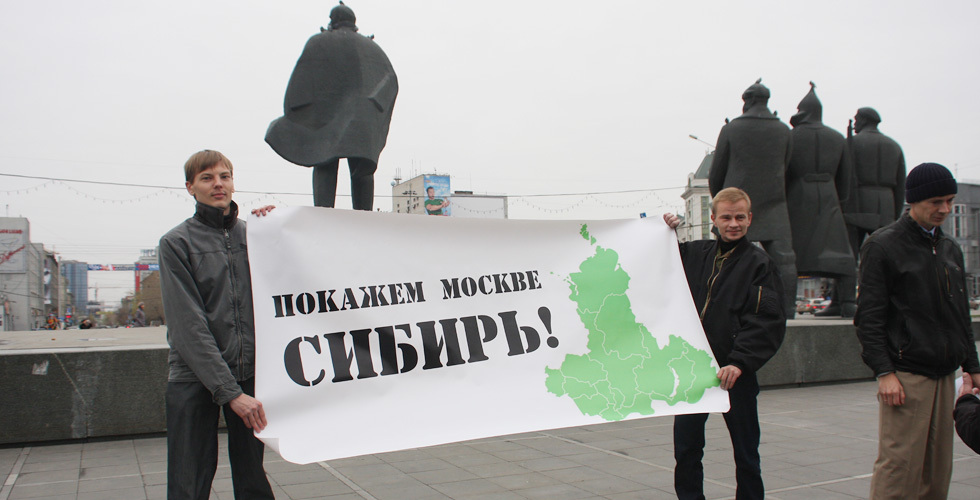
Kolta asked me to write about the collapse of Russia, apparently, referring to my almost three years ago, a performance that the collapse of Russia is inevitable. To my vanity, it is a pity that the recent “Ural Range” Evgenia Albats interrupted that lecture with its 118 thousand views, and the most disgusting people of Russian politics and media, arguing about how to punish for non-altitude conversations about the future of the country, recall it primarily, and at best, I should even take off-“I should not even take it“ in its place. It was me. " In this sense, the request of the Kolita came in very handy - on such days, the text on this topic can become a pass to the upper league of the enemies of Russia, and if you are lucky, Dmitry Kiselev himself quote me on Sunday.
But, as they say, Freedom is late for life, today I would not say about the future those words that said in the spring of 2011. When will the Russian Federation break up? Never. The fact is that it has already broken up, it’s just not so noticeable.
Lyrical retreat: Remember such a word from the eighties - “Sayudis” . The Lithuanian word, the name of the Vselitovsk Popular Front, initiated and successfully completed the struggle for the separation of Lithuania from the USSR. I would like to avoid emotionally colored assessments, now they do not matter, but there are several details that today seem curious.
People must understand what unites them in this territory. Russia has nothing of this.
Sąjūdis is in a litho-“movement”, which does not mean a word, you can’t imagine a neutrally. But there was the full name of the organization - Lietuvos Persitvarkymo Sąjūdis . The Lithuanian word PersitvarKymas is a “perestroika”. The exact translation of the name is “the Lithuanian movement for perestroika”, that is, for the official policy of the Union Center, and not at all for independence and not for separatism. Of the 35 members of the initiative group of movement, almost half (17 people) were made up of members of the CPSU - the ruling and the only party of the Soviet Union at that time (this is 1988). This is now, when Lithuania is already in the European Union, NATO and the Schengen zone, it seems to us indisputable that Sayudis was a movement for independence - and he was, which was already there. But if suddenly in the Soviet Union there was a criminal article for calls for its division into parts and an investigator from Moscow would come to Vilnius in 1988 to catch separatists, he would of course not catch anyone, and then he would have written in a report that the movement for perestroika would completely approve of the course held by the party and Mikhail Sergeyevich Gorbachev, and even at the founding congress of the foundative congress The guest from Moscow, the poet and laureate of the USSR State Prize, performed, Andrei Voznesensky (this is true, he performed there), you will not be held.
When now somewhere in the Kuban or even more so in Kazan is gathering under Putin's portraits for another forum for another spirituality, who will guarantee that we have not a new “Sayudis”?
Any country within its borders is kept by non -criminal articles for separatism and not even tanks with guns. The unity of the country, territorial and so on, is common goals and common values, among which a common language is in last place. People should elementarily understand what unites them in this territory and why they need all this. Russia does not have any of this - it is no longer, and that is why the collapse of the country should be considered already accomplished, regardless of formalities.
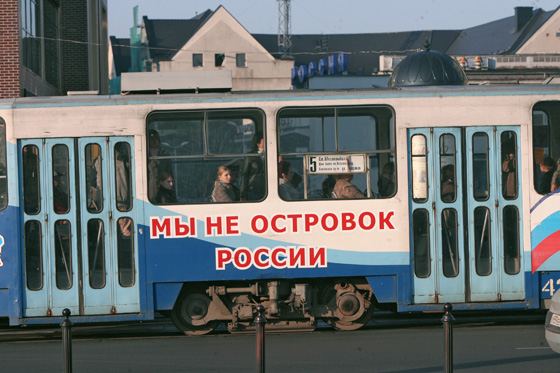 © Alexey Kudenko / Kommersant Kaliningrad
Another lyrical digression. When the “largest geopolitical catastrophe” of 1991 was part of the final stage, everyone remembers that in addition to the other Baltic states that had been separated earlier, there were still radical Georgia and Moldova, partly Armenia, at the very last moment - Ukraine Kravchuk. And there were passive republics-to some extent Belarus, in some even Russia with Kazakhstan, as well as Azerbaijan and reference loyal regions with the highest percentage of votes for the Union at the March referendum-Central Asia, that is, Uzbekistan, Kyrgyzstan, Tajikistan and Turkmenistan. Already after the Belovezhsky agreement, their presidents went to meetings to Gorbachev, their deputies disciplinedly arrived at the last meeting of the Union Supreme Council, and only two weeks after the Belovezhskaya Pushchi they also signed an agreement on the creation of the CIS. Karimov, Makhkamov, Akayev, Niyazov - people who did not fight for independence, people who did not even play at the Nazarbayev level in hardware games in Moscow, people appointed by Moscow and even in their thoughts did not dispute Moscow’s right to appoint them and remove them suddenly became the presidents of new countries recognized by the whole world accepted in the UN and so on. Is it easy to at least believe in such changes? They say they did not believe: the cult of the Turkmenbashi personality in Turkmenistan began almost a year later, in the second half of 1992-several months after independence fell into his hands. Member of the Politburo of the Central Committee of the CPSU Saparmurat Ataevich Niyazov behaved exactly the same as if he remained a member of the Politburo of the Central Committee of the CPSU. A popular legend says that he sincerely waited for a call from the Kremlin - “That's it, it was a rally, tomorrow we are waiting for you in Moscow at the Plenum of the Central Committee.” Well, not from the Central Committee, but at least from Boris Nikolaevich - the first president of Azerbaijan Ayaz Mutalibov told me that he and his colleagues sincerely believed that Yeltsin simply took the place of Gorbachev, and nothing would change; When Mutalibov was overthrown, he called Yeltsin, waited for instructions, but did not get through. So only when Niyazov realized that there was no draw and that no one would call - only then he was frostbitten and turned into the most eccentric dictator of the central and, perhaps, all of Asia in general. The unity of Russia today holds on the assumption that they can call and yell from the Kremlin. Which of the regional bosses will be the first to understand that you can yell in response, he will tear the bank.
The only thing that holds the country in the current borders was the hatred of everyone to everyone.
But when the governors begin to yell, this will already be the final stage of decay, such a design of official documents, a boring and tiring procedure. This is just a consequence of the current stage when the authorities, which seems to be supposed to do everything so that the nation remains one, devotes at least two years to prove to all doubts - society split, there would be nothing that would unite people living in Russia. Three years ago, when I gave that lecture, one could talk about the interethnic and interregional contradictions, which then quietly smoldered and did not catch the eye at all. There have been no anti -Girls, no anti -Sirot, no Pussy. Riot , neither “swamp business”, nor even Instagram Ramzan Kadyrov. During these three years, Russia ran an impressive path - the only one that holds it in the current borders was the hatred of everyone to everyone that might not have been, but, probably, without this hatred there would not be this power. During this time, the institutions of hatred managed to visit the parliament, the church, and television, but the bets must be constantly raised. Having spent all the available sources of public confrontation since December 2012, the government has now actualizing the fight against separatism. Now the Kremlin makes the Russian Federation itself the source of public conflict - even I wonder why they do not feel sorry for it.