
Translated material
By the way, the writer is divorced
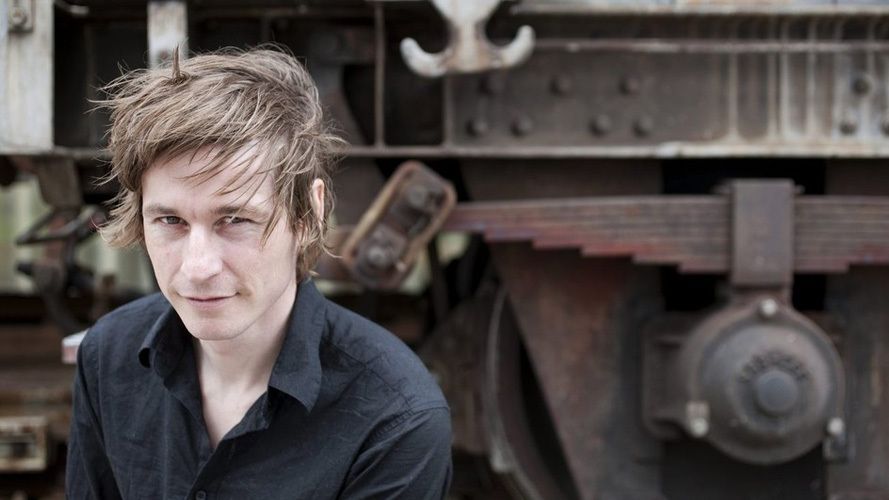
Arno Kamenish does not look like a writer. You will rather accept him for an athlete. Young, athletic physique, with dark-blinking strands casually combed back, with stubborn dark eyes and strong gestures. It seems that he will now jump onto a snowboard, a board with a sail or into a sports car or run after a football. But Kamenish calmly sits at the table opposite me at a literary dinner in a Basel restaurant. We are discussing the Swiss and Russian literature, the Basel Book Fair with which we just returned, and the Moscow Non/ Fiction Fair, at which Kamenysh will have to be his books. Kamenish is a recently rising star of Swiss literature. He writes in the Romansky (or Romanshi) - a language that remained Swiss from the Romans, which only 60 thousand people speak here. “60 thousand are like half a dodium Luzhniki ,” Kamenish suddenly says and smiles a desperate smile. At that moment, he is even more like an athlete who goes to the start to beat the unattainable world record.
60 thousand talkers in Romanshi are like half -Stadion Luzhniki.
The 35-year-old Kamenish published his first book 4.5 years ago and is already setting records in Switzerland. 150 days a year he is busy with public readings of his own works - he performs in cafes, restaurants, theaters and at book fairs. “I live in a car,” says Kamenish and explains that he came with readings already to Lviv and the Baltic states and really wants to go to Russia - look at Luzhniki . I saw how Kamenish reads his prose, which is close to verses, at the Basel Book Fair. He was forcefully threw the stanzas into the air, as if twisting the sun on the crossbar, and the audience in the hall - and these were mainly young women (by the way, the writer was divorced) - barely noticeably swayed on chairs, catching the rhythm of his speech. There were no free places. The atmosphere was almost like on a rock concert-however, this is familiar to Kamenish, he often performs with the musicians who call his texts.
Arno Camenisch & Pascal Gamboni - "L ' Homme"
The most amazing thing is that the ardent football fan of Kamenish is a writer-ruler. He took the plots for his three books in his native village, located in Canton Graubunden. 50 people live in the village, and every year there are fewer than them. The old people die, the young leave to hell. Kamenish is one of those sons of the village who left for a big city, but began to return - including in his prose. The tragicomic stories of the harsh rural life that the author retells is universal and cling to people regardless of their origin. Kamenish saw in the closed world of the station rural zucchini, the main place of action of his books, the model of the universe and managed to show it to his reader. He was able to infect him with his sadness from the fact that the world and language of his childhood disappear under the onslaught of a unified civilization. This is probably why the small stories of Romanshsky Rasputin are willingly put in the Swiss theaters and translated into 14 languages-they will soon appear in Russian, in the November issue of the magazine Foreign Literature, a fragment of the first novel from the Graubuna trilogy of the Kamenisha “Setsz-Ner” is printed.
He forcefully threw stanzas into the air, as if twisting the sun on the crossbar.
The success of the writer’s village prose is also explained by the fact that he himself transferred her to German, carefully weaving the Romanchian words into the text and making them the same full heroes of his stories. For this in Switzerland, he is called an innovator. Kamenish’s books are published in a bilingual format - a page on Romanshi, which the writer affectionately calls “ Mother Language” , and a page in German. He also reads in German, dosedly throwing the laryngeal of Romanesh idioms into the public. So the young writer, worn in Europe in a car, makes more to popularize the disappearing language than a whole state program.
The world record of Arno Kamenish is that, by and large, he managed to save his native Matera and save her tongue. He has already won.
On November 30, on Saturday, at 13:00 and December 1, on Sunday, at 13:15, Arno Kamenish will take part in a large Swiss program at the Non/Fiction No. 15 (Swiss stand A1).
The editors thank the Helvetia Foundation, Swiss Air Airline and Switzerland Tourism Office in Moscow for helping a trip to Switzerland.