
Translated material
Alexander Zaitsev. "AZ"
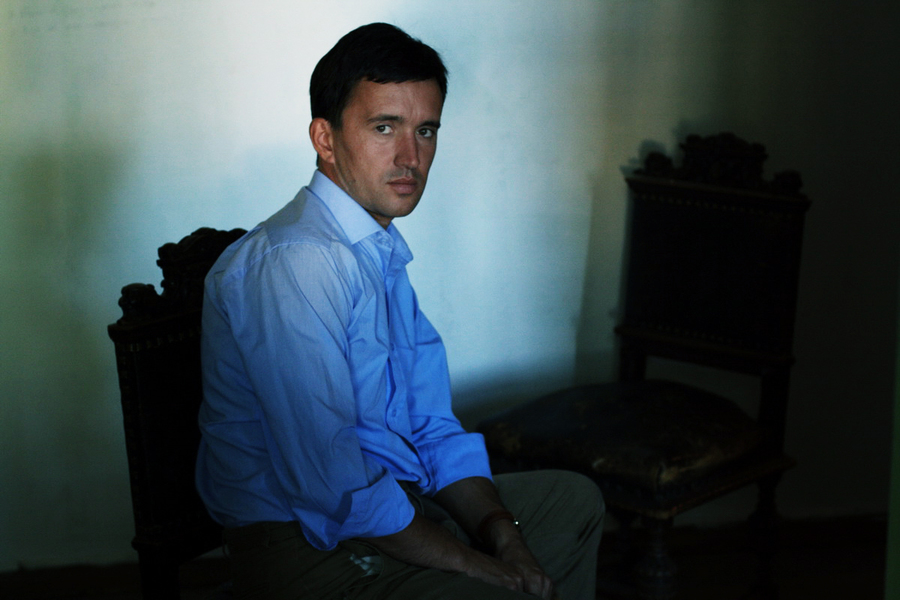
Alexander Zaitsev from the Christmas Toy produces the debut album “ AZ” . The word “debut” sounds a little surprising for those who follow the discography of the St. Petersburg duet, because Zaitsev has always been the main music in numerous projects that arose around the “EI”: the completed rap 2 h Company , Stas Baretsky, the joint plate of the duet with the poet Andrei Rodynov and the four albums “The largest simple number” would not happen without Alexander Zaitseva. In the SBPC group, which until recently gave concerts in a rock quartet format, Zaitsev not only composed music, but also played the guitar and sang. Suddenly for many - he recently left the demanded team to release his own album, Megamikx from which it now represents at Colta.ru:
Comments Alexander Zaitsev
- Can you say that you recorded a debut? What is the idea of this plate?
- We can say that I recorded the debut. I say so.
I wanted to record more music I hear. Not being distracted by the explanations of what I am doing and why. I went to the village and began to write. What I did was a natural continuation of everything that was before. There was no sharp shift. When you do something, you always think: how else can you? More and more often I had recently thought about this "how else." And then I bought one machine, it was already quite old, it came out at the beginning of the zero, called Monomachine , and it turned out to be just doing things that I invented, but could not do it.
I never wrote experimental music for the sake of experimental music, it seems to me that it is very boring.
I wrote a lot of music, almost 400 tracks, but I realized that it was impossible to work with all this at once, I took the first about 50 tracks and showed them to some people whose opinion was important to me. These were not even ready-made things, but simply spontaneous demo recordings, and I did not want to choose tracks for the album myself, then look for order for them, then write them down efficiently, etc.; I was wondering whether this material could be structured in some other ways.
Someone did not answer anything, and someone, like Fedor Vetkalov, on the contrary, actively joined the work, and the album unexpected for me very quickly arose.
- Who else took part in the record?
- When you write a lot and for a long time, the actual musical experience interferes with the very actually, and I wanted to develop music in a blessed way. For example, I was very worried about whether it was possible to develop a melody, thinking about visual images, and not about the programming of drums. This is probably stupid, but it was important to me. So for me the most important thing was to communicate with "non -recupens" - photographers, designers. Therefore, first of all, among the contributors, I would have to call photographers Nastya Tsidder and Anton Mikhailovsky, who had long been shot as “SBPC”, for example, either Cyril Blacks, a designer who made a book about “SBPCh”, or Syany Zakharenko (ex-bummer “SBPCh”.- Ed. ), Which made this megamix, or Igor Antononovsky, author, author Public "Sleeping areas of the country OZ " , but they can not hear them on the album))). Although Kirill of the Blessings eventually made the whole design for the cassette and the album as a whole from the filming of Nastya Zader.
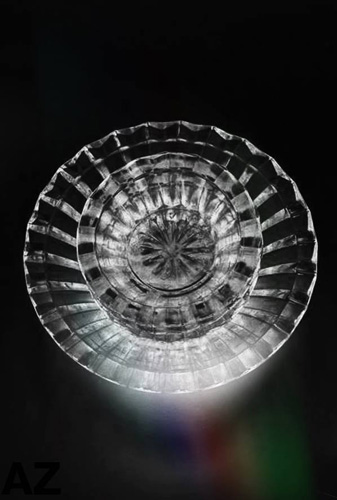 Cover of the album "AZ"
- Judging by what you say, your experience of recording this plate is purely for yourself. You made a record "for yourself." But at the same time, you hardly did not think about the listener: what he needs, or, for example, that you would be nice to speak with this material-say, at the SKIF festival or “electricity”-or in the cities of Siberia, as the SBPC is now making.
- I thought, of course. That's why I bought this machine for myself. In fact, she has many drawbacks, but there are two huge pluses - it is compact, so I'm mobile as never before, and it works more stable than the computer. I never wrote experimental music for the sake of experimental music, it seems to me that it is very boring. I would not like to work in the studio, but to play concerts. Therefore, all this material and a lot of new things are very played. I tried almost a year on our electronic Thursdays and Silent-Giggs in the Erarta Museum-it turned out like this:
It seems to me that it is very good for festivals. In the summer I went to Nizhny and played at a club party there, and it turned out very cool. Not only by my sensations. It was evident from people, their reactions - I made a label for this so that it could be started to export to all cities of Siberia and not only.
- What do you think about the return of the listener's request to “intellectual electronics” - music without obvious applied value, without a straight barrel and drops? Does it exist? How wide is this niche?
- While I traveled around England and Europe, I thought that Neckiroka. But in the zero I drove enough from Vladik and Komsomolsk-on-Amur to Kyiv and Riga to understand that the new language is interested in everyone and everywhere. And how people need drops and a straight barrel, they also really want music without it.
Commented by Fedor Vetkalov, XI Zhuang
- What was your role in the recording of “ AZ” ? How did you interact with Alexander Zaitsev?
-Once Sasha said that in the summer in the village he recorded a lot of live sessions, and sent me a huge archive of 52 track-more than two hours of music. I uploaded everything that was in the iPzd and for several days I listened to the composition endlessly, rolling for many hours on a bicycle. For me, this is the best form of listening to music - you fly calmly and listen to, abstractly and carefully at the same time. Every time there was an interesting track, I made a note and rode on. Thus, out of 52 tracks there are 30, then 20, and then 12 compositions, in my opinion, are the most indicative and versatile. That is, from two hours of music there are 32 minutes left - this is luck. Further, starting from the sound, I came up with the option of the name of the album, cover, tracking of tracks, the name of the tracks and sent Sasha in the form of a mini-presentation as if already a finished album. As a result, after joint discussions and thoughts, the name of the album became different, the cover was replaced, the compositions disappeared, but the option with the choice of tracks and their sequence we recorded, which I am very happy.
I am for an intellectual diverse listener (IRS) and for Russian original music (RSM).
- What do you like the most in the album " AZ" ?
- In the album, I like his identity, his integrity. Of course, you can always find parallels with one or another of the sound, but here not only the sound is important, but also your statement, your vision. Sasha did a very personal, intimate work, and she is far from the noisy road. There is your house around the farm, and everyone in this house is good. For me, there are many basic, fundamental things in the album (sadness, melancholy, longing, fear, love, kindness, etc.), but expressed in a rather abstract and not emotional manner. This is also a rarity. It also seems to me that this is very Russian music. In my opinion, you can hear that it was written by a person who lives here. In a word, for me, Sashin album is a real Russian electronic music.
- Why did you and Sasha also have a label - and what views do you have for him?
-We talked a lot on a variety of topics, I came to St. Petersburg several times, there were conversations about the search for my musical language, and about the experience of the place in which we live, about Russian music, and the idea naturally arose to make a label so that this community of interests to somehow support and at the same time support all the projects that would come out on it. Say, the album of one musician attracts attention to the album of another. It also turned out that Sasha heard with Alik - Tembr69 (Albert Rasyulis, a participant in the Fizzarum project. - Ed. ) - his tracks and compiled an album from them, which is called: “Tembr69” . Excellent and little for a similar work with your bizarre language. I see a label as a field for the publication of unusual, peculiar music, where there is its own internal order. The plans already have a lot of interesting and, by the way, thank God, not only electronic.
- What do you think about the return of interest from the listeners to the so -called Is there such a phenomenon? Or is it a fiction?
- It seems to me that the listener's return to intellectual electronic music is not even a fiction, but a few fictions.
In my opinion, what is called “intellectual electronic music” (IDM) , back in the 1990s, it became just a stamp: it is convenient to write on posters, etc. But, by and large, you can simply listen to some opus of Shtokhausen, xenakis and other wonderful people, and the question of the intellectuality of IDM music will close by itself. Moreover, the music of these composers is simply called - electronic music. If we talk about Russia, then IDM has never been particularly fashion, only, maybe in the late 90s, therefore there is no return. But in fact, this is not so important. I’ll say differently: I see that in Russia there are many thinking, interesting, deep people and they have interest in original music, I would very much like to see and communicate with them more often. I want to live here, and I want to be affirming, and not denying just doing my job. I'm not for IDM , I am for an intellectual diverse listener (IRS) and for Russian original music (RSM). Well, the label, in turn, will try to continue to issue records made by using both electronics and acoustics. Together we will water the bed, and flowers will grow.
The presentation of the album of Alexander Zaitsev “ AZ” will be held on November 21 at the Moscow Borodach Moscow Bar , on November 22 - in “Bufet” (Nizhny Novgorod) , on November 24 - in “Sea” (St. Petersburg).