
Translated material
Why "Russian officers" prison
How security officials become human rights activists
In the country where the Chekists are in power, security forces inevitably become human rights activists
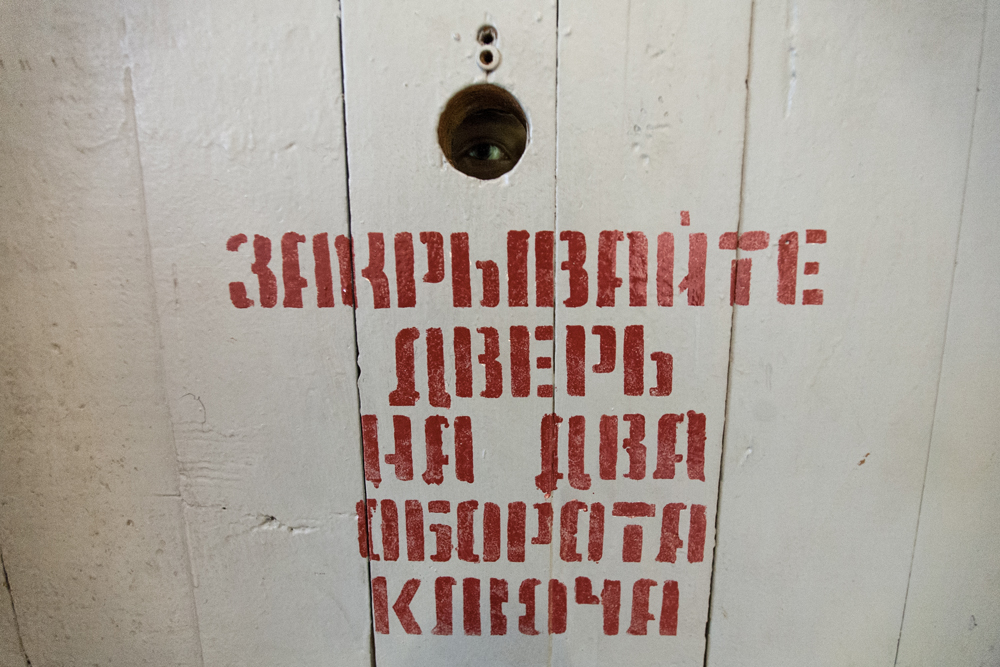
SIZO "Sailor Silence". Entrance to one of the buildings. July 2013
"Hello! Public Supervisory Commission for the places of forced content! We visit the Moscow pre -trial detention center, find out what problems you have. Do you have complaints about conditions, health, and non -ordering medical care? ” - With these words, we go to the cells, to the schizo, to the walking courtyards, to the “monkey” of the ATS, to the IVS cells, to the centers of the maintenance of foreign citizens and stateless persons. In Moscow there are no colonies, as in other regions. If we were - we would visit them too.
If in the first years of the work of the PMC prisoners treated us wary, not very distinguishing us from prosecutors, now they are now distinguished. But they are still surprised: why are we going to them and protect their rights for free? On this score, the employees of the pre -trial detention center have their own opinion. “Members of the PMC - mostly pensioners, visit only rich people who pay them money” - so they say prisoners.
But when we come, they try to position themselves in every way, they are afraid of our visits. The head of one Moscow pre-trial detention center somehow even admitted that he was starting his day, looking through the Internet: whether there was any publications after visiting the PMC of his prison.
Who is afraid of the PMC
What they are afraid of is generally understandable: prohibited objects are still “walking” in prisons-phones, drugs, alcohol. Despite all the reforms - in quotation marks and without - in this sense nothing has changed. Therefore, it is so important for the employees of the pre -trial detention center that people who will not get to digging and interfering with prison corruption will not destroy the established traditions and orders for years.
Public observation commissions throughout Russia are selected for the third time. Last time, in 2010, the authorities decided to introduce security forces into these commissions - former operatives, guards, police and prosecutors. The law allowed - these people were nominated in the PMC from public organizations protecting former employees and veterans of security structures. Already in the last convocation of the Moscow commission of such people, there were 9 out of 20 people. But while they were still in the minority, the security forces were not able to choose the head of the public organization “Officers of Russia” by Anton Tsvetkov, although he did not hide that he really wanted it.
"
It is important for employees of the pre -trial detention center that people who will not interfere with prison corruption come to them
"
Valery Borschev was elected the chairman of the Moscow PPC, as in the first composition of the commission: the famous human rights activist and politician, the author of the law on public control, for which this topic is the main thing in life. He led a public investigation in the case of the death of Sergei Magnitsky.
If, then, in November 2009, we did not interview many of those who were involved in the death of Sergei in the “sailor silence” in fresh tracks, would not have presented their own report on the circumstances of his death, there may have been neither the “Act of Magnitsky” or the criminal case on the fact of the death of a lawyer, which, however, for obvious reasons, ended with zilch. It was the active participation in the Magnitsky case, as well as the reports of the PMC after mass protests, certificates of visiting Leonid Razvozzhaev in Lefortovo, when he spoke about his abduction in Kyiv, Borschev and did not forgive the security forces.
And this time they seemed to take a revenge.
Human rights activists-patriots
Just like Anton Tsvetkov, they patiently waited for the powers of the former composition of the commission to end, and prepared the soil. It is said that Tsvetkov lobbied for several months in a row in the Public Chamber of his candidates for the PMC. He was helped by the notorious Vladimir Osechkin, the creator of the Gulagu.net website, who, loudly declaring the dominance of security forces in public supervisory commissions throughout Russia, selected those who, in his opinion, would become “fresh blood”, replacing the old cohort of human rights activists, accustomed to living on foreign grants.
Osechkin himself cannot get out into public observers - he has an incessant criminal record: he served several years under Art. 159 of the Criminal Code ("Fraud).
His cellmates said that he collaborated with operas, for which he had a number of privileges in a pre -trial detention center. Having freed himself, Osechkin with the light hand of the head of the “Rus'-sitting” Olga Romanova entered the human rights and journalistic community, became an expert on a prison topic, but after some time Romanova distanced him, declaring her almost “enemy of the people” for opposition activities.
Anton Tsvetkov is also a patriot. On the website of the "officers" his credo: "We live in a great country whose name is Russia." As stated in his biography on a personal website, Tsvetkov "was born on July 15, 1978 in Moscow in a family of employees of the State Security Committee." He does not write anything about the service in the army, but in the column "Activities" notes: human rights activist, candidate of political sciences.
A human rights activist-businessman
Tsvetkov is a member of many public councils, he loves to boast of his connections in the Ministry of Internal Affairs and the FSIN.
But this is not all: according to the SPARK-Interfax system, flowers are also a co-owner of seven commercial firms, whose scope of activity affects the imagination. What he does not do - retail trade in drinks and tobacco products in non -specialized stores, marketing research, delivery of real estate, providing various types of services, audit activities, studying public opinion and many others.
Why such a business figure Protection of the rights of prisoners? Maybe for him human rights activity is a springboard for a political career?
The ill -wishers say that Tsvetkov received a task from the security forces to choose the chairman of the PMC and force Borshchev to slap the door with a noise. And the commission, led by the new chairman, will take up a violent imitation of human rights activities.
I quite admit that for the head of the “officers of Russia”, such an active part in the activities of public observers is the path along the career ladder. But why go to jail to those whom he brought with him to the ONC - to veterans of operational services, former guards and police officers? It is not very believed that these people with an army bearing are ready to run around prisons just like that, from altruistic considerations, protecting the prisoners from the arbitrariness of their former colleagues.
If Tsvetkov heads the commission, everything will fall into place: in Russia, where the Chekists are in power, “socially close ones” should be human rights activists
"
It would be better to ask them about their motivation, but they think they are unlikely to say the truth. Although more than once I heard that former security forces can go to prison for purely commercial reasons. Tsvetkov himself spoke about this in an interview with Public Post: “Ask how much a request from a member of the PMC costs how much it costs to transfer a person from a pre -trial detention center to the hospital. On average, the request is five, ten, fifteen thousand rubles with them. And what do they live on, do you think? "
I remember, after reading this interview, I was very surprised: over five years of work in the PMC, I wrote queries dozens of times, sought to transfer prisoners to hospitals and even the release of some of the pre -trial detention center due to illness. But it never occurred to me that you can take money for this. It was just interesting to try to make the jailers fulfill the law.
Human rights activists against security forces
I understand why journalists want to become members of the PMS: in every pre -trial detention center - dozens of fantastic plots, pictures, and experiences. I understand why compassionate pensioners go there: they just need to occupy themselves with something, especially if there are no grandchildren. There is another type of visitors to prisons - those who have been engaged in human rights for many years, choosing this lesson in the character warehouse, at the command of the soul. All these people will never be able to work with Anton Tsvetkov and the like: they have completely different ideas about good and evil, different goals - they will never understand each other.
If on November 18, the head of the “Officers of Russia” will be elected chairman of the Moscow Penacious Power Pour (and the alignment of votes in the new composition of the commission in his favor - 23 versus 17), this discredits the system of public control itself. The result - prisoners will cease to trust human rights defenders. By the way, this is perfectly understood in the presidential administration, which oversee the elections to the Moscow Peninsula. The first deputy head of the Kremlin administration Vyacheslav Volodin, and the head of the Department of Internal Policy, Oleg Morozov, knew about the confrontation between Borshchev and Tsvetkov. But both did not move a finger to change the alignment of forces in the commission, although the Commissioner for Human Rights Vladimir Lukin recommended his list of human rights activists who were supposed to enter the Public Chamber. And the Council of the Chamber, who chose Moscow visitors, in fact, preferred the “List of Tsvetkov” “Lukin's List”.
However, there is also a certain logic in this future. After all, if Tsvetkov heads the commission, then everything will fall into place: in Russia, where the Chekists are in power, “socially close ones” should be human rights activists.
You see, in the future flowers will rush to the Commissioner for Human Rights.
Why not?
Photo: Vasily Popov