
Translated material
Rebel from the ashes
Ksenia Larina - About television retro
In the struggle for the viewer, the main television channels threw strength to TV series in the retro style. The trend is the Soviet past
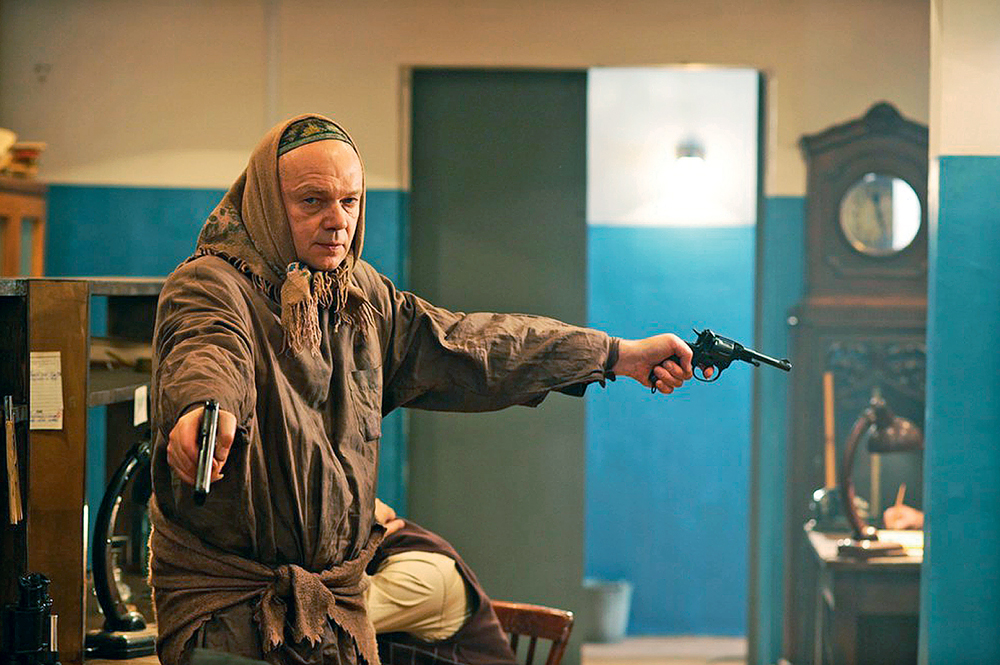
Andrey Smolyakov in the series "Pepel"
The dull single -type melodramas of the “weekend”, designed for compassionate spectators of the “let them talk” program, and the peaceful retrodes about the Kremlin wives and children (“son of the father of the peoples”, “Brezhnev”, “Furtseva”, etc.), maybe they make a cash register, but clearly lose a high -quality age audience, educated on Stirlita and Zheglova and Zheglova and Zhegliva and Zhegliva and Zhelova and Zhelova and Zhelova and Zhelova The host of his spectator count from those years when the movie on the TV was made by real directors according to real scenarios.
The divided world
Now Sergey Ursulyak is working for this high -quality audience, its television production is an absolutely piece product intended for those who in Soviet times went out for a walk with a dog during the Time program in order to be in time for the next series. The “liquidation” of Ursulyak, as the “Isaev” that followed her, and then the epic “life and fate” changed the face of today's television, gave it human features, revived the best traditions of the old Soviet school of television feature cinema. Ursulyak's films do not fit into a modern serial format with typical plots and schematic heroes. And his main trump cards are a high -quality literary or scenario basis, plot non -standard, depth and complexity of the author’s gaze.
However, even far from a simple Ursulyak could not rearrange the emphasis in the mass consciousness: the world of the Russian viewer is still divided into red and white, to patriots and traitors, to those who serve the Fatherland, and those who harm him. And any attempt to change the picture frozen since Soviet times leads the audience to a state close to schizophrenia. The authors of the retroder, like the audience, rush between the "Great End" and the "Bloody Age", not risking making their choice.
The confused consciousness of the creators of the new Soviet mythology is fruit: good Chekists, wise military leaders and noble policemen, designed to realize the popular slogan “But there were a lot of good things!” Dressed with a needle, as if stepping from the pages of fashion magazines of the 30-50s, these brave men with the faces of their favorite artists leave no doubt that "there were a lot and good." And it turns out - much more than bad.
Urks rule
The series "Pepel" on the channel "Russia 1" stunned with unprecedented advertisements, the number of movie stars and the director "from Hollywood". Literally from the first series, it became clear that something went wrong with the script: the heroes and plot moves, dumbfounded from all the “liquidations” and “apostles”, were striking in some prohibitive rudeness of an experienced gopnik. It was as if the script was composed by a dumb fifth grader from Biryulev, with his tongue -tied ideas about the beautiful and the habit of "trifle to rub on his pockets." The captain of the Soviet Army Petrov (Vladimir Mashkov), escaping from the arrest, steals the thieves' common fund and documents at the thief in the law of Senki Poplov (Evgeny Mironov), and for ten episodes and years they live so, pretending to each other: Senka Pepel makes a career of the Soviet officer Igor Petrov, and Petrov turns into a dangerous bandit, a killer and a smuggler.
"
Do children need a real truth about their parents? Is there an excuse for meanness and betrayal?
"
Miraculously, neither one nor the other has nor relatives, nor friends, nor the past. Petrov’s wife (Elena Lyadova), having lost the real Petrov, began to love the “Petrov” false with the same passion and even became pregnant, but she could not give birth, because the former Petrov appeared and first shot her in her heart, and then dropped with her and with the car directly into the abyss, and the new “Petrov” chased them on a motorcycle, but did not catch up.
All this nonsense with a brave combat horse rides through historical milestones - there is a war with the Nazis, and special forces with policemen, and a Spaniard, grumbling under the Siberian zone almost to Spain itself, and tattoos in the form of black lily or roses, which all do in each other in antisanitarian conditions, and learning a hairdryer in a warmth (these are already “gentlemen of good luck”! Prospectors who melt native gold into wagon chains, and “Blond Josie” from the Primorsky restaurant (Chulpan Khamatova) with a cry “I will be yours on the other side!”, And the leader of the Mafia “Grandfather Leva” (Peter Mamonov), sitting on a white chair in a snow-white costume on the Kiselny Molochnaya River somewhere near Petrozavodsk, and Brillants, buried in the grave of the mother ... The literary basis of the “ash” turned out to be as cloudy and dubious as the biography of the screenwriter Bagirov - former shuttle and Patyushnik with a criminal past, and now the proxy V.V. Putin, who entered the Zamrevelensk “cultural lads”, like Urca Senka Pepel in the highest command staff of the Red Army.
In the way, it turned out that the Hollywood director Vadim Perelman disappeared in the middle of the crew under unknown circumstances: either his twins were born, or his head was broken. In any case, according to journalists, he categorically refuses to speak on the topic of “ash”. How the whole color of Russian cinema was lured into this monstrous scam, it also remains a mystery.
An even greater mystery was the transcendental rating of the “ash”: the country watched this incoherent nonsense with some inhuman rapture, like those mice eating a cactus.
Underwater stones
The response of the first channel was the retround “The Scream of Owls”, in which the enkawadeshnik with the human face of Sergei Pukepalis, step by step, exposes a spy nest in the county town of an island, lit up as flies, saboteurs, traitors, maniacs, “forest brothers” and German residents. The director and screenwriter of this film Oleg Pogodin, to his honor, lasted until the end of the filming, although he admitted that the script was written right during the filming process, and the most unprecedented - the actors themselves did not know which of them the villain!
Such an amazing approach is the absolute know-how canal, because you can hardly imagine the performer of the role of Hamlet, who does not know the end of the play. Apparently, for this reason, the artists here play each episode as the last, as if driven by fear of exposure into a corner - you need to play in full, otherwise this is a killer? The apotheosis was the monologue of the main maniac: Vasily Bochkarev, an artist of a very advanced age and iron school of the Maly Theater, appears before the KGB (and before us) officer in absolutely naked form and shamelessly demonstrates scars, cuts and openings from bullets on his luxurious body.
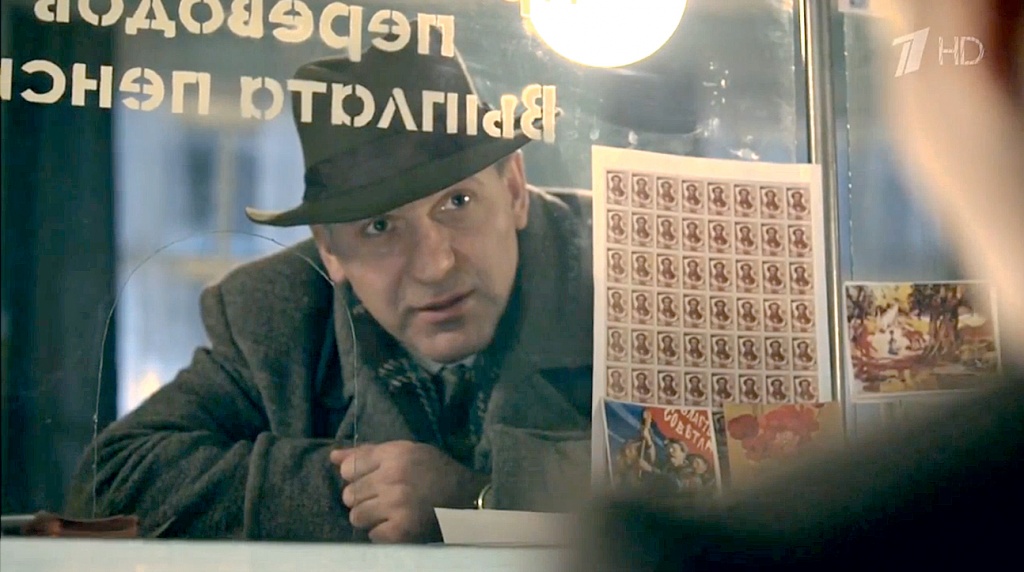
Sergey Pukepalis plays in the "Switch of the Owls" of the Encavedeshnik with a human face
However, despite the unbridled imagination of the authors and the usual Soviet solitaire, an attempt to explore human nature, the nature of absolute evil, the nature of sin and the inevitable reckoning for it is guessed in the “scream of Owls”. The theme of the choice between truth and mercy does not only continue the famous dispute of Zhelov and Sharapov, but raises it to a different level, projects it to this day, when the question of the truth of the past - the country and the individual human biography - becomes the main thing in choosing the future path, and on the answer to which our future life depends.
Do children need a real truth about their parents? Should you dig out criminals from the graves on which it is written that they are heroes? Is there an excuse for meanness and betrayal? Do we have the right to condemn the children of strangers to the suffering and death of children in the name of saving our own children?
In the past - long -standing and recent - TV, like its viewers, is trying to find support and re -compose a biography
"
All these frightening questions unexpectedly and timidly emit from the boiling broth of the “cry of owls”, surprising by their presence of the authors themselves, who, perhaps, did not think anything like this. But it is precisely these issues that remain in memory, clinging to our consciousness, like the corners rushing along the mountain river - for the pitfalls. Unlike the meaningless “ash”, Oleg Pogodin’s film restrained from the temptation to shout in front of the fool-public and disappear in the Void funnel. And the actors here are less bustard their faces, and they are more engaged in internal life-and this habit of thinking, before saying something, to our pleasure, could not be hidden. And Sergey Pukepalis, and Andrei Merzlikin, and Maria Mironova, and Ernst Romanov, and Anatoly Vasiliev, and Vasily Bochkarev are clearly artists of another warehouse, who can swim against the current.
In the present time, the TV is clearly uncomfortable and somehow bad. From today, the TV is staggering and fooling, this is evident in the news that regularly spits out our box from its subsoil, and by wild noctors, which are called socio-political current shows, and in terms of the number of toilet humor, smeared throughout the channels and exuders persistent nauseating aroma. In the past, a long -standing and recent - TV, like its spectators, is trying to gain support and re -compose a biography. Just do not be scared to remember everything. And then it will be, as in the song announcing the new retro-series Valery Todorovsky, dipping us in the abyss of the Soviet 60s: "We thought it was spring, and this is a thaw."