
Translated material
Temporarily retired
Furious security forces are transplanted to other chairs. Or increase
In law enforcement agencies, a new tradition has been rooted - the demonstrative resignation of managers for the misconduct of subordinates. How the fate of the dismissed bosses develops and why many of them return to the service without unnecessary noise - the New Times sorted out
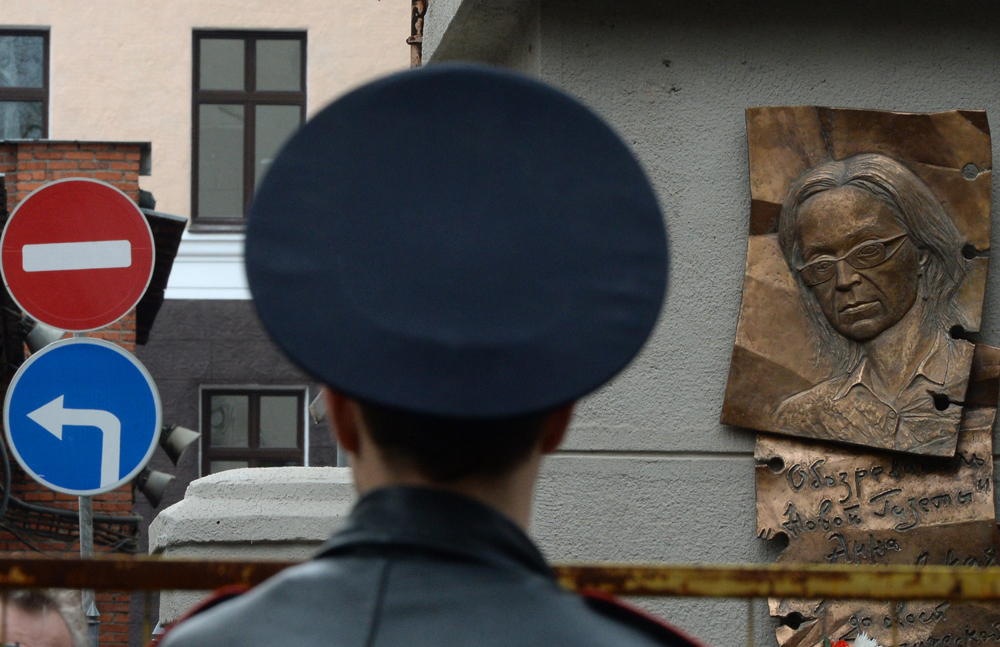
“I served for forty years, I loved the police. I am a fighting officer, of course, I expected another departure ... somehow kindly, or something. I do not want to talk about a career in the police - she died so died. " Colonel General Vladimir Pronin, in an interview with The New Times, recalls his resignation with bitterness. He was fired from the post of head of the Main Directorate of Moscow on April 28, 2009 - the day after the head of the Tsaritsyno Department of Internal Affairs, Major Denis Evsyukov, fired at the capital's supermarket, killing two and injuring six people. The head of the Central Internal Affairs Directorate then publicly expressed support to his subordinate, calling him a “promising employee” and writing off a tragedy for a “mental disorder” - and lost a position that he held almost eight years.
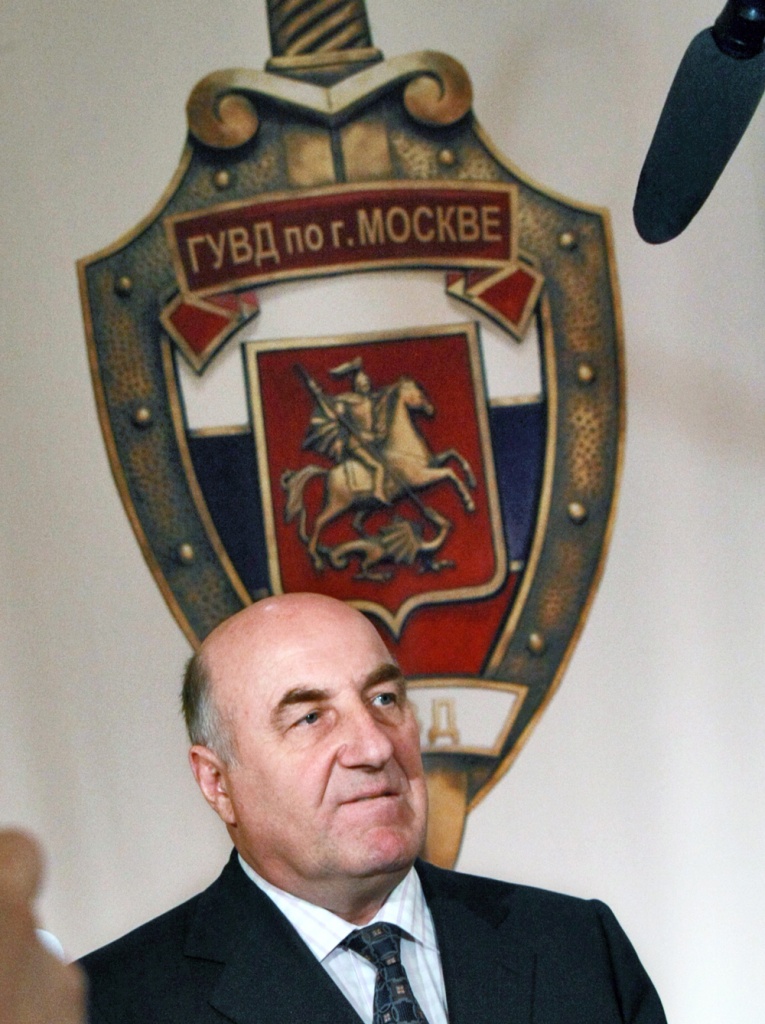 |
| Vladimir Pronin, having lost work in the Moscow police, now works for the Kremlin |
Having removed the epaulets, Pronin got a job quite comfortable. Having worked for several months as an adviser to the first vice-mayor of Moscow, Vladimir Resin, in July 2010, the former head of the Moscow police was appointed vice president of the Olympstroy state corporation. Two years later, he moved to the Office of the President of the Russian Federation, where he is now holding the position of first deputy head of the Office of the buildings of higher authorities. The New Times refused to tell about his duties on Old Square Pronin, limiting himself to the laconic: "Normally, I am satisfied."
General Pronin was one of the first “ritual victims” of the new course of the leadership of the Ministry of Internal Affairs, begun under the former Minister of Rashid Nurgalieva: the heads of different levels began to regularly dismiss for the unlawful actions of their subordinates. This practice was a response to the frequent scandals around law enforcement officers and finally established himself after the reform of the Ministry of Internal Affairs and the renaming of the police to the police.
Vladimir Kolokoltsev, who headed the updated department in May 2012, is clearly proud of this practice. In an interview with Rossiy Gazeta, published on November 6, he said that only in 2013 out of four thousand punished for resonant offenses of employees were police managers three quarters. And after the Ministry of Internal Affairs, the method of demonstrations was adopted by other law enforcement officers. True, the scandalous resignations, as The New Times found out, did not stop many security forces safely settled in new positions. There are three main areas of such employment: to the civil service, to other units of the same law enforcement agencies or in the business structure close to the state.
"
In 2013 alone, out of four thousand punished employees, three quarters - police leaders
"
Vertical shift
The story of General Pronin is not unique: high -ranking security officials, subjected to demonstrative flogging, often “pop up” in high positions in the civil service.
Major General Viktor Lesnyak, who served in the internal affairs bodies for 37 years, was removed in October 2009 from the post of head of the Ministry of Internal Affairs of Tuva loudly-with revealing plots in television ads and devastating speech at meetings. Rashid Nurgaliev then directly connected the resignation of Lesnyak with the execution of two traffic police officers by the senior lieutenant of the UBEP Tuvin Ministry of Internal Affairs Ayan Pavlov. However, already six months later, the source of The New Times, the deputy minister of the internal affairs of the Russian Federation, Alexander Smirin, introduced the Lesnyak to the appointment of the head of the Pskov Internal Affairs Directorate, says. True, then his candidate for some reason did not pass. But in 2012, Viktor Basargin, appointed by the Governor of the Perm Territory, made Lesnyak as Deputy Prime Minister, entrusting him with the regional Ministry of Public Security. The 62-year-old Lesnyak left this position in February 2013-as explained in the regional government, in connection with the deterioration of health.
One of the ways to preserve “valuable personnel” is to move to similar positions in other constituent entities of the Russian Federation
"
The scandal in Kazan was even more loud, where in March 2012, Sergey Nazarov, detained for petty theft, was killed in the “Dalniye AFD”. The name of the department quickly became a household name, during the investigation it turned out that Nazarov was far from the only one who was tortured by the police, and in the Republican Ministry of Internal Affairs they arranged a demonstration cleaning. Several leaders, including the head of the Kazan police Rustem Kadyrov and the head of the operational-search part of the Tataria Ministry of Internal Affairs of the Ministry of Internal Affairs, Rustem Valiullov, were issued warnings about incomplete official accordance. The head of the Republican Ministry of Internal Affairs, Lieutenant General Asgat Safarov, escaped with a reprimand, but in April filed a report on dismissal of his own free will.
However, this did not interfere with a successful career of punished. In August 2012, Rustem Kadyrov became the head of the Inspectorate of the Ministry of Internal Affairs for Tataria, and then headed the administrative and law enforcement department in the apparatus of the republican government. Valiulov is now held by the post of acting head of the Department of the Federal Migration Service for Tataria. Well, Safarov was just two months after the scandal was appointed Deputy Prime Minister of the Tatar government, and in August 2013 he headed the apparatus of the president of the republic.
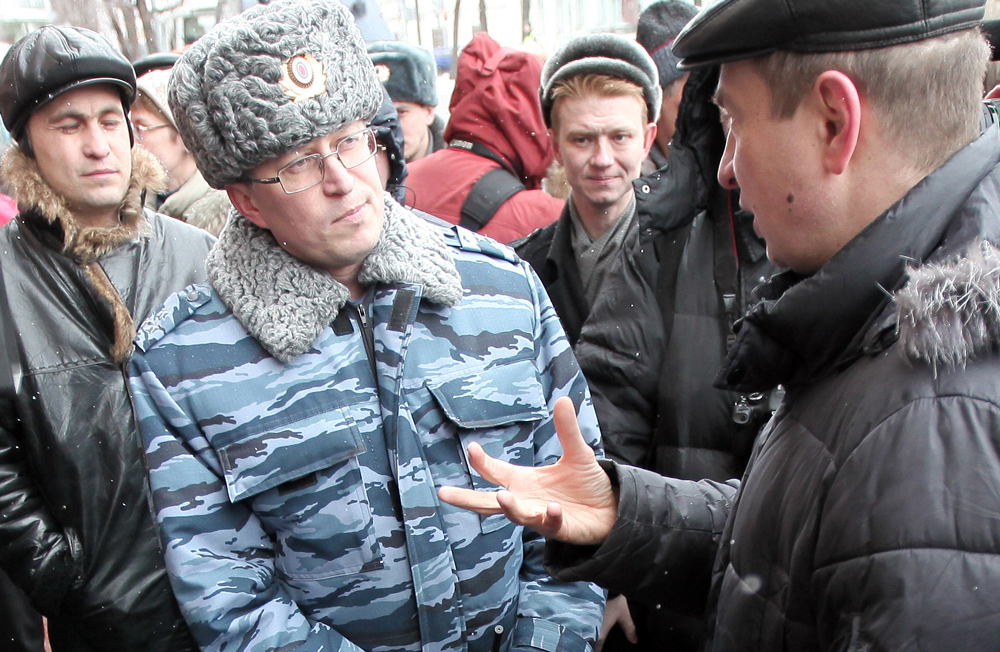
Rustem Kadyrov (second on the left) after a disciplinary sanction received an increase in the service
Horizontal drift
| *Cm. No. 35 of October 28, 2013 |
Another way to preserve “valuable personnel” is their movement to similar or even higher positions in other constituent entities of the Russian Federation. It was according to such a scheme that he was “punished” for interethnic unrest in Kondopog in 2006, the head of the Federal Security Service of Karelia Alexei Dorofeev: as the New Times*wrote, then Colonel Dorofeev, the head of the FSB in Moscow and the Moscow region, is now the head of the department of the FSB.
Among the security forces who received disciplinary sanctions after the murder of 12 people in the village of Kushchevskaya in November 2010, was the deputy head of the Office of the Investigative Committee for the Krasnodar Territory Aslan Huade. Immediately after these events, he was issued a warning about incomplete official compliance, and in July 2011, following the results of an internal investigation, Huade was fired with the official formulation “to reduce the states”. But already in August, he took a similar position in the management of the IC of the neighboring Rostov region.
Another law enforcement officer to switch to a new prestigious place of service was not prevented even by the prosecution of a criminal offense under the article “negligence”. On August 17, 2009, an explosion occurred near the building of the Nazranovsky District Department of Internal Affairs of Ingushetia, 20 people died. After the terrorist attack, the head of the police department Ali Yandiev and the head of the Ingush police, Ruslan Meyeriev, were fired, a criminal case was opened against them. According to the investigation, they knew about the impending terrorist attack, but did not take security measures. While the case is obeying in court, Yandiev received a new appointment, replacing the old capital of the republic to a new one: now he heads the Department of the Ministry of Internal Affairs in the city of Magas.
The police in the current law enforcement system have no incentive to fight corruption
"
The FSIN often resorts to the experience of colleagues from the Ministry of Internal Affairs. The head of the Butyrsky pre-trial detention center Dmitry Komnov, one of the few employees of the sentence system that lost their work after the death of lawyer Sergei Magnitsky in 2009, was appointed the acting deputy chief of the SIZO-4 Bear. And in 2013, the person involved in the “List of Magnitsky” was raised in his position and appointed the head of the capital's pre-trial detention center “Presnya”.
The head of the “sailor silence” of Tagiev, who was dismissed in May 2013, will remain in the FSIN system, and Oleg Topalov, the accused of murder, ran away, making a hole in the ceiling with an ordinary spoon. According to The New Times, Tagiev is currently on vacation, but in the near future it is planned to be appointed as an adviser to one of the senior employees of the FSIN.
Spare airfield
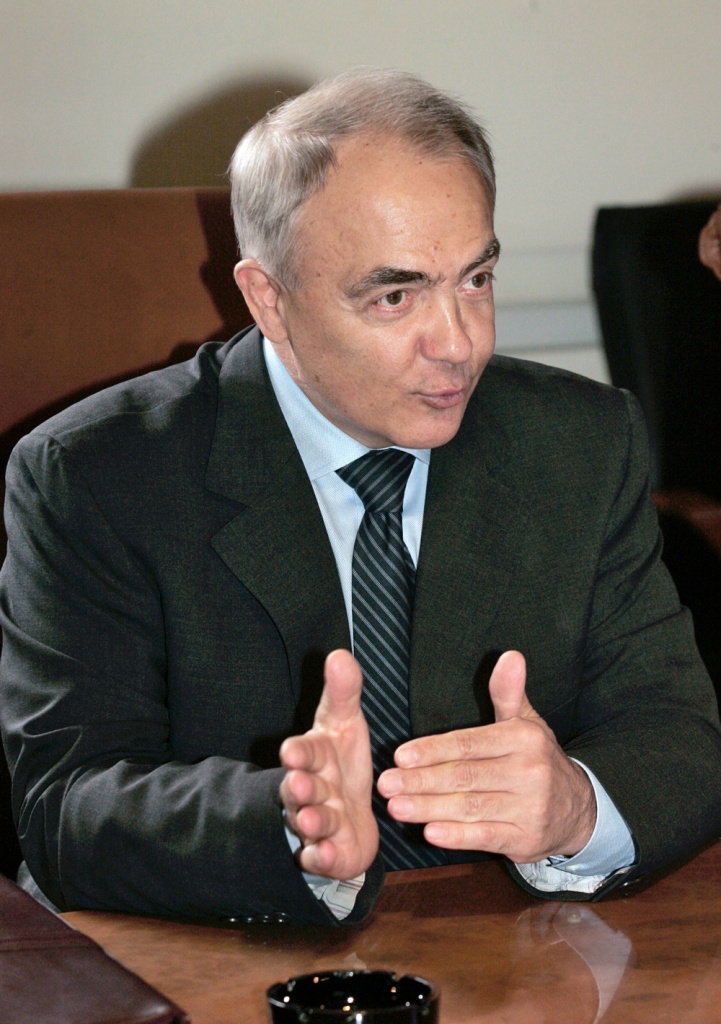 |
| Former FSIN Director Yuri Kalinin is engaged in personnel in Rosneft |
Finally, another popular area of labor migration of retired security forces is in the business structure close to the state.
In August 2009, Yuri Kalinin was dismissed from the post of director of the FSIN. He was not accused of anything and was even appointed Deputy Minister of Justice, but unofficially in the Kremlin explained that the 63-year-old veteran would not cope with the planned President Dmitry Medvedev with a large-scale reform of the penalty system. Less than a year later, Kalinin went to the “honorary pension” to the Federation Council, where until October 2012 he represented the Penza region. And in December of the same year, the former head of the FSIN took the post of vice president in personnel and social issues in the oil company Rosneft.
In 2010, the head of the Krasnodar Central Internal Affairs Directorate of the Central Internal Affairs Directorate, in 2010, also lost his position on the initiative of the president, who harshly criticized law enforcement officers for the situation in the village of Kushchevskaya. But the local authorities quickly found a new position to the disgraced officer - the deputy general director of Krainvestbank (belongs to the administration of the Krasnodar Territory). The new colleague was personally represented by the vice-governor Ivan Poronko.
Viktor Grechman, the head of the Tomsk Internal Affairs Directorate, was kicked out of the police after the murder of journalist Konstantin Popov in one of the Tomsk Medicipers. From the post of Grechman was removed in January 2010, and in September of that year he became an adviser to the manager of the Tomsk branch of Promsvyazbank (the owners-the “Orthodox bankers” of the Ananyev brothers). His responsibilities include "lobbying the interests of the bank in various structures."
The head of the Internal Affairs Directorate in the Southern District of Moscow, Major General Viktor Ageev, was also re-qualified as bankers. Although his dismissal from the bodies at the end of April 2009 was presented in the media as the punishment “For Evsyukov”, whose immediate supervisor was Ageev, the press service of the Moscow Central Internal Affairs Directorate of the Moscow Central Internal Affairs Directorate was actually a week before the massacre in the supermarket. According to unofficial information, the reason for this was the scandal with documents in the case of the ex-owner of Euroset Yevgeny Chichvarkin, which were found in the garbage tank near the District Department of Internal Affairs. Be that as it may, in 2011, Ageev “surfaced” as Vice President of the NSB, who belongs to the owner of the Su-155 construction holding, Mikhail Balakin, closely connected with the metropolitan authorities. At the bank, Ageev is engaged in economic security issues.
Dry residue
| **Cm. The New Times No. 36–37 of November 11, 2013 |
There are no retirees in the existing system, everyone is attached, explains Ella Paneye, a leading expert at the Institute of Problems of Law Enforcement of the European University in St. Petersburg, one of the authors of the concept of law enforcement reform developed by order of the Civil Initiatives Committee **. Having examined the mechanisms of the police, she came to the unambiguous conclusion: “The problem is that the effectiveness of these purges, even if the retirees had not returned to the organs, would be zero.” The fact is that the police in the current law enforcement system have no incentive to fight corruption or change something; When the threat of dismissal for the sins of subordinates hangs over them, the bosses gain a new meaning - to cover negligent employees. “So far, the police are forced to exceed the previous indicators of disclosure based on corruption and the application of force to the suspects, the practice of leading the leadership for ordinary employees will be“ positive ”only for Kolokoltsev. For the minister, this is a way to hold a tough hierarchy in the department, ”concludes Paneye.
Photos: Maxim Blikov/RIA Novosti, Vasily Shaposhnikov/Kommersant, Mikhail Sokolov/Kommersant, Grigory Sobchenko/Kommersant