
Translated material
Anti -Soviet Soviet man
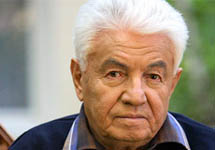
Galina Starovoitova: On the 15th anniversary of the death
I met Galina Starovotova in Washington in late 1989 or in 1990. We were both scholarships of the Kennanov Institute. There was such an American journalist George Kennan, who was in tsarist Russia and wrote about her. And his younger relative - also George Kennan - was a diplomat, at one time even an ambassador to the USSR, and participated in the creation of this institution. When they asked him, the name of whom is this institute after all, he began to crumble, because officially, it seemed to be the name of Kennan Sr., but at the same time he wanted it to be his name.
And there we met Galina. It was a time when many Soviet people went to the West - ordinary citizens, journalists, people related to politics. Then I met Yuri Baturin, the correspondent of the "Light", who then became the secretary of the defense council under Boris Yeltsin and his assistant, and then - the astronaut and academician. Yuri Levada came and also performed at the Kennanov Institute.
Of course, I heard about Galina by the time of our acquaintance - however, a little. At that time I myself was in exile and what was happening in the then Soviet Union, I knew only from the press, from the messages of agencies and Western television. At the Kennanovsky Institute, she made a report on interethnic relations in the Soviet Union and made a very strong impression on everyone, including me. After her lecture, I went up to her, and we somehow immediately made friends. She was only one month in America, and we met almost every day.
Soon Galina sent me an invitation to go with her to Armenia. I flew to the Soviet Union with a foreign passport, since I was deprived of Soviet citizenship under Brezhnev, and we flew to Armenia. By the way (I remembered against the backdrop of the tragedy in Kazan) flew on the terrible Tu-154, where passengers were allowed with all their luggage, so that all these suitcases, boxes, bales fell somewhere in the corner. I don’t know why there were stewardesses, but they did not follow anything, did not check whether the passengers were fastened, and half of the luggage shelves were open during takeoff. In flight, the plane trembled terribly and creaked, and it was amazing that he did not fall apart on the way. In Armenia, I saw how insane Galina used there. The whole country knew it in the face, it was impossible to walk along the streets with her.
The time was restless then: 1990 - on the eve of large events in the Soviet Union and in Armenia itself, where the Armenian liberation movement operated. It was a very strong opposition, which was actually the second power. The movement collected huge rallies - for hundreds of thousands of people. But there were small street meetings, and when we were next to Starovoitova, she was invited everywhere. The great love of the Armenian people for her was visible.
Then I finally moved to Moscow, I was returned to Soviet citizenship, which later transferred to Russian, and we often talked here.
She was a strong woman, strong -willed and imperious. Even in Washington, we both, being the scholarships of the Kennanov Institute, had the right to assistant students. I was embarrassed to give any instructions to my student, and Galya operated her assistant to the whole coil - because she was used to commanding, but I was not used to it and still have not learned.
She was powerful, but at the same time open to people, aroused confidence. They could approach her on the street and start talking about something, she stopped and heard everyone without any fanaberi, spoke to people. Huge energy was a man.
It was a time of great optimism. I remember we celebrated her birthday at the Moscow Hotel. And there someone said one of the two in Soviet times at the literary intelligentsia of table toasts-"For the success of our hopeless business!" (The second was "let the whole bastard die!"). Galina got angry and said that our business is not hopeless, but very reliable. It was a time of hope.
The overall impression that I had when I watched it near and from the side when she performed somewhere in the Duma - that she is a rare independent politician who has her own completely clear worldview. Such politicians then became smaller and less, and in the end she and Sergey Yushenkov remained.
I had such a definition - "anti -Soviet Soviet man." And I attributed Galina to such people in the sense that she was very critical, even dissident in relation to the Soviet regime, but, as a man of Soviet times, I very well understood with whom and how to talk. I could be both sharp and diplomatic, but it did not get down from its fundamental direction.
At a time when she, as a politician, was most in demand, various assumptions were expressed about her further career. When the question was considered about whether to replace the military Minister of Defense as a civilian, then among possible candidates for this position was also mentioned Starovoitov. I don’t know if she had coped with this role, but I’m sure that the president of the country (this opportunity was also not excluded), she could be outstanding. If this happened, we would now live in another country.
Unfortunately, the political climate became less suitable for her. Democratic reforms came to naught, an open policy was increasingly replaced by the usual for the established regime of the hardware subcover struggle of the Soviet type. Politicians like Starovoitova became an increasing obstacle along the way. And the easiest way to eliminate this interference was the murder.