Translated material
Great anger

Yuri Trifonov in “ Another Life ” has an episodic character, the great -grandson of the great poet, a funny boring little man who, on Sundays, works as a judge in football matches. “In relation to that,” the great -grandson muttered, “that the anniversary date is approaching ... I compiled in relation to that letter ... Academician Veleglars promised to sign, artist Sonin signed ...”
The main character, historian Sergei Troitsky, who is trying to grab the thread connecting the generation, acquaintance with the descendant causes a feeling of severe bewilderment. “One of the two, ” he angrily tells his wife on the way home, “ either in this Oboltus there is something hidden, unsolved, or in the famous poet there was something“ regarding that ”...”
The author’s position is clear. This is a ghhoux thing: to look for the features of great -grandfathers in great -grandchildren. The thread connecting the generation is intertwined. Studying the pedigree, you are unlikely to grab it. Especially when it comes to geniuses.
That's why it was so funny to read an invitation letter signed by Pushkin, Lermontov, Tolstoy, Dostoevsky and others. Along the way, various natural issues arose. Like, and where is Tyutchev’s great -grandson, for example, he went, why did Phoonite and not invite writers to meet with Putin? Derzhavin, why is it erasing? Radishchev with Chernyshevsky why are they sinking? Although, in good conscience, then under the letter there was a sharp lack of signatures of the grandchildren of Bulgarin's heirs. Then we could talk about the baton of generations with greater certainty and clarity.
And so, when reading a letter in the language, another question was also spitting, often asked in Runet in a collision with various misunderstandings: who are all these people? And with which Boduna they say on behalf of the great relatives (I do not enjoy the widow of Alexander Isaevich on this list: has the right)? Such questions are also called rhetorical, so the answer was not supposed.
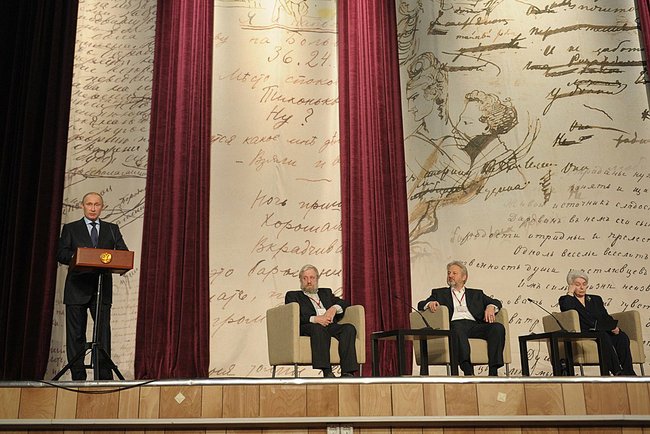
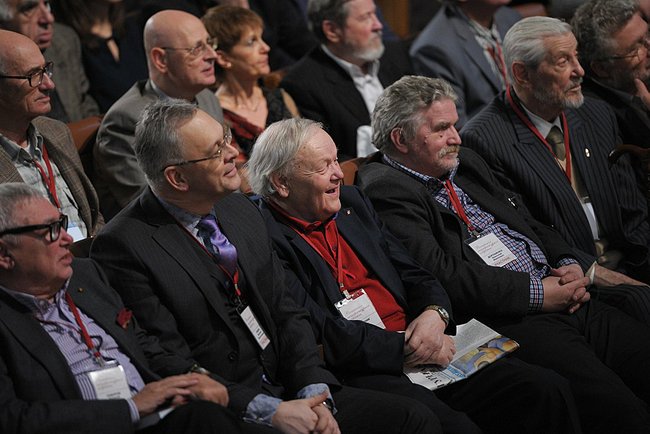
Meanwhile, the answer during the president’s conversation with the physical and spiritual heirs of the classics sounded, and very loudly. This happened when the word was taken by a man named Dmitry Andreevich, who is the author of the Notes from the Dead House. “I have now run through the life of Fedor Mikhailovich in Siberia, ” he told Putin and the rest, when they contributed to the fate of the prisoners of swamp and ecologists in the hall. “ He transgressed the law, and most importantly, he realized that the law was stopped and received these four years of hard labor ... and we get a person who increased many times ... This is a genius! The males! If these people ("Swamp prisoners." - Ed.), Passing through this (hard labor. - Ed.), We will come to this, we will only applaud! " And the worst thing, he added, is when the prisoners "PR in prisons."
The great -grandson then beat for a long time and mercilessly on social networks, and after all, about Dostoevsky, he told some truth. In relation to the fact that it is useful to sit the writer, Fedor Mikhailovich spoke out, this is a historical fact. And Natalya Solzhenitsyna, who entered into a discussion with the great -grandson, could recall how her husband was complained to, that Brodsky was locked too shortly in the village near Arkhangelsk, among the "livestock" landscapes. “I think: live Brodsky in exile longer,” the classic was upset , “that component in his development could have extended significantly.” Yes, and Joseph Alexandrovich himself about the time spent in Konosha spoke with mental warmth.
How to explain all this: praise of hard labor and sincere, like a pea jacket, poetic warmth? Yes, to explain that Russian history with a bit is stuffed with licks, prisons and camps, and how to write about the edge of his native long -term, if he did not sit? True, in Leo Tolstoy, this turned out by some miracle, well, so he was excommunicated from the Church for outrageous free-thought and rude violation of spiritual graces.
In general, the great -grandson of Dostoevsky did not disappoint. And even the idea creeped out that if he himself had a chance to scan in Mordovia for four years, then this Dmitry Andreich would be able to please us with an “Idiot” novel at least. Alas, I did not happen.
What pleased much less was the holy confidence of the great -grandson that the great -grandfather was imprisoned for nothing. Still, a shot sentence, then a staging of the execution (one of the sentenced ones has gone crazy), and followed by a change in the fate and Omsk hard labor, and all this for reading the letter of Belinsky Gogol - is it a lot? Having freed himself, Fedor Mikhailovich said bitterly that "he was stunned alive for four years," so he would probably argue with the descendant - about the fact that he "rightfully" went to the Gulag. Even harshly, I think, would argue. I could give in the face.
Even more sad thoughts arise when you think about the context. That is, we agreed that the prison for the Russian writer is a native house and a source of inspiration, well, if a person is not going to write prose or there are lyrical eight -plays? Why, then, asks, are the blind Akimenkov and a starving curves sit? Which of the "pirates" hatches the plan of "crime and punishment"? What are they suffering for? Here, as we might assume, the descendant of Dostoevsky was somewhat hastened with conclusions and calls.
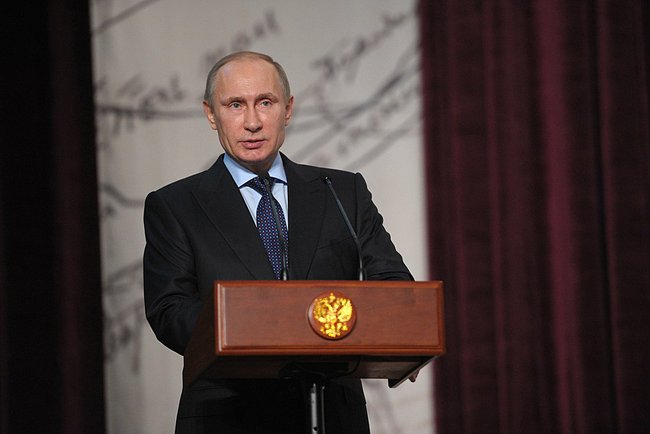
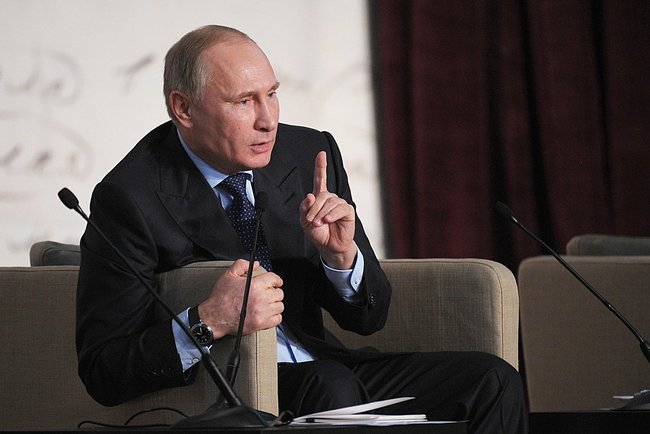
Although, most likely, he did not hurry, but, on the contrary, spoke very on time. Immediately after Putin, when he with his usual ease justified all the landings of recent years. The spirit of the time, the spirit of demasic, insanity and lacaming vanita and exuded the smells of Balanda in the monologue of a relative, and not without reason, upon completion of speech, he won the presidential applause. Is it a joke - Putin, it turns out, is full of geniuses, and they, ungrateful, are also promoting in prisons!
Fedor Mikhailovich, the kingdom of heaven, described to him as ni a nizu like no one, but he himself was merciful. And when he reflected in the " Writer's Diary " about the mournful cases of court, he recalled the gospel parable: go, they say, do not sin. Yes, he wrote from the exile of lacrimal letters from the authorities and even composed loyal poems, but it is impossible to imagine him mocking at prisoners in a conversation with Pobedonostsev. It is impossible to imagine that the great -grandson of the great poet from the "other life" shock the historian with the power of his poems. The thread breaks off immediately after the departure of the genius, and the descendant of Dostoevsky is pronounced by monologues worthy of the most miserable characters from the works of her greatness.
"Power, Power!" - Something like that .