
Translated material
List of Gurlitt
In Germany, a collection of degenerative art was discovered
A collection of so -called degenerative art, which was found in Munich, as the Nazis called it, is the largest find of recent times. Who and what is behind the sensation - recognized The New Times
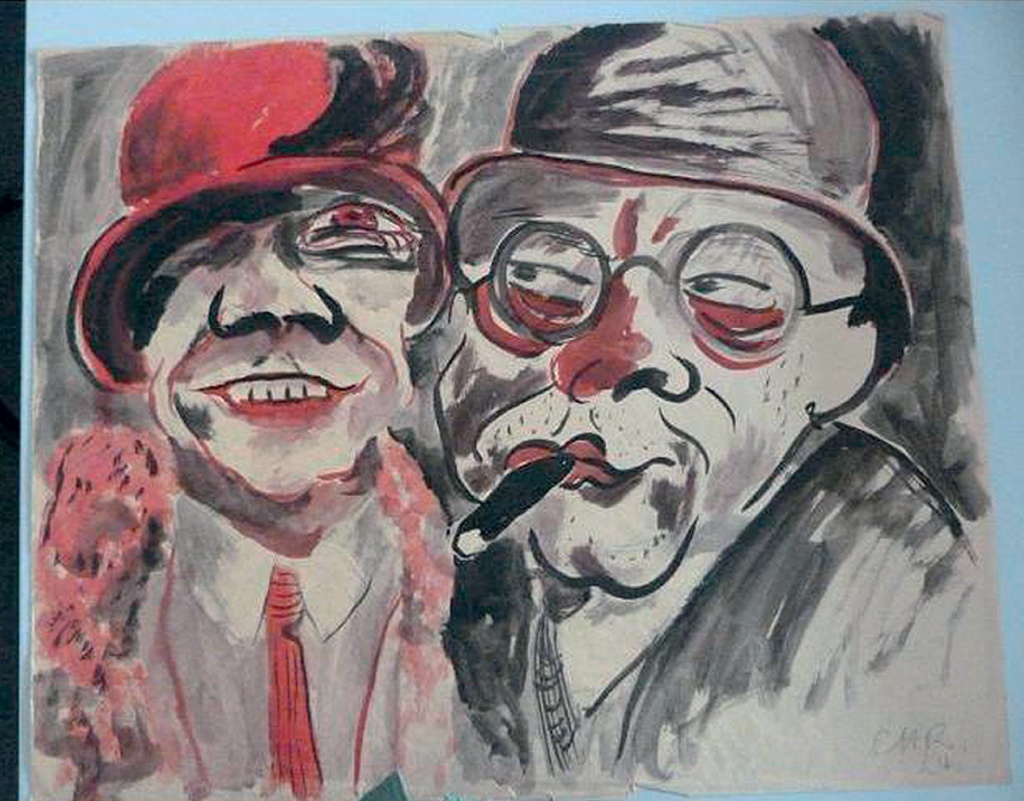
Hans Christoph. "Couple", 1924
In early November, it was officially announced that in February 2012, in a regular Munich apartment among boxes with overdue products, juices and dusty trash, 1406 works of world -class art, which were considered lost from the time of the Third Reich. And in mid -November, 22 more paintings were added to them, closely related to this collection.
Invisible man
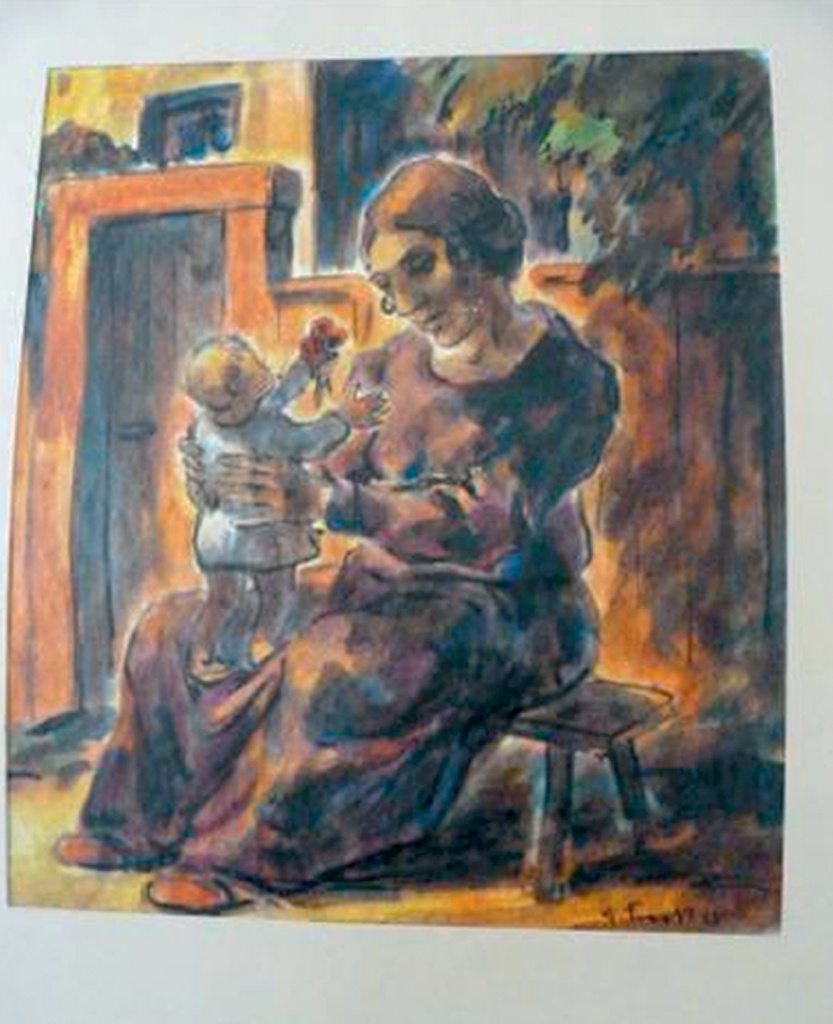 |
| Erich Fraars. "Mother and Child", 1922 |
 |
| The picture from the Gurlitt collection attributed as the work of Henri Matisse (date is not installed) |
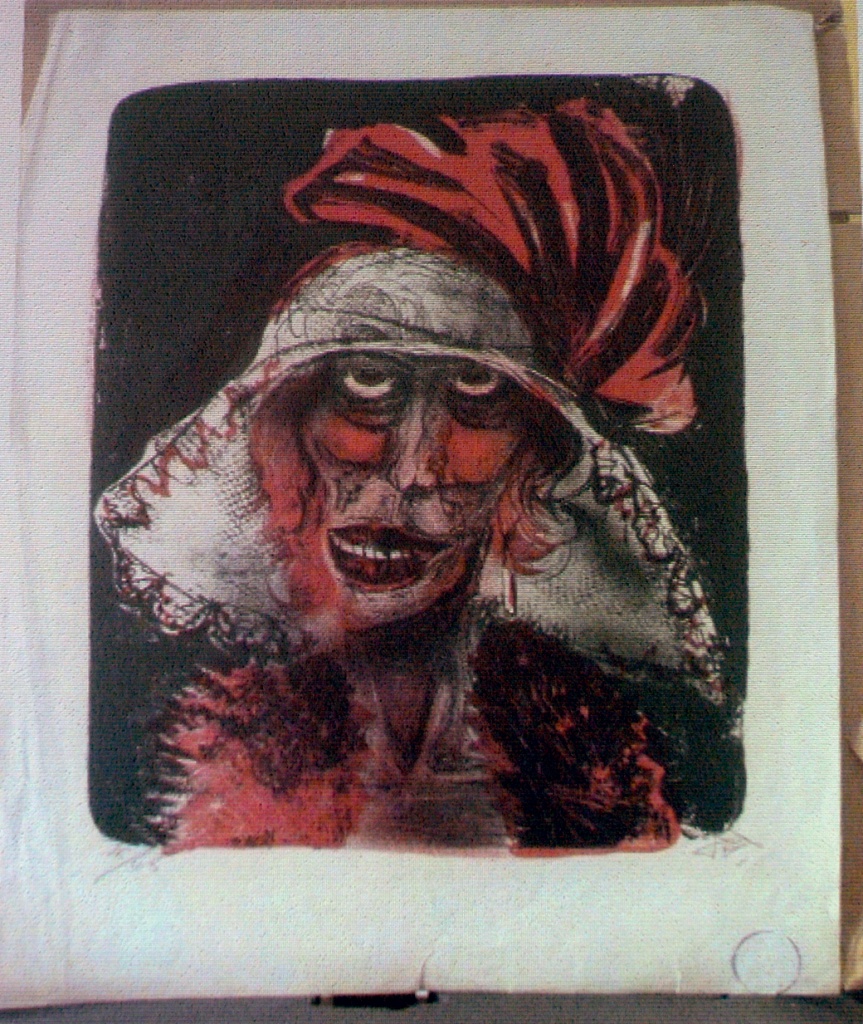 |
| Otto Dix (the name of the picture and the date are not installed) |
The usual evening flight of the EU-197 train from Zurich to Munich. Customs officers decide to check the elderly man whom they have already checked in the morning on the way to Zurich. He presents the Austrian identity certificate in the name of Rolf Nikolaus Cornelius Gurlitt, born on December 28, 1933 in Hamburg. Old people rarely go back and forth in one day ... When asked whether he imports cash, he first responds negatively, but then present € 9 thousand in bills of € 500. He could not declare this amount. To the question: where and why did he go - Gurlitt replies that “on art matters” to the art gallery of Eberhard Cornfeld in Bern (the gallery specializes in the classic modern trade).
Customs officers did not like something in this person, and he, as they say, "fell under the cap." After some time, it turned out that Gurlitt lives in Munich, in the Schvabing area, but is not registered in this apartment, which is rented for € 650 a month, he does not have a tax number, no official sources of income, he does not receive a pension or other social payments, does not have medical insurance, he does not have a driver’s license. It does not officially exist for the German authorities.
Then the prosecutor’s office managed to achieve the order for the search. They thought they would find instructions for “black accounts” in Swiss banks or something like that. But they found another ...
Bad a bad apartment
Inside, the apartment was almost completely darkened, the windows and doors were tightly lifted. Boxes with meat and vegetable canned foods, sometimes dated 80 years, rose to the ceiling, boxes with semi-finished products and juices. Only through the window in the bedroom, where the owner lived, the light and fresh air penetrated.
Between the boxes, in half -empty cabinets, in tables of tables, on the linen shelves and found treasures. These were paintings, engravings, drawings, posters, the cost of which was immediately impossible to imagine. After a preliminary examination, the work was seized and sent for responsible special storage for the customs warehouse near Munich. For a long time, they were silent about the find in order to avoid unnecessary excitement, premature legal complications, and simply because the case of tax evasion, covering property mined by criminal means, and the assignment of someone else's property was instituted on Gurlitt. And only in early November of this year, the chief prosecutor of Augsburg Rainhard German informed journalists that during the search, 1285 of the irreversible works and 121 paintings in the frames were confiscated. According to him, works of art were in good condition. This was confirmed by the art critic Mike Hoffmann from the research center at the Berlin Free University. She said that the paintings were "partially polluted, but no damage was found."
"
In half -empty cabinets, in tables of tables, on the linen shelves and found treasures, the cost of which was immediately impossible to imagine
"
Among Cornelius Gurlitt of the work are the works of Albrecht Dürer, Jacob Reisdal, Canetto, Eugene Delacrois, Auguste Rodin, Francesco Guardi, Jean-Oonor Fragonar, Gustava Kurba, Pierre-Oghust Renoir, Edward Munka, Max Liberman, Lovis Corinint, Anrin Matisa, Anrin. Pablo Picasso, Mark Shagala, Henri de Toulouse-Latrak, George Gross, Oscars Kokoshka, Ernst Barlah, Franz Mark, Emil Nolde, Karl Spirg, Kolvits, August Max, Max Bekman, Otto Dix, Ernst Ludwig Kirchner, Paul Klee and others. According to the most modest estimates, their cost may exceed a billion euros.
According to Mike Hoffmann, some of the paintings were previously unknown to the public. And therefore there is a thorough examination and paraphernalia.
But this was not over. In mid -November, the Munich police entered another collection of paintings formally belonging to Cornelius Gurlitt. The collection of 22 paintings was stored at the Gurltt son -in -law in the Baden town of Cornvestheim, located 250 km from Munich. (Gurlitt’s sister, Benita Fressne-Gurlitt, was married for many years to Nicholas Fresswo and died a few years ago.) Fresswoi himself called the police and said that he also had paintings of a relative and that he was “worried about their safety”. Police and the Order for the search appeared in the apartment of the Fresswo at Keplerastrasse, 9, the police appeared.
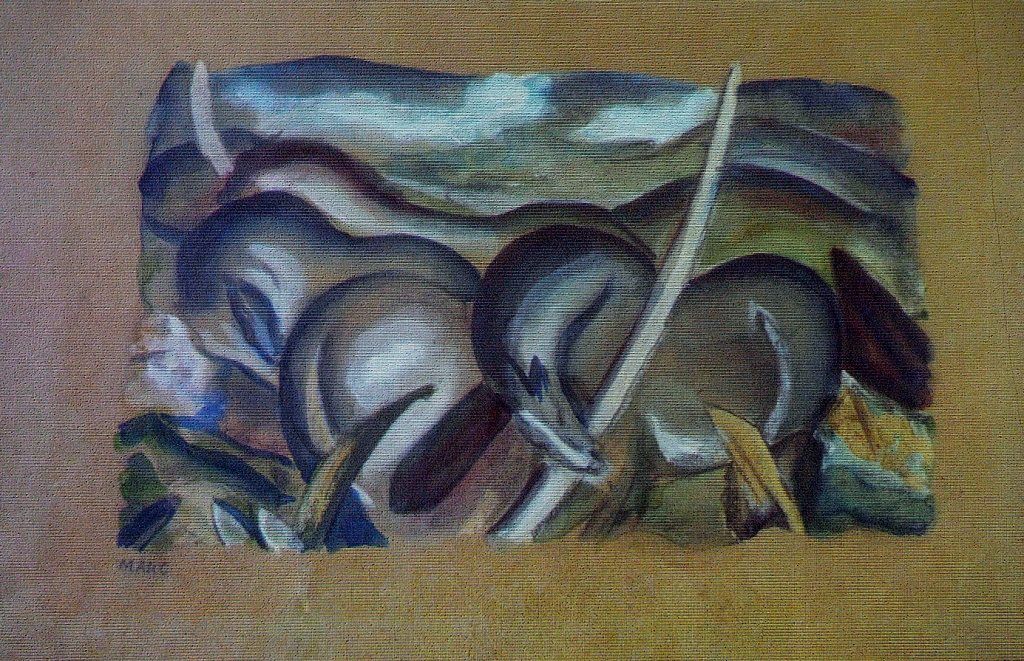
Franz Mark (the name of the picture and the date are not set)
War of purification
On June 29, 1937, at a dinner, the Reich Scan of the Germany Adolf Hitler instructed his Minister of Propaganda Joseph Goebbels to organize an exhibition of “decadent art” in order to clearly show that “the morals and spiritual essence of the German people”. A few hours later, Goebbels recorded in his diary that he could now clear the Reich museums from “degenerated art” (sometimes he is also called “degenerative”). And he cleared. But first, by July 18, he organized an exhibition so desired by the Fuhrer at the Hofgarten Gallery in Munich, where 650 works of “Raisins” were exhibited, coupled with the drawings of insane and photographs of freaks. Among the artists and sculptors, whose works confiscated from 32 museums were presented in the expositions were Ernst Barlah, Vasily Kandinsky, Max Ernst, Lovis Corinint, Paul Kle, Oscar Kokoshka, Pete Mondrian and further on the list of great modernists. The ugly music sounded Arnold Schenberg, Paul Hindemit, Beli Bartok. And the day before, in the “Munich House of German Art” at the opening of a large German art exhibition was Hitler. Speaking of Cubists, Dadaists, Impressionists, futurists, he attributed them to people who "have nothing to do with the German people." And he explained: “However, it is also possible that these persons themselves do not actually believe in these“ feelings ”and“ visions ”, but try, based on other motives, to insult our nation with this outrage, mockery. Then such actions relate to the field of criminal punishment ... From now on, we will wage a merciless purification war against the latter elements of cultural decomposition. ” The exposition "Degenerative Art" was visited by about 2 million people - a record for many decades. For comparison: only 420 thousand came to the “Aryan artists”. Later, the presentation of the Jewish-Bolshevik obscurantism was held in 12 cities of the Reich, and with a constant success (about 3 million visitors). By decision of Hitler, some work from the exhibition was exchanged for paintings by old masters.
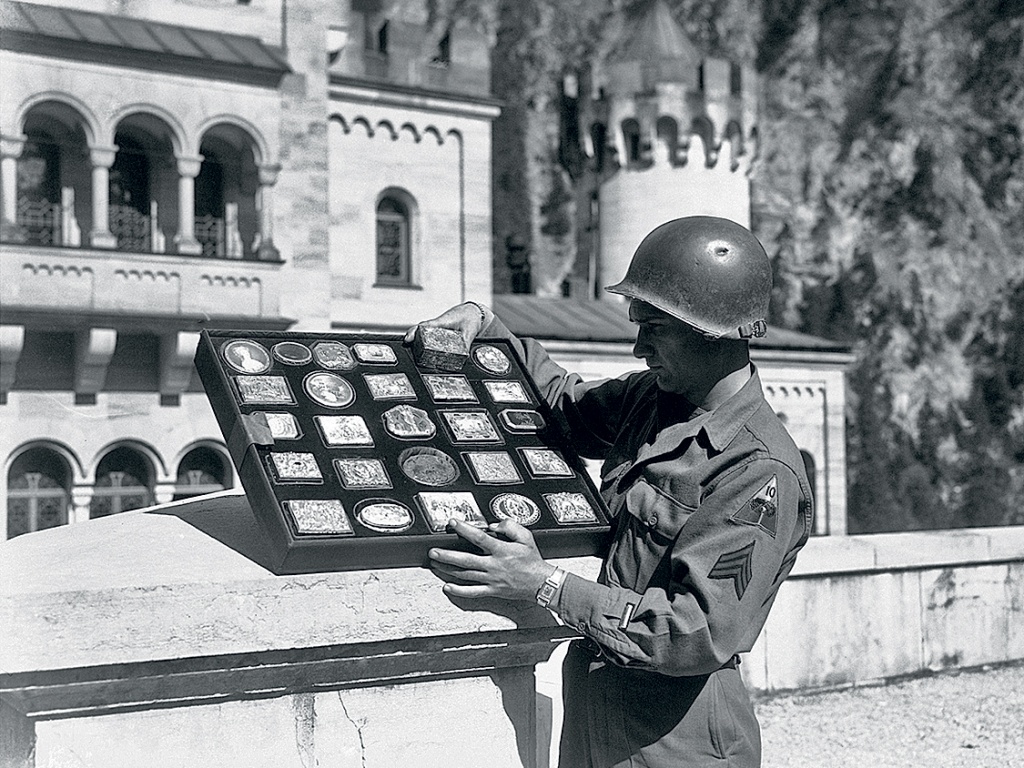
An American soldier with objects from the famous Rothschild collection, stolen by the Nazis during the Second World War. Austrian Alps, May 16, 1945
All for sale
At the same time, a raid of museums and private collections was unprecedented in history. More than 20 thousand works of almost 1,400 artists were taken out of all museums in the country and stored in Berlin. On May 31, 1938, Hitler signed the law “On the seizure of works of degenerated art”, which allowed the state as a new owner to sell work abroad or even simply destroy them. Later, in the courtyard of the fire department in the Berlin district of Kroyzberg, 1004 paintings and 3825 graphic works were burned. But what are museums! By 1938, the robbery was already walking in full swing in all directions. Several large galleries belonging to the Jews who exhibited and sold the classics of Art Nouveau were “arushed” - for example, the largest gallery of Alfred Flechtheim in Dusseldorf. Those Jewish collectors who, fleeing the persecution, intended to escape from the country, had to sell their collections-but not abroad, but German "art critics". It was the so -called "imperial refugee tax." A giant redistribution of artistic values began. The Nazis sought to get rid of “degenerative” art as profitable for themselves, acquiring the art “true” in return, like a Dürer or Kranacha, and for this they needed the help of specialists. The authorized persons in this trial, the Ministry of Propaganda determined Karl Bukholts, who opened the branches of his “forbidden art” stores in New York, Spain, Portugal, Romania and even Columbia; expression of expressionism Ferdinand Maller, officially appointed by the "caretaker of" degenerated art "; Former sculptor Bernhard Beremer, close to the top of the Reich, and Dresden Hildebrand Gurlitt, the father of our hero. Even the Jewish grandmother was forgiven Gurltta Sr., his connections in the world of art merchants were considered so useful. He went successfully, and by the end of the war, Gurlitt became the chairman of the commission on the organization of the Fuhrer Museum in Linz.
The presentation of "Jewish-Bolshevik obscurantism" was held in 12 cities of the Reich, and with an unchanged success
"
When buying works of “degenerated art”, absolutely funny money was paid. Once Gurlitt purchased 400 first -class work for only 9 thousand Swiss francs. For 4 thousand Swiss francs, Art dealer bought 315 works from the Ministry of Propaganda from the Exhibition "Degenerative Art". During the search in the Munich apartment, Cornelius seized business papers and inventory lists. From them, for example, it is clear that the Gurlit-Sr. paid for two drawings by Max Beckman two (!) Swiss francs, and his colleague Karl Bukholz for two paintings of the same author-respectively $ 80 and $ 20. How many works were really in Hildebrand Gurlitt's hands is unknown. In 1945, British troops discovered in Hamburg a meeting of 115 paintings and 19 drawings registered in his name. However, he managed to prove that the paintings were legally acquired, and received them back four years later. However, the British were not particularly interested in the meeting: this is not Titian. Immediately after the war, Gurlitt announced that his rest of his collection died at the catastrophic bombing of Dresden on February 13-14, 1945.
In 1956, the owner of unimaginable values, comparable to the funds of museums of contemporary art in Paris or New York, quietly died in a car disaster.
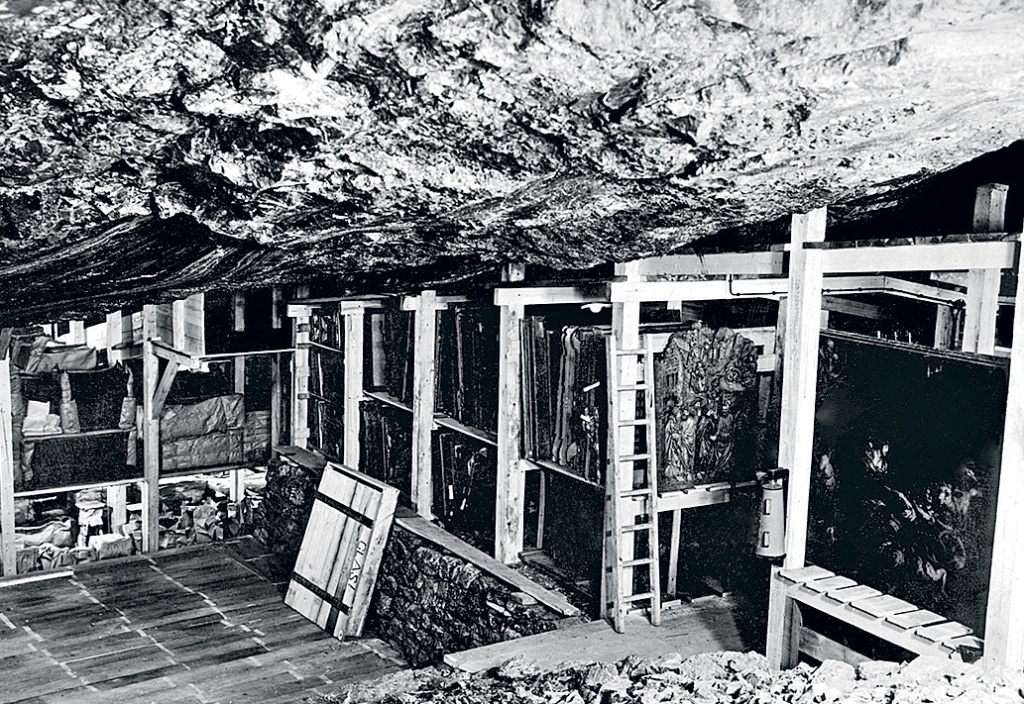
Who belongs to this?
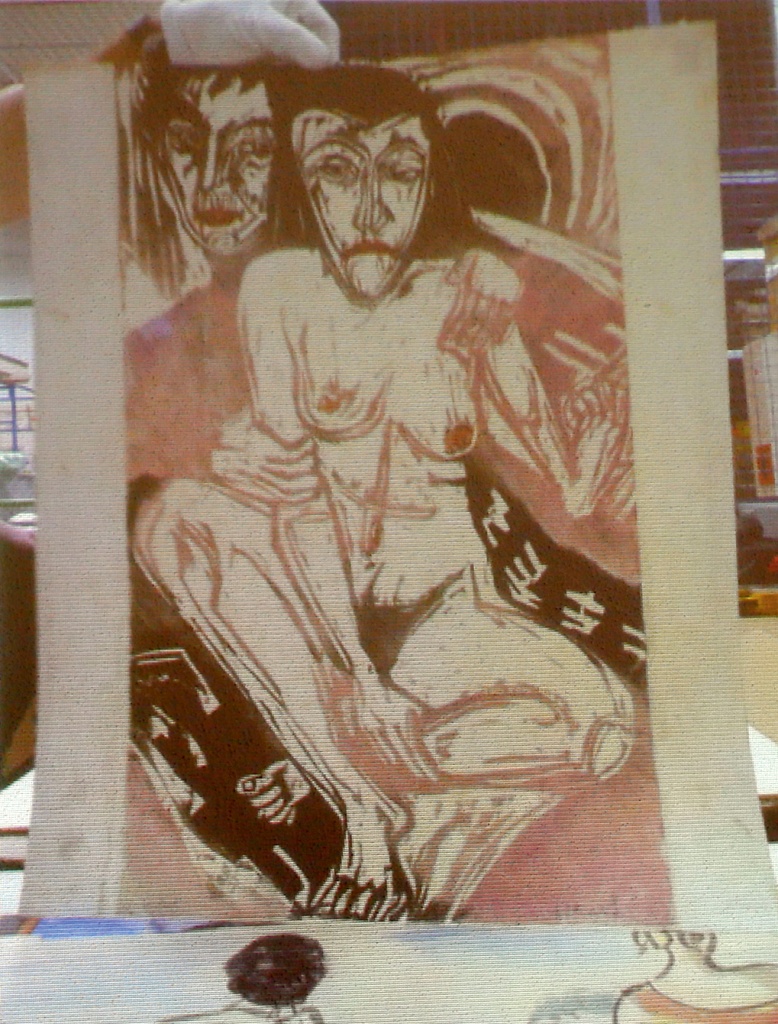 |
| Ernst Ludwig Kirhner. "Melancholy Girl" (the date of creation is not established) |
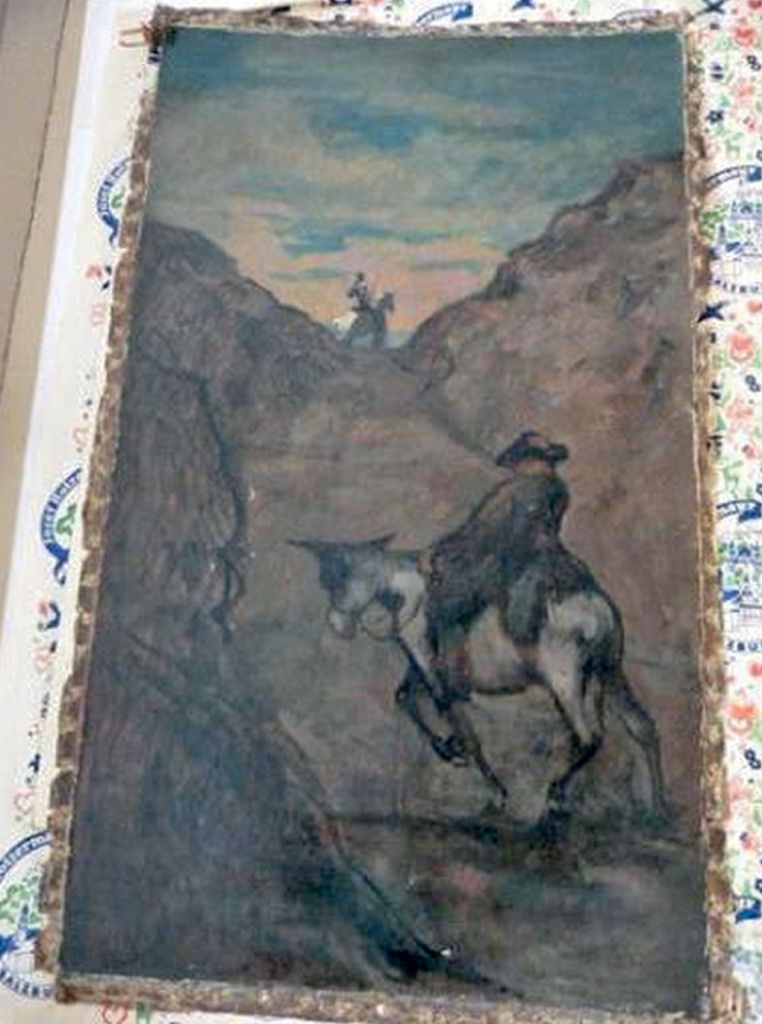 |
| Honore Domier. Don Quixote and Sancho Pansa (c. 1865) |
The catch is that thousands of world-class works acquired by Gurltt Sr. and his colleagues for pennies are considered legally bought. And here the question arises: is such a “legality” the right to property? With museum exhibits, more or less clear - they belonged to the state, and here a special procedure applies. However, it is clear, but not to the end. Thus, at the auction of “Growded Arts” in 1939, hundreds of paintings and sculptures seized from German state meetings of paintings and sculptures seized from German state meetings were bought in Lucerne. One of the most active buyers was the Museum of Contemporary Art in New York. Perhaps, in order to avoid complications at the international level, in Germany for a long time the Nazi law “On the removal of degenerated art from museums” was not canceled - this assumption was made by one of the most authoritative art experts Ralph Yench. As for private acquisitions, then, according to a specialist in the field of restitution, Marcus Stetzel, “from a legal point of view they are absolutely legal. As a result: Gurlit-Jr. inherited these objects. ” He can dispose of them if they were not, of course, a “instrument of crime”.
Another point of view, which, by the way, shares the majority of the Germans, was expressed by the Velt observer Torsten Krauel: “Any antiquely at the time of National Socialism understood the causes of the mass appearance of paintings in the market. In the case of Gurlitt, their acquisition cannot be called conscientious. For pursued Jews, this was the only opportunity to escape from the country. But after 1945, Antique Gurlitt hid the paintings for personal enrichment. This is comparable to the bruit of stolen. Hildebrand Gurlitt could not buy such treasures without the Hitler regime. But their legal owners after 1945 remained with nothing. His son lived well thanks to the looted good. ”
“Antikvar Gurlitt hid the paintings for personal enrichment. This is comparable to the bruit of stolen "
"
What is true is true. For example, in 2011, he sold through the Cologne auction Lempretz pastel Max Bekman “Tamer of Lviv” for € 864 thousand. After various deductions, he remained 450 thousand clean. And this, apparently, was not the only deal. For example, with the same Gallery of Cornfeld. Did the gallerists really know where Gurlitt got these paintings?
Meanwhile, history went beyond Germany. Ronald Lauder, president of the World Jewish Congress, demanded to return values to the descendants of the robbed collectors. Moreover, their names are known, and almost all the paintings belonging to them. He even accused the federal government of "intentional inaction." Which, in general, is not entirely fair: the Merkel government learned about masterpieces only a few months ago.
There will still be sensations
How many claims for restitution will come after the publication of the full list of paintings found in Munich is difficult to even imagine. For example, the heirs of a Jewish collector from Dresden, who “with a high degree of probability” belonged to almost 200 paintings and which he sold to Gurlitt at catchy prices in the hope of escaping from Nazi terror, already demanded to return these works.
Not all work can be legally returned to the heirs of the victims, although in 1998 44 countries, including Germany, adopted the so-called “Washington principles”, according to which, after a 30-year period of limitations, “cultural values looted by Nazis are returned to the owners”. However, purely legally, these “principles” have no power: everything is of good free will.
Nevertheless, dozens of paintings from the Gurlitt list have already been posted on the Internet. A group of six experts has been created, who carefully examine another 970 works. So it is still just beginning. According to the Bild’s newspaper Cornelius Gurlitt Eckerhart, who has been living in Barcelona for the past 27 years, his relative may know where the amber room was taken by the Nazis during the war from the Catherine Palace. “Cornelius once said this to my father. But it was 30 or 40 years ago, ”Ekkerhart said. That's how the plot is twisting ...
Photos and illustrations: AP Photo, AFP/East News, Reuters, Polaris/East News