
Translated material
"The artist is a life project"
Peter Pavlensky - on literary preferences
Posecostarist Pyotr Pavlensky, who recently in protest nailed his male dignity to the paving stones of Red Square - about literary preferences, without which there would be no performances
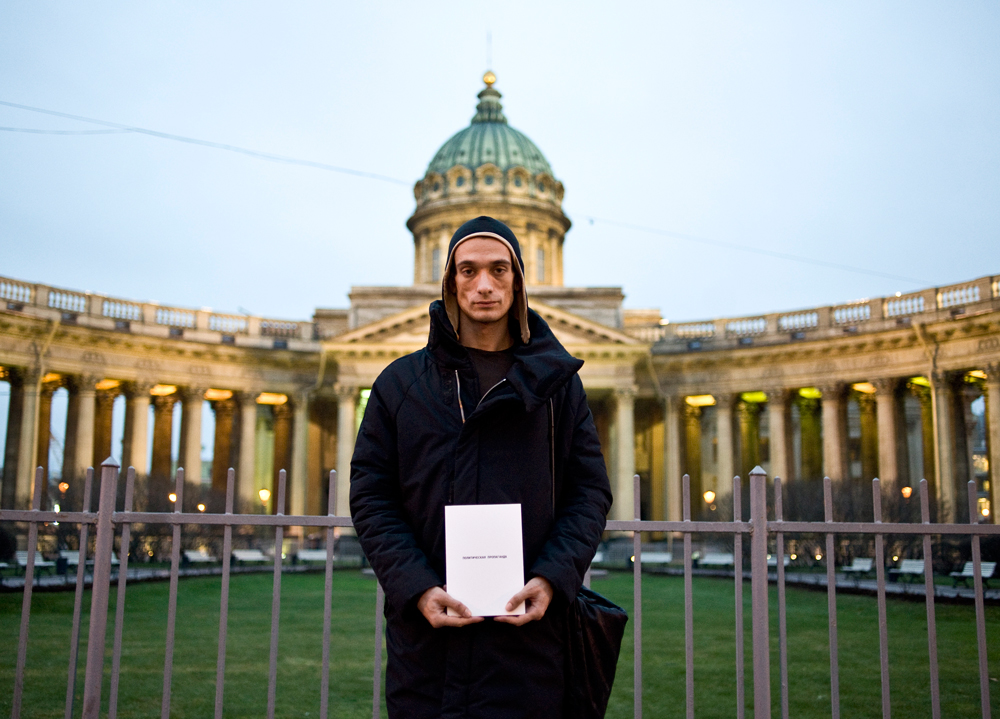
Peter Pavlensky with a sign in his hands: "Political propaganda." St. Petersburg, November 2013
 |
 |
 |
Reading is support. The texts allow you to comprehend things critically: if I had not read, then I would not do what I am doing. A person is formed from the information that passes through him. You can’t just read and not have visual baggage. Also, you can not rely only on visual baggage and not know the culture associated with the texts.
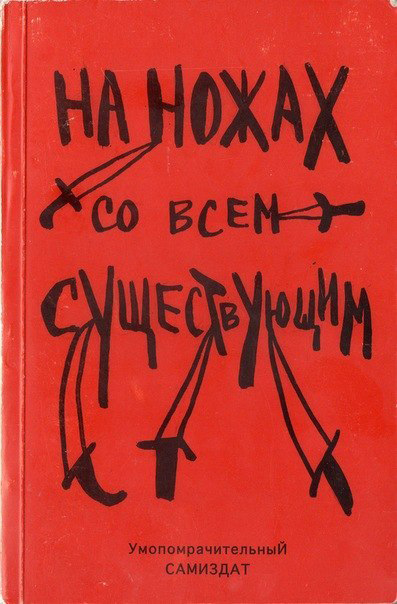
Alfredo Bonanno “on knives with everything existing” is the last thing I read and what I certainly like. Bonanno is one of the leaders of the Italian rebel anarchists, who received a prison term for about six years for this book. Anarchist literature is a point of confrontation with totalitarian structures in which we are all today. Both the media and info are dominated by us, suppress personality and individuality, stupid us to a unified opinion. To just remain yourself, you need to have a desire for freedom. At the time when I am carrying out the action, complete release begins, the state and the police at that moment are at a dead end. Only then does interaction begin with the control system directed, albeit from the best prerequisites, to suppress individuality.
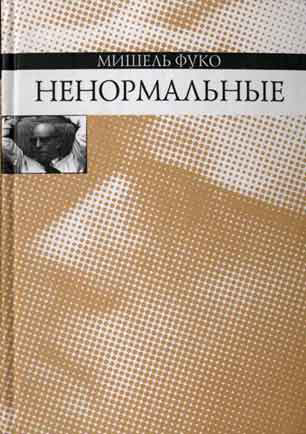
Michel Foucault has a very good book made on the basis of transcenograms of lectures - “abnormal”. The book is relevant in the situation that we see today in Russia. I feel her in my own skin. The concept of division into a conditionally normal majority and into some kind of abnormal and marginal minority is built. Standards and standard are built. This literature has applied meaning, it allows you to realize what is happening today, even if the book was written decades ago. I choose literature in which I see analogies with what surrounds me.
"
At the time when I am carrying out the action, complete release comes, the state and the police at that moment are at a dead end
"
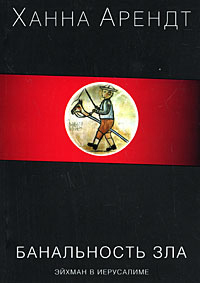
The “banality of evil” Hannah Arendt is a very important book, which tells about the process over one of the Nazi figures who sent entire echelons of people to torture camps. Was there what he did, his official duty, when he, as a citizen of his Fatherland, could not but believe in the ideals of his fatherland? Is it possible in this case to consider the switchman who translated the rails as a participant in this conveyor of death? This book is about people who are within the framework of ideology, performing their official duty and holy believers into ideals. In the days of the Nazis, if the hero refused to comply with orders, he would be called a traitor to his homeland. But, having fulfilled his duty, he still found himself under a military tribunal for a crime against humanity. A person in any case ends up in a millstone.
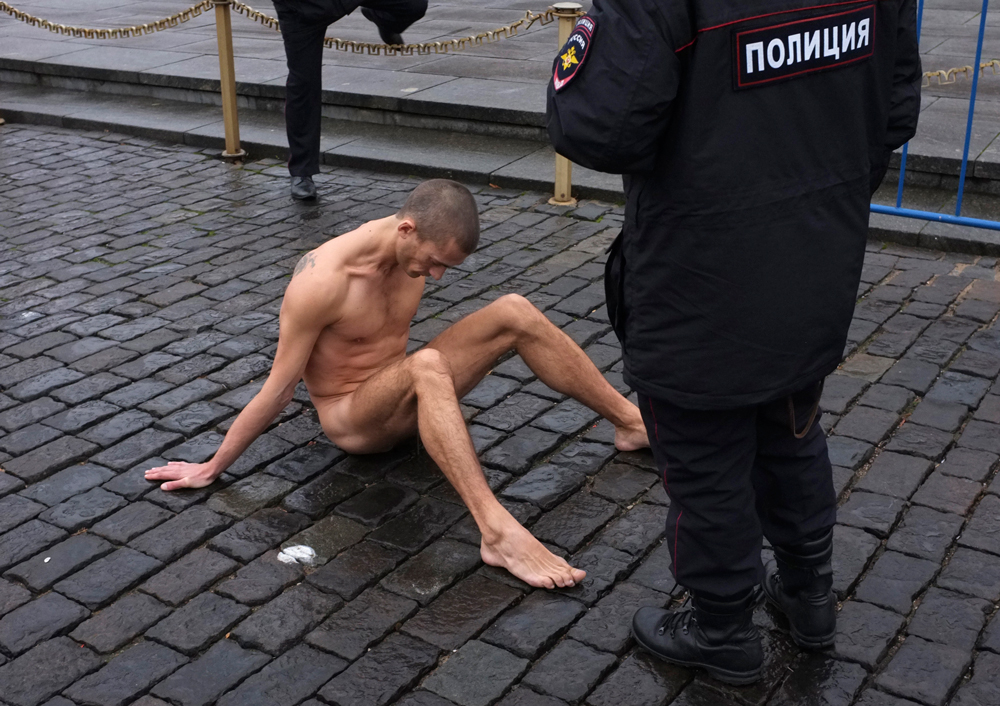 |
| “Fixation” is a public action by Peter Pavlensky on the day of the police. Red Square. November 10, 2013 |
I read books on art, in particular, on the Russian avant -garde of the early twentieth century. If we talk about critics of contemporary art, then I am interested in Rosalind Krauss. Although I treat some prejudice to criticism: you need to know it, you can rely on it in your judgments, but critics often build their world. A commentary on the work can be repelled from the previous commentary, so the system of interrogation is built. Perhaps this is interesting, but the facts are more interested in how art processes developed, the same Russian avant -garde. For example, how the revolution influenced art. She created a precedent in art, such as Suprematism and constructivism. This is the only case when exactly Russian art became the first and ahead of the Western trends for about fifty years. Minimalism abroad partly appeared after the publication of catalogs about Russian Suprematism.
I am interested in biographies of artists, an artist is a life project.
Photos: Sergey Nikolaev, Maxim Zmeyev/Reuters