
Translated material
Brain explosion
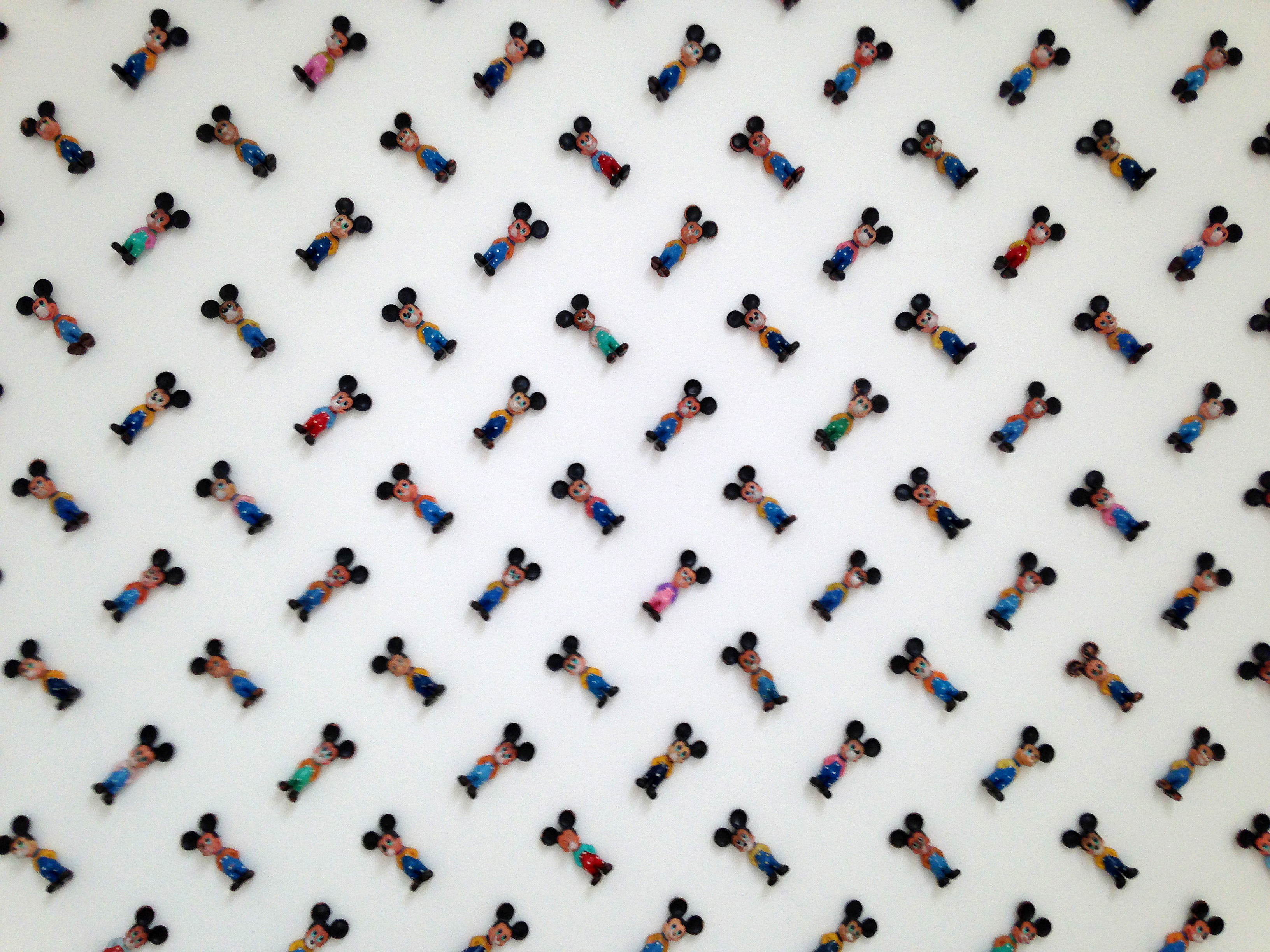
To Venice with Roman Haismit
Lenin either said, or did not say that the cook would rule the state, Flobert said, or he did not say that Madame Bovari was him, and the Patricia Haismit either said, or did not say that a cat would save a cat, and not a child from a burning house. Most likely, she said, because Haismit loved animals more than people, dedicated a romance to her cat and smuggled manual snails to France, hiding them in a bra. She wrote a misanthropic “Book of brutal murders for animal lovers”, and I once translated her story “The horrors of weaving baskets” about a woman who drives a basket, discovered on the beach: even inanimate objects are rebelled against vile humanity.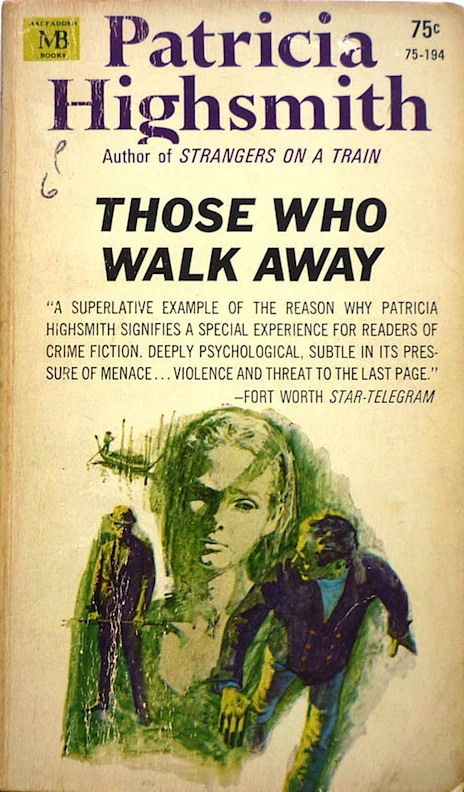
From Venice, which Haismit describes, today almost nothing is left. It was a city that has not yet been captured by tourists: Garrett instantly calculates the hotel in which Coleman stopped (there are only a dozen of them), and all Americans go to one bar in the evenings, so the victim and the executioner meet almost daily. Today, Garrett and Coleman would hardly have found each other in tourist crowds, the city has turned into a museum during this time, and almost all the Venetians ran away - they say that by 2030 they will not be left at all (about this - last year's film " Venetian Syndrome ").
The artist Coleman, the author of the bold painting “Conspiracy” (seven human figures depicted from above: only the tops, sticking noses, knees and raised hands are visible), would be stunned if he had been in 2013 and saw how the Venetian Biennale changed. How to describe this turn, when the tops and roots changed places, the underground was in its own way? In the heart of the central pavilion of the "Encyclopedic Palace" - the Red Book of Jung, which was hidden in a safe for almost a hundred years ("On the evening of the third day, I bow my knees on the carpet and carefully open the egg. Something resembling smoke rises from it, and suddenly the Fozdubar stands in front of me, huge, transformed and whole"). Nearby - an airplane erased in the gray dust surrounded by the mediumic paintings of Emma Kuntz and Hilma Af Clint. The step to the right is the huge cards of Tarot Alister Crowley and Lady Frida Harris from the collection of the Secret Order of the OT look at the bronze steles of James Lee Bayars, who could well turn out to be the monuments of Aivass, who dictated the “Book of the Law”. Knowledge is not placed in the head, it turns into a target, arrows fly out of it, the brain explodes.
On November 24, the "Encyclopedic Palace" closed. Here are a few pages from his catalog, lying next to the Haismit Venice Detective.
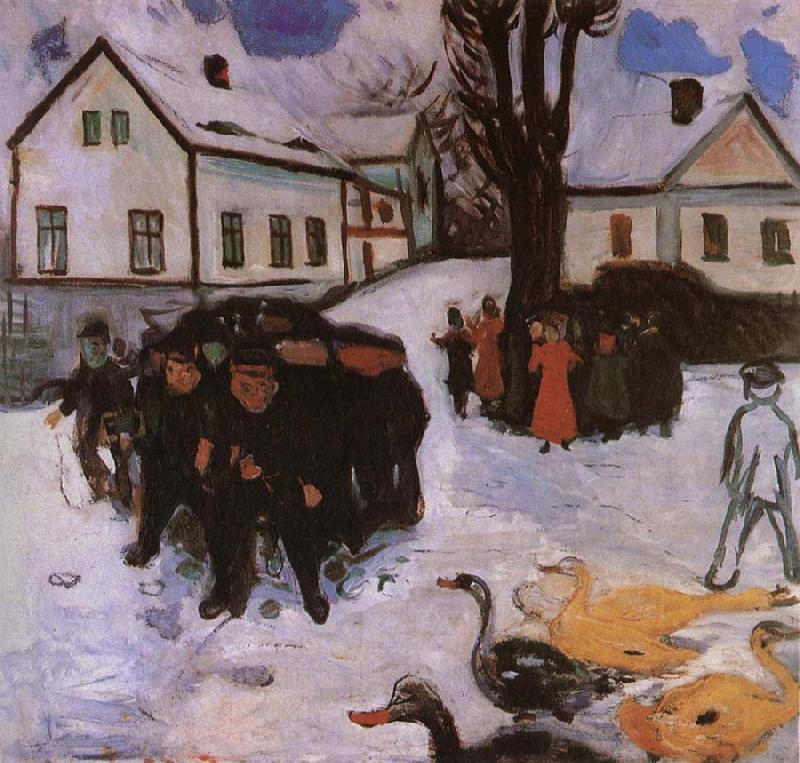
A hundred years ago, in 1913, Norway gave women the right to vote in the elections. 150 years ago, Edward Munk was born. These two dates are united in the Norwegian pavilion: he hid on San Marko Square, so that the labyrinth of Biennale begins with him. Is there a painting worse than "children and ducks" Munk? The blue ghostly figure is separated from the crowd of monsters, free will confront the will to power.
Juan Maria Gusman and Pedro Pasiv represented Portugal at the 2009 Biennale Venetian Biennale. Now their ultra -short films occupied the whole hall in the arsenal, and in this room I spent more than an hour, hypnotized. The naked woman slowly goes to bed, squids pop up behind her, the albinos drinks the fire, against the background of the baroque landscape, a turkey appears, the blind man devours the papaya, the trunk slowly picks up the earthen nuts, the tonsure is shaven with a dangerous razor, and under one castle, another is hidden under her bowl, under her bowl, under a bow A cup under a bowl, and under it - three peas.
Jooke Maria Gusmander + Pedro Paiva, "Getting Into Bed", 2011 from Inter. Society of Abissology on Vimeo .
Almost no one stops at Roberto's Huge Gray microbe, although he received one of the exhibition awards. Meanwhile, this is the creation of an artist who conducted the most crazy performance in the world. When he turned 20, Kuogi decided to portray his 60-year-old father: he got fat, let go of his beard, made an artificial gray hair, began to shuffle and cough. And so it went on for several years until the father died. After that, the couches began to get younger again, but the process of returning to genuine age was so complicated that surgical operations were required. But his sculpture:
Carol Rama. Di più, ancora di più from simone pierini on vimeo .
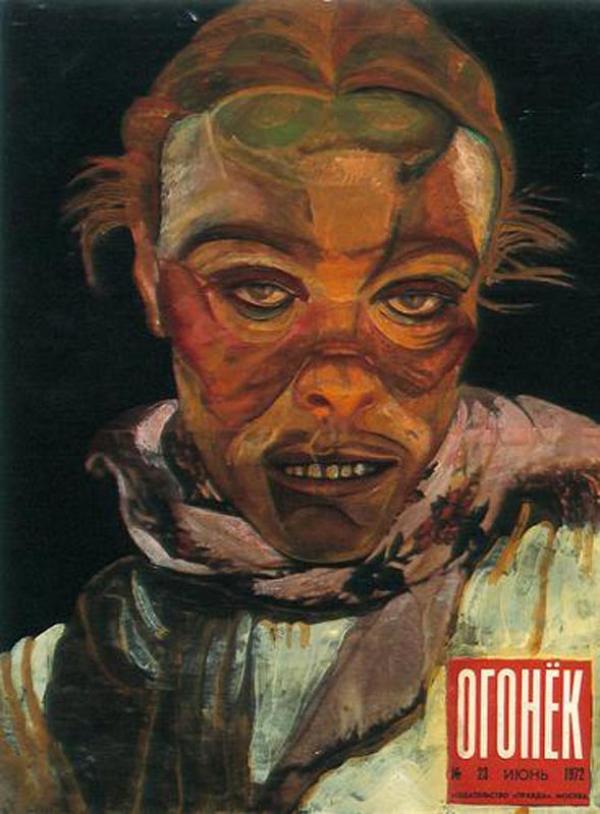
Erotic watercolors Karol Rama collected Cindy Sherman in the arsenal. In the hall, which she supervised, remarkable things: a thousand photographs of the “ hidden mother ”, vuduist flags (I also once brought one from Port-O-Prens), home albums of transvestites of the 60s, photographs of Herbert Liszt and Pierre Molinier and Ukrainian artist Sergei Zarva, alchemically restored the true appearance of the apples of the magazine “Ogonyok”.
Bart Dors-California, living in Moscow and skating on it on a fire-headed duck , in dark velvet back streets on the embankment of the inexhaustible arranged the temple of Katya, a girl-bodimodifier, sufferer, beauties, and saint.
If my will, I would give the main award not to the Angola pavilion, but to one of the two wonderful projects related to Africa - Cyclamen Congo in the Irish pavilion or similar to the characters of the film Claire Denis, Black Motorcyclists moving from Paris to China to the will of Danish artist Yesperet Susta.
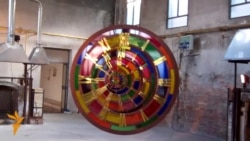
Probably three weeks are needed to go around the Biennale and slowly. Unfortunately, I had only three days, and the film that I shot in Venice lasts only three minutes.

To Venice with Roman Haismit
The text of the copyWidth PX Height PX
The url has been copied to your clipboard
No Media Source Currently Available
0:00 0:02:52