
Translated material
Patriarch Cyril decides. All
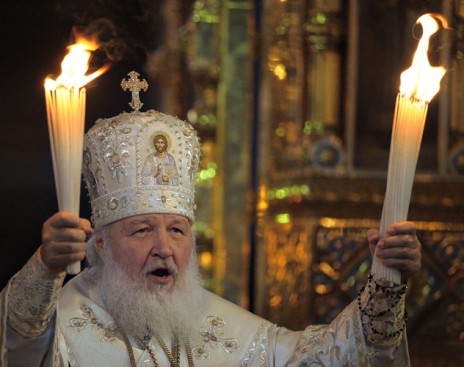
At the end of October, in the reader’s cafe, the religious scholar, historian, specialist on the problems of modern Orthodoxy Konstantin Mikhailov gave a lecture “Church: from perestroika to the third term”. Slon publishes lectures in reduction, and today we bring to your attention the second part. The first part .
The first big conflict, which questioned the moral authority of the Russian Orthodox Church in society, is the 1996 tobacco and vodka scandals. In the nineties, the authorities wanted to support some of the loyal groups, but it was not possible to help with money, it simply was not there. Therefore, the state created preferences, as a rule, on the non -zacicious import of certain goods. For example, they were received by the Afghan Veterans Society, and the Russian Orthodox Church could also import and receive cargo in the form of humanitarian aid, which struck the variety: from product humanitarian aid to fridge engines. Western churches helped Russian Orthodoxy as they could, even if they had only motors. And in 1996 it was found that a certain number of cigarettes were imported as humanitarian aid in Russia, or rather about 1 million blocks. This raised questions, because the church is not associated with an organization engaged in industrial tobacco sale.
During the check, the load with cigarettes for the church was stopped at customs. Why did customs officers open this container? Researchers came to the idea that an intentional leakage of information occurred: someone from the Russian Orthodox Church informed the customs where and when to look for these cigarettes. The fact is that in 1996-1997, there was a struggle between the manager of the Patriarchate and the head of the department of external church relations (today - the department of external church relations), it was Metropolitan Cyril, and it was through him that all these goods were imported in the Russian Federation. Personally, Cyril did not withdraw from this benefit, but as a result, the church received a lot of money. Nevertheless, Cyril oversaw the process to some extent, and this could not but throw a shadow on his reputation. And it is very likely that the manager of the affairs of the Patriarchate Metropolitan Sergius accommodated the information to the state authorities. The problem is that the scandal came out too noisy. As a result, the Russian Orthodox Church was stuck into an unpleasant and ugly situation, complicated by the fact that by 1996, Patriarch Alexy began to take a lot. He was more and more inclined to the life of the recluse and communicated less with people, delegated the authority of assistants, including Metropolitan Kirill. At this moment, Cyril's quick height begins, which later led to Patriarchate.
People. Metropolitan Methodius
The next loud story happened in 2000-2001. Putin was elected president, which caused some movement in the circles of people close to the structures of the FSB. Such a person was in the Russian Orthodox Church - Metropolitan Methodius (Nemtsov). No one particularly hid that he became an archbishop on the direct order of the organs (then the KGB). After the collapse of the USSR, the position of Methodius turned out to be shaky: no one forgot where he came from in the church. He was sent to the Voronezh diocese, where he successfully vegetated. The diocese became one of the richest in the Russian Orthodox Church, but Methodius wanted the authorities, so in 2000, realizing that the changes were taking place, he came to Moscow. Such an act is a violation of canons, because not one of the bishops of the Orthodox Church has the right to come without a direct invitation to the Patriarch; You cannot also enter the territory of another diocese without an invitation of a local bishop. Methodius ended up in Moscow, met with Putin, with representatives of the FSB, government officials and began to lobby for his advance in the Holy Synod. But there was nothing for! Bishops of large metropolitan cities or people whose work is recognized as extremely important for the church fall into the Holy Synod.
In 2000-2001, the health of Patriarch Alexy worsens. True, then it will improve, but then many believed that he was about to die, and the question arose: who would become the next patriarch? A series of conflicts, a war of compromising evidence began. The main defendants in the struggle were Metropolitans Cyril and Methodius. Subsequently, Methodius lost with a great roar. He was sent to Tashkent from the Voronezh diocese, and later transferred to Perm.
Filaret's attempt to separate and problems with Constantinople
In the bowels of the Ukrainian church, the idea of separation from the Russian Orthodox Church began and began to mature, since Ukraine has now become an independent large state. However, the processes were inactive until Filaret (Denisenko), strongly offended by the Russian Orthodox Church for the fact that he was not elected by the Patriarch of Moscow and All Rus', intervened. In 1992, the Metropolitan is joking from the Russian Orthodox Church and leading a rather large number of local churches, clergy and parishioners. Most of the episcopate remains on the side of the Moscow Patriarchate, moreover, an unprecedented story takes place with Filaret (Denisenko). The fact is that he does not leave himself, he is removed from the post of Metropolitan. And it is not the highest leadership that removes it, but the local episcopate, which initiates the bishop's cathedral and realizes the right of the cathedral to remove the ruling metropolitan. Nobody ever tried to do this (In 1997, the Russian Orthodox Church leaves Filaret and anathematized. - Slon ) .
The position of the Russian Orthodox Church in Ukraine becomes even harder than the previous one, and it was not especially easy before. Firstly, there are Catholics, especially in Western Ukraine, and secondly, the Ukrainian church, which in the late 1980s-early 1990s resurrected the former grievances, remembered how in 1945-1947 the Russian Orthodox Church took away the parishes, and began to return them to itself. Naturally, this caused irritation among the Russian Church, but the Ukrainian authorities did not interfere in the conflict, not wanting to find themselves between two lights. In addition, the Ukrainian authorities were configured to create an independent church so as not to experience the political pressure of Moscow on the church line. And Filaret went for help to the Patriarch of Constantinople-the main opponent of the Moscow Patriarchate since the late 1980s.
Patriarch of Constantinople - the figure is very complicated. Formally, Constantinople no longer exists, in Istanbul it owns only one quarter-lamppost, because of this hierarch is sometimes called a lantal patriarch. But, firstly, he has numerous flocks, dioceses are located outside Turkey and Greece, for example, in the USA, and secondly, historically it happened that Patriarch of Constantinople is a significant figure.Of course, in Orthodoxy there is no analogue of the Pope, all the patriarchs are as if equal to each other, but the Patriarch of Constantinople, as they say, is more equal. |
Still, this line reaches for the Byzantine Empire. In particular, it is virtually impossible to create an autonomous autonomous Orthodox Church without the consent of the Patriarch of Constantinople, he must at least assure this to the Promise.
And Filaret runs to him in the hope that he will help and accept the new Ukrainian church under his wing. The plan was shallow, since the Patriarch of Constantinople has already done this with the Estonian Orthodox Church. But the attempt was unsuccessful. Filaret today heads the independent Orthodox Church of the Kyiv Patriarchate, and Patriarch Constantinople still continues to conflict with the Russian Orthodox Church. And we can say that this has already gone beyond decency. At some point, the Moscow and Constantinople Patriarchate and more than six months interrupted canonical communication. The reason for this conflict in the imbalance: Patriarch of Constantinople formally - the most authoritative patriarch of Orthodoxy, and Moscow is the richest and controls the largest number of believers in the world. Therefore, he does not want to obey Constantinople, it is also unpleasant for him to feel the fifth on the list. But the Patriarch of Constantinople seems to be changing the current situation.
Reforms of Patriarch Kirill
The Putin era was not so intense for the church in terms of serious diplomatic and political clashes. Nevertheless, the largest and most strange change in the history of the Russian Orthodox Church is planned. If the Russian Orthodox Church was a state, it would be correct to say that in 2000 and 2013 there were two state coups, which, for obscure reasons, almost no one noticed. And if the Russian Orthodox Church by an economic company, the incident could be described in this way - holders of large stakes have seized control of the company, despising the interests of the minoritarians.
It all started in 2000. According to the Charter of 1988, the Local Council was the highest power and higher administration of the Russian Orthodox Church. It was assumed that every five years he should gather, but in 1995 this did not happen. In 2000, the cathedral was not again. Time passed, tired of violated, for many it caused discontent.In 2000, the Russian Orthodox Church, or rather the Bishop Cathedral, accepts a new charter in which the power of the local cathedral is cut by 90%. This is unthinkable because the bishop's cathedral must obey the local one. It turns out that the lower authority prohibits the higher! |
What lost the local cathedral? The right to evaluate the work of the Holy Synod, to establish and abolish the church administration bodies, to approve the decisions of the Bishop Cathedral; He lost the function of the court of the highest church instance - that is, he lost almost all his functions, except for the dogmatic and the functions of the election of the patriarch. Somewhere in 2006, the well-being of Alexy II worsens so much that it becomes clear to everyone that he will soon die. It was also clear who would be the next applicant for power. At that moment, there were a certain number of strong figures in the church, but Metropolitan Cyril turned out to be the most serious candidate. As soon as Alexy died, all analysts unanimously said that it was he who would become a patriarch.
Then the last ideological conflict in the Russian Orthodox Church was still unfolding: the dispute of the "Lavra" with the "Nicodima". “Nicodimovites” were brought to power by Metropolitan Nicodemus Rotov, “Lavra” are connected with the Trinity-Sergius Lavra, these were people who, as a rule, ended the Moscow Theological Academy. Pupils of Nicodemus Rotov - Leningrad. In this conflict, “Nicodimovites” until 2008 were considered as carriers of more modernist orders, and “Lavra” - conservative and fundamental. Therefore, when Metropolitan Kirill won in 2009, the “Nicodima”, the analysts decided that the Russian Orthodox Church was on the verge of liberalization and modernization.
Patriarch Kirill first refrains from direct systemic reforms. According to his statements, it was the impression that he was a compromise figure and made an unspoken promise not to make serious changes. But in 2011, Cyril was able to sufficiently concentrate power in his hands and remove “Lavra” competitors. This is primarily expressed by the adjustment to the charter of the Russian Orthodox Church. The reform of 2008–2011 deprives the local cathedral of the latest rights. If earlier it was said that the cathedral interprets the teachings of the Orthodox Church, now, in the new version of 2013, it serves as an expression of the canonical unity of the Russian Orthodox Church and has its main task to preserve it. If earlier the cathedral could have a judgment on the decisions of the Bishops' Council, until 2000 - even to cancel those, then since 2013 the discussion of decisions is possible only if the Bishop Cathedral invites them to consider them. The local cathedral turns into an organ with a single function - the choice of a patriarch. From this moment on, its participants are simply voting delegates. If earlier the cathedral could determine the procedure for choosing, now this is the task of the Bishop Cathedral.
It may seem that the Church is now managing the Bishop Cathedral. But a thorough study of the charter of 2013 opens our eyes to the real state of things. The bishop's cathedral really received many functions, but at the same time has lost some fundamental: it can no longer create church administration, now this is done by the Holy Synod. The same thing happened with the disposal of the property of the Russian Orthodox Church. The most important thing is that the cathedral loses the right to create new dioceses and metropolis of the Orthodox Church - all this is now done by the Holy Synod. The Bishop Cathedral may approve or not approve the decision, but in reality the latter has not yet happened. Since 2000, the Bishop Cathedral gathered every two years and has been making all the decisions of the Holy Synod, as a rule, unanimously, then a group photo is being taken and everyone is leaving.
It is important to note that the Bishop Cathedral now determines the theological teaching of the Russian Orthodox Church, but it is simply not able to do this, since the level of theological training of most Russian bishops is not just low, it is not. It is unpleasant, but the fact: most of the bishops in the 1970-1980s did not even write a graduation dissertation on their own. The church was in a strange position, so in 2011 a specific subinstitute was created - an inter -sort of presence. These are several commissions of professional theologians, which (as if in anticipation of the Local Council, it seems to be about to gather, but still) discuss subtle issues of theology. The inters -suffering presence is headed and fully controlled personally by the patriarch, all its members are appointed by the Holy Synod. In addition, Cyril in 2011 creates the Higher Church Council-each of the members of the Council heads some of the synodal departments. This is, in fact, the cabinet of ministers of the Russian Orthodox Church.
Well, the Holy Synod, in which there are six permanent members: Patriarch Kirill, Metropolitan Illarion Alfeev, managing the affairs of the Patriarchate of Barsanofia, as well as the Ukrainian and Belarusian Metropolitans, who live far and simply do not go into the affairs of the Russian Orthodox Church, and extremely elderly people, for example, Juvenal (Painarkov), Metropolitan Krutitsky and Kolomensky. He is so old that he leaves his residence only for the collections of the Holy Synod. The Holy Synod has turned into a structure that accepts reports and is engaged in large church policy, creates new dioceses, metropolis, appoints the highest leadership of some synodal institutions. In addition to permanent, there are a certain number of temporary members of the Synod, prescribed for six months. They manage to stay in a pair of sessions and understand nothing, so they vote like everyone else. The only thing they can do is solve all the problems of their diocese, this rotation is useful.
The sole control: the Russian Orthodox Church has changed.
Here is such a strange scheme: formally the Church is headed by the Synod, and in reality - the patriarch. This may seem completely natural, but in fact, Orthodoxy involves the cathedral management, and not the sole one. |
In addition, Patriarch Kirill in 2011-2013 arranges another greater reform. This is the so -called system of disaggregation of the diocese: we take one diocese, for example, Kuban, and break it into six. In 2009, there were 159 dioceses in the Russian Orthodox Church, by October 2013 - 260. What is the point? Firstly, in order for the bishop to control the parishes, secondly, to track cash flows, thirdly, it was assumed that this would bring the episcopate closer to the simple clergy, and the bishops would finally be forced to do the affairs of the priests. But there were even more conflicts. The number of bishops increased, most of them did not manage them before, they were the maximum of monasteries. Now they have received power and the opportunity to do anything with the priest.
Patriarch Kirill and his environment had to be promoted to the bishop of faithful people, since most bishops were appointed until 2009 under the Patriarchs of Pimen and Alexy II and perceived Cyril as equal. And now-one hundred new bishops, each of which owes either a patriarch or someone from his immediate environment. In addition to this, a huge number of new metropolises are created. In 2009 there were 11 of them, now 49. It must be understood that there was a somewhat strange skew in the Russian Orthodox Church. In the entire Orthodox world it is accepted as follows: the archbishop is above the bishop, then the metropolitan and, finally, the patriarch. In the Russian Orthodox Church, it is different, the metropolitan is simply an honorary title for the most honored and venerable archbishop. But in 2011 they decided to put a triple scheme and introduced a layer of metropolitans who would lead the bishops. Over the past three years, a number of quarries have been made - from rectors to metropolitans.
As a result of reforms 2011, 2012, 2013, the church went into a new state. From the cathedrally controlled organization, headed by the local cathedral (according to the Charter of 1988 and formally according to the Charter of 2000), it turned into a hierarchically clear pyramid with Patriarch Kirill, head. He controls the Higher Church Council, that is, all the practical activities of the Church, as well as the inter -sort of presence - all theological activity, can appoint and remove “ministers” at its discretion. In fact, Patriarch Kirill performs in the Russian Orthodox Church approximately the function that Pope performs in the Catholic Church.
The diocese, which has existed since the 13th century, is divided into parts, the patriarch has power, unthinkable even two years ago. The main question is: is it forever or for a while? Will every next patriarch now be one single and hard to manage the church? Cyril created all the conditions for this, but will his successors use them? If so, then in the future the Russian Orthodox Church will change in the most stripping way.