
Translated material
"New" Middle East
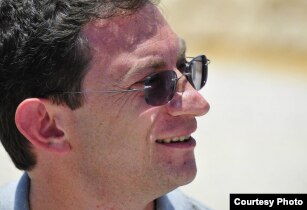
Israeli political scientist Arik Elman on the Geneva agreements on the Iranian nuclear program
On the night of November 24, an agreement was signed to mitigate economic sanctions against Iran in exchange for partial freezing of the Iranian nuclear program. The validity of the agreement is six months, and if the United States presents it as a great success of diplomacy, then Israel does not experience any enthusiasm for the agreement - in fact, immediately after the terms of the agreement were declared, Israeli Prime Minister Benjamin Netanyahu called him a “historical mistake”.
Political analyst Arik Elman discusses the possible consequences for Israel of the Geneva agreements :
- Israeli President Shimon Perez noted that the agreement is temporary and we will judge him based on the results that it will show in the next six months, and not by the statements of those who have just signed it. On the one hand, this can be considered as criticism of US President Obama, who states that the agreement is fully consistent with the interests of Israeli security, on the other hand, as an attempt to somewhat cool the discussion in Israel, where, indeed, all the statements of Israeli leaders have been unequivocally negative. Including, from the part of the parliamentary opposition, where they do not say that the agreement is good, but nevertheless they are trying to say that if Israel does not continue advancement in the Palestinian direction, then this will give additional cards to the supporters of the further isolation of Israel. But this thesis is currently not very popular. ”
- What exactly are they afraid in Jerusalem?
- From an Israeli point of view, the agreement reflects, first of all, the unwillingness of the West to take confrontation with Iran, the unwillingness to go to additional military conflicts in the Middle East. This is all evidence that they want to lower the Iranian nuclear problem on the brakes. Evidence of this in Israel's eyes is the fact that although the contract has not officially announced that the West recognizes Iran’s right to enrich Uranus, nevertheless, the fact that enrichment will continue in itself says a lot. And Netanyahu, in his official statement at a government meeting, is precisely this clause - for the first time, world powers agreed, silent consent, it should be emphasized, to enrich Uranus in Iran, contrary to the already existing decisions of the UN Security Council.
- Until this moment, in fact, the only method of monitoring Iran was the strict sanctions imposed on it by the world community. How will the situation described in the Agreement change the amendment of the sanctions regime?
-It the point of view of the sanctions regime, Israeli experts are not afraid that the West will be easier to violate their own decisions. And the fact that the third countries, non-person with Iran, such as Turkey, the countries of Southeast Asia and Africa, are those that do not see Iran as a threat to themselves, may begin to reduce and weaken their own sanctions against Iran in accordance with the decisions of the UN Security Council. If such erosion of sanctions occurs, at some stage it will become so important what sanctions are used by the United States or, say, Germany. They can be easily circumvented through mediation, say, Turkey, Thailand or South Africa.
- The Israeli Foreign Minister Avigdor Lieberman, speaking of the signed agreement, noted that the silent permit that the West gave Iran to continue nuclear developments can become a signal for other countries of the Middle East to join the nuclear race. If Iran is possible, why can not everyone else?
-Thiscorely right. The problem is the fact that Iran does not threaten Israel directly, but to its Arabic environment, countries where there is a significant Shiite minority. These countries, led by Saudi Arabia, do not intend to sit calmly, do not intend to neglect their own interests. And, moreover, from their point of view, the behavior of the West in this race suggests that Washington and his allies no longer want to remain global police officers, no longer intend to take effective measures in order to impose on the rest of the world the order of things that corresponds to Western values. It must be said that, with the frank contradiction of the Saudi regime to Western values, it still existed calmly under the cover of the West - we recall the first war in the bay, when the coalition, led by the United States, defended the Saudi Arabia from the expansionism of Saddam Hussein after the annexation of Kuwait. Now, if Saudi Arabia decides that she needs to be guided by her own interests and protect her own territorial integrity and resources that are there, then this may lead to the intention to create her own nuclear potential, and this will not take much time from Saudi Arabia. "
- What are the prospects of Israel in such a “new” Middle East?
- “The question that is most worried about Israel is the question of how much Iran will be ready to realize its strategic goal - the elimination of the Jewish state on the way to establish the dominance of Islam throughout the Middle East, the parish of the“ hidden imam ”and build the kingdom of Islam throughout the planet. On the one hand, this is, of course, a story that our Western mind does not perceive us, because it seems to us perfect fantasies. A significant part of the Iranian establishment is guided by these purposes as the covenants of Imam Khomeini. So, will Iran sponsor any terrorist group that will want to, say, blow up a “dirty bomb”. South, naturally, the potential for any settlement with the Palestinians on some conditions arranging the growth of instability in the Persian Gulf and in the Middle East, of course, save the Bashar Assad regime in Syria, bring the war against its opponents - all this will lead The Middle East will make this region much more conflict and will distinguish any prospects for security and peaceful coexistence. "