
Translated material
Lakmus paper of ambitions of PRC
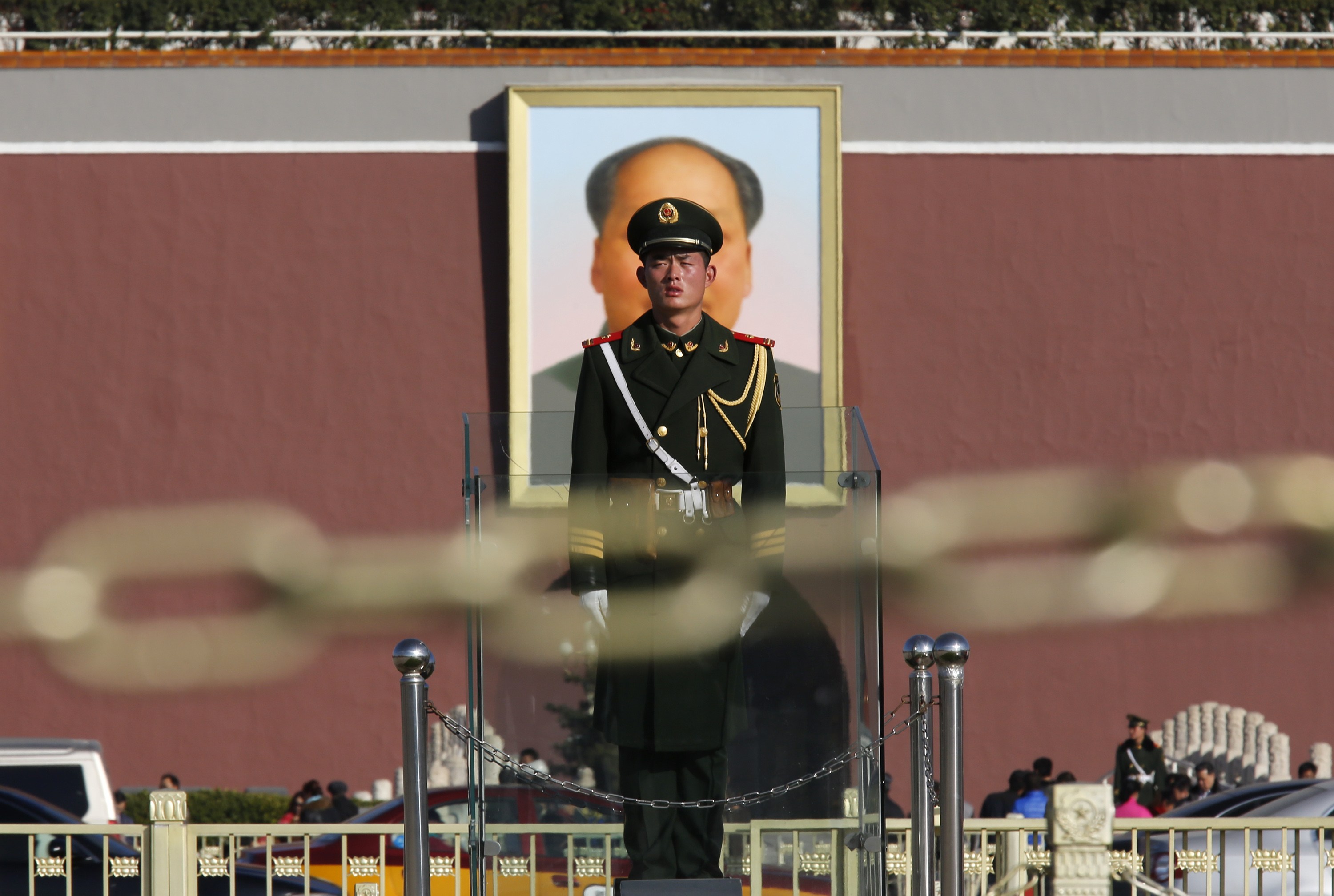
China has established the "identification zone of air defense" in the East China Sea - outside its sea borders
On November 23, the Chinese government announced the creation of an air defense zone in the East China Sea, the work of which will be regulated by the Ministry of Defense of the PRC. The first air patrol of the zone spreading outside the territorial water of the PRC took place on the same day. As the representative of the Ministry of Defense of China explained, the zone will be used to recognize aircraft, observation and control over them, as well as for timely operational response in the event of a threat.US Secretary of Defense Chuck Hagegl in response called China's actions "an attempt to change the status quo in the region." Hage noted that the “unilateral actions” of China increase the risk of conflict as a result of “misunderstanding and incorrect conclusions” about the intentions of the other side. The American Minister confirmed the US allied obligations regarding Japan, which disputes China's claims to the Dyaoyidao Island in the East Chinese (Sepansky - Senkaku).
The situation is commented by the director of the Center for Oriental Studies of the Higher School of Economics in Moscow Alexei Maslov .
- Why is the zone created right now? After all, territorial disputes in the East China Sea have been underway for a long time. Maybe this is somehow connected with the recent plenum of the CPC Central Committee?
- Yes. This plenum, in fact, largely gave carte blanche to the new leadership of China to more decisive action in all areas, including foreign policy. It should be borne in mind that after the PRC of Xi Jinping came to power, the foreign policy of the PRC, including politics in the disputed territories, was noticeably intensified. This applies not only to Sinkaku, but also to disputes around Spartley Islands in the South China Sea. China shows that he is ready to take active actions, and not just with the mouth of the Chinese Foreign Ministry to respond to some attacks. And in many ways this, of course, is a rather smart provocation on the part of China - to see how the whole world, the allies and opponents of China react to the situation. To a certain extent, it is a litmus piece of paper to understand how China can advance its political ambitions forward.
- Did Japan and the USA calculate the tough reaction in Beijing?
In many ways, this is a provocation from China - to see how the whole world, allies and opponents of China react to the situation. To a certain extent, it is a litmus piece of paper to understand how China can advance its political ambitions forward.
“I am sure that all this was calculated on her.” China is trying to endure any joint actions of the United States and Japan. The United States reacted, as Beijing expected, that is, made a rather sharp statement both represented by the US Minister and a number of American senators. At the same time, China may now try to show the whole world that, in addition to these sharp statements, the United States is not able to do anything to protect its ally. And as a result, according to Beijing, this can turn the eyes of a number of countries of Southeast and East Asia towards China precisely as the winner. At least the winner in a political battle, if not a military. Today, China is trying to choose for itself a number of so -called “oscillating” countries with which the United States cooperates quite tightly. It is primarily about the Philippines, to a certain extent about Indonesia and South Korea. Beijing is trying to demonstrate that he can not do anything, despite such warlike statements and willingness to introduce the armed forces in case of violation of the border.
- In territorial disputes, the parties very rarely make concessions. Does all this mean that we are dealing with the next and now very long -term exacerbation of the Relations of the PRC with Japan?
- The question is how much this exacerbation will be long -term is very complicated. We know exactly the same from history a number of conflicts that last for decades or even centuries, which does not prevent countries from developing trade relations. Because everyone understands that being in a constant state of enmity, especially in such a small territory, is very difficult. Japan is one of the largest, if not the largest investor in China. Japan placed its production in China and itself is interested in selling its products, or at least in its production in China. China is absolutely not interested in losing such a large investor. But for any policy, as always, there are economic considerations. Today, China has accumulated enough its internal gross product and gold and foreign exchange reserves in order not to need some serious currency tributaries and any large investments from the outside. China does not refuse them, but they are no longer critical. That is, the whole situation with Japan began precisely after China felt that it was quite rich and strong enough. Many technologies that Japan transferred to China along with the development of production, China today can safely buy or even play. Therefore, such a dependence on such an important ally as Japan has disappeared. Now, I think, of course, China is much more important for Japan than Japan for China. So, despite the cooling of relations and the folding of a number of projects that were rolled up last year, for example, a number of projects for the construction of joint automobile plants and their expansion, I am sure that the cooperation will continue. But it will be sharply limited. Moreover, the Chinese authorities will use this lever in order to supplant Japanese manufacturers from their markets if desired.
-


Andrey Sharogradsky
International Radio Offer Freedom. Author and host of the information and analytical digest, podcast "Time of Freedom"