
Translated material
Gabriel Superfin: “I never dared to ask:“ Did you work on ...? ””
Tomorrow at 20:00 in the club "Fassborder" COLTA. RU conducts a show of the German documentary “Modern Traitors” about the writer Paul Gracika, who was knocking on his friends and colleagues, that is, he worked at the headquarters. After the film there will be a discussion with the participation of Boris Dubin, Alexander Morozov and Nikita Petrov.
This is the beginning of the new project “Cinema Believe”, in which we will show the best documentary films about the most acute issues of our time. You can get to the show if you write about it at the address info@colta.ru . The entrance is completely free, but on the lists (there are very few places left).
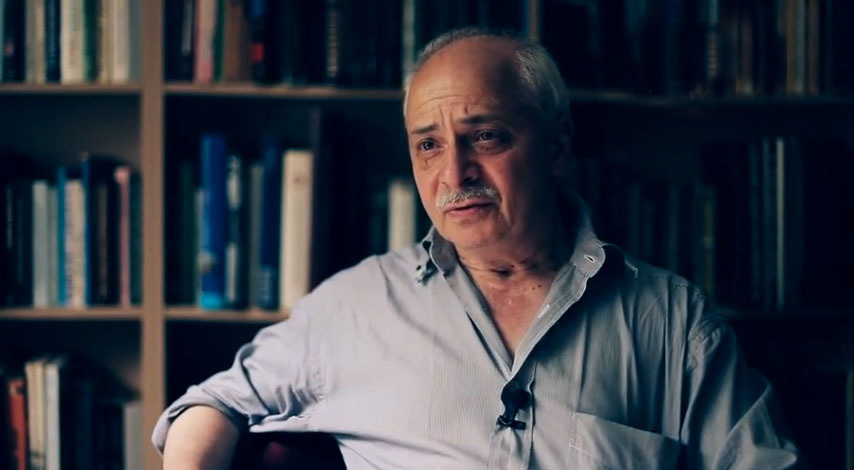
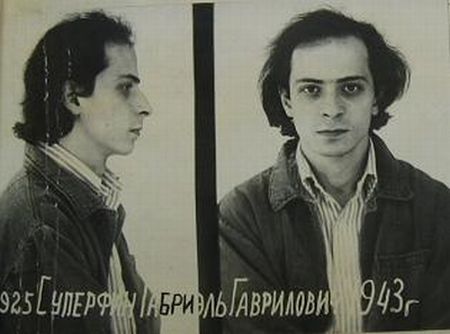
Meanwhile, Elena Racheva asked the philologist living in Bremen and one of the editors of the Chronicle of Current Events Gabriel Superfin about how the Soviet teachers and colleagues of the Stasi recruited secret agents - KGB workers.
- As you know, the work of organs with dissidents was largely built on informants. I know that you also encountered them. Do you know how the authorities usually recruited their assistants?
- In fact, all the recruiting mechanisms at different times are the same. Create a hopeless situation for life - and go. The easiest way was to put on prisoners in the camps. The Chekists there recruited agents for tea, food, and the possibility of amnesty. “We are not humanists” - as the KGB officers themselves said. That is, “good” for “good”, you have to pay for everything.
Former political prisoner Ivan Kovalev said that his wife, also political prisoner, was tormented by a croak. To facilitate her fate, he agreed to cooperate. He was placed in front of an ethical dilemma. True, the honest Kovalev was able to avoid the implementation of his "non -disclosure subscription." Yes, and the Chekists simply needed to “stain it”, they did not really need information from him.
"Are there any other opportunities?" I asked. "Well, go to BAM!" - said Baranov.
This seems to be science fiction, but one participant in the “Aircraft Process” (the 1970 trial of a group of Jews who refused to leave the USSR and tried to capture a passenger plane and fly away from the country. - Ed. ) He said that for his consent to cooperate in prison, he met with girls or a girl.
There was also blackmail: “Do you want an apartment? We will help. But you have to earn it. ” There were other cases: adventurers who believed that they would outplay the Chekists and recognize their secrets ... One person-I will not call his name-as a boy, in the 40-50s, wanted to catch spies, turned to adult friends of his parents, and they said: "And you serve, go to such and so, listen to what they say ..."
- And if it became known about such work?
- Of course, the attitude towards agents from their acquaintances changed. This story is not particularly discussed, but it is believed that one participant in the publication of samizdat historical collections “Memory” in the early 1980s was an agent. When this - almost irrefutable - was discovered and many know, it began to shun, and he pretended that he did not notice this. Some justified him: "Maybe they recruited him, but he did not give reports." So I have never dared to ask the suspected: "Did you work on ...?"
- After you returned, having served a deadline, you also tried to recruit you?
- Yes, I then lived in Tartu and even worked in the archive in a technical position. At the end of 1982, I was unexpectedly fired from work and parallel to the residence permit, so I at the same time became homeless and unemployed, which in those days threatened for a term for parasitism. I tried to get a job for any work, but one of those who knew from the inside, what was being done in Tartu and in the area, told me that all the heads of institutions and enterprises were informed that it was impossible to hire me.
It was in January 1983. It was obvious that in Estonia, where the cleansing of dissidents began, they wanted to get rid of me. I decided to go to Moscow, to the Central KGB. Under some pretext, I was able to get out of Tartu (I pledged the local Tartu department of the GB to talk about my exits from the city), in February or March 1983 he left for Moscow and went immediately to the KGB on Dzerzhinsky.
I say: "Can I see Comrade Baranov?"
Alexandra Vladimirovich Baranov - the title was then unknown to me then - I saw before twice. In 1979, I was in exile in Kazakhstan, and at first I was allowed to go on vacation to Moscow, and then I was forbidden, and I didn’t have a scandal, but I sent a telegram in the name of Brezhnev, which was deprived of the legal right to leave. Then a man named Baranov came to me and said that the vacation would be allowed.
In the USSR, one of the operatives accounted, for example, five agents. The operative is the exhausting daily work!
The second time I saw him in Tartu. I arrived there in the 80th, registered, but waited for the bride that my parents did not let go of the house, from Kazakhstan. I wrote in the KGB in the name of Baranov that obstacles were being repaired. He appeared immediately! He said that he accidentally ended up (in those days in Tallinn there was a mass performance of Estonian youth). He promised to promote marriage. I was interested in if I would go, having married, to exile. I replied that I probably would have to (I always answered the question about emigration, because I did not want to leave).
So, I was appointed a meeting with Baranov the next day. Baranov said that I have several opportunities. One is to write a repentant letter, the second - to go to the West (“This opportunity is not given almost to anyone now”), the third - to become a “consultant” of the KGB.
“Do not laugh - a consultant, not a snot. We have enough informants, but we need a specialist in dissidents ... "
"Are there any other opportunities?" I asked.
"Well, go to BAM!" - said Baranov.
I seriously reacted to drawing up a letter, wrote that it is pointless to put pressure on a person who wants to engage in scientific activity, handed a letter to the Tartu KGB, but the next day they returned it to me, they said that such a letter was not suitable for them. And I began to prepare for traveling abroad.
Later I learned that Baranov was the head of the 9th department of the fifth department, was engaged in dissidents. He took Bukovsky (to Switzerland to exchange the leader of the Chilean communists Luis Corvan in 1976. - Ed. ), Signed acts on the destruction of Sakharov’s operational affairs ... Apparently, he understood that I did not agree to become a consultant. He said for the Promise. And the task was to “bow” me to emigration.
- How massively did the KGB try to recruit people in your times?
- To recruit, it was necessary to get the consent of a higher comrade, the operatives themselves did not solve this. Many were “incorrect”: one is talkative, the other is unlikely, someone is not enough years old, someone is mentally sick-although, in my opinion, they didn’t disdain like that ...
The mass approach is German. And in the USSR, one of the operatives had, for example, five agents, and it was necessary to consider how many employees were in the staff so as not to gain too many informers. The operative is the exhausting daily work! You need to meet in conspiratorial apartments or in hotel rooms, recruit, write reports, look for approaches to a recruitment, get used to the image. And it is unlikely that the authorities are welcomed by a creative approach. Then, probably, informers and operatives are attached to each other - you can write novels about these.
- There was a film “The Life of others” about the stami agent, who began to sympathize with the playwright whom he listened and saved him from arrest.
- Even, probably, more lyrical things are. In Bremen, in our archive there was a visitor, a former Gideerovka, the wife of the dissident. She spoke in Russian perfectly, came from Hamburg. A very sweet woman. At some point, she disappeared, and we saw in the newspapers that she was exposed as an agent of Stasi, who brought her husband out of jealousy. You will read such stories - one, two, three - they are all the same. This is routine work. Man's tragedy is a tragedy! - It becomes a routine official business.
If there was at least one case of suicide on this basis, I would not publish names.
In addition to secret agents, there was also a system of proxies who were no longer recruited, but sometimes used by friendship, but mainly in position (this does not mean that in the past, without nomenclature posts, they were not unspoken employees). Such people in the KGB documents, it seems, do not pass under the nickname, but under their own name. For example, a doctor Evgeny Chazov - in his memoirs he writes that he told Andropov about the state of health of Brezhnev, that is, he was actually a trustee of Andropov. Let's say that the appropriate state archive from the KGB entered the manuscript, which were not destroyed during the exemptions, for example, Pasternak. They entered secret storage. Gosarchiv received them through his director, probably a KGB trustee. The heads of party organizations, nomenclature party workers, who were not supposed to be recruited, but there were trusting relations with them were also entrusted.
- Are there any instructions for the KGB officers on how to work with agents?
- Of course, everything was clearly spelled out. I recall the story of how a year in 1969 from one dissident was the instructions of the Cheka on the recruitment of agents. It turned out that then he was brought to him by the then oppositionist Peter Yakir. He discovered her at home by the widow of the Chekist, took it and showed many (maybe someone even managed to take a copy). One person, worn with this instructions, threatened the imaginary listening Chekists on the phone, which will expose their recruitment methods. As a result, the whole thing was opened, people were threatened with an article about treason and the disclosure of GOSTINA. And the screaming on the phone was planted (of course, without mentioning his telephone threats) ...
- In your opinion, is it necessary to publicize the names of Soviet secret agents now, as has already been done in Lithuania or the Czech Republic?
- If there was at least one case of suicide on this basis - I would not do it. But it is worth identifying those who inclined people to cooperate, or agents who have turned into party leaders, deputies or someone who occupies socially significant positions. These themselves are not recognized and do not end with suicide.
- Do you know examples when the informers were people who determine public opinion?
- I have no such examples. And don't. Why disappoint yourself? A person who lives a double life is obvious. He or becomes a drinking ... this is ... you can’t hide it. Lies shine through in a person. It is difficult to live a double life, make friends with someone and every minute transmit information about him. Maybe there are conditions under which agents can testify to others and not touch close friends. But in the current situation, I cannot imagine such people.
- Do you think they are recruiting informers now?
- What are you?! Probably more and more impudent! We love reliability and will not trust exclusively by technical means. People, or rather, “sources of information” are the most reliable.