
Translated material
"Food in the pre -trial detention center is just terrible"
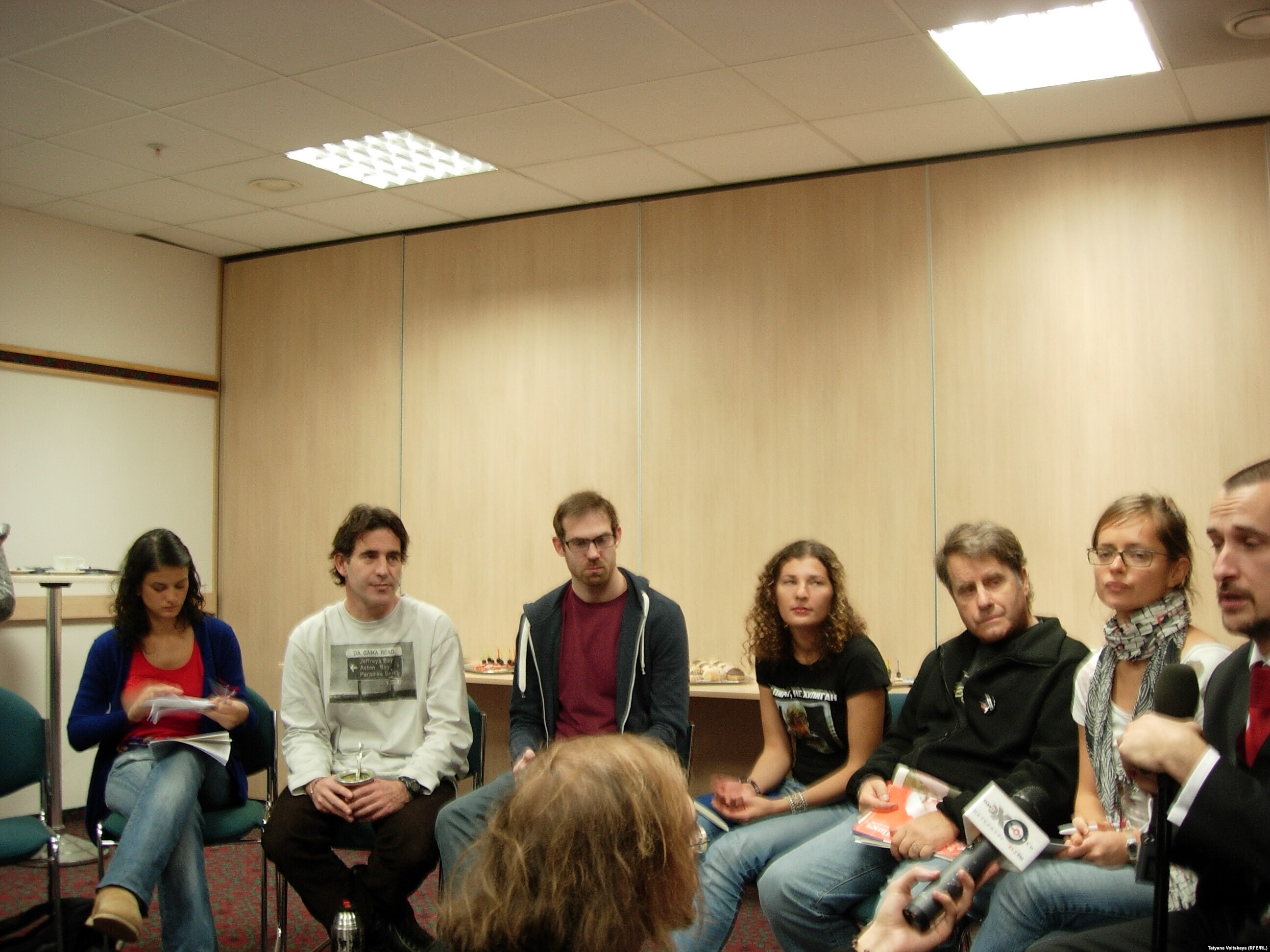
Activists "Greenpeace" freed from the pre -trial detention center met with reporters
Greenpeace activists and crew members of the Arctic Sanraise vessel feel very tired after pledging from the St. Petersburg pre -trial detention center. Nevertheless, they found time and effort to meet with reporters in an informal setting and telling about themselves and their experience of communication with Russian reality.
“The most difficult was not a conclusion, the most difficult was the consciousness that such accusations were brought against us - first in piracy, then in hooliganism,” says Peter Sanraise, Peter Wilcox . - I have been working with Greenpeace for a long time, because I share the principles of this organization: never to take money from any governments, to arrange shares of only non -violent nature, to never spoil anyone's property. These principles were also respected by the Prirazlomnaya platform, in this case the accusations against us are especially absurd, since everything happened in neutral waters. And I want to especially emphasize, we did not oppose Russia, we opposed the oil magnates who are ready to cover our planet with garbage.
“Captain Wilcox, what if some people tried to get on your ship, what would you do in this case?”
- I would be guided by exactly the same principles. First of all, the principle of non -violence. Yes, in fact, this was already the case, in 1985 my ship was attacked and even blown up by the French special services.
The phrase that the biggest test was not a prison, but heavy charges, a criminal case is repeated by all Greenpeace activists who have recently left the pre -trial detention center.
“Well, okay, arrest, okay, two months, but you all the time remember that these two months can turn in several years, and here it really becomes bad,” says the British movie operator Kiron Brian , who, however, talks about his misfortunes quite fun. - When we were brought to Russia, the first few days the only persons we saw were the faces of the police and investigators, and it was a rather harsh experience. But then, already in prison, we met wonderful people. Both guards and neighbors in the cell - everyone treated us very warmly, constantly asked how they could help us. When we were sent by train to St. Petersburg, people climbed at 5 in the morning to encourage us, smile, wish good luck. It was quite difficult to communicate, because none of them knew a word in English, but, nevertheless, the communication turned out to be very warm, they shouted, waved after us. I will never forget this, it completely changed my attitude towards Russia.
But still there is a prison. For Kiron Brian, food was the most difficult test:
- The food there is just terrible! For example, soup. They always gave soup for lunch, and there were four species, they changed these soups every day, in turn, one after another. So, the fish soup was the worst, it had to be poured into the toilet right away, and I just loved the chicken soup and rejoiced when it was brought. I will see chicken soup - oh, well, this is what I will eat! But once I saw how my cellmate, having received his plate, picked up a piece of chicken with a fork and threw it into garbage. I screamed - what are you doing, this is a chicken, if you do not want, then I can eat it! And he says - "No, not Kura!" I am surprised - how is it, not a chicken? And he waves his hands like wings and says: "Krrr, Krrr!" - and points to the window. And there, on the windowsill, just a dove sat. My cellmate says - pigeon! And he shows, as if shooting a gun: here is the soup!
In general, the topic of the prison menu varies in the stories of activists in all ways. Captain Wilcox, for example, cannot forget how Sini Saarela was crying from the hunger: she is not just a vegetarian, she does not eat eggs or dairy products, and for her the prison turned into a real hunger - they almost never gave what she could eat. But, despite this, Sini did not abandon her principles, preferring to starve.
But for the assistant Captain Miguel Ernan Perez, everything turned out to be so scary: the neighbors on the cell found impressive powder reserves, from which potato puree could be prepared in a minute - thus, he was saved. Miguel in general, speaking of his cellmates, passes to a high syllable:
- When I appeared there, they immediately gave me everything - pants, a shirt, slippers, and as soon as I managed to change, a huge plate of pasta appeared in front of me. These people shared not only food with me, but absolutely everyone, they treated me like brothers.
Miguel looks the happiest - his wife and little daughter have already arrived from Argentina, since they don’t need a visa, but the captain Wilcox family is still engaged in questionnaires, visas, and the case is still moving tight.
Anthony Parret, a long blonde guy from Wells, is engaged not only in Greenpeace’s affairs, in his homeland he promotes renewable energy sources, windmills - it turns out that their installation is very difficult to coordinate, especially under the conservative government. Aiza Oulakhson has already recovered after a pre -trial detention center, she also warmly recalls her neighbors and, it seems, regrets that they could tell each other so little. But Aiza prefers not to look back, but forward - she is already in work, coordinates new projects on the Internet and is waiting for the closure of the criminal case.
Everyone is waiting for this-as an end of absurdity, as the opportunity to finally feel the half-free, as Kiron Brian expresses, but real freedom, the opportunity not to sit in the hotel in anticipation of a call to the prosecutor’s office, but to go home to relatives. Greenpeace lawyer Anton Beneslavsky believes that only such a way out can be welcomed.
- Let these structures, which brewed all this porridge, are drying out. And I would have asked all these investigators in the place of journalists - by what right do they deal with all this nonsense for money from the taxes that I pay?!