
Translated material
Freedom of speech. Expensive
Free people support free press

Friends!
If you read this column, it means that for you, as for us, those who make this magazine, freedom of speech is the value with which neither you nor we are ready to part.
For six years, the magazine was published thanks to Irene Stefanovna and Dmitry Anatolyevich Lesnevsky. We did not have censorship: neither external nor internal, we had not a single custom article, we never got notes from the number for political reasons - even when the intuition of the wise Lesnevskaya suggested that there would be big problems, as it was with the “black cash desk of the Kremlin”. Irene Stefanovna could not be called and demanded that the journalist dismiss: the caller immediately went to the famous address.
But everything once ends.
Since 2014, our magazine has been included in the new stage of its history. Namely: the magazine will no longer have owners, it cannot be sold or inherited. The only owners of the magazine will be you, his subscribers and readers (more details - Chavo ). And this is the uniqueness of The New Times: it will become the first public magazine in the country.
Everything is very simple: you read - we write. You are not - there is no us either.
And the magazine’s mission will be - in fact, as it was in previous years - to inform you about what is happening in the country, in the world, in society, in power structures, to give qualitative analysis, to talk about the problems that others prefer to be silent about. Cultural discourse, pain points of history, science as an alternative to obscurantism, books that help to understand itself and the world - all this will remain in the field of our attention and your, I hope, interest. And just as before, the basic principles of The New Times will be honesty, independence, and incurred.
We are working for you. You - finance our investigations, reports, business trips to the hot spots of the country and the world.
Therefore, it is so important for us that you subscribe to The New Times.
Here - - options for subscriptions, choose what suits you more.
Sincerely -
Evgenia Albats,
The editor -in -chief of The New Times
"I became one of the owners of The New Times"
Free people support free press*
| *Quotes from posts in a living magazine, Facebook, echo.msk.ru |

Tatyana Lazareva, TV presenter
Frend are you or not Frend? Brother Are you me or not a brother? And now we will check /... /
There is such a magazine - The New Times. Honestly, this is my light in the window for a long time. As she began to read it, she was surprised: neither a fig to himself, but they say, we have no freedom of speech! But since then years have passed, and the magazine remained alone. And I always bought it and read it from crust to crust, there are many different things - and controversial, but it is necessary for that! Now I have a subscription, and I am happy-it was not so easy to find in Moscow.
But this year finally (I thought-when?) Investors refused. And this is our last and decisive chance to say that we need freedom a) we need, b) We are not afraid of her and c) We are also responsible for her.

Nikita Belykh, Governor of the Kirov Region
Now I am issuing a subscription for the next year/ .../ The New Times: here you can find a variety of materials-from an interview with the press secretary of the president to acute criticism of the current government. Of course, I do not agree with all the materials and often argue with the editor -in -chief of the magazine. But I am extremely interested in their desire to ensure the release of the publication at the expense of subscribers. And thus make an independent socio-political media, the success of which would only depend on the popularity of the audience.

Grigory Chkhartishvili (Boris Akunin), writer
I have never been a subscriber of this magazine, but now I will subscribe. Such times are now: all the good and necessary things for normal life (for example, independent media), except for you and me, is nobody to sponsor. Let's take a thing.

Alexey Navalny, politician
/ .../ We need a model of new coexistence of publications that are ready to make high -quality journalism (including investigative) and an audience that is interested in such journalism. Apparently, the secret of such coexistence is expressed in a statement shocking its novelty: you have to pay for the information. In Russia, many quite curious, useful and correct experiments on the transition to a mandatory or voluntary subscription have already been done. But the most amazing experiment makes The New Times.
They do not just answer us the question: how will you finance investigative journalism?
They decided to answer the question very relevant for Russia: how do you guarantee us independence in the future? Suddenly we just finance someone's business, and a new owner will come tomorrow?
The thing is that there is no person who can say now: The New Times belongs to me.
I myself saw the documents and I can certify: The New Times trademark, the archive of the publication and everything else that is the main value of the media is now transferred to a specially created non -profit fund.
The policy of the non -profit fund is determined by the Board of Trustees. Now they are included Boris Zimin, Ekaterina Zhuravskaya, Timothy Collon (professor at Harvard University), Irena Lesnevskaya and, probably, will come in other people who, for me personally, completely remove the questions about whether the head of the publication will ask for something to write something (or not to write).
This is an important thing. Thus, The New Times turns into a public property in a sense-a magazine that belongs to everyone and does not belong to anyone.
On The New Times, 360 thousand unique users per month read. If (taking into account the indelible online and offline audiences) 10% of this number will be subscribed, then the magazine will live and write what he wants, we are delighted.
It seems to me that this is a realistic goal and it makes sense to help the magazine achieve it.

Konstantin Rivkin, lawyer
Dear colleagues lawyers! The New Times magazine, one of the rare publications, where in each issue you can find articles about the judicial system, about what you and I encounter in court hearings, where the contesting of the process is violated, about the Russian Gulag, where our clients are sent, today is very necessary for your help. In order to survive, the magazine needs subscribers.

Olga Romanova, "Rus sitting"
I subscribed to The New Times, because it is important. It is simple, it is inexpensive, it is useful. And I forcibly signing this magazine of various FSIN chiefs. They can throw it away - but it is unlikely. The toad will strangle. And then, maybe something will happen to the brains.

Boris Nemtsov, politician
The New Times went out of extremely risky business. He wants to be the first public magazine in Russia. A magazine whose fate is completely dependent on readers, not the owners. It is necessary to find thousands of caring people who are ready to believe and invest in business. This is oh not easy.
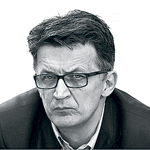
Rustem Adagamov (Drugoi), blogger
The magazine will gain 20 thousand subscribers - he will live, will not gain - we will lose another fighter on the front of the struggle for freedom of speech.
In the struggle for freedom of speech, publishers and journalists in Russia have to pay your own pocket, pay with their broken lives, reputations, and health. And they have only one protection and support - their readers.

Andrey Malgin, literary critic
/ .../ We discussed (with readers of a living magazine. - The New Times), when M.S. Gorbachev advertised Louis Vuitton. It was in September 2007: a magazine lies on the purse at Gorbachev, on the cover of which it is written about the murder of Litvinenko. It was the New Times (No. 16 of May 28, 2007). / .../ They now have a signature campaign, on which it depends whether they will survive or not. I would like to survive.

Philip Dzyadko, journalist
I became one of the owners of The New Times.
And at the same time his 849th subscriber.
This took 3 minutes 24 seconds (a minute went to search for our index).
I always imagined such a picture: you get up in the morning, go down in slippers to the mailbox, take out a couple of letters from Australia and Namibia, two or three cards from Tbilisi, Barcelona and New York, the La Vanguardia newspaper around 1931 and the magazine.
Only Perushev sends postcards to me, with letters from Namibia the trouble has been completely a disaster, but the magazine will now come every week. And since we have only one interesting weekly socio-political journal, in each number of which I read at least 80–85% of materials, I will become its owner. Rather, the 849th subscriber.
Only one thing embarrasses me: so that such a magazine exist for a long time, 19 thousand people should live in the world who are ready to pay for the opportunity to go down to the mailbox for steep readings about current events every week.
However, the consciousness that in addition to me, Masha Alekhina and Mikhail Khodorkovsky subscribed to this magazine-that is, we now have 1) common property, 2) weekly common reading-convinces me that somewhere nearby and 19 thousand other allies.
I paid for now for six months - this is about nine bottles of vodka or one tenth ticket to Namibia. However, on the magazine’s website the answer to the question of what kind of money is even more concise.
See you at the mailbox.
I know that the paper leaves, runs away, disappears like an invisible person, and this process is irreversible. Online publications are displaced by printed magazines. For generation of our children, Rider is more convenient, friendly than the book. I also have no doubt in your generosity and the ability to support a good project exclusively out of a sense of solidarity with its authors.And I have to say this: do not be stupid, gentlemen, let your imagination run ten to fifteen years in advance. We will live in another country again. This is inevitable. And the New Times magazine will be a bibliographic rarity, a collector's dream. Its inventive covers or even entire rooms will shine under glass in the best houses in Moscow and St. Petersburg. They will be given, as a rarity, for birthdays and for weddings. Your grandchildren will admire your insight.
Because in our cloudy time, the time of compressed tails and trembling knees is the only political popular magazine with an honest position. “The New Times” is a Christmas magazine. He may be mistaken, but the betrayal of ideals, prostitution is unthinkable for him. This is proud loneliness, standing in a clean field - completely unique, because the magazine does not come out in a cozy and safe emigration, but right here in Moscow, in the center of the cyclone. And he is not an underground dissident publication. The editors and authors behave like free people in a non -free country. There are very few such episodes in history.
Chavo*
*Frequently asked questions and answers
Why is the subscription more profitable for buying a magazine in a kiosk?
Firstly, there are fewer kiosks, they take more and more for distribution and getting into them the magazine is increasingly difficult. The price of the magazine in the kiosks of Moscow - from 100 to 115 rubles, on BIPI columns - 147 rubles, in airports - 169 and above. At the same time, our vacation price is 50 rubles. Thus, buying a subscription, you save: for 44 numbers per year - 4200 rubles, or 95.4 rubles. per number, plus access to articles on the site on the day of the room.
What is the signature price of one number from?
Answer: 50% - “Russian Post”, 28% - taxes, 21% - printing house and paper, 1% remains for the rental and remuneration of the journal employees. The staff of the editorial office, including technical employees, is 23 people.
Why not refuse a paper medium and make an Internet magazine?
Firstly, the economy of the magazine does not allow: we earn on sales. Secondly, the audience of the site www.newtimes.ru (360 thousand individual users per month) and a paper journal, as the research show, intersects little. Thirdly, all high-quality newspapers and magazines, developing electronic versions, continue to go out on paper: this allows you to add the audience and increase coverage.
Why can't The New Times be profitable?
Our two main problems are a monopoly of the delivery and distribution of the press and political pressure on potential advertisers. A large business depends on the authorities and is afraid to give advertising to our magazine. However, high -quality publications specializing in political journalism and journalism of the investigation are unprofitable almost everywhere in the world.
How is it: will belong to the magazine civil society?
The capital of the magazine - its trademark and archive - will be transferred to a non -profit organization: now there is a paperwork. Thus, the magazine cannot be sold, or inherited, or drive out journalists and hire those who will write not about politics, but about flowers and berries. From a formal point of view, the magazine will work on the principle of a public campaign, only in this case the role of the shares will play a subscription.
How can subscribers control the editor of the magazine?
According to the media law, the owners do not have the right to intervene in the editorial policy: this is the exceptional prerogative of the chief editor and journalists. If the subscribers do not arrange a magazine, they will stop paying for it.
What does it mean that the magazine will not have the owner?
This means that there will be no specific person or groups of people who will expect a business profit from the magazine, and if there is no profit, they will be able to sell the magazine or change his mission.
Who will ensure that The New Times fulfills its mission - to be a civil society magazine, to be honest and impartial to write about events in the country and the world?
Now the observational council is being created, which has already agreed to enter the head of the Board of Trustees of non -profit programs “Dynasty” Boris Zimin, founder of the magazine Irena Lesnevskaya, professor of Harvard University Timothy Kolton, professor of Rash and the Parisian Economic School Ekaterina Zhuravskaya. Negotiations are underway with a number of no less worthy people.
Why then honestly not to say that the New Times conducts crowdfunding?
We do not hide, honestly say: “There is no you - no us. To survive, the magazine needs to collect 20 thousand subscriptions. ” But there is a difference: crowdfunding is a donation for trust, a subscription is a contract (we undertake to deliver a magazine to you within a year).
And what will happen if The New Times does not manage to collect that kind of money?
We are absolutely convinced that we can. The materials of the magazine on the site are read monthly 360 thousand unique users. If 10% bought a subscription, we live. And besides, many friends of the magazine not only buy subscriptions for themselves, their relatives and friends, but also transfer donations to the Freedom Support Freet that helps the magazine.
Is it possible to help the magazine without buying subscriptions?
Can. Here www.newtimes.ru/foundation. Thank you.
Will access to the site www.newtimes.ru be closed?
Access to the site will be open, the site, as now, will regularly be updated by materials about the main events of the day.
Will those who did not subscribe be able to read the articles of the magazine?
The materials of the magazine for subscribers will be open on Monday, and urgent ones - already on Sunday evening. Those who did not subscribe will be able to read materials at the end of the week - on Friday and weekends.
How to be pensioners who are used to reading a magazine, but cannot afford a subscription?
For pensioners, students and school libraries, a 50% discount on the price of the magazine. You can also buy a new number at a vacation price (50 rubles) every Monday and Tuesday from 11.00 to 15.00 in Kiosk at the address: Moscow, Tverskaya Boulevard, 14/1. Thanks to the sponsors: prisoners in zones and prisons, as well as those who are very bad with money, we sign with the money of donors.
Will those who subscribed to the PDF version get access to the materials of the magazine on the site?
Yes, they will receive.
What kind of "The New Times" did you come up with?
Firstly, everyone wants to have friends: we already live in a very broken world. Secondly, we need feedback and criticism, which we hope to receive weekly in a closed branch on Twitter. Thirdly, we often have interesting discussions, special events and events in the magazine, to which we will be happy to invite our friends. Fourth, you yourself send us a lot of new ideas about what can be done together-we will be happy to discuss them.