
Translated material
Hitler and Stalin's heads and balls "Sieg Heil!": In Germany there is an exhibition of Christmas toys of the mid -20th century
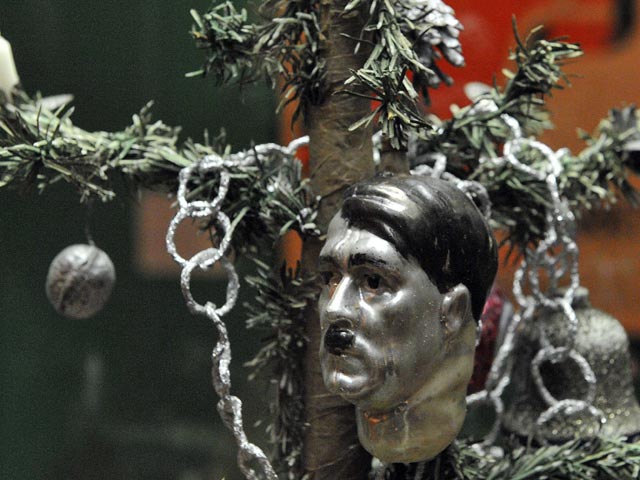
In the German city of Ulm, an exhibition of unusual Christmas decorations opened. On it you can see Christmas toys from the time of the main dictators of the past century.
The exhibition "Aufgeputzt" presents 400 exhibits, writes Augsburger Allgemeine . The exposition reflects how Christmas, one of the main Christian holidays, during the 20th century changed its appearance under the rule of different ideologies. The exhibition collected Christmas toys, which dressed a Christmas tree at Kaizer Wilhelm II, Hitler and Stalin.
Here you can see the head of the dictator made of porcelain, which on the New Year holidays crowned a Christmas tree instead of a star or an angel figure. There were also silver Christmas balls depicting a swastika or the famous slogan of supporters of the Nazi ideology "Sieg Heil!" (Translated from German - "Glory to the victory!").
In the USSR, it was customary to wear a tip with a red star symbolizing communist power to the top of the Christmas tree. Interestingly, this tradition has not outlived itself in modern Russia.
Photos of the German emperor Wilhelm II are exhibited in Ulma against the backdrop of imperial eagles with spread wings, as well as the Zepellin airship model with an iron cross on the side.
The Daily Mail newspaper calls the exhibits of an unusual exhibition "ominous ghosts of Christmas from the past." Now the idea that against the backdrop of a war with its cruelty, mass bloodshed and violence, the inhabitants of the warring countries continued to celebrate the New Year holidays, it seems strange. The person’s face, on whose initiative, the concentration camps tortured thousands were created, could easily become an image on a Christmas toy, designed to delight the owners of the Christmas tree.
The tradition of decorating a Christmas tree on New Year's holidays dates back to the Middle Ages. Then people brought home green branches, symbolizing the heavenly tree, from which Eve tore off the apple, as the old covenant narrates.
Then Christmas trees began to decorate with apples, nuts, cookies, paper flowers. Gradually, the tradition has spread among representatives of the middle class. In the XVII century, the first angel, a star and other Christmas figures made from papier-mash and wax appeared. And it was Germany that became the center for the production of glass jewelry in the 19th century.
Now most exhibitions on Christmas toys are held in China, their largest manufacturer.