
Translated material
Without the right to adoption
KS will consider the complaint of the failed father
Russian laws prevent children from adopting children not only to foreigners, but also to their own citizens. One of these stories last week was considered in the Constitutional Court
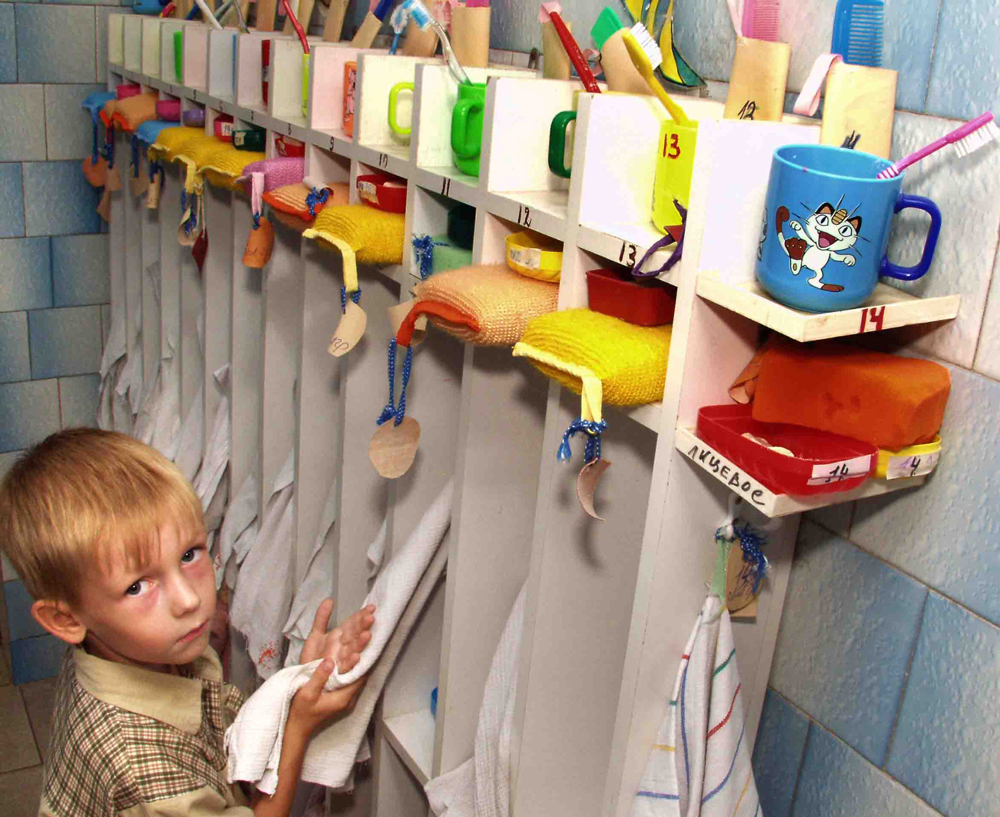
Article 127 of the Family Code complicates the adoption of children to Russian citizens
“Not only do they limit adoption abroad, although there are more opportunities for the child, and in Russia they limit. At the same time, they advertise us everywhere: adopt, adopt! ” -The mother of 2.5-year-old Matvey Olga Anikieva wondered in a conversation with The New Times. Her husband Sergey Anikiev in 2012 tried to adopt a child, whom he raised from an hour and a half age, and was refused. Because three years before, he went through a trifle case about a fight that ended in reconciliation of the parties.
Alien among relatives
The problems in the family of Olga and Sergey Anikievs began in October 2012, when the court of the city of Koryazhma, the Arkhangelsk Region, banned the head of the family, the 26-year-old driver of the cargoer, and adopt the child of his wife Olga. “Matvey was born in March 2011, and we got married in May of that year. He is like a native to me. I consider him my son, he calls me dad. I wanted everything to be officially, ”Anikiev explained to The New Times.
The Koryazhminsky court substantiated his refusal by the tenth paragraph of the first paragraph of Article 127 of the Family Code (SK), which excludes from among the adoptive parents of persons who "have a criminal record who are subjected to or undergoing criminal prosecution ... for crimes against life, freedom, honor and dignity of the individual." The court reminded Anikiev that after a fight in 2009, he had a case under Art. 116 of the Criminal Code ("Beating"). In court, the opponents reconciled and did not reach the sentence. Nevertheless, Sergey is considered “undergoing criminal prosecution”, which is just suitable for definition in Art. 127 SK.
“I would never have thought that this episode would affect our life so much. We do not want to advertise that the son is not him, ”says Olga Anikieva. - Only relatives know this, and distant relatives are sure that the child looks like dad, and we do not refute. We have a common daughter Alina, she is now a year, and for Sergey there is no difference between children. ” Olga told The New Times that the family is already experiencing a lot of inconvenience - for example, in kindergarten: “We hoped that when Matvey would go to the kindergarten, he would have a father’s surname. Now, so that the husband can take his son from the garden, you have to write receipts. ”
Anikiev appealed to the Arkhangelsk Regional Court, but he was also denied adoption-on the basis of the same 127th article. And then the couple decided to go with a complaint to the Constitutional Court. “I don’t know what prompted me, probably, despair. I talked about the situation to a friend of the lawyer, and he found a way out, ”Olga explained. In January 2012, the Constitutional Court accepted the complaint. The meetings were waiting for almost a year. “We are seriously tired of all this nonsense with a motorcycle on the courts, I would like to quickly rewrite Matveyka to my husband and live calmly,” says Anikieva.
An unlimited ban
“The norm established by Article 127 of the UK is an unconstitutional, is an automatic, unconditional and, most importantly, unlimited ban, which does not give the court the opportunity to make an exception and individually consider each case: for example, the fact of a terminated criminal case, repayment of a criminal record, the desire of the child,” the lawyer Vladimir Zwil, representing the interests of the Anikievs in court. In addition, in a complaint, the lawyer indicates the contradictions within the very Art. 127 SK. Thus, the 10th paragraph of the first paragraph introduces an unlimited ban on adoption for persons who had a criminal record or undergoing criminal prosecution, and nearby, in the 11th paragraph, to citizens with an outstanding criminal record for serious or especially serious crimes, only a temporary ban on adoption is prescribed. According to the lawyer, there is a "imbalance of the legal consequences of criminal prosecution."
At a meeting of the Constitutional Court, where Anikiev’s complaint was considered on November 28, the applicant’s position was supported by the children's Ombudsman Pavel Astakhov, a representative of the State Duma in the KS Dmitry Vyatkin, who noticed that “it is possible to amend the current legislation”, as well as a representative of the government in the highest courts, Mikhail Barshchevsky, who wrote in his response, that the contested norm leads to the disputed norm excessive restriction of citizens' rights.
Amendment from Mizulina
The 10th paragraph appeared in Article 127 of the Family Code at the end of December 2010 with the submission of deputy Elena Mizulina, who made these amendments together with a group of members of the State Duma Committee on Women, Family and Children. Prior to this, it was forbidden to adopt children only to persons who have a "incredible or outstanding criminal record for serious or especially serious crimes."
Mizulina herself refused to comment on the comments. And her then first deputy for the committee Natalya Karpovich, co -author of the amendments, explained: “The law was adopted so that the child could not get into a dysfunctional family and undergo violence there. The idea arose from the request of society. Society told us that people who do not give the child the proper education become adoptive parents. ” The deputy is confident that the 127th article gives law enforcement officers the freedom of choice: “Everything except the articles“ Cruelment ”and“ Murder ”should be considered individually. The Family Code says that if a family is created, the only thing the court can, to establish a thorough check, a trial period for about six months and then allow us to adopt. Here, guardianship authorities have not worked - they could give a petition. Maybe Anikiev was refused, because there is some negative information about the family. ”
"
“These deputies did not read the Family Code, they wrote it. The story is anti -human and written with a run by people who do not understand the right deeply "
"
“These deputies did not read the Family Code, they wrote it. This story is unfair, anti -human and written with a run by people who do not understand the right deep, ”the lawyer Anton Zharov, a specialist in the family structure of children, commented on The New Times. He sees the root of the problem in the fact that the deputies, adopting amendments to the Family Code, invaded the field of criminal law, but did not take into account its principles - for example, that the punishment is excessive (has a limitation period).
“A person is amazed in rights completely and forever, even for some kind of frivolous articles. For example, the article “Beatings” can receive a son -in -law that has flipped a mother -in -law in the face. And after that, he will never, even after 20 years, will not be able to adopt the child, ”explains the lawyer Zharov. According to the lawyer, the court, deciding on adoption, cannot retreat from the letter of the law: “The court cannot replace the law. He only decides whether a person corresponds to the criteria or not. ”
To decide whether such stringent requirements meet the basic law and whether this rule is more flexible to make this norm, the Constitutional Court should until the end of December.
Photo: Sergey Viniavsky/RIA Novosti