Date
Author
Александр Генис; Владимир Гандельсман
Source

Preserved copy
Translated material
Myth Margaret Thatcher
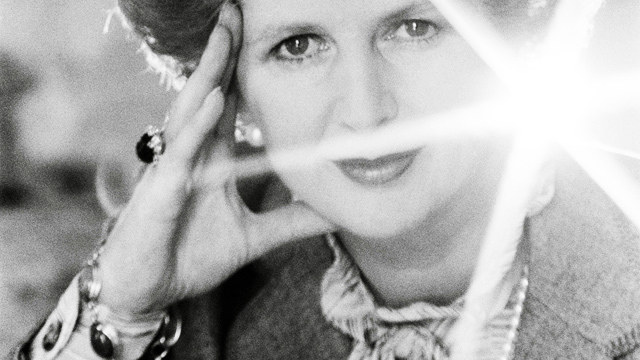
Vladimir Gandelsman: At the beginning of 1978, the largest country in the world is the Soviet Union - and the most multi -sized country in China seemed an indestructible monolith of communist ideology. Iran headed a shah, and the elderly leader of the church opposition Ayatollah Khomeini was exile in Iraq. Afghanistan was under the control of General Muhammad Daud, the secular educated, preoccupied with the modernization of the country, the rights of women, which posed the main threat to autocratic rule, where communist ideas were supreme. It seemed at that time that the iron curtain would forever separate the free world from the unfree. The Cold War was a dominant factor in global policy.
Alexander Genis: However, in the same in 1979, the Polish Cardinal Karol Voitil, who was already Pope John Paul 2nd as if blessed Poland to fight communism.
Vladimir Gandelsman: Yes, it was in 1979, in the summer, dad first came to Poland as the head of the Catholic Church. For the Poles who were under the rule of the atheistic pro -Soviet regime, the election of their compatriot by the pope became a spiritual impetus to the struggle and the emergence of the “solidarity” movement. “Without it, communism would not end, or at least this would have happened much later and with greater blood,” the British newspaper Financial Times , the former leader of the “solidarity” of Lech Valen .
Then it all began. The Soviet block cracked. Shah went into exile. The National Front, under the leadership of Ayatollah Khomeini, formed the government, and most referendum participants supported the creation of the Islamic Republic of Iran. In Afghanistan, Daud was overthrown and killed a year earlier, the Islamists began the resistance war with his successors and, in fact, declared the whole world Jihad, which lasts to this day. In 1979, Chinese leader Dan Xiaopin visited the United States , where he met with President Jimmy Carter in the White House . Thanks to Dan, the relations of China and the West have improved significantly. Dan goes abroad a lot and has several friendly meetings with Western leaders.
Alexander Genis: In other words, Kiril sees 1979 the year of counter-revolution and the harbinger of the 21st century.
Vladimir Gandelsman: Yes. Today there is no Soviet Union, China is a capitalist, in essence, country, Iran - a theocratic state, etc. All this began in 1979. Who then could predict this? Most of Cyril’s research is devoted to autocratic states. An important exception, which occupied the Fifth Book, was the ascent of Margaret Thatcher in England, which became the Prime Minister all in the same fateful 1979.
Alexander Genis: You know, Volodya, I remember this time well. I then first came to England, and was surprised at how shabby the country looked. Something did not work everywhere, everywhere someone went on strike, the plaster showered, and nasty things were written on the walls. But the main thing is that the pound of sterling cost as much as the dollar. Under Mark Twain, the ratio was 5: 1, after the war - 2: 1, but the parity was considered unheard of and humiliated the British. Especially the one who stood with me the queue at the Stratford Theater office, found that he could not afford tickets.
Such was the heritage of state socialism, which ruined England for the third century. Having nationalized industry, the Labor Government ensured that it stopped working. Taxes took half the income and were arranged in such a way that after all the payments, the director of the bank received a little more in his hands than his clerk. Such justice did not suit the first and did not help the second. England turned into a state -owned power, inferior to competitors in everything except antiquities.
To bring England to life, Thatcher needed a revolution that she had not yet forgiven. She sold unprofitable nationalized enterprises in private hands, forcing almost a million workers to look for another lesson. Another 10,000 businesses went bankrupt without surviving a new policy.
Vladimir Gandelsman: Many have not forgiven this for her. Which is understandable, because its mission was to change the economy and stop, it would seem, an unstoppable decline, to make democratic trends become more stable - in short, change the direction of the country's movement. And this should be done democratically in the face of organized resistance, which lasted decades.
Alexander Genis: There was no popular love, but Thatcher did not look for her.
Vladimir Gandelsman: She really did not seek to be a unifeator. Many commentators, which we will turn to now, write about this.
So Charles Moore, who issued the first volume of Tatcher's biography. He writes that the consensus did not interest her, she despised him. So, given what Britain was after the war, Margaret Thatcher was a counter -revolutionary. Her election manifesto said: “The reason for our economic weakness is partly in the erroneous opinion that all classes in our society ultimately the same thing and want the same thing. This is wrong". From the idea that we are by no means a unanimous and prosperous family, she never deviated.
Alexander Genis: Margaret Thatcher was originally an outsider, and this often happens with those who subsequently become politicians who violate the general calm.
Vladimir Gandelsman: That's right. The conservative party at the time of its youth - and during her political career - consisted mainly of men, landowners and aristocrats. In the parliament there were the so -called “renovaries of the counties”, who received their title “sir” from the queen for a long and conscientious service, this was for the most part participants in the Second World War. They were related by strict discipline and patriotism, which was above any ideology. Margaret Thatcher was in opposition to all this.
Alexander Genis: She was the granddaughter of the shoemaker and the daughter of a groceryman from the provincial town of Grenemo, quite respectable, but not luxurious.
Vladimir Gandelsman: Yes, but her father was a member of the city administration, and often said to his daughter: "Never do anything just because the majority does it." We know that this had a huge impact on the formation of the character of the daughter.
The correspondence of the 40s and 50s studied by Charles Murom sheds the Light of Tatcher in his student years. She already showed political ambitions then, was a serious student in love with her woman.
Among the revelations on the pages of the publication there are also 1982 Falkland War. The author writes that Thatcher, sitting at home on her bed, cried, learning about the victims during this short-term but bloody conflict with Argentina because of the controversial islands in the south of the Atlantic. The husband Danis even had to console his wife’s affected by grief, relying on his own memories of the Second World War. The name of the book “Margaret Thatcher, an authorized biography, the first volume: without turning” is based on a well -known phrase of a policy that she, like a lady, does not make 180 degrees in her course. According to critics familiarized with the biography of critics, she draws a portrait of a woman whose energy and impulse allowed her to sweep away all the barriers that had risen in the way.
Alexander Genis: In America, a politician can leave the arena of political life with his head raised high. The best example is President Carter. But in Britain - and this is almost an axiom - the career of politics ends in failure.
Vladimir Gandelsman: Yes, the resignation of Margaret Thatcher was more cruel than many others-she was thrown off from Downing Street, the place of the residence of the Prime Minister, in the middle of her term by party associates, and she considered her offset with his position. Her life after the resignation was also sad. By the time of her death, it was widely known that she had many years of health problems, that she was completely alone after her husband’s death in 2003. The townsfolk were surprised that she lives on her own, alone, in the Ritz hotel. Robert Harris, its speaker, is adding something to this sad picture in his book “The Life of Margaret Thatcher”. There is no well-known one, but there are some details of the last 20th anniversary-she drank, a series of strokes led to the fact that she could not finish the proposal ...
Alexander Genis: We will still not forget that after the death of Margaret Thatcher was awarded all possible honors, comparable except with the honors that Winston Churchill was awarded. For Britain, this was a reason to pay tribute to his prime minister.
Vladimir Gandelsman: But also to note how contradictory her rule was, how many disputes flared around, how much during her premiere was in the office and around successes and failures. The general judgment is such that under her leadership England became a more successful country, but also more ambiguous, changeable, or something. For the sake of liveliness of the characteristics, several judgments about Thatcher, given in the book of Julian Barnes, can be cited.
Alexander Genis: the famous English writer, essayist and laureate of the Buker Prize ...
Vladimir Gandelsman: He has a book “Letters from London”, where he leads, for example, the reaction of the poet Philip Larkin to a meeting with Thatcher: “A flash of blue hit me in my eyes. Oh, what a steel blade! " Even President Mitteraran, who, is reason to assume, for both national and political reasons, could have immunity, obey: "Stalin's eyes, the voice of Marilyn Monroe." And here is another witty characteristic given to her by the same Philip Larkin: “From the very beginning the first -style attractive feature of Margaret Thatcher was her reinforced concrete conviction. Her “the greatest virtue,” he said in 1979 “to say that two plus two to four, that these days are as unpopular as always.”