
Translated material
"Russian booker" for Andrey of the hair
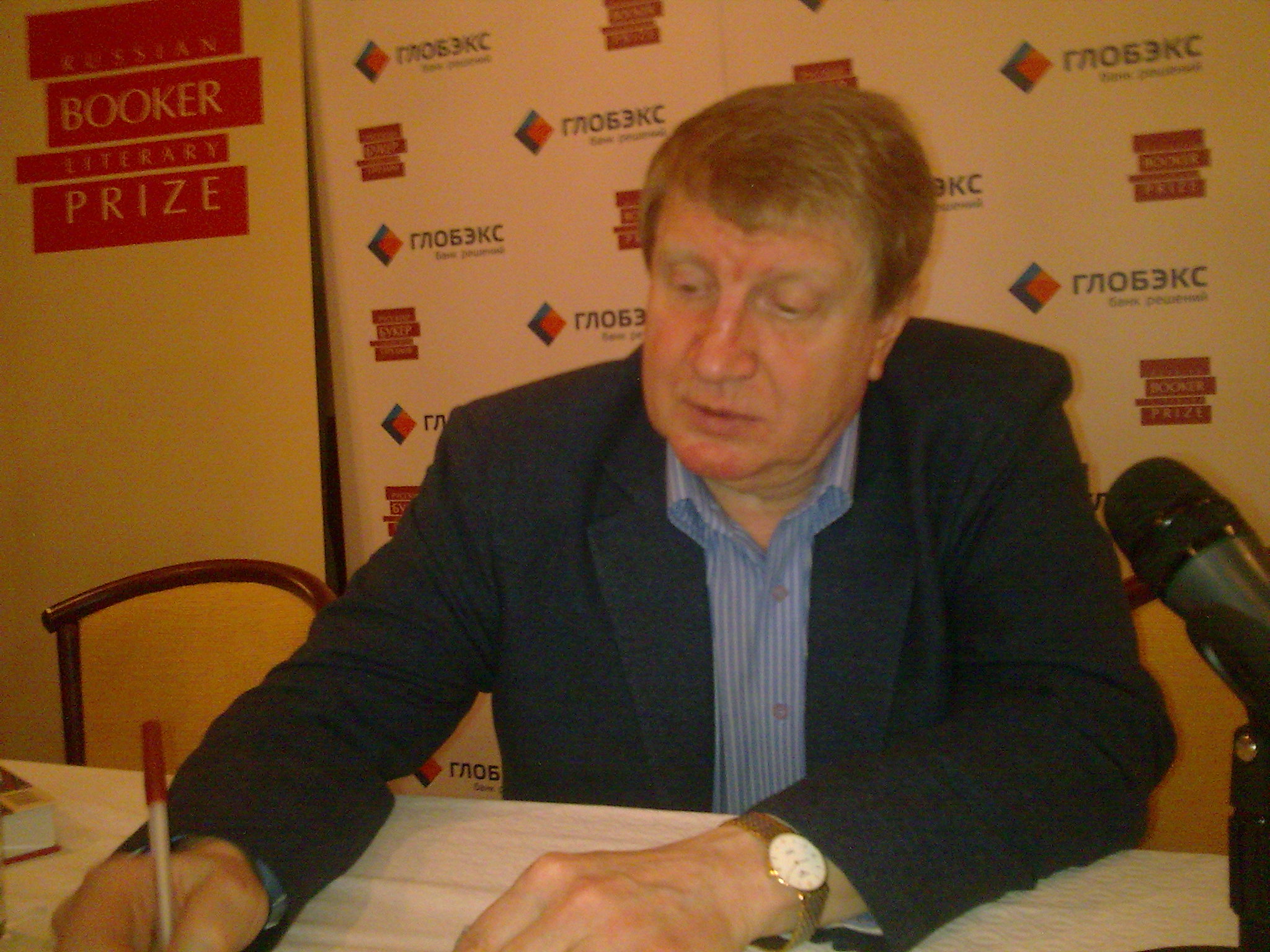
Writer Andrei Hair became the laureate of the Russian Bucher Award for the novel about the great Tajik poet Rudaki
The best novel of 2013, according to the Buker Jury, was recognized as the book “Return to Panjrud” by Andrei Hales. This is a fictional biography of the great Persian-Tajik poet of the X century Rudaki, blinded by order of the Bukhara Emir.The short list and the figure of the laureate of this season show that the Buker jury refused to award marginal authors. Andrei hair 13 years ago entered the short list of the Buker Prize with the Book of Prose about Tajikistan Khurammabad, received the State Prize for it. The writer was born and lived in Dushanbe, knows the Tajik language, in his youth he was engaged in the history of Persian poetry. Andrei says:
-The most strong impression on me was made by the story of the founder of the Khorosan style Abu Hassan Rudaki. He discovered a whole era, which in science is called “East Renaissance”, it lasted from the X to the XIV century and gave the world many wonderful poets and scientists. For Ajyama, that is, a person -speaking world, he is about the same as Homer for Europe: the discoverer and founder of a new way to handle the word and, apparently, think otherwise. This figure is semi -legendary. He was a very famous poet. At first he lived in Samarkand at the court of one of the younger Samanids , then he was lured into Bukhara, where he became an adornment of the court of Emir Nazra. He was heavily rich, some of his gold jewelry was transported to twelve camels, as the sources of that era tell us. And at the end of his life, he was blinded, disgraced, apparently in connection with the uprising of the pockets . And he was exiled to his birth estate Panzhrud, from which his pseudonym “Rudaki” comes from the name: ore is a stream, and Rudaki is a man sitting by the stream.
The story of the poet, the great, blinded and offended, drove away from everywhere and sent to seek into exileThe plot of my novel is the journey of a blinded old man with a guide boy who does not know who he is instructed to accompany. On the way, they meet different people, Rudaki recalls his life, the boy gradually understands that it is not he leads the blind, but the blind man opens his eyes. I saw this image of a blind old man and a boy wandering along the road many years ago. And he excited me, a lot of things appear through him: the whole story of the poet, the great, blinded and offended, expelled from everywhere and sent to seek into exile. I kept this image.
Andrei of the hair noted that consciously would like to avoid parallels with modernity, but readers told him about the inevitable associations on the topic "Literature and Power". About why the Book of Hair was chosen from the Buker list not only of the jury, but also the students of the Russian State University, from the so -called prize "Student Bouquer", says literary critic, secretary of the award Jeanne Galieva:
- It is curious to observe how students who grew up on fantasy and Harry Potter read novels about their (including Soviet) and someone else's history. In the novel by Andrei Hales, they are interested in that the main character is a writer, a poet, an exceptional person in exotic culture. They are philologists, they want to understand how an ordinary young man becomes an exceptional person in difficult times. Those and those heroes that are depicted in the novel answer them the question of how to behave in an era that acquires politicized features. Students, regardless of their ideological addictions, react to this. They want to understand how to stay in this era - or to re -become a cultural person.