
Translated material
We created not a show, but a workshop
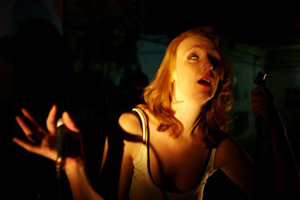
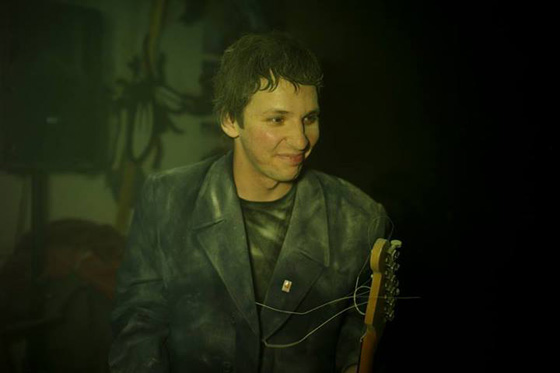 © Igor Mukhin during the concert at the Media School festival
In early November, a three -week festival entitled "Media Assembly" ended in Moscow. Judging by the name, we could assume that he sets himself the goal of achieving the greatest media resonance. However, the working group of the festival fundamentally left the entertainment in the exposition. We created not a show, but a workshop; They offered not the consumption of visual images, but participation in an unfolding event. Therefore, in addition to external lighting in the media, the experience of the festival deserves attention and from the inside of its process.
I allow myself to write about the festival, while in his working group, for several reasons. Firstly, because I set myself the task of self-criticism. And secondly, since I am going to talk about the experience of a practical solution to one problem, which is not yet theoretically set as a Moscow art and political environment. Not to mention the fact that the map of her practical solutions is extremely poor.
This problem, which is one of the key in the present, becomes especially obvious in connection with the practices of political art. Such art often seeks to use some freedom within art institutions for the production of public political statements. “However, the point is that the freedom of the art scene within the framework of the capitalist staging can only be false freedom, since it always serves a clearly defined (that is, non -free) goal - pursuit of profit” is only a general place for a modern critical theory that discusses this problem in many votes. I give a quote from this text only because it is accompanied by photographs that clearly illustrate the limit of a political statement within neoliberal institutions. What happens when the characters in the Moscow critical scene advertise clothes on the pages of Esquire magazine? The editors of the magazine exchange access to a wide audience for the obligation to convey to this audience no longer a critical, but a commercial message.
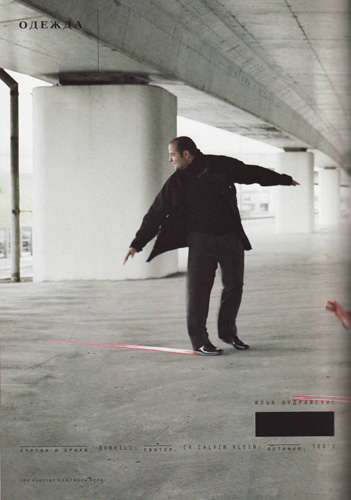 Photo from Esquire magazine (September, 2009), used in the article "Art scene" Pascal Gilen in "Art Journal"
The way out of this impasse shows the corporate impotence from the E.T.I. group To the camp "occupy" on pure ponds. The action acquires its own voice, using the immediate publicity of urban space or interfering in the thick of the political movement. However, the voice of actionism cannot be really independent without a connection with a community that forms its language and pursues its policy. The corporals of the last wave - I mean the “war” and Pussy Riot , - having achieved great fame, did not offer new criticism or politics, remaining within the framework of the general optical agenda. And the camp on pure ponds showed how the community can grow in the context of self -organization and horizontal decision -making. Today, not only the courage of a public gesture is needed, but also the creation of new institutions that replace the old institutions. I want to tell about the ideas that appeared in the experience of such an institution, as well as about those who arose in connection with this difficulties.
I am based on the materials of intra -group discussions, including the festival dedicated to the self -criticism of the festival, but I do not claim to be an expression of the uniform opinion of the organizational group of the festival. The general we strive for is to create a general movement, the general principle of decision -making, the general space of disagreement, and not a common opinion. I will describe the main directions of our politics - what we did along the path, what problems arose before us and how successfully we solved them. In my opinion, there were three such areas: an organizational experiment; refusal to represent the results of art in favor of revealing its process to participation; interference in the current political situation.
Horizontalization of institutions
The sad choice between the “intellectual”, but the servile action in neoliberal institutions and the brave, but intercepted by the media, the state-owned action should be completely discarded. As well as the choice between participation in institutions and their abandonment. Leaving them is only creating independent infrastructure without hierarchical relations of hiring. To participate in institutions is only with their transformation.
An example of this gives a developing situation around the Kiev Arsenal . The last Berlin Biennale, who made the Assembly of its central event, moved in the transformation of the institution. But it also showed the most important problem of such experimentation: the assembly did not replace the traditional administration of the exhibition, but was placed in its framework. It was exhibited as a procedural work of art and thus lost its political significance.
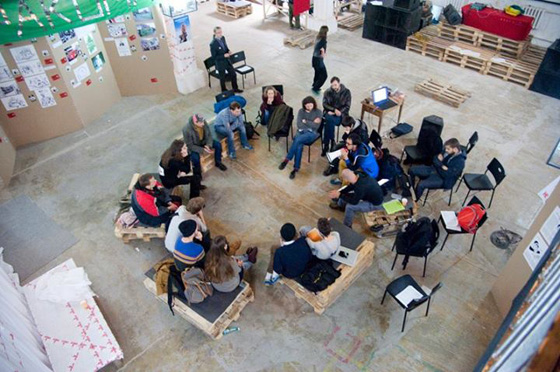 © Tanya Sushenkova Assembly at the Festival "Mediasar"
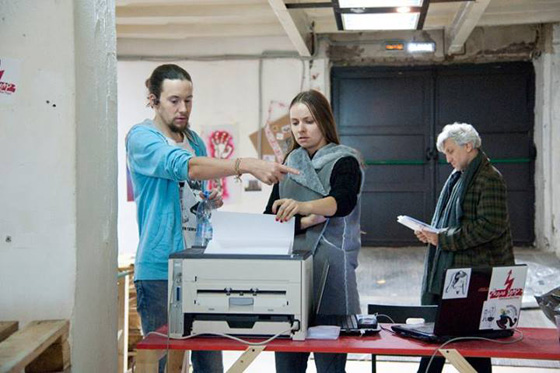
The working group of the second “Mediaudar” itself became an echo of the OCCUPY movement, placing an assembly in the center of the organization’s process. The festival was invented on the assemblies. The assemblies continued after the opening, we indicated the time of their schedule and were located in the most noticeable part of the space. So the organizational process has become partially open for visitors. One of the important experiments for me was the Assembly, which took place a week after the opening. On it, we called into question and clarified the basic principles of organizing the festival and our expectations from participating in it. And visitors participated in this process. However, on the way from institutions to new institutions, new problems arose. Starting the drift of self -organization and abandoning the figure of the curator and the functions performed by it, we could not sufficiently fill out the empty place of coordination with horizontal connections.
Instead of the general movement of the whole variety of initiatives, sometimes we could observe the blind neighborhood of disparate actions.
A year ago, we started preparing a festival. But when the first charm of new meetings, acquaintances and the formation of a new team took place, the time has come for a search for something in common besides the decision-making procedure on the assemblies. Search in the field of political views, tactics or aesthetic preferences did not lead to the formation of a common platform, on the contrary, exposed disagreements. Institutional inertia - the concentration of organizational and financial relations and, therefore, responsibility - led to a lack of involvement of the majority of the working group. She was consistent with the inertia of this majority, which was not yet ready to distribute responsibility. The general festival has become only for a smaller part of the working group and several people who have already connected during the festival. As a result, instead of the general movement of the whole variety of initiatives, sometimes we could observe the blind neighborhood of disparate actions. Even many organizers of the festival cared mainly about their performance, little interested in the rest.
In general, in this large two -story hall there was a spirit of underground and schismatic. Many interesting and useful events occurred: in addition to discussions, we had, for example, the first “crypto -country” in Moscow or the performance of “seven evil poets” ( 1 , 2 ). But the level of internal interaction was still insufficient. It became clear: for the festival to become a common cause, it needs to be rejoiced together. Fragmented meetings arising along its edges and new connections should still be folded into the community in order to subordinate it to the chatteric dynamics all coordination of actions. And the training of hired labor should only replace the self -discipline of horizontal relations. In the meantime, the route from the institution to the commune can hardly even be represented, it seems so utopian.
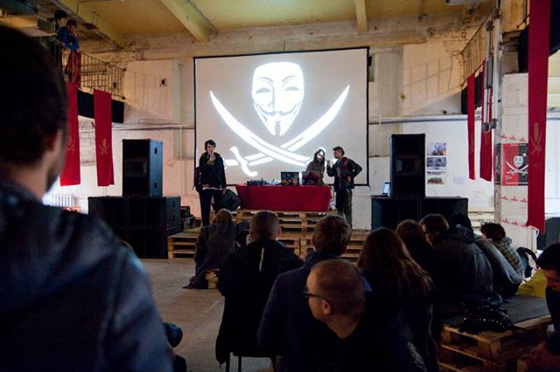 © Tanya Sushenkova "Cryptian"
From the representation of art to radical participation
A certain frame setting the general movement was still formulated: we moved from the exhibition to the workshop. That is, from the space of consumption of art results to the process of its joint creation. Several anarchists appreciated the dignity of this idea, printing a brochure circulation in a free printing house with criticism of green capitalism. Evil poets printed a collection of their poems. In addition to the assembly and printing house, we placed daily discussions and master classes in the center of the event. But mainly the participation of visitors was limited to these master classes and discussions. We also failed to get away from the creation of the exposition; You can only notice that the exposition has constantly changed in the process, for example, when the participants of the Quirr with an order is not easy to add it with their photographs.
Radical participation suggests the ability to influence both the process of the process and the principles of its organization. In the limit, it should increase that part of any work that is associated with participation, and save it from another part related to operation. (And this applies not only to the working group. If we are talking about the participation of visitors, it is appropriate to discuss their operation.) We only managed to outline the implementation of this principle. For example, not only the organizers of “Fashion Freedom” made a contribution to the creation of a new protesting dress code. Familiar and even unfamiliar to any of the organizers of the festival took part in creating clothes and its show. Someone also helped with the construction of the catwalk. But most of those who came have chosen a classic model of passive contemplation of what is happening. And the point is not only about their ideas about how and why they visit exhibitions. I think that we have not created sufficient conditions to make the possibility of radical participation really obvious.
The experience of the festival showed that the audience goes mainly to events only if they are organized by someone from their parties. Therefore, often we did not have many people who came from the side. Day after day in the space of the festival, one subculture replaced another, and their participants did not go beyond their ghetto to exchange with others.
What is such an organization of a festival of political art in our metropolis atomized to the limit, this ideal city of alienation? Where politics is practically realized as an experiment of relations only by units. Where even these units, somehow dividing the common position, the alienation spilled throughout the city penetrates. Unfortunately, we were not able to create a real friendly atmosphere in the space of Mediaudar.
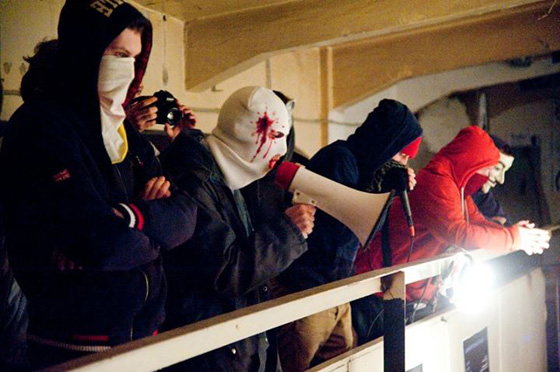 © Tanya Sushenkova performance "Seven evil poets"
Now it is already clear that the festival was to become an area, a nutrient medium of political art, a place of meetings and exchange, a joint holding of time and the birth of new ideas. In part, he became so. But special attention is required by the design of the festival not only as a workshop, but also as a habitat. The experience “occupying” shows what exactly is needed for this: a free kitchen, the ability to stay at night, etc. All this could allow the super -entered Muscovites to break out of dense labor and movements around the city, where the travel time is measured for hours. The relief of acquaintance with each other, a discussion of common goals, some free market, finally, the constant announcements of the program and why we gathered here-all this could serve the creation of relations and an experiment of relations.
Political art
Until now, we have not ceased to talk about political art, but now it's time to place accents in this topic. What policy is the work of the festival and how is art woven into it?
The political line of the festival consists in the formation of the community as informed and non -irarchical relations. And it is opposed by the logic of media representation external to the community. It is interesting to consider this difference on the example of the exhibition "The Feminist Pencil - 2" held within the framework of the "Mediaudar". I am not at all opposed to the strategy of separatist feminism chosen by the participants of this exhibition. You can easily imagine the need for a female association in the atmosphere of Moscow sexism. However, it is important to understand how this strategy works in a particular situation and a specific context. Full separatism involves the separation of both men and institutions and relations that support male privileges. But instead of analyzing the mechanisms of inhibition of women, girls from FC are limited to a distance to biological men and meet any collision with FC as a patriarchal offensive. This is probably why they showed no interest in other events taking place at the festival. And Alexandra Galkin, who intervened at the FC exposition, was easily recorded in the agents of the Patriarchate (this situation was analyzed in detail in the “stop Stage” by Alexandra Novozhenova and Gleb Napenko). Also, unlike Mediaudar, FC, he did not refuse to declare itself within the framework of the Moscow Biennale , even the surface analysis of which would show its patriarchalism. Thus, at the level of relations, the separatist strategy of the “feminist pencil” is close to the competition strategy in the art field and collaboration with institutions, that is, to the struggle for the possession of the masculine type of power, the very existence of which should be challenged. And all this, instead of looking for a common with other oppressed, albeit not by gender, but for beliefs, public actions, lifestyle, at least with participants in the Mediaudar.
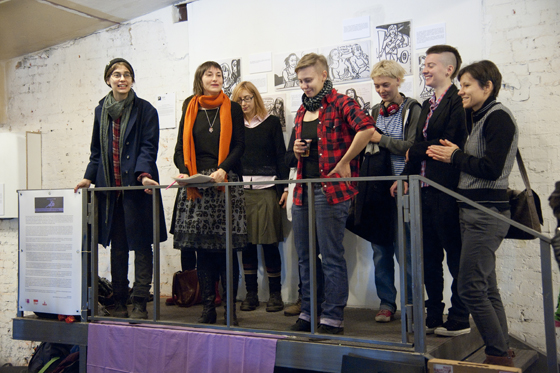 © Tanya Sushenkova Participants in the project "Feminist Pencil-2"
The problem is that the desire for the representation of feminism fully shading for the “FC” contradictions associated with how this representation occurs.
Here, the policy of becoming a community and creating informal relations is directly approaching the issue of art. It is the art that leads us out of social roles, reveals to the unknown, thereby making the community possible. Art may be in the very relationship. And images on the walls are an intellectual, visual landscape of our interactions. If at once, art had to fight for autonomy from the Church, and then from the state order, now the time has come to take the next step, unfolding the struggle for independence from the neoliberal "autonomy" of art and the related model of representation. This model should be overcome as an idea of the social function of art and as the practice of its depolitization and helplessness. Only then, at the site of half -wounded attempts by the Berlin or Istanbul Biennale, really new poetics will arise.
The art on Artpley is not a tahrir and not pure ponds. All the activity of the community remains only half political without participation in a specific political clash.
The problems of art and criticism in question are perfectly demonstrated by the aforementioned article by Novozhenova and Naplyenko. Turning the curious classification of politicized art, the authors remain within the framework of the liberal model, striving to naturalize its depolitized position. Within the framework of this model, art exists on an autonomous scene, where its various types represent the political process in a neutralized form. This is probably why for our critics political is only the question of how exactly these types of art interact with each other, and not with social. In relation to the political process itself, the artist, in their opinion, is only able to “peep behind a policy from the castle he built” (like Arseny Zhilyaev) or show the boundaries of a group or public consensus (as, for example, this was done by Alexander Galkin, destroying the cozy discourse of “FC”). But unlike such an art and such criticism that exist in the Paradigm, the political statement is openly carried out as an intervention. The question is only in which situation you need to intervene. And this question is faced with both discursive and visual forms of practicing thought.
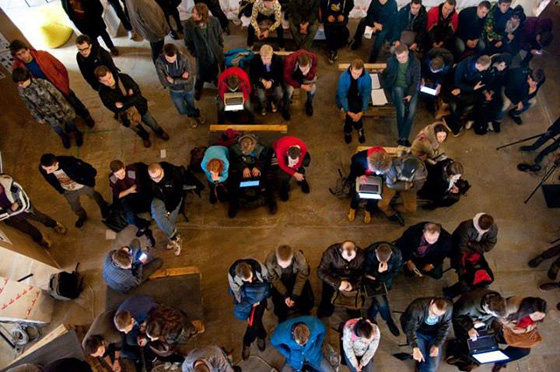 © Tanya Sushenkova "Cryptian"
The horizontal principle of the organization of the festival opened up many of its aspects: from creating the principles of coordination to the construction of material space. But any situation, being chosen for intervention, requires rethinking in accordance with it the purpose of pronouncing speech or creating an image. Here, the text, for example, becomes successful depending on how it included in the creation of a relationship. The assembly is successful if it has created the possibility of free discussion and a collective game of desires. One of the organizers is not not possible to fog Polina Zaslavskaya told me that he was doing this show in order to create an atmosphere of a partnership, which was not enough at the festival. As she noticed, "collectivity is always a little love."
But all this applies to the organizational aspect of the policy addressed to the community, to its needs and its formation. However, the art on the Artpley is not a tahrir and not pure ponds. Вся активность сообщества остается лишь наполовину политической без участия в конкретном политическом столкновении. Именно с выбором последнего и связаны наибольшие проблема как медиаактивизма в целом, так и «Медиаудара» в частности.
Участники рабочей группы пикетировали ФСИН в поддержку Надежды Толоконниковой. Борьба, которую она продолжает изнутри тюрьмы, проливая яркий свет на условия заключения в России, так же как и поддержка этой борьбы, очень важна. Но необходимо придумывать и другие стратегии, выходящие за пределы бесконечной череды медийных акций, бросающих вызов властям, и изнуряющих кампаний в ответ на последующие репрессии. Здесь «Медиаудар» еще не предложил ничего нового, и это его основная проблема как события политического.
Возможно, перспективы политического искусства связаны не с деятельностью маленьких групп на центральных площадях, а с вмешательством в конкретные ситуации сопротивления. Не с безлюдной пустотой городской площади, а с плотностью взаимодействия в протестном лагере, в ходе забастовки, в борьбе против сноса очередного памятника архитектуры, строительства небоскреба или стоянки на месте детской площадки. Тогда на место «привлечения внимания» к тем или иным абстрактным проблемам — лишь кормящим политиков и экспертов — сможет прийти распространение информации о способе их решения или, по крайней мере, об удачном опыте самоорганизации. То есть на место репрезентации жизни в политике и искусстве придет объединение этих трех величин в общей борьбе.
 © Таня Сушенкова
***
Фестиваль принес разочарования, но и стал местом встреч, которых без него бы просто не случилось. Ведь в этом городе надо тратить часы на дорогу, только чтобы встретиться. Мы увидели друг друга, мы действовали вместе. Успех этого события измеряется тем, насколько плодотворны были эти встречи, будут ли длиться возникшие в них отношения и какие последствия они повлекут. Мы по-прежнему открыты участию, все желающие могут связаться с нами указанными на сайте способами и продолжить движение вместе.