
Translated material
Nelson Mandela died
Nelson Mandela died
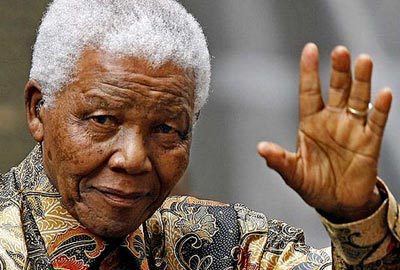 © Anc
© AncOn Thursday, December 5, in Johannesburg, at the age of 96, the first black president of the South African Republic, the Nobel Prize laureate, a national hero of the struggle against the apartheid Nelson Mandela, died.
In a television appeal to fellow citizens, South Africa President Jaykob Zuma said that Mandela would be buried with state honors, ITAR-TASS reports.
Mandela was hospitalized on June 8 due to the exacerbation of the pulmonary infection (during the 27-year prison imprisonment he was sick with tuberculosis), on September 1 was discharged from the hospital.
“Our nation has lost the Colossus and the embodiment of humility, equality, justice, peace and hopes of millions in our country and abroad,” the African National Congress (ANC) said, which Mandela led to power 20 years ago.
“Let's love each other how he loved us. Let's remember the Mandela and not let him down, ”said the South African Archbishop of Desmond Tutu, Laureate of the Nobel Prize of the World.
“In order to be free to drop the shackles, you must still respect and contribute to the freedom of others. I fought against the dominance of the whites, and I fought against the rule of blacks. I cherished the ideal - the creation of a democratic free society in which all people live in harmony with each other and where everyone has equal opportunities. This is the ideal for which I live. And if necessary, I am ready to die for him, ”said Mandela.
Nelson Rolklila Mandela was born on July 18, 1918 in Bantustan of Trans -Transes in the family of the leader of the Temba tribe (Kosa nationality). He studied at the university college at Fort Heyre (Master's Diploma), at the University of Vitvatersrand, in 1988 he received a bachelor's degree of legal sciences at the University of South Africa.
In 1944 he joined the ANC - the largest party of South Africa, which advocated the transfer of power in the country to the black population. Mandela was one of the creators and leaders of the ANC Youth League.
In 1951 he was admitted to the collegium of lawyers of Johannesburg, and opened his own law office in Johannesburg. In 1952, Mandela headed the ANC in the transval province.
For active participation in movement against racial discrimination, he was repeatedly arrested. On June 12, 1964, he was sentenced to life imprisonment "for preparing an armed uprising in order to overthrow the government." Until 1982, he was in prison on the island of Robben, then in other places, released in February 1990.
From 1991 to December 1997 - ANC President, from May 1994 to June 1999 - President of South Africa.
The first non-state parliamentary elections in the National Assembly took place on April 26-28, 1994. At the first meeting, the National Assembly unanimously elected Mandel to the head of state. Having left the post of President of South Africa, he continued to lead an active public life, speaking on behalf of human rights organizations.
Nelson Mandela is the Nobel Laureate of the World, which he received in 1993, together with the last white president of South Africa Frederick de Clerk for a peaceful transition from an apartheid to a democratic unusual structure of the country.
On July 18, 2010, the International Day of Nelson Mandela, announced by the UN annual, was first celebrated.
In December 1994, he published the autobiographical book “A Long Way to Freedom”, in May 2013 the film “Mandela: a long way to freedom” was presented at the Cannes Film Festival. In South Africa, the film will be released on December 6, 2013.