
Translated material
Man goes after the sun
Ksenia Larina - about the "thaw" on Channel One
On the First Channel with a triumphal rating, the series "Thaw" is underway. The reasons for success were versed in The New Times Podpiska.newtimes.ru
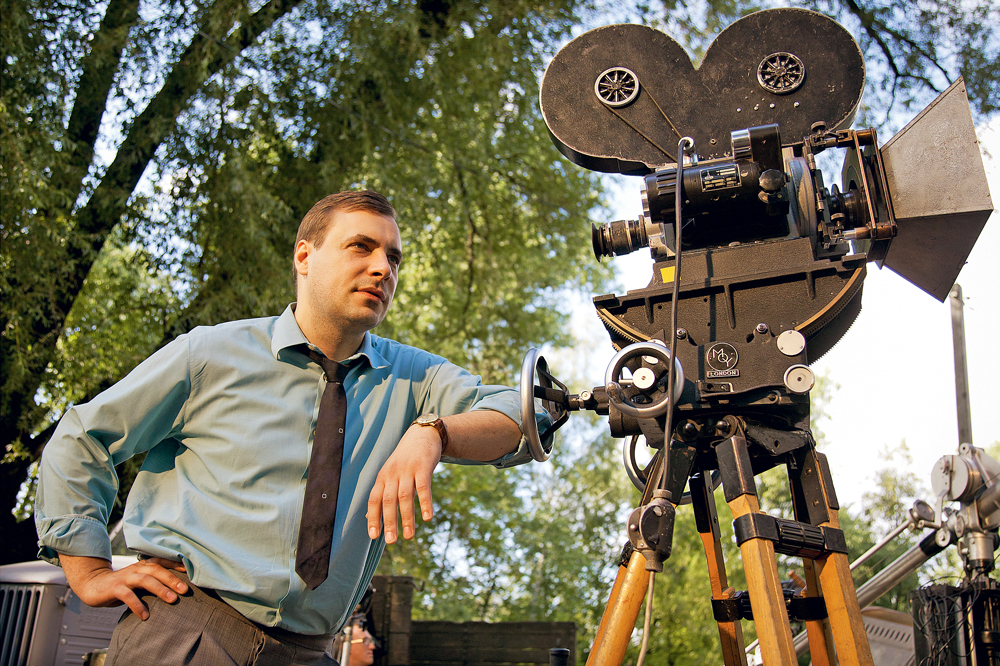
The protagonist “Thaw” is the film operator Viktor Khrustalev (Evgeny Tsyganov) “A man goes beyond the sun, but what does he see?! He sees real nonsense, not our Soviet achievements! ” From the speech of the first secretary of the Central Committee of the Communist Party of Moldova I. Bodyul at the discussion of the film “Man goes beyond the Sun”, 1961 * * “A man goes beyond the Sun” directed by Mikhail Kalik, the sign film “Khrushchev’s thaw”, one of the first Soviet paintings “New Wave”, accused of formalism and indistinguishable. In the “thaw” Valery Todorovsky there is no feeling of happiness - which would be quite expected if we are talking about the “brightest” time of Soviet history - the time of hopes and liberation, the time of censorship retreat and liberal dizziness. There are no fluttering girls in the film, there are no festive demonstrations, there are no balloons soaring into the sky and flying paper leaflets in honor of Soviet cosmonauts. Here the streets are deserted, people in the metro are gloomy, unwinding, these people want to be more likely to pass, as you want to run past gastronomes and universals faster, past everything that resembles a dull Soviet life-with its bursts, nonsense, tasteless food and the same clothes. “Thaw” is a film about those who were looking for happiness and light where the sun never rises. This is a film about how not to notice. This is a film about a free parallel life that a person bargains in exchange for loyalty. This is a film about the Soviet form of conformism - when you observe the rules established by the regime, for the sake of the safety of your and your children. And for this they allow you to live a normal life: to do your favorite thing, live with your beloved wife and even have a personal car and a separate apartment. “Thaw” is the answer of parents to the question of children: “How could you? How could you not notice and not see? " And so: do not notice and not see. The movie about the cinema was not accidentally chosen by the Todorovsky and the habitat of the heroes: “Mosfilm”, the crew. The filmmakers of the 60s-like writers, poets, and artists-this is Bohemia, the sweet world of freedom, to whom everyone dreamed of leaning-from party secretaries with their lordly familiarity to enthusiastic students. Cinema about cinema - the genre is not new, but in the context of the era, this circumstance of the place acquires a special metaphorical sound. A movie for the heroes of the film is not just a job. This is a way of flight, a way of filling black holes and white spots in your life, a method of atonement, a way of replacing reality. "
Accustomed to living with an eye on, Soviet intellectuals built their own parallel world
”Each here has its own biography, which is guessed by two or three strokes: who has war and fighting past behind him, who has evacuation, who has 58th and gulag, who has a repressed family, and the main character is indelible shame, who drives him all his life as a hare, and does not want to crush this lump of shame. Happiness, everyone dreams of him, strives for him - but no one gets a hundredth share of what the world in which freedom is smoking, drinking, dancing and love - this is the result of a “thaw”, and any attempt to go beyond the permitted freedoms is stopped instantly, with one shout, as it will happen a year after the described representatives of Boema. Insults at your address and friendly guessing and hooting of the whole country.
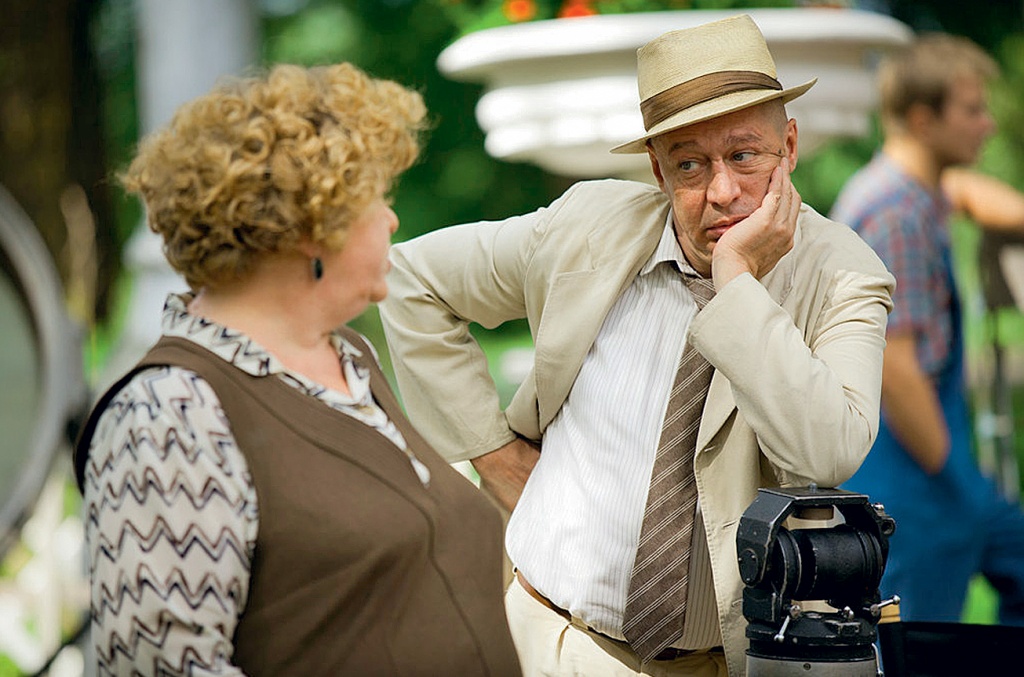
On the set is the master of Soviet cinema, the laureate of the Stalin Prize Fedor Krivitsky (Mikhail Efremov) and his “right hand”, the second director Regina Markovna (Nina Dvorzhetskaya), we and “they” accustomed to live with an eye on, with constant fear inside, Soviet intellectuals built their own parallel world, which discussed creative intentions and ways of struggle with the struggle. Censorship, forbidden books were read and prohibited films were visible, political jokes and anti -Soviet bikes were born. Everyone determined the measure of conformism for himself. The degree of pressure and humiliation is too. The main thing is to never face them. It is probably possible to live a life, never having encountered a system, but, judging by history, these are happy exceptions. The system in the “Thaw” is represented by the investigator of the Prosecutor's Office (Vasily Mishchenko), who appears in the film as a completely private cop, the investigating case of suicide, and then his image grows to the scale of Porfiry Petrovich. In Tsanin, all the determining features of this power are concentrated - hypocritical, cowardly, vile, ruthless, sadistic. With the genetic hatred of freedom, to irony, to intellectual work, to any manifestations of individuality, personality: “What did you imagine about yourself?! - The drunk tsarin shouts to the creative group. - The people feed you and singing you! Who are you?! " He walks around the country as a master, with his foot opens the doors to any cabinets, when he appeared, everyone gets up, everyone is silent at his insults and rudeness, try not to look into his eyes and only think that he would “carry” anyone, but not me. The director of the film, a healthy, strong Georgian (Demeter Schirtladze) is pulled into a string when Tsanin appears and his requirement: “Imagine” - automatically answers: “Taridze Giya Revazovich!” - "Article?" - Tsanin barks. “58th! He was serving a sentence for six years! " Of course, according to all the signs, the menth of Tsanin is no cop, but a seasoned kagbeshnik, and this is perhaps the only concession that Valery Todorovsky allowed himself. In this demonstrative inconsistency of speeches and actions, the declared status of the character is a challenge, a fat emphasizing for the audience - such a form of the Aesopian language of 2013, also an interesting time.

Filming of the collective farm comedy “Girl and the Brigadier” is not the first film by Valery Todorovsky about the time of the 60s-in 1993, according to his script, the painting “Above Dark Water” (director Dmitry Meskhiev) was shot, the “generation of our fathers” stood in the credits, the plot and heroes balanced between the “outpost Ilyich” and “July rain”. The film caused the equally hot and irreconcilable disputes that mainly spun around their beloved philistine “was or wasn’t”, and the representatives of the sixties were completely offended when they saw a mockery and mockery of their sacred youth in the film. Twenty years later, Todorovsky again returned to this era - the era of the youth of his parents. And his current view for the time and on people in it is completely different, without a stack, without a desire to make fun of and call for an answer, without presenting an account, without an attempt to accuse. The heroes of the “thaw”, in which many are recognizable, since they combined the features of the legendary representatives of the then film environment - cannot but cause sympathy and emotional response, since they are all the very “complex” people about whom we are so yearning. And their complexity is in the uniqueness, in uniqueness, in the absence of “common places” in their characters and biographies, in their habits, their suffering, external manifestations of feelings, in special signs of the human person, from which we have so lost. It was then, in the cinema of the 60s, a new type of hero-intellectual was born-a reflective, doubtful, vulnerable, devoted to the case, but from a party point of view-unreliable, therefore requiring special attention and control ... But, however, we will not. "
Heroes cannot but cause sympathy and emotional response, since all of them are the very “complex” people whom we are so yearning
"Todorovsky perfectly picked up the actors-it is with those immature persons who do not glisten with satiety and well-being, these are actors who feel time and capable of passing his nerve. Evgeny Tsyganov (main character, operator Viktor Khrustalev)-a single wolf, with a secret that he carries like a handkerchief of Frida. Tsyganov has several in the film. Scenes that can be attributed to the heights of acting, which indicates the scale of this actor. As if stepping from the films of Lelyusha and Truffo, an actress born for large dramatic roles, but which our cinema is stubbornly not noticeable. mind and irony. In the Thaw, finally, actress Ramta, theater teacher and director Nina Dvorzhetskaya (Regina Markovna) played the first large movie - played so that her Regina had already dispersed to quotes. Also, for the first time in large roles, young MHT and “Snapberry” stars Yana Sekost (Lucy Polynina, a movie operator) and Svetlana Kolpakova (Nadia Krivitskaya) appeared on the screen. They are not at all afraid of cameras, close -ups, of which energy simply splashes, they are natural, ironic, charming. Humor, drama, absolute freedom and absolute truth - this is what distinguishes the entire film trapping Todorovsky, in which the debutants and masters exist on an equal footing, in which the work of Evgeny Volotsky (Sancha), which is just starting his way to the cinema, is just as grace and the work of the successful and popular Pavel Derevyanko (Gennady Budnik, film star). And Mikhail Efremov as the Stalinist laureate, the master of Soviet cinema Fedor Krivitsky, probably played here one of his best roles. The era without myths “Thaw” destroys all myths about the “thaw”. And the generation of hipsters is surprised to find out that in 60s people made love and their favorite things, drank champagne in cafes and vodka in the dining room, danced until the morning, made abortions, despised scammers, covered Jews and homosexuals, shot films, staged performances, painted paintings and books, and if it became completely unbearable-they got into the train “Moscow “Odessa” to start life over. The era, about which so many myths have been built, is recreated by the authors of the “thaw” without tenderness and nostalgia, without tear and clicks-and with some special sense of ownership, with the desire to hold and not spray this font, in which our wounds and wounds, sins and exploits that went into the inheritance from our parents were mixed up. From those who did not go to the square, but knew that it exists. From those who did not step into the window and did not get into the loop, but buried those who made such a choice. From those who fed the dragon with his silence and consent and believed that the dragon would someday die. From those who were able to remain decent people without becoming heroes. podpiska.newtimes.ru photos: Channel One