
Translated material
Non -traveling children
What happened to orphans that were not released in the United States
How the fate of orphans that did not have time to leave for America took shape, the New Times found out
A large delegation gathered in the small room of the child’s house No. 13 in St. Petersburg: the children authorized Pavel Astakhov and his retinue, officials of the city administration, the leadership of the institution, journalists with and without cameras. In the middle of the room on a high children's chair sits a small black -haired boy with bandaged hands. The boy’s name is Nikoloz, he is two and a half years old, and he is one of the most famous orphans in Russia. “The diagnosis is bullet epidermolysis,” Natalya Nikiforova announces the head physician of the child’s house. “Nikolenka has all the fingers in order, only on the legs from birth two fingers fused.” However, it is unlikely that among those present there are those who do not know his history. A boy with a rare and severe genetic disease, popularly called the “butterfly syndrome”, was almost adopted by the American family, but due to the “law of Dima Yakovlev” he remained in Russia. For only bandages and special ointments for processing the RAS constantly appearing on the skin, today you need 150 thousand rubles a month, not to mention specialized care, and therefore the chances of finding a foster family in Russia are scanty. The American Don Croker specially lived for two weeks in the family of neighbors who adopted a child from Russia with the same diagnosis to learn how to take care of him correctly. Now she calls to Petersburg and cries, but no one can change anything.
The chances of survive
"Help is provided?" - Astakhov is interested. “Yes, the Bel Foundation helps,” the head physician replies. “Aunt ...” says the boy. “Aunt, yes. And uncle, ”Astakhov replies. “Uncle,” Nikoloz repeats. “He is well done, he eats himself, he pronounces sentences from two words, draws,” the teacher praises the baby. - He has such smart eyes ... but sad. Here, everyone takes you off, smile! " But the boy does not find who to smile. “Uncle,” Nikoloz says thoughtfully and looks at the door, into which the authorized and his retinue entered - Astakhov loves to call her “children's special forces”. They go further - too fast to remember the faces of the children found in their path and that the children who find themselves in the corridor be able to understand who came to them and why. For the entire visit on the program for the authorized, no more than half an hour, of which ten minutes per “press approach”. On it, as journalists expect, Astakhov will say, or at least hint at the fate of Natalia Nikiforova, who leads the child of the child No. 13 25 years old. For two weeks, his inspectors worked here, understanding all the documents, raising old cases of adoption. Employees of the institution and observers are sure that this is revenge for the strict criticism of the “anti -magnetic” law, which the head physician has repeatedly allowed itself.
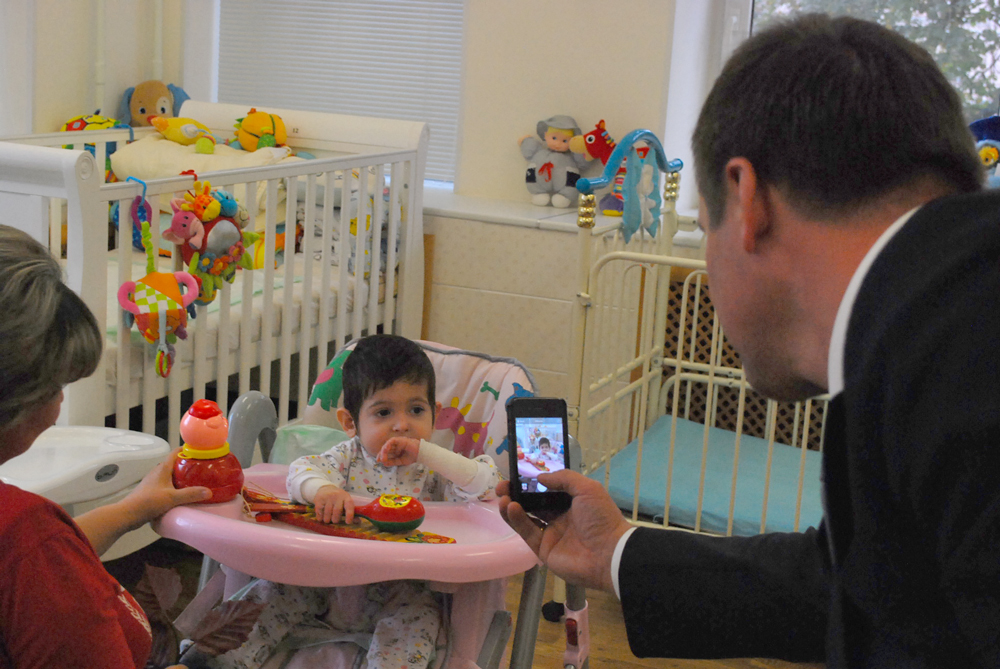
A man from the "children's special forces" Astakhov takes Nikoloz on the phone. October 2013
“There are many countries where everything is wonderful, but this does not mean that we should give out everyone now,” Astakhov answers the journalist’s question, whether he intends to cover all foreign adoption at all, “and then distribute our homes, distribute our lands ... a socially healthy state and society do not allow itself such a luxury: to distribute children, whatever they may be ...
Natalia Nikiforova, in turn, could not afford a luxury to be silent when a girl who had every chance of surviving in America was dying in her eyes. The eight -month light of Kumymova required an urgent liver transplantation. In Russia, such operations are made from related donors, but the girl-racing girl did not have relatives. “She was just sent to me,” recalls Natalya Vasilievna.
In November, in America, where, unlike Russia, there is a single bank of materials for transplantation, there was a family ready to adopt the light and engage in its health, but a month later the Duma adopted the law. The chances of finding a suitable body in Russia were preserved, but were scanty. And Nikiforova called to the aid of the press: they wrote and shot reports about the light, her photos with calls to help wandered from the forum to the forum. Journalists asked about the law, and Natalya Nikiforova said what she thought: the law was not in the interests of children. The girl had the chances of surviving only if she was not only on time and successfully operate on time, but if there is a family after that, ready to care for her accordingly. And a miracle happened: an organ was found, and some time after the operation and the foster family from Moscow. “We had no thoughts about adoption. I just wanted to follow the fate of the girl: after all, not so often we have such stories, ”recalls Victoria, the mother of Sveta, who is now called Vidana. She learned about the problem of the child from television. - And then I thought: why not we? Why not me? " “Svetka saved publicity,” says Nikiforov, the head physician.
"Is there any complaints about this orphanage?" - the authorized journalists ask, with difficulty wedging the question of his laudatory story about the foster clever Ramzan Kadyrov. “Yes, there are no complaints, we have a constructive dialogue all the time,” Astakhov replies and adds with a smile: “And when the dialogue does not work, it means that you need to choose: either I quit me, or a person who does not hear me.”
A month later, at a congress of directors of children's orphanages in Moscow, Natalya Nikiforova said that Astakhov had no complaints about her. On the contrary, the Commissioner is trying to help - to arrange Nikoloz in the Russian family. "And how, it turns out?" - I ask. Nikiforova sighs: "Yes, it doesn’t work yet."
Of the 259 children whom Russian officials officially consider to be victims of the ban (we are talking about children whose adoption cases were transferred to court, but by the time the law was made into force, the court decision was not made), according to the Department of Deputy Prime Minister Olga Golodets, two returned to the blood families, 103 were adopted or taken under the custody of the Russians, 59 are “in the process of transferring to families to families to families” citizens ". And 95 remain unsettled, of which 35 are disabled.
The American side has slightly different numbers. According to The New Times, the official representative of the US State Department, from the moment of adoption of the law, about 700 American families "were at different stages of adoption" of Russian orphans have addressed them.
You can argue about numbers. And you can look at some destinies.
Lucky. Stepan. Marat.
Those officials who are interested in why Russians rarely take children with disabilities should listen to what the few who are being decided about their children say.
| *The psychological-medical and pedagogical commission (PMPK) determines where to transfer an orphan from the child’s house upon reaching 4 years: to an ordinary orphanage or to a specialized boarding school for mentally retarded children. There is no one to dispute the diagnoses of the PMPK, and there are many cases when “mental retardation” turned out to be elementary pedagogical neglect. |
“I was told that he did not have logical thinking, causal relationships, that he is oligophrenic by moronic type. But he can see him: he had a completely adequate look! ” - says Natalya Kazhaeva, the mother of six -year -old Stepan. An inconsistent boy with cerebral palsy was supposed to go to America and already met his future parents, but the law intervened, and he did not go anywhere. True, thanks to his charm, the wheelchair user fascinated the commission* and was not sent to the house of the disabled, but to the ordinary orphanage, from where it was taken by the 45-year-old mother of two daughters from Samara. Arriving with Stepan to sign up for the district clinic, Natalya heard from her pediatrician: “Why did you take it? You have to take healthy! " The child was sitting nearby.
You can change this attitude in the only way, Natalia is sure: “We need to pull these children out of the underground and show people! To show that they are just as cool, as funny, are also worthy of living in the family. ” She takes Stepan with her in a cafe and shopping centers, and the boy in a wheelchair smiles around people around, and people smile in response to him. She readily communicates with the press, and then reads in the comments on the article about her family, that she took a disabled child with the aim of profit, that she is conceited, PR is drawn. “Let them say they want, but I am ready to show wherever it is possible for everyone to see that he is no worse than others. Maybe someone will be imbued with, looking at us, and another or two children of such people will fall into the family. And then someone will look at them and take them too ... "
One operation has already been done by Stepa, now he gets up and can even take a few steps, although he prefers to sit on Natalia on his knees. “Mom, let's wear you,” he suggests. “Learn to go first,” Natalya smiles in response. She already knows that in a few months, if not earlier, her son will definitely go.
And recently they met the Americans who wanted to adopt Stepa, and now they communicate with them on Skype. “It was a very strange feeling during communication,” Natalya wrote on her Facebook page. “It’s insanely sorry for these wonderful people ... And at the same time, there is such happiness that Stepka is with us.”
Stepan’s peer -Tajik boy Marat also did not go (diagnosis: cerebral palsy) and was also going to America. He managed to get acquainted, chat and attach to his future parents. The adoption court was scheduled for December, but due to the delay in receiving the Russian visa, the meeting was postponed to the beginning of 2013. And when on January 1 the law entered into force, the court was completely canceled.
The educators of the orphanage themselves were very upset, seeing Marat's chagrin. Sincerely, wanting to somehow calm him down, they told the boy that actually in America is bad, they kill children there, and they cannot allow him to go there because they would kill him there too. But in the head of a six -year -old child, such a version did not fit well, and then he came up with his explanation for what happened: “I am bad, I kill everyone, so I won’t go to America, otherwise I will kill everyone there.” So he explained to his new Russian parents Julia and Oleg Shuldeshov why he did not leave for the ocean.
Julia and Oleg took a boy from an orphanage for mentally retarded children in the village of Uvarovka, near Moscow. After the disappearance of the Americans, Marat became even more closed and did not impress the commission at all, and therefore was sent to a specialized institution with a diagnosis of lying. The nannies caring for him was given the task of regularly feed him and change diapers. If the girl-volunteer of the site refuseri.ru, who was engaged in his device in the family, did not write a complete despair of the post when the American adoption fell off, and Julia and Oleg would not accidentally read it, Marat would still be in a large building, about which the village of Svyrovka was said: “Project power is 260 pupils”. But the volunteer wrote, and Julia and Oleg read, and Marat became the fifth child in the Shuldesh family, four of which are adoptive.
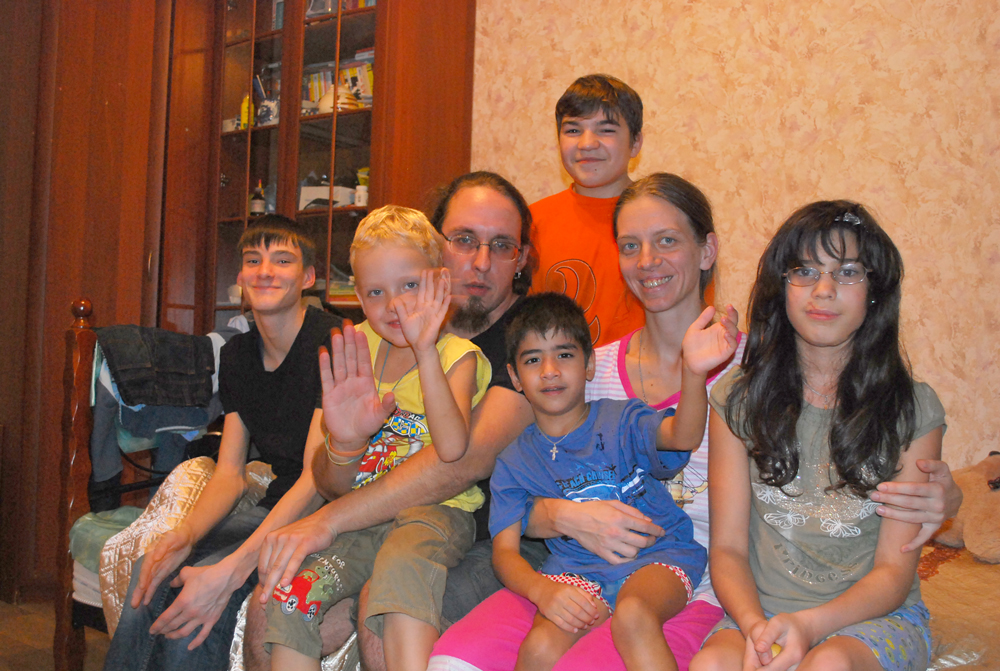
“Actually, our children are something similar,” Julia’s social worker begins, laying out pasta in children's plates in a small kitchen. Marat enters the kitchen himself - he is lame a little, but he moves quite tolerably around the apartment.
| ** Candal around the orphanage for mentally retarded children in the village of Vygochinovka Astrakhan Region in 2011 was raised by volunteers, and then journalists and human rights activists who accused the staff of brutal handling of children. Numerous departmental inspections found different violations, but the most egregious facts did not confirm. |
“They are similar in that they are our children,” comes the voice of her husband, 30-year-old programmer Oleg. In a small two -room apartment on the outskirts of Moscow, he allocated a piece of loggia under the office. Oleg asks for permission not to listen to the story that he knows by heart and remains at the computer, and Julia begins to tell how Natasha appeared, who did not know how she was with a fork and knife and drank soup from the plate, and how she was taught to go to school: no, not to study, but simply to sit at a desk and not to interfere with other students. And then from the same racket **-yes, the very one where the pupils were tied to the beds, remember, there was a scandal? - They took Yura because he was 17 and a half years old, and at the age of 18 he was supposed to “move to the other side of the Volga”, to a neuropsychiatric boarding school, from where they were no longer returning. Yura did not know how to read and counted on his fingers up to ten. But he cleverly controlled a fork and a knife at the table - he spied on the cinema, as people do on the screen, and repeated after them - so he was preparing for life in the family so that he was not ashamed for him.
Those officials who are interested in why Russians rarely take children with disabilities should visit a small two-room apartment where Julia, Oleg and their five children live, and listen to their plans to allocate a piece of kitchen for another children's bedroom-because Natasha is already a teenager and she needs to sleep separately from boys. To ask them why they do not require the expansion of the living space, and to hear in response: “If we complain, this means that we overestimated the opportunities and we need to pick up children. Therefore, we do not complain, we have everything ok. " And then to read the answer from the Department of Housing Policy and the Housing Fund of the city of Moscow: “The family is not on housing in the city of Moscow,” “There is no registration with housing.” Since the adoptive children are under guardianship, the representative of the housing department explains, the family cannot apply for the expansion of housing.
In the end, the apartment of the Shuldeshov family was still allocated - after repeated requests from famous people who know the family well ...
Before they had time. Dasha. Kadyr
 |
| Dasha |
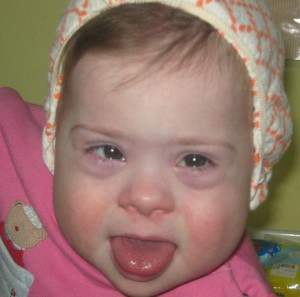
Dasha died in the hospital of Nizhny Novgorod in April 2013, not having lived a month until her four -year. She never met her parents and did not even find out that she had almost appeared. That nine people on the other side of the ocean - two adults and seven children, especially the youngest - for several months thought and talked about her, looked at her photos and tried to imagine how very soon she would take her place in their house. That there were those who are diagnosed - Down syndrome and congenital heart defect - were not pushed away or frightened. However, it was too small to understand what these diagnoses mean.
Thanks to the unknown operator who had filmed the girl in the hospital, we know that in the short life of Dasha there were moments of joy. In an amateur video laid out by someone on YouTube, the child, sitting in a crib, plays with a camera, playfully twirls his hands, as if helping himself dancing, and smiles a lot broadly. Hadie Barrog saw her and fell in love with her - the mother of seven children from Texas. She entered into an agreement with the adoption agency and began to collect the necessary documents. “We have moved not far away in the collection of documents,” she says. “But Dasha was very desirable.”
The adoption of the law interrupted the registration, Haydi did not come to Russia with Dasha. And after some time, the American noticed that the girl with a photograph of a photo disappeared from the federal database of Russian orphans. This happens in two cases: if the child is taken to the family or if he dies. She was buried in a cemetery in the village of Fedyakovo.
| *** The Ministry of Health of Russia by order No. 621 dated December 30, 2003. Highlighted five children's health groups. The fifth includes seriously ill children and children with disabilities who require constant therapy, with “significant restrictions on the possibility of learning or labor”. |
The death of a child-orphans of the fifth health group *** would easily go unnoticed, but the press leaked to the press that the Americans were interested in Dasha, and the tragedy of a small man became part of the information war around the "Law of Dima Yakovlev." In response to the publication of Olga Allenova in Kommersant, the story of the girl’s death was followed by the publication in Izvestia, who claimed that the commission, which included the employees of the Office of the Commissioner for the Rights of the Child, representatives of the Ministry of Internal Affairs, prosecutors and regional ministries of education and healthcare, “did not find any traces indicating the existence of the child, whose death was reported at the end of May by many media.”
The fact that Dasha existed and really died, The New Times confirmed in the apparatus of Deputy Prime Minister Olga Golodets. The girl underwent surgery in the Bakulevsky Center for Cardiovascular Surgery on the region’s quota for high-tech types of medical care. But the operation did not help, the death of the child came "from the complication of the underlying disease." Apparently, we are talking about heart defect - Down syndrome is not a disease, and although incurable, it is absolutely not fatal. Volunteers who worked in the hospital and knew Dasha confirmed: the girl was treated, following all the instructions of the doctors. Her death is shock and surprise.
 |
| Kadyr |
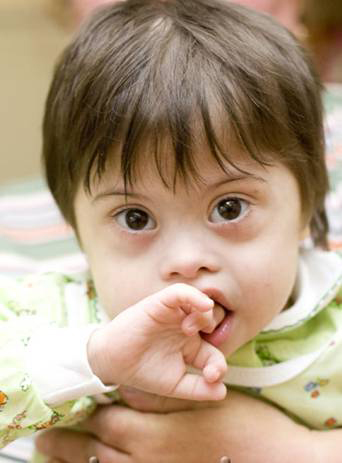
The fact that something wrong with the seven-year-old Kadyr is obviously suffering from an adoption specialist Alena Sinkevich, when the boy was still alive: she compared his photograph of three years ago with a new photo in the database of orphans. On the first - a handsome and well -groomed child, on the second - screaming, with abrasions on the face. The boy was in one of the institutions of social protection, where, upon reaching the age of four, they transfer children from the houses of children recognized by deep disabled people, unclaimed or mentally retarded. Вскоре после этой публикации стало известно, что ребенок умер.
Смерть Кадыра, ответили на запрос The New Times из аппарата Ольги Голодец со ссылкой на результаты судебно-медицинского вскрытия, наступила от «острой респираторной вирусной инфекции, протекавшей на фоне врожденного порока сердца, хронического тяжелого заболевания центральной нервной системы». «Причинно-следственные связи между назначенным лечением и смертью ребенка отсутствуют», вместе с тем по факту его «внезапной смерти» Вышневолоцким межрайонным следственным отделом СУ СК России по Тверской области проводится проверка, результатов которой в распоряжении вице-премьера пока нет.
Валерия-Наташа. Людмила и Иван. Арина и Димочка. Vitalik
Оператор снимал против света, поэтому лица людей на видео временами затемнены. Это двое взрослых и девочка в платьице с двумя большими синими бантами, так близко друг к другу завязанными на ее голове, что кажутся одним огромным синим бантом. Они садятся на диван и начинают разглядывать книгу про животных. Теперь это уже не видеоряд, а последовательность фотографий на фоне музыки. Потом снова кусок видео: женщина делает движение рукой, видимо, копируя какое-то животное, и девочка его повторяет. И все трое улыбаются друг другу той улыбкой, которая обычно возникает между близкими людьми и до конца понятна только им самим.
Девочку зовут Валерия, но семейная пара дала ей и второе имя — Наташа: «Это означает ребенок Рождества и новое рождение. У нее день рождения 19 декабря, и она похожа на рождественского ребенка. А ее удочерение было бы для нее как новое рождение», — объяснила Катрина Моррис.
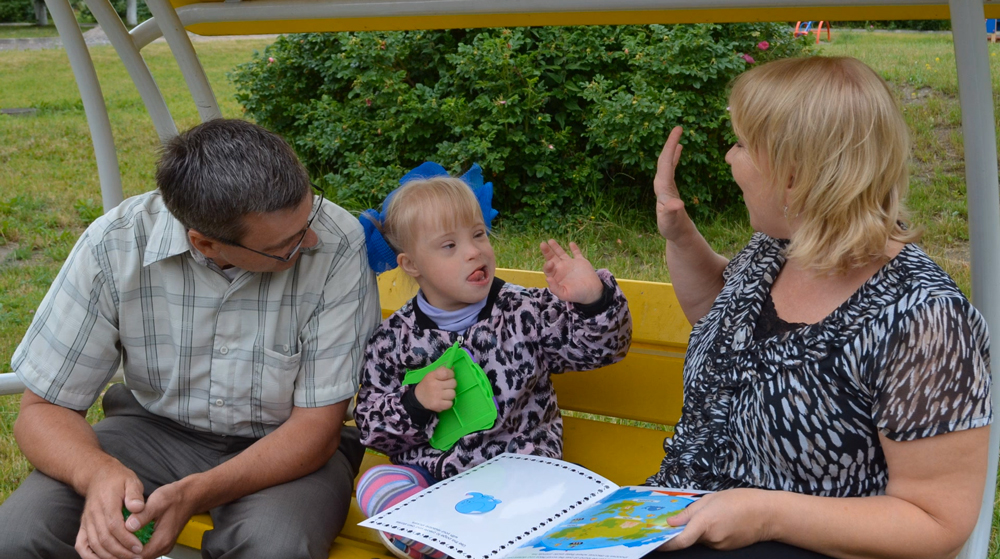
Стивен и Катрина Моррисы общаются с Валерией в саду дома ребенка № 1 в Петергофе. July 2012Действие происходит в доме ребенка № 1 в Петергофе 18 июля 2012 года, спустя неделю после ратификации Госдумой российско-американского соглашения об усыновлении детей, за пять месяцев до неожиданного принятия теми же депутатами закона о запрете американцам усыновлять российских сирот.
Примерно в то же время, в июле 2012 года, в детском доме Приморского края американка Дебора Де Вриес спрашивает десятилетнюю Люду, поедет ли она с ней жить в Америку. «А ты заберешь моего брата тоже?» — спрашивает в ответ Люда и объясняет, что у нее еще есть Ваня, о котором она должна заботиться. Дебора обещает: да, конечно, я заберу вас обоих.
О том, как хорошо будет детям в семье Де Вриес, Людмиле могут рассказать ее будущие сестры Люба и Юля — девочки из Мурома, удочеренные Деборой в 2004 году. Сейчас подростки готовят комнаты для младших сестры и брата: у Люды будет комната с розовыми стенами и белой мебелью, а над кроватью большими буквами уже написано ее имя с двумя «Л» на конце. У Вани тоже будет своя собственная комната и кровать в форме машинки — все девочки знают, что мальчики любят машинки.
37-летняя домохозяйка Сара Петерсон и ее 42-летний муж, компьютерщик Эрик к тому моменту еще не встретили четырехлетнего Диму и пятилетнюю Арину из Тверской области. Они познакомятся позже, в ноябре, за месяц до принятия закона. Детям Сару и Эрика представят как маму и папу. А в декабре будущим, как им казалось тогда, родителям четырехлетнего Виталика, мальчика с синдромом Дауна из Подмосковья, объявят о назначении даты судебного заседания по усыновлению: это будет январь. Но поскольку закон еще даже не начали обсуждать, Дженни и Аарон Мойеры обрадуются январю: очень скоро ребенок будет с ними. Виталику подарят альбом с фотографиями семьи. У него будут два брата и сестра: вот они — держат его, Виталика, фотографию в руках.
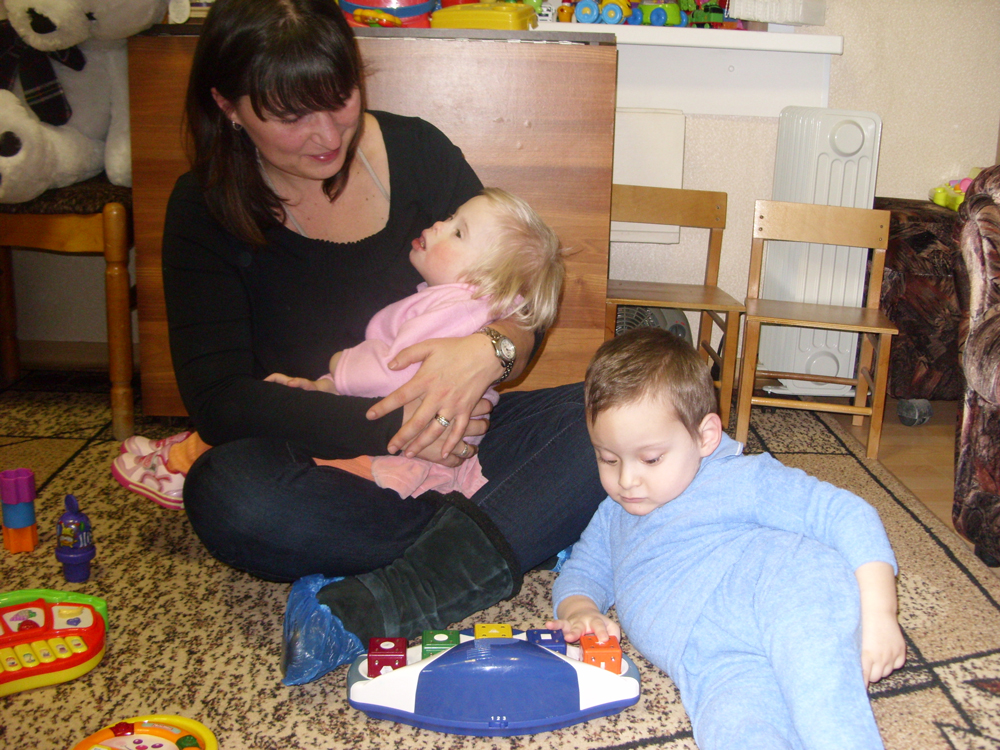
Сара Петерсон на встрече с Ариной и Димой. Тверская область, декабрь 2012 г.
Сейчас трудно сказать, успели бы Катрина и Стивен, Дебора, Сара и Эрик, Дженни и многие другие потенциальные усыновители из Америки забрать своих детей, если бы они заранее, хотя бы за несколько месяцев знали, что Россия введет запрет на американское усыновление. «Ощущение от того, что я не могу привести этих детей к себе домой, похоже на ощущение выкидыша», — написала Дебора на своей странице в фейсбуке рядом с фотографией московского «марша против подлецов». Она часто заходит в базу данных российских детей-сирот и смотрит на фотографии своих несостоявшихся дочери и сына: они по-прежнему там, значит, по-прежнему без семьи. Люде уже 12, она становится слишком взрослой для удочерения, объясняет Дебора, к тому же она не пойдет ни к кому без Ивана.
В сентябре 2013-го Виталику исполнилось пять. Его американская семья испекла ему большой торт и написала на нем: «С днем рождения, Виталик!» Его ждет неминуемый перевод в следующее учреждение — это будет, конечно же, специализированный детский дом для инвалидов и умственно отсталых детей. Такие же учреждения ждут Диму и Арину. При всем желании персонала домов ребенка — а часто они стараются до последнего продержать воспитанников в доме, к которому те привыкли, — они в итоге не смогут помешать этому переводу. So the system is arranged.
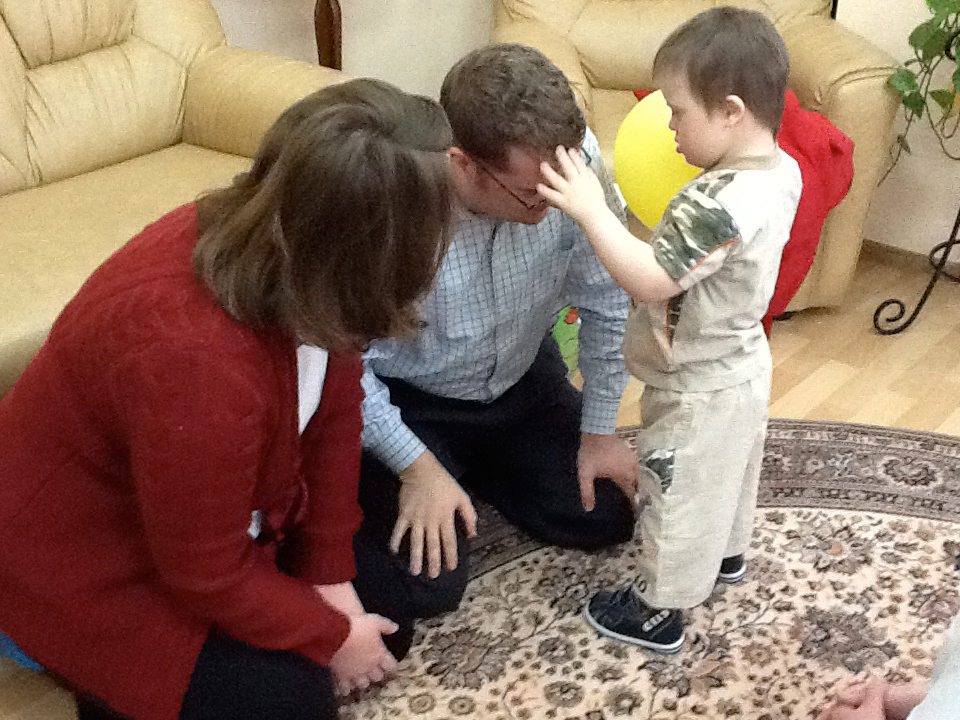
Четырехлетний Виталик знакомится с американцами Дженни и Аароном Мойерами, которых ему представили как маму и папу. October 2012
«Это очень печально, — так Валерий Асикритов, директор детского дома-интерната № 1 в Петергофе реагирует на тему запрета американского усыновления в России. — У нас американцы недавно забрали мальчика с синдромом Дауна, мы теперь часто общаемся по скайпу. Он даже лицом на них стал похож, мы все были потрясены». Помнит ли он Катрину, которая хотела удочерить Валерию? Конечно, помнит. «Она пишет нам, я читаю, а у самого на глазах слезы. Она так полюбила этого ребенка, а ребенок непростой. И она это видела, и она готова была с девочкой заниматься». «Она бы хотела, чтобы ее взяли россияне. Может, возьмут?» — «Ну что вы! Вот я 39 лет работаю. И за это время троих детей в опеку взяли россияне. And that's it. "
Руководитель фонда «Волонтеры в помощь детям-сиротам» Елена Альшанская считает, что проблему решить можно. Россияне готовы были бы взять в свою семью ребенка-инвалида, если поменять отношение к этому общества и государства: «Наши люди не хуже, чем американцы, итальянцы, французы, — уверена Альшанская. — Мы такие же сердечные, просто у нас нет этих условий, а государство эти условия, заметьте, не создает».
Из новых мер поддержки семьи, усыновившей ребенка с особенностями развития, российские законодатели ввели пока только единовременную выплату 100 тыс. рублей. «Ну, ты можешь купить хорошую инвалидную коляску — не самую лучшую, для не самого тяжелого ребенка, но приличную, — говорит Альшанская. - And then? Нет пандусов, а главное — нет образования. В садик мама такого ребенка не отдаст, в школу его не возьмут. Где он будет работать? И конечно, отношение окружающих: то, как на тебя смотрят, если у тебя родился такой ребенок. А как на тебя посмотрят, дурочку такую, когда у тебя никто не родился или родился здоровый, а ты еще и взяла больного приемного? Совсем, скажут, какая-то дурная, сумасшедшая». Но и это меняется. Фонд Альшанской успешно устраивает в семьи даже тяжелых детей. Просто этим надо заниматься: распространять их удачные фото и видео, рассказывать про них, объяснять, что на самом деле означают их диагнозы, оказывать потом по возможности поддержку семье.
«Это прекрасные дети, которые принесут много радости своим родителям, — говорит Сара о Диме и Арине. — Лучшее, что может сейчас с ними случиться, это если найдется российская семья, желающая их усыновить. Дима очень дружелюбный, обаятельный и умненький. Его медицинские потребности довольно сложные, но он не болезненный и не слабенький. Он сможет прожить очень хорошую жизнь, если кто-то даст ему такой шанс».
В федеральном банке данных детей-сирот о светловолосом, как видно по фотографии, Диме написано немного: «волосы темные», «характер: не выявлен». У блондинки Арины тоже указаны «темные волосы», а про характер всего два слова: «спокойная» и «заторможенная». Но Сара, которая держала этого ребенка на руках, знает ее гораздо лучше: «Арина пока плохо растет, но она уже может ходить и интересуется всем, что происходит вокруг. И она обожает, когда ее берут на руки и с ней разговаривают».
Тем временем в Госдуму внесен законопроект, запрещающий передачу российских сирот в страны, с которыми у РФ нет соглашения об усыновлении. То есть на сегодня – во все, кроме Италии.
Фото: East News, Мария Эйсмонт, из архивов семей Моррис, Петерсон, Мойер