
Translated material
Solzhenitsyn: Yesterday and today
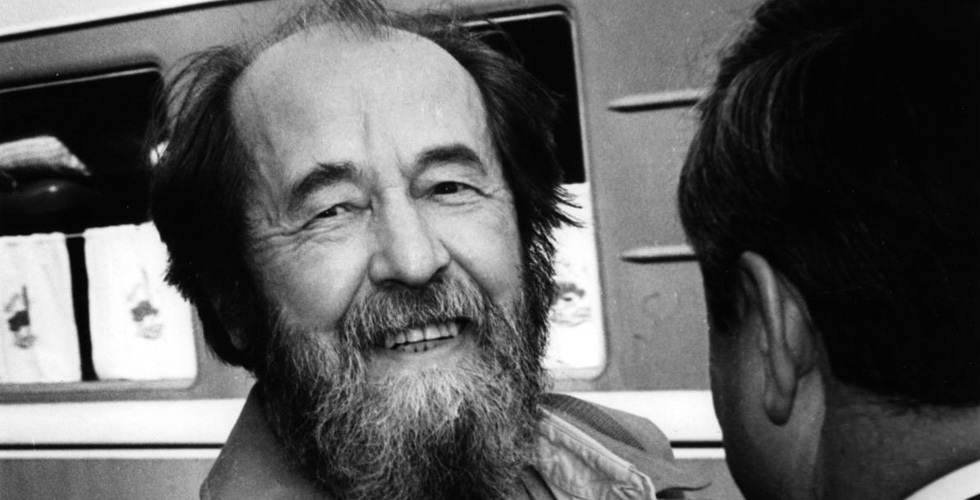
On December 11, 2013, 95 years old, Alexander Isaevich Solzhenitsyn (1918-2008), was performed by the writer, Nobel laureate (1970), a political fighter who managed to triumphantly return to the Fatherland after twenty years of expulsion (1974-1994). Solzhenitsyn lived a long writing life. For decades of active work, always taking uncompromisingly distinct position on the most painful issues of Russian history and modernity, he has repeatedly lost some supporters and acquired others. On the eve of the anniversary of the writer COLTA. RU turned to a variety of his readers with the question: “How has your attitude to Solzhenitsyn have changed since the first reading of his books?”
Stanislav Belkovsky
political scientist
I first read the main Solzhenitsyn relatively late-in the late 1980s. But even before all reading, I knew that Alexander Isaevich is a great Russian writer who crushed communism, and almost alone. I had no right to find out anything else by completing the sacred reading. Otherwise, I would not have believed it. And then, after reading Solzhenitsyn and trying to rebuild him, I told myself: here is literature, Russia, man, humanity - everything is secondary. Primary - this mission A.I., which is concluded exclusively in himself. It can be taken completely, partly or not to be accepted at all. But without this mission of Solzhenitsyn as a writer (prophet and someone else) does not exist. So the point is, as it were, not in the writings of A.I. It exists in addition to his labors, in a blurry cloud, which we must look at. Therefore, for the third time, you should no longer re -read. “Enough, enough, a little pretty,” as A.I. At the final point of the mission, its carrier was supposed to merge with earthly power. Which, in fact, he (before) believed in the "letter of the leaders of the Soviet Union." The irony of history is that the only power with which the great Solzhenitsyn could merge was Vladimir Putin. Now the name of the classic prophet hold second-rate writer forums. And what can you do! Solzhenitsyn, therefore, lived for so long that the final point of his mission has always been ahead. And he left when he got directly to this point.
Alexander Etkind
Culturologist
Thinking about this issue, you clearly see how much has changed over these decades. A lot in different senses: much has changed, and very strongly, and changed many times. All these decades, it was precisely the part of the life that Solzhenitsyn once discovered for the reader: a huge zone of relations between state violence and personal life, between the chaotic evil that the camp produced, and the stubborn, victorious efforts of the little convict, which in front of his eyes learned to survive, hide, hide and enrich. Then everything changed so that the scale, the pettiness of these changes paralyzes, inspires amazement and dumbness. It is difficult to talk and write about them, because, combining incompatible, they were immediately and huge and insufficient. Solzhenitsyn was the first to show the scale of Soviet evil. He contrasted him with a business plan of a skilled person who survived the war, a gulag, socialism-but continued to dream of small production, about sales mats that would enrich him and then, with the help of something like an invisible hand, would raise millions of goners to life. It is instructive, as combined in Solzhenitsyn the genius of a historian with faith in small -scale production on a patriotic basis. In the end, this foundation remained, and it was inflated on it that people who did not understand and did not love everything that helped Solzhenitsyn and his colaigers - the faith in socialism, hope for labor and the market, hatred of guards, love for the difficult history of their country. He, who survived the camp, who passed the shmone, who gathered tons of memoir ore and forged a great monument to the Soviet victims from it, managed to privatize along with other national wealth. But oil is not asked for consent for sale; And the story is not asked for consent when they do it, and when they write too. Solzhenitsyn's consent is a sad episode that should not be talked about; I would like to shook your shoulders, dismiss, move on. Only it is not very clear where to go. Former and current readers of Solzhenitsyn are all at the same fork. Everyone seemed to be frozen in a dumb scene, looking with horror at wealth, idleness and corruption. At that time, the auditor appeared in the image of the creator of the Archipelago. Will he be someone next time?
Vyacheslav Kuritsyn
writer, critic
Before perestroika (“one day”) and in perestroika (“archipelago”), I read Solzha as a writer of “political”, carrying important information - such as the magazine “Spark”. Somewhere in the mid-nineties, I first read “in the first circle”, was very impressed by the physical power of the letter, again took the “archipelago”, then even the “wheel” rolled a little and realized that it was also the exacerburative qualities of fiction, a grandiose experiment, “avant-garde”. And four years ago, in a fierce St. Petersburg winter, I wanted to lie down with the “archipelago” and tea for several days, to get a skeleton from the text, but the matter did not burn out: from the book - overlooking the era - relevant meanings climbed the air. But it was hardly the last approach.
Alexander Morozov
political scientist
Perception has changed. But what is it connected with? A difficult question. Shalamov began to seem larger. Probably because 20-30 years ago the socio-political side of communism seemed to me more significant (from the point of view of criticism). And now, the further, the more significant it seems already pure “personal experience”. Maybe some disappointment also affects: Solzhenitsyn was sure that if we remove the “concrete cap” of Sovietism from the Russian person, then “healthy forces” would be found. But some other “Russian man” was discovered. Not at all, is a farm-Khutorian, the heir to Old Believer independence. As Solzhenitsyn expected. And some kind of Chubais Lemonov-Prokhanov-Putin. Strange "victim of deprivation." Eternal deprived of state attention. And even Solzhenitsyn himself suddenly ended up among the people whose expectations of the “restoration of Russian” were embodied in Putin. But, of course, Solzhenitsyn has no guilt in this. The consequences of the “Soviet” turned out to be much deeper - anthropologically - what he expected. Or, in any case, I wanted to believe. Inside my personal story, I remain grateful to him. In 1988, I wrote an article about whether he should return to Russia (then it was discussed). It said: no, no. Then Ginzburg and Gorbanevskaya were still alive, they published it in “Russian thought”. And for me it was very significant. And I think that his text “how to equip Russia” remains the most important document of the era. Of course, he was right in the fact that Russia needs to reset not only the “underbelly” of Central Asia, but also the Caucasus. His plan for getting rid of the Empire was true. And in a long historical horizon it will be so. He will be right.
Sergey Shargunov
writer
I started with the “matrynide yard”, and still this is my beloved thing Solzhenitsyn, whom I read almost everything. I must say, maybe paradoxical: first of all, Solzhenitsyna is very pleased to me, even to read. I'm talking about style, about poetry, brightness, flexibility of speech and about peppy clumsy in individual phrases, which also enchants. Even the "archipelago" is a language! And “a calf with an oak” “butt was not just just an adventurous book, which inherits simultaneously Machiavelli and Avvakum, but also a poem. It was interesting to learn about Solzhenitsyn’s judgments until the last days of his life (he passed on some advice to me through Natalia Dmitrievna). He was different, but I accepted him different and accepted (although not always agreeing), because for me Solzhenitsyn is a mysticism of fate, the story of the personality that was thrown, inseparable from the history of the country, which also threw. He wanted to be conscientious, with an effort to hide, as it were, a kind of piece of iron, who was curved and bended, because the world is crafty and changeable. He was a “Fatherland” (so he followed Dahl translated the foreign word “patriot”) and sympathized with people. I understand his principle “not by lies” like this: not to lie means not to say what you do not think. So, if you are mistaken, it is free and sincere.
Sergey Soloukh
writer
For the first time I read Solzhenitsyn by a schoolboy. In the seventy -third or seventy -fourth. These were the praises of Novomirov publications carefully interwoven by his father. “One day”, “Matrenin Yard”, “Case”, “Kulikovo Field” (“Zakhar-Kalita”.- Ed .). I remembered forever. But then, in childhood and later, in my youth, nails could still be made of me, but now not, and accordingly re -read A.I. And everything else, implying the incentiveness and adamant of the reader’s soul, comparable to the author’s, or even large ones, now does not pull me. What is sad, of course, but already, I am afraid, irreparable.
Grigory Bruskin
Artist, writer
In 1962, “One Day of Ivan Denisovich” made a large, one might say, overwhelming impression. In the future, he read the books of Alexander Isaevich with great cognitive interest, wiping himself through, from my point of view, the literature of a very bad quality. I always shared Solzhenitsyn’s hated attitude to the crimes of the Soviet regime. But I never shared and do not share his other views. The first volume of "two hundred years together" read with a sense of disgust. The second did not read. Nevertheless, I took off and take off my hat in front of Solzhenitsyn’s life feat. Before the "humanity!".
Alexey Tsvetkov
Poet, publicist
Unlike many of my friends, I grew up in a family where any kramola was a taboo. By the time of the publication of “One Day of Ivan Denisovich”, in my head, from the premises and hints of adults, doubt had already developed that the Soviet government was what it gave itself, but the doubt consisted mainly of white spots, and it was precisely this book, it played a huge role in the formation of my personality and life path. This fact from the biography can no longer be deleted. It is unnecessary to add that I watched the writer’s struggle with the Soviet leadership and its outcome with admiration, which I regarded with many as his moral victory. Already on the eve of emigration, I eagerly read the “Gulag Archipelago”, which was given to me in photocopy for one day, understanding perfectly well that in a matter of days I can read this book calmly and slowly. An irreversible disappointment began shortly after leaving, when I began to work in the Michigan publishing house "Ardis", whose founders and owners, Karl and Ellande Proffer, were convinced liberals and supporters of freedom of speech. They were outraged to the core by the infamous Harvard speech Solzhenitsyn, in which he fell on these foundations of Western society. In those days, a editorial note from Hustler magazine Larry Flint hung on the wall in the publishing house, in which Solzhenitsyn was declared a “ass of the month”, with an appropriate illustration, in connection with this speech. The next step in the insight was the book of Vladimir Lakshin published in the West with criticism of the writer's memoirs “Foiled a calf with an oak”. Since then, I have not met special references to her, but she convincingly shows that “one day” was largely a product of the collective work of the staff of the then “New World”, while Solzhenitsyn portrayed all his real and imaginary merits as exceptionally sole. The subsequently published book by Vladimir Voinovich was already a description of evidence. And when, during the first visit to the USSR after many years of emigration, I encountered my friends with an unchanged admiration for the figure of the Vermont Hermit, this was an extremely unpleasant surprise. All the further activities of Solzhenitsyn, both literary and social, convinced me that the evolution of my views was true. For a long time, his figure invariably causes me an association with Thomas Opuskin as a literary prototype.
Alexander Filippov
sociologist
Purely aesthetically changed. When I first read, I remembered the feeling of some extraordinary freshness, almost happiness, from the prose itself. And now it all went into the category of Soviet literature, which is impossible to read for pleasure, and for historical truth, all the more, because history is studied differently. But for some reason it seems to me that this is not the end. I return to a lot, I will return to Solzhenitsyn.
Oleg Lekmanov
philologist
The first impression of Solzhenitsyn’s book was in 1984 - for one night they gave “Ivan Denisovich” with the preface of Tvardovsky. The level of prose was struck - the book immediately and tightly stood on one imaginary shelf with a hot “Moscow - cockerels” of brooms. Then Solzhenitsyn, as a prose writer, never disappointed seriously: I love the “cancer corps”, and “in the first circle”, and “archipelago”, of course. The attacks on Gaidar and Yeltsin were slightly annoyed, and in general it seemed (possibly erroneously) that Solzhenitsyn, returning to the new Russian life, as it should not be cut. But the very fact of returning the irritation still blocked. And one more thing: I really love Solzhenitsyn, as he appears in the diaries of Fr. Alexander Shmeman. And - truism at the end: Alexander Isaevich Solzhenitsyn - the last, of course, the great Russian writer. He is even Brodsky.
Andrey Vasilevsky
critic
When I first got acquainted with Solzhenitsyn's works (“One Day of Ivan Denisovich”, “Matrenin Yard”, etc.), the author has not yet written everything that he later wrote. Therefore, the scale of the phenomenon was not entirely clear to me. Then it became clear: a phenomenon of a huge scale.
Denis Dragunsky
writer, publicist
Yes, of course, it has changed. There are several steps. At first I was in complete delight from him: “Ivan Denisovich” and the samizdat version “in the first circle”. “Gulag” is a shock, delight, but with a spoonful of bitterness - a slight taste of anti -Semitism in the story of Berman. Further-“August of the 14th”-it seemed boring. For the same reason, the “red wheel” did not read. Further - “how can we equip Russia” are a little naive doctrinet. Although the “democracy of small spaces” really liked, a wonderful idea, and today is relevant. "200 years together" did not like. However, be that as it may, I have no doubt about Solzhenitsyn’s enormous meaning for our recent history, I appreciate his outstanding role in the stiffening of the foundations of advisers.
Lev Lurie
Historian, journalist
In general - nothing. Pushkin also had “Borodino anniversary” and “slanderers of Russia”. Solzhenitsyn is a great Russian writer, a calf who is concerned with an oak.
Alexander Markov
philologist
I first read Solzhenitsyn’s books in fat -journal publications when I was 13-14 years old, this is just 1990. Then I perceived Solzhenitsyn as the successor of Dostoevsky, as a commentary on the “great inquisitor”: if the great inquisitor was going to manipulate the masses, thereby humiliating the conscience of each person, then the communist leaders knew how to shake groups, parties, individuals, creating both the guilt system and the system of betrayal. Solzhenitsyn unexpectedly showed through the heroes of the “red wheel” that Judas is not just a greedy neurotic, but a man who easily joined any parties, for whom the party struggle to destroy and thirst for profit were about the same. At the same time, I read “in the first circle” and basically took the system of worldview disputes, in which everyone was ready to take the blame for the past. And the romance of the pre -revolutionary past, and critics of tsarism, and the haters of Bolshevism in the intonations themselves expressed what kind of guilt who was ready to accept in the system. In fact, “in the first circle”, like the “cancer corps”, is a kind of novel about the redeeming, which is carried out through the emphasized difference in positions: these are the apostles, who fled in fear, but did not become Judas and therefore melting a new meeting with each other. Then, at the age of 15-16, I read the “Bulletin of the Russian Christian Movement” over the years (I was especially impressed by the her priest Alexander Shmeman, who at one time had high hopes on Solzhenitsyn, who wanted to see the emigration by the sun), talked with Victor Aksyuchitsa and perceived all these phenomena as a commentary on Solzhenitsyn. The most important in Solzhenitsyn then his philosophy of history seemed to me, which deduced Bolshevism from persecution of the Old Believers: this motive, explained in Solzhenitsyn biographically, unexpectedly built it for me in search of the beginning of the century - it was then that the new religiosity included the Old Believer as the ultimate possibility of a religious attitude to things. Thinkers such as S. Bulgakov and P. Florensky, not experiencing special sympathy for historical Old Believers, insisted on strictly fulfilling the “historical destiny” of the church, fidelity in the small, accuracy and verification of contemplation, from where the direct path to the exact storage of the rite is already. Solzhenitsyn looked then as a man uniting this line of the beginning of the century, a line of “stylized Orthodoxy”, with a responsible attitude to worldview discussions. Some disappointment in Solzhenitsyn came when reading his criticism: they were too addicted, unfair and ideologically many of his literary assessments. His monologism, which in the novels helped him achieve virtuosity in the image of other people's thoughts, conveying to the wide strokes of the movement of feelings and changes in mindset, it turned out to be extremely inappropriate here. Другим неприятным впечатлением было его возвращение с Востока — я восхищался всегда «Светом с Востока», по Владимиру Соловьеву (видя продолжателей проекта Соловьева в С.С. Аверинцеве и О.А. Седаковой), а здесь этот свет заканчивал путь в Москве, на Николиной Горе, и дальше двигаться не собирался. Уже в нулевые чтение новых глав «Теленка» и «Двучастных» и «Суточных» рассказов, которые критиками оценивались иронично (В. Войнович в «Портрете на фоне мифа» 2002 года вспомнил про суточные щи), как раз вызвало новую волну интереса к Солженицыну. Его искусственный язык, лишенный напевности, здесь как раз впервые занял правильную нишу. Это был не язык описания, повествования или внутренней речи, а язык протокола, точной записи происходящего, которая делает «и Саула пророком». Внутренняя речь одного героя могла протоколировать события, а точные описания событий — показывать безупречность внутренней речи. Так, начав с религиозно-философских дискуссий, Солженицын пришел к сухой протокольности житий, актов первых мучеников. Это для меня важнее, чем многие его односторонние заявления, чем стремление найти общий знаменатель несовместимых явлений. Политику он не умел взвешивать на весах Иова, он взвешивал ее на конторских весах бытового словаря. Но когда заходила речь о человеческой душе, он ее взвешивал на тонкой игле сердечного интереса. То жало в плоть, одержимость каким-то очень сильным чувством, которое извне порождало уродливых словесных кентавров, все эти «укрытища», здесь позволило создать новые литературные формы.
Никита Алексеев
artist
Вопрос забавный. Дело в том, что я в раннем подростковом возрасте был чуть-чуть с Исаичем знаком: он какое-то время жил у родителей моего отчима, В.И. Маликова. Он меня тогда поразил жуткой мрачностью, занудством и требовательностью к своей персоне. А на второй или третий день рождения моего сводного брата Саши (т.е. в 1966 или в 1967 году) он ему подарил зеленый жестяной самосвал. Коробку, в которую это изделие было упаковано, он бисерным почерком исписал советами, как жить не по лжи. Это двухлетнему-то ребенку! В семье, новомировской, был его культ. То есть я почти с детства читал сочинения Солженицына. «Один день» и «Матренин двор» до сих пор считаю неплохой традиционалистской прозой. Все прочее — ужасно. Что касается «Архипелага», который, как многие, я в свое время читал в машинописи на папиросной бумаге, он подтвердил то, что я из разговоров уже знал. И огромное спасибо Солженицыну за это. Но к хорошей прозе это отношения не имеет. По сути, это что-то вроде Трумэна Капоте или даже Тома Вулфа. Так что когда Володя Сорокин в середине 80-х написал издевательскую «Тридцатую любовь Марины», я с ним был полностью согласен. А еще лучше про Солженицына спел Алексей Хвостенко: «Ах, Александр Исаевич, Александр Исайявич, что же вы, где же вы, как же вы — дожили...».
Антон Носик
медиаменеджер
К тем книгам Солженицына, которые я прочитал в детстве, в молодости, отношение мое не изменилось и вряд ли изменится. Это очень важные в моей жизни книги — «Один день Ивана Денисовича», «В круге первом», «Архипелаг ГУЛАГ».
«Красное колесо» с самого начала казалось мне несколько тягомотным, по мере выхода новых томов это ощущение никуда не делось.
А после «200 лет вместе» я просто утратил интерес к дальнейшему творчеству писателя. Но его более ранние вещи не стали от этого хуже.
Олег Проскурин
philologist
Мало изменилось. Конечно, жаль, что в последние годы Александр Исаевич продемонстрировал историческую наивность и близорукость в отношении многих вопросов, но по-прежнему считаю «Архипелаг ГУЛАГ» выдающимся литературно-гражданским памятником мирового значения, а «Один день Ивана Денисовича» — лучшей художественной репрезентацией советской жизни (можно больше ничего не читать — достаточно одного «Ивана Денисовича», чтобы понять, как она была устроена и как люди могли в этом жить).
Сергей Кузнецов
writer
Первое мое прочтение Солженицына было довольно ранним, типа классе в восьмом, в самом начале восьмидесятых. Я медленно читал его все восьмидесятые по мере того, как книги попадали ко мне в руки. Несмотря на очевидные паттерны восприятия самиздатовских книг, меня он и тогда прежде всего интересовал как писатель, а не как политический деятель или идеолог. В этом смысле отношение к нему у меня не менялось, разве что дополнялось теми или иными деталями.
Если говорить о каких-то реперных точках, то для меня был важен опыт повторного чтения «Архипелага ГУЛАГ» в середине девяностых, когда эта книга интересовала меня прежде всего как способ говорения о насилии и повествование о непереносимом. Если угодно, это был опыт чтения Солженицына через Батая и Клоссовски. И тогда, и сейчас мне кажется, что в этой области — разговор о немыслимом, попытки представить массовые смерти и так далее — Солженицын добился выдающегося литературного результата.
Владимир Тодрес
financier
Я начал в юности с «Ивана Денисовича», «Матренина двора» и «Ракового корпуса» — то есть почитал его сначала за большого писателя. Чем дальше в лес, тем меньше мне нравилась его литчасть, но ценнее были фактура и идейный заряд — в первую очередь я, конечно, имею в виду «Архипелаг» и «Красное колесо». «Март 17-го» вообще имеет прямое отношение к сегодняшнему дню и может использоваться как руководство к действию (кому какое действие симпатичнее. Вам, видимо, совсем другое, нежели мне). «200 лет вместе» я намеренно не читал и обсуждение игнорировал (мне давно надоела вечная тема про евреев), «Теленка с дубом» бросил на четверти и т.д. Короче, Солженицын для меня — это большая литература по имени «Один день Ивана Денисовича», «Матренин двор», «Раковый корпус» и гениальные «Знают истину танки» — и вполне уважаемая и близкая мне трактовка истории в «Архипелаге» и «Колесе» (которые, ИМХО, не имеют прямого отношения к литературе как виду искусства).
Модест Колеров
historian
Солженицын начался для меня в 1970-е: сначала с письма возмущенной общественности в «Огоньке», затем с «Ивана Денисовича». Первое мне запомнилось вполне ясно, как звук пенопласта по стеклу. Второе не впечатлило. Наверное, я был мал и прочел его поздно. Гораздо сильнее было впечатление от «Карателей» Адамовича. Затем я прочел «Архипелаг ГУЛАГ» и могу сказать, что художественной своей цели он достиг: я укрепился в отвращении к коммунизму, воспитанном во мне в моей семье, хранящей память о раскулачивании и гибели прадеда на Беломорканале. Когда я перечитал «Архипелаг» уже для историографической перспективы своих исследований сталинской экономики принудительного труда, я был разочарован. Для исторического самознания время «Архипелага» прошло настолько ясно, что никто — даже из числа ангажированных публицистов — не рискнет уже проверять его пафос фактами.
Борис Долгин
historian
В годы перестройки литература и ее окрестности все еще были средоточием общественных дискуссий. Солженицын оказывался в самом их центре. Совершенствовать социализм или прекратить фетишизировать однажды сделанный «социалистический выбор» — таким на момент 1989-го — начала 1990-го был один из основных вопросов, над которым думали не успевшие его для себя решить до того.
Книги Солженицына были очень сильным фактором морального поражения коммунизма на Западе — его тексты стали важным толчком в том же направлении в СССР. Это и тогда не отменяло понимания неоднозначности личности, невозможности для него выдержать требования, предъявляемые к профессиональному историку, оставляло ощущение литературного несовершенства и даже вымученности некоторых текстов («Красное колесо»).
За прошедшие годы наша литература избавилась от необходимости нести груз площадки общественной мысли, убрав на периферию то, что было ценно преимущественно исполнением этой функции. Это уже должно было бы скорректировать место Александра Исаевича. Но наряду с внешними обстоятельствами поработал и сам писатель — он умудрился частично реализовать пародию на себя, а еще продолжил неудачно экспериментировать с историописательством.
В этом месте я бы был рад сказать, что Солженицын остался очень важной частью своего времени, но история не закончилась. Сегодня чьи-то «классические» тексты должны напоминать школьникам (и не только) о сталинизме, о сопротивлении ему, о том, насколько небанальной является задача интеграции советского периода в линию непрерывного исторического процесса, о том, что насилие государства над маленьким человеком может быть не проявлением безразличия, а необходимым условием существования государственной машины. И этой своей роли они не потеряли.
Илья Кукулин
филолог, критик
О Солженицыне я впервые услышал в возрасте тринадцати лет от своего отца. Отец тогда рассказал мне о сталинских репрессиях и попутно о Солженицыне — в том числе об «Архипелаге ГУЛАГ». При всей своей детской болтливости этим знанием я ни с кем тогда не поделился.
Примерно в пятнадцать лет родители сочли, что я дорос, и дали мне спрятанный в доме «Один день Ивана Денисовича» в первом отдельном издании. Мне очень понравилось, в первую очередь — по ритму, то есть (глядя из нашего общего сегодняшнего знания) по тому, в чем Солженицын напоминал прозу 1920-х годов — от Шкловского до Бабеля (Шкловского я тогда немного читал, а Бабеля — только «Историю моей голубятни»: родители посоветовали прочесть, чтобы понимал, что такое погром). Я попытался написать примерно таким же ритмом школьное сочинение о «Матери» Горького. Думал ли я тогда о соотнесенности фигур Горького и Солженицына, не помню.
Во время перестройки я прочитал «Архипелаг ГУЛАГ», Нобелевскую лекцию и разные полемические материалы о Солженицыне — Бенедикта Сарнова, Вячеслава Воздвиженского и других. «Архипелаг» произвел на меня очень сильное впечатление, но, как и многих читателей, меня там смутила фраза о Нафталии Френкеле: «Мне представляется, что он ненавидел эту страну». Позже мне показалась очень убедительной точка зрения Льва Лосева, который в статье «Солженицынские евреи» проанализировал антисемитизм писателя как явление, использующее для своего оформления эстетические средства советской соцреалистической литературы. Самого Солженицына Лосев интерпретировал как писателя-модерниста. Это прочтение кажется мне убедительным и теперь, хотя, вероятно, я отношусь к Солженицыну намного более отстраненно, чем Лосев.
В 1994 году на книжном развале у Российской государственной библиотеки я раскрыл один из томов «Марта семнадцатого», и мне показалось, что стиль фрагментов, названных у Солженицына «Киноглаз», напоминает кинематографическую манеру Эйзенштейна и что это не случайно. Примерно в 2000 году я попросил прокомментировать эту мысль известного киноведа Леонида Козлова, выдающегося специалиста по творчеству Эйзенштейна и по истории итальянского кино. Козлов меня поддержал и дал важнейший совет — на какие фильмы Эйзенштейна стоит обратить внимание при анализе Солженицына. В 2008 году я написал об этом статью, которая была напечатана в 2010-м. С этих пор я занимаюсь Солженицыным как исследователь.
Сегодня Солженицын — фигура для меня глубоко чуждая, но вызывающая огромный интерес — социологический, историко-культурный и человеческий.
Видел я писателя один раз, несколько секунд, совершенно случайно. Кажется, в 1997 году я одевался в гардеробе музея в Павловске, а он туда только вошел. Эти несколько секунд я запомнил.
Сергей Гандлевский
поэт, прозаик
Сходный опрос много лет назад проводила «Литературная газета», я принял в нем участие и сейчас перечитал написанное мной тогда. Я начал тогда за здравие: сказал, что Солженицын как никто убедительно и успешно разоблачил ужасную утопию и т.п. А закончил тоном ниже: признался, что его поздний головной слог помешал мне осилить «Красное колесо», впрочем, «Ленин в Цюрихе» кажется мне психологически очень точным попаданием в цель. Вскользь помянул я и «пастырский проезд по России»…
За прошедшие 15 лет я Солженицына не перечитывал, и мое к нему отношение не подверглось пересмотру. Это было бы понятным поводом, чтобы уклониться от участия в нынешнем начинании — кому охота повторяться?! Тем более что мой взгляд на Солженицына вполне общепринят в известном кругу, стоит ли множить банальности, пусть и справедливые?.. Но я вспомнил один эпизод, о котором хочется рассказать.
В 2000 году меня неожиданно пригласили в Фонд Солженицына на вручение премии Валентину Распутину (видимо, кому-то из организаторов церемонии на глаза попалось мое помянутое высказывание в «Литературке» — иного объяснения у меня нет). Друзья-коллеги веселились, в какую, мол, чуждую компанию я угодил. Я вторил дружеским шуткам, но внутренне ежился и колебался: идти — не идти. Но любопытство перевесило.
Зал на Таганке был полон. Большинство присутствующих я видел впервые, хотя двух-трех одиозных личностей узнал (уже не помню кого). Публика, как водится, погомонила, потопталась и расселась. Появился Солженицын. По-моему, одет он был во что-то военного покроя, вроде кителя, впрочем, не поручусь. Сразу, без общих слов Солженицын заговорил о виновнике торжества — Валентине Распутине. Он говорил не коротко, но в его речи напрочь отсутствовала «вода»: это был скрупулезный до трогательности разбор произведений лауреата, включая особенности его эпитетов. Меня, привыкшего к псевдоартистическому сотрясению воздуха на подобных сборищах, солженицынские прилежание и серьезность приятно удивили, даже изумили. Я вдруг с симпатией разглядел во властителе дум и нобелевском лауреате рязанского учителя, каким он был некогда. Приехал Лужков. Никакого специфического трепета приезд мэра в хозяевах не произвел. Наталья Дмитриевна Солженицына приветствовала Лужкова ровно так, как, по моим книжным представлениям, люди с достоинством и должны приветствовать градоначальника: не больше, но и не меньше. Церемонию, понятное дело, венчал фуршет. Он был сервирован на двух этажах, и, уходя наверх, я подумал, что больше не увижу классика.
Я не жалуюсь на отсутствие аппетита, на отсутствие самолюбия — тоже. Некоторое комичное смятение, видимо, отразилось на моем лице, потому что бывалый сосед успокоил меня: «Здесь всем хватает». И оказался прав. Через какое-то время сосредоточенного застолья головы повернулись в одну сторону: на наш этаж поднялся Солженицын. Александр Исаевич по-хозяйски обходил столы, перебрасываясь со знакомыми словом-другим. Все это было так по-домашнему, что у меня промелькнуло хулиганское предположение, что попроси я хозяина в приступе нахальства, но вежливо о какой-нибудь малости — горчице, скажем, или газированной воде, — мой каприз не произвел бы фурора: гость есть гость.
Для сравнения. Один видный деятель культуры рассказывал, что на приеме в Кремле тихо признался официанту, что на дух не выносит рыбы. Оскорбительный ответ официанта лишил моего знакомого дара речи до самого десерта. Но то — Кремль, чего от них ждать?! У меня есть пример и поближе.
В Петербурге отмечали двухсотлетний юбилей Пушкина. Торжественный вечер, если не ошибаюсь, в Таврическом дворце мыслился устроителями как завершающий бетховенский аккорд. Не утерпев, мы с товарищем вышли покурить и застали в фойе буфетчицу чуть ли не в слезах: ей предстояло откупорить в одиночку десятки бутылок с вином. Мы вошли в ее положение и в четыре руки взялись за дело, благо кое-какой навык имелся. Как только мы покончили с этим, минута в минуту, двери распахнулись настежь, и толпа оголодавших литераторов мигом смела со столов все подчистую. Но чинной вереницей сквозь эту давку потянулись в VIP -зал литературные генералы — по большей части уважаемые писатели и свои в идейном смысле.
Morality? Хорошо бы обойтись без нее. И меньше всего я хотел бы быть заподозренным в смене гражданской ориентации. Я сознательно присутствовал (и не жалею) на нескольких белоленточных шествиях и сознательно отсутствовал (и тоже не жалею) на недавнем Собрании Писателей, где, кстати, была вдова А.И. Солженицына. Просто меня чем дальше, тем больше занимает одна тема. Есть какие-то убеждения, которые человек декларирует — и это очень важно. Но не менее важен стиль. В случае Солженицына могу засвидетельствовать поведение, которое иначе как добропорядочным не назвать, а на пушкинском торжестве наблюдалось что-то совсем другое. То есть без морали все-таки, прошу прощения, не обошлось.
Подготовил Глеб Морев