
Translated material
How Putin has recruited human rights activists
On December 10, on the International Human Rights Day (was established in 1950, the UN General Assembly in honor of the proclamation of the universal declaration of human rights and freedoms in December 1948) Vladimir Putin in his Novo-Ogarev residence adopted Russian human rights defenders
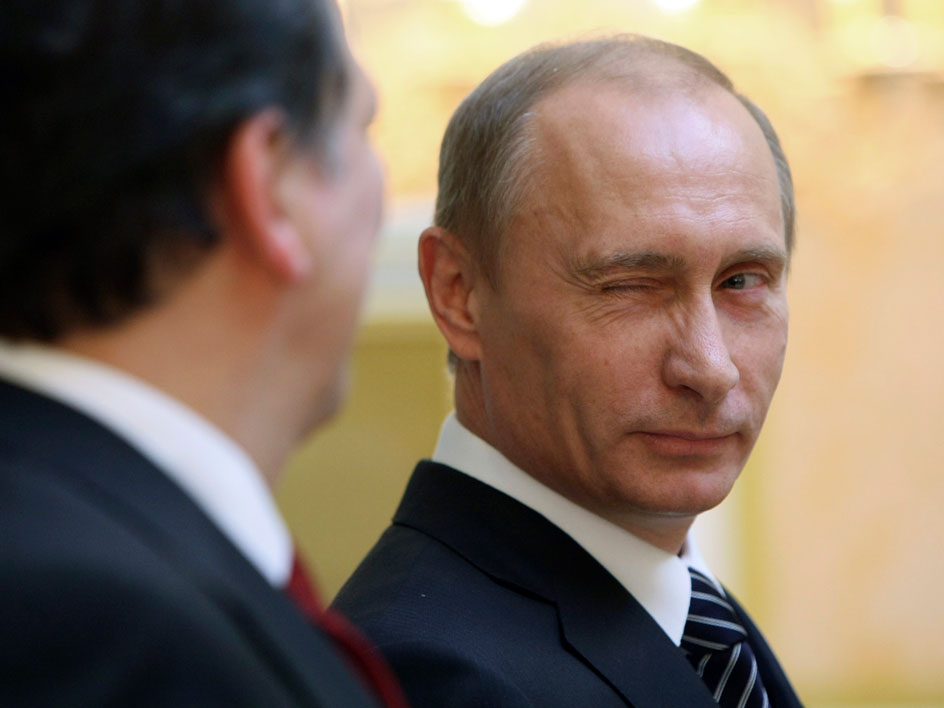
The head of the Moscow Helsinsky group Lyudmila Alekseva, the Commissioner for Human Rights in the Russian Federation Vladimir Lukin, head of the Human Rights Council under the President of the Russian Federation Mikhail Fedotov, the Commissioner for Human Rights in Moscow, Alexander Music and ten more famous human rights activists came to the president to celebrate their professional holiday.
"The authorities and human rights movement have absolutely the same tasks that the lives of citizens are better!" - said the head of state to his guests. And they did not object to him. Although it is obvious that human rights activists, as a rule, protect citizens from violation of their rights by government officials, judges and representatives of law enforcement agencies.
Putin asked human rights activists to help in Russia's work in the UN Human Rights Council. It is known that in another structure of the UN, the Committee against torture, Russian human rights activists who criticize power present their reports, which contain numerous facts of human rights violations in Russian prisons, police and colonies. These reports contradict the bravura speeches of government officials who represent Russia to the UN and poorly affect its image in the world.
It seems that Putin, who seeks to correct the reputation of the country on the world arena, decided to “recruit” for this task and human rights activists who came to him in Novo-Ogarevo. The composition of those who arrived, by the way, surprised his heterogeneity: along with Lyudmila Alekseeva and Svetlana Gannushkina, known as a critical attitude to the authorities, the newly -made chairman of the Moscow PPC Anton Tsvetkov was at the meeting, and in combination the head of “Russian officers”. According to the New Times in the Federal Penitentiary Service of Moscow, he informed the chiefs of the Moscow pre -trial detention center that he allegedly “signed up for a meeting of the Russian President” and will lobby for the interests of employees of the prison system.
Probably, he managed to do this during an informal conversation with Vladimir Putin behind a glass of wine, about which the New Times was told by other participants in the meeting in Novo-Ogravo.
Andrey Babushkin, member of the HRC:
“It was an informal meeting, they spoke with wine, everyone who wanted to speak. The positions, of course, were not coincided in everything: we all play for a wide amnesty, and the president - for "careful." Putin said that it was necessary that not only the state is engaged in the Russian presence in the UN HRC, but also human rights organizations have provided moral and organizational support. I think it's right. The state will be effective if human rights resources are used.
The issue of state grants was raised. The president said that next year, if my memory serves me, 3.5 billion rubles will be allocated. He jokingly said that all questions about grants to ask Pamphilova. But this question was not central. It is important that a member of the Public Chamber Maria Cannabikh designated the problem of promoting the activities of public observation commissions, especially in small constituent entities of the Federation, where it is difficult to get, and the president said that it was necessary to touch this issue in the message to the Federal Assembly "
Alexander Music, Commissioner for Human Rights in Moscow:
“At first Putin performed, congratulated on the holiday. He said that human rights protection is a useful work, a useful institution, but it is necessary that it be mounted on other institutes. He said that he has advice, there is Vladimir Petrovich Lukin, regional authorized in 70 regions. After Putin, Lukin said a good speech. He said that the task of the human rights activist is very complicated, he should think about the “tear of the child”, help ordinary people, about protecting this ordinary person from a “copper horseman” who personifies power.
Then informal communication took place, everyone crowded around Putin: everyone asked questions, sometimes several people at once. Putin said that he really believes that it is possible to amend the Law on NPOs. He said that it was impossible to engage in politics for foreign money, and everyone agreed with it.
Elizabeth Glinka, the head of the Fair Help, said that riot police came to her. Putin asked: "Why?" Glinka replied that I did not understand why, that they just walked and left. Putin was indignant: "Horror!"
About the amnesty, opinions diverged. Someone thanked that Putin introduced an amnesty project to the State Duma, and someone noticed that everyone was counting on a wide amnesty, and what was recorded in the project did not pull on a wide amnesty. ”
Elizabeth Glinka, head of the Fair Help Foundation:
“I did not notice the discrepancies in the opinions of human rights activists with Putin. He really agrees with everything that they say to him. In general, no disagreement. On the contrary, complete-full support. There was a very informal situation and very noisy. ”
In general, apparently, the recruitment operation was successful, which Putin could report to his colleagues on December 20, when a completely different holiday will be celebrated - the Chekist's Day.