
Translated material
Alien Malevich
Russian avant -garde in Amsterdam
The exhibition of the Russian art avant -garde in Amsterdam is completing the difficult year of Russia in the Netherlands and the Netherlands in Russia
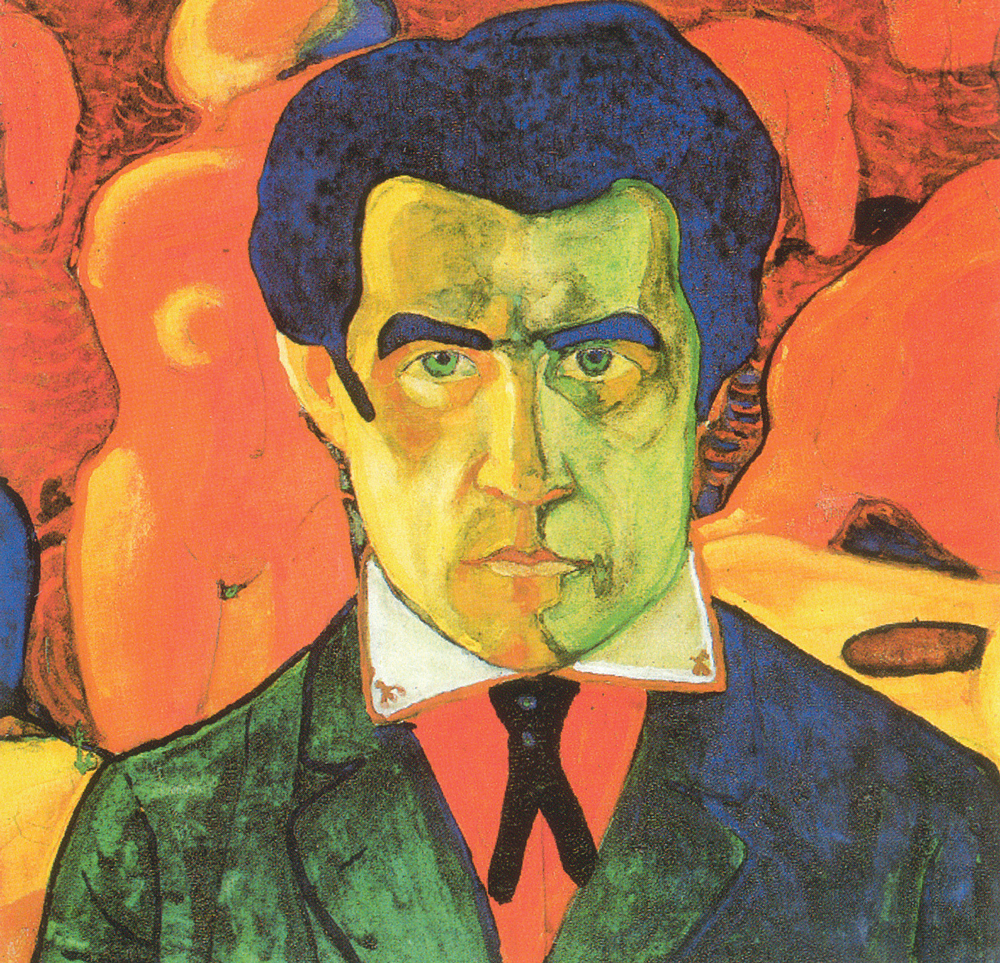
Kazimir Malevich. Self -portrait, 1910
Never before in the West or in Russia have passed such vast exhibitions of Russian avant -garde players. 13 halls, 500 works. The basis of the exposition was the work from the collection of the city museum (Stedelik) Amsterdam, the Nikolai Khardzhiev Foundation, the collection of George Kostaki, stored in the Museum of Modern Art in Thessaloniki. 39 works from the museums of Moscow, St. Petersburg, ten regional museums and one private meeting were also brought to the Netherlands. The history of both the exhibition itself and the works presented on it resembles a detective.
The will of the artist
The exhibition is called "Kazimir Malevich and the Russian avant -garde." That is, the famous Russian artist is represented in the context of the acts of his students, followers, friends and even rivals. Among them are Kandinsky, Larionov, Udaltsova, Shashnik, Klun, Lisitsky, Suetin, Tatlin, Rodchenko, Matyushin ... that Nikolai Khardzhiev, a famous scientist and collector, was partially represented at the exhibition, between these artists, which are sometimes perceived from the outside. A person is extraordinary and ambiguous, in one of his last interviews, already in exile, he gave rather caustic assessments of the artistic environment of those years. Here is what he spoke of a difficult relationship of Tatlin and Malevich: “They were enemies. They could not share the crown. They were both candidates for the director of the Institute of Artistic Culture. Malevich said: "Be the director." Tatlin: "Well, if you suggest, there is something wrong here." And he refused, although he really wanted to be there as a director. When Malevich died, his body was brought to cremate (from Leningrad. - The New Times) to Moscow. Tatlin still went to look at the dead. He looked and said: "Parts." Rodchenko Khardzhiev recalled this: “Malevich and Tatlin treated him with irony and contemptuously - he was a comic figure for them. Lisitsky treated him contemptuously ”, etc.
It is significant that most of Malevich’s work, presented at the exhibition, belongs not to Russian museums and not Russian collectors. And this is despite the fact that Malevich is one of the few Russian artists universally recognized in the world, the founder of contemporary art. In 1927, the artist took about seventy works from Russia, first to Warsaw, and then to Berlin for the exhibition. It was his breakthrough west. However, Malevich had to urgently return to the USSR, and from there he was no longer released. He left the paintings for storage to the architect Hugo Hurring. Leaving Berlin, Malevich on May 30, 1927 wrote a will in case of his “death or prison innocent conclusion”, disposing of paintings, architectural projects and manuscripts: everything remained in Germany. After 1933, it became dangerous to keep these works: the Nazis came to power, who declared avant -garde art “degenerative” and subject to destruction. Nevertheless, 30 years were stored in Herring's apartment, where in 1957 it was discovered by the then director of the Schedelike museum, Willem Sandberg. Part of the work was transferred to the exhibition to America, where it remained, and the part was in Amsterdam. 28 paintings and drawings of Malevich today belong to the Steedelic Museum. After a long -term dispute, some paintings were returned to the artist’s heirs, who by that time had 37 people. The most famous of the paintings “Suprematist composition (the blue rectangle over the red beam)” was sold by the heirs in 2008 for $ 60 million.
Russian trace
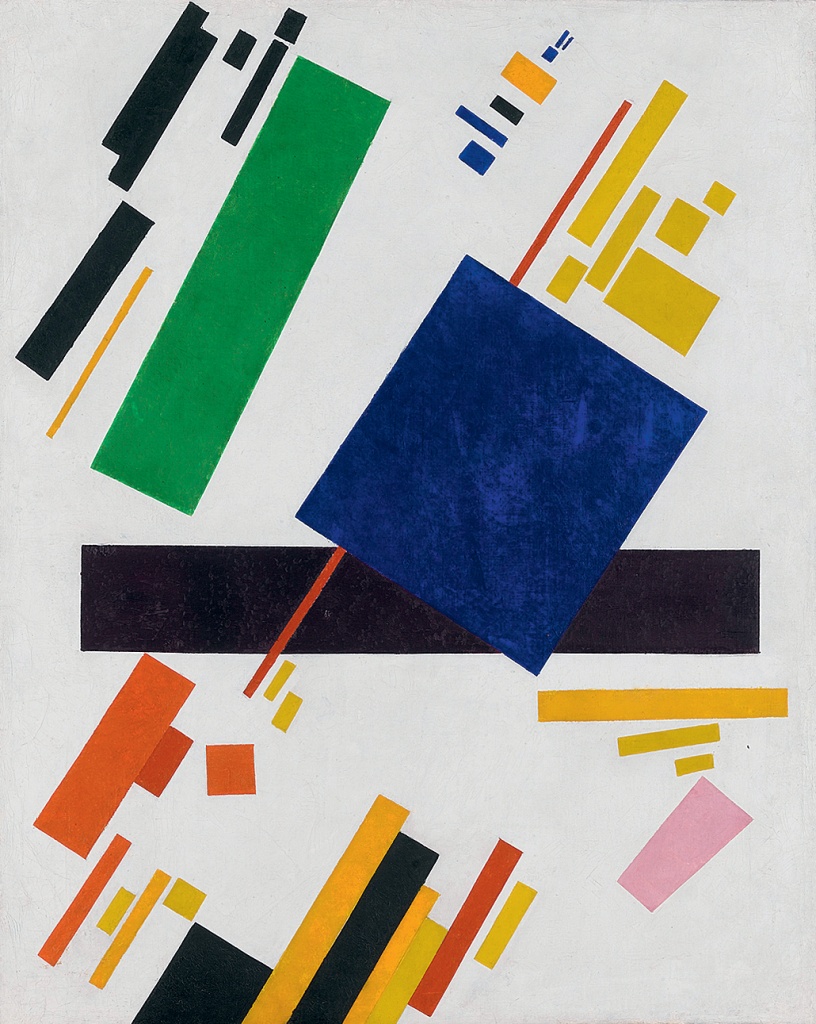 |
| Kazimir Malevich. "Suprematic composition", 1916 |
And what about the USSR? Malevich was not the artist who should be stored in Soviet museums. After the war, many of the work of avant -garde players were generally removed from storage and were subject to destruction. This was especially true for provincial museums that were not protected by high status. But the order met resistance. A clear example of “Battle for the Vanguard” is the activities of the then director of the Russian Museum Vasily Pushkarev. The former party organizer of the Academy of Arts, art criticism in education in 1951 was appointed director of the museum. Suddenly for many, Pushkarev was imbued with the Russian vanguard and began not only to acquire it for the museum, but also to storage. Among the works he had gathered then, they were contrary to the party attitude were Kandinsky, Tyshler, Filonov and, of course, Malevich.
In 1972, the American businessman Armand Hammer demanded in exchange for his inaccurate Goya (he brought the canvas as a gift to the USSR) one of Malevich’s paintings. Despite the order of the Minister of Culture, Pushkarev flatly refused to give the picture, and then Malevich Malevich was taken from the Tretyakov Gallery from the Tretyakov Gallery. Attempts to pull out paintings from the Russian Museum were made repeatedly, but since Pushkarev resisted, on December 1, 1975, even a special commission of the Ministry of Culture with the powers to find the best works of Malevich and deliver them to Moscow was sent to Leningrad. Fearing for the fate of the collection, Pushkarev hid the paintings in one of the attic premises, the admission to which only had himself. Moreover, he seized all the documentation on these paintings from the archive. The work was saved, but the intransigent director himself was dismissed.
Malevich’s paintings fell into the Russian museum immediately after the death of the artist, were transferred to his heirs for storage, three of them were later returned to him. In 1976, there was a need to resolve the legal status of works remaining in the Museum. Then, as a result of negotiations, 91 work of the artist was bought by the state for a meager amount - 21 thousand rubles. Pushkarev, already in retirement, called such actions “pressure and blackmail” from the state and believed that compensation to the heirs should be more serious. One way or another, it was thanks to the dedication of Pushkarev in the Russian Museum that the most complete collection of works by Malevich in the USSR turned out to be.
The archive of Khardzhiev
The main sensation of the exhibition was that it contains 250 documents, photographs and paintings from the archive of the famous scientist, researcher of the Russian avant -garde Nikolai Khardzhiev. Many of them have never been known or considered lost before. A voluminous catalog of the Khardzhiev archive was prepared for this exhibition - invaluable assistance to the study of the heritage of Malevich and his environment.
The story began as a detective. In February 1994, several volumetric suitcases of the Israeli citizen Dmitry Jacobson, flying to Dusseldorf were detained at customs in Sheremetyevo. There were about 3.5 thousand manuscripts in it related to Khlebnikov, Akhmatova, Mandelstam, Malevich and other cultural figures. The documents were confiscated, and Jacobson was released. This archive was the last part of the collection of Nikolai Khardzhiev, which by that time almost everything had already been transported abroad in different ways.
The fact is that back in 1982, Khardzhiev and his wife decided to emigrate. But the catch was precisely in the archive, which the scientist gathered all his life. He had to somehow be taken out. Khardzhiev began negotiations with the Swedish Slavist Bengt Youngfeld. Ten years later, his Dutch colleague Willem Westshtein invited Khardzhiev to Amsterdam to the Mayakovsky conference. It was necessary to closely engage in the archive, without which the scientist refused to go to the west. In the spring of 1993, the German galleryman Christina Gmurzhinsk came to Khardzhieva and offered her services to remove the archive and assistance to the collector in a new place. Together they selected the best paintings by Malevich from the Khardzhiev meeting, verbally agreeing that in exchange for the help of the two paintings of Malevich are sold to the Gmurzynska gallery, and four are transmitted to her “for eternal storage”. Then Khardzhiev rented a special sef room and, with the help of Willem Weststein, began to collect his priceless suitcases. As Khardzhiev later claimed, Weststein slowly robbed him, stole the best autographs and rare book publications from the “safe”.
Gmurzhinsk promised upon the arrival of the Khardzhievs in Amsterdam to give them a check by $ 2.5 million. However, the agreement was not fulfilled, moreover, when the scientist arrived in the Netherlands, it turned out that there was no archive and paintings yet. She decided to sell all six works by Malevich Gmurzhinsk. Those papers that nevertheless returned to the owner, he handed over to the Khardzhiev -Chang Foundation, which was arbitrarily changed after the death of the scientist in such a way that it became possible to sell the best from him. That is how in 1997 the Gmurzynska Gallery sold the model of the book “Tale about two squares” El Lisitsky (1922).
The story of the archive is filmed (the paper part was later returned to Russia) turned out to be possible partly due to the fact that, unlike Kostaka, Khardzhiev never bought any paintings or manuscripts. He took many of them “to study” and then simply did not return to the owners. He explained this by the fact that he, a close friend of Malevich, Akhmatova, Khlebnikov, Tatlin and other avant-garde, who retained these documents, has more rights to them than some heirs. The attitude towards the Russian avant -garde throughout the years of Soviet power was negative, and for those who studied it, even dangerous, in this sense, Khardzhiev partly rights. But the lack of legal rights to paper and paintings made it possible to spray this priceless wealth. In 1996, Khardzhiev died, not having lived a few days before his 93rd birthday.
Victory over the sun
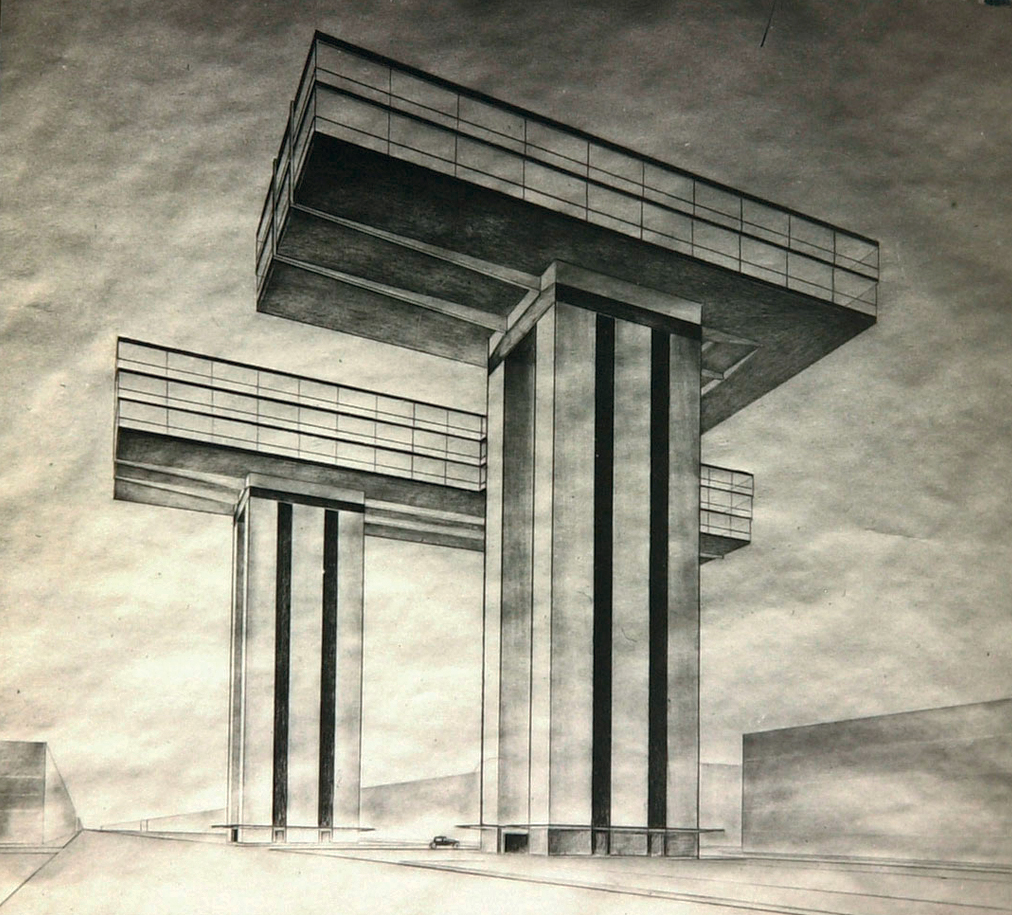 |
| El Lisitsky. "Iron Clouds", 1923–1925. |
The exhibition in Amsterdam was dedicated to the anniversary dates-a hundred years ago, the premiere of the experimental cubic-futuristic opera “Victory over the Sun”, for which Malevich created the scenery and costumes. This year, the 90th anniversary of the first large exhibition of Russian art of the XIX and XX centuries-the Russian Art Show in the Steedelic Museum, which was the first museum to showing the malematism of Malevich outside Russia.
The Russian avant-garde began in the 1910s, a century ago. The curators arranged paintings at the exhibition not on chronology, but on the subject. So, at the final exhibition “0.10” in Petrograd, thirty -nine powermatics paintings occupied a separate hall, the “red corner” of which was given to the “black square” of Malevich. In the current exposition, this hall is reproduced exactly. In the corner there is also a “black square” brought from the Tretyakov Gallery (in total, Malevich created four similar works). The artist wrote: “The Suprematics three squares are the establishment of certain worldviews and world buildings ... Black as a sign of savings, red as a signal of revolution and white as a pure action.” Work from the collection of Khardzhiev are in the section “Suprematism: work on paper” (1915-1920). A separate hall was given to the history of the mentioned software and futuristic opera “Victory over the Sun” of 1913, the music of which was written by Mikhail Matyushin, the text is Alexey Kruchenykh ...
Suprematism according to Malevich is the only opportunity for the art of “becoming next to death”, because only the Suprematism is “so absolute ... that he alone can express the essence of mystical sensations. He stands completely next to death and wins it. ”
Malevich bequeathed to bury his dust surrounded by nature, in open space. His funeral in 1935 became the triumph of the artistic direction he created. Suprematic sarcophagus with the image of a black square and a circle was made. The artist wanted to be buried in the coffin of a special sample, he mentioned the “northern cross”, the “gesture of the open hands with which death should be taken, spreading on the ground and opening the sky so that the figure took the shape of a cross.” However, the joiners could not make such a coffin. The basis of the new rite was to be the “Cube as a symbol of eternity”, “White cubic cube with a square”.
This white cube with the image of a black square was installed in the field near the village of Nemchinovka near Moscow over the artist’s grave. Now Malevich’s burial place has been lost. But the battle for his heritage continues.
Photo: bogdan-malevich.narod.ru