
Translated material
Experts of rights and freedoms
Officials will have to take exams - for knowledge of the Basic Law. State Duma speaker Sergey Naryshkin, speaking, but a joint meeting of the chambers of the parliament, returned to this topic and stated that such an exam could be introduced since next year. “As you recall, I have already proposed to examine the knowledge of the basic law of those who enter the public service, and I believe that this could already be done in the apparatus of the legislative authorities from next year,” the speaker believes.
The presidential administration seems to be supported by the idea. “In their activities, officials should primarily be guided by the Constitution. Therefore, it is logical to citizens who have decided to start professional activities in the apparatus of public administration to ask several questions that identify the degree of their acquaintance with the constitution, ”the anonymous source in the AP Izvestia said.
Naryshkin proposed such an exam as a month ago, in an article in the Rossiya Gazeta on the 20th anniversary of the Constitution. “The slurred idea of her goals and meaning, the misunderstanding of her“ letters ”and“ spirit ”are not considered a vice in our society. Moreover, even in those circles where it is obliged to be guided every day. That is, in the state administration bodies. After all, if in the first years after the plebiscite, interest in the Constitution only grew up, now it has ceased to be a “table book” for many politicians and for officials, ”the speaker wrote.
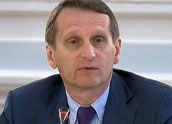 Sergey Naryshkin
 “One of the measures that can at least somehow correct the existing state of affairs could be the introduction of a mandatory exam for knowledge of the Constitution for everyone entering the public service. And he would have suggested as the first stage to introduce such an exam for employees of apparatuses of legislative (representative) authorities of the Russian Federation (for example, from June next year). Here you can’t work without knowledge of the constitution at all, ”Naryshkin suggested.
Judging by his perseverance - and he is a person at least formally in the state not the last - they really can enter the exam. Since there should be no harm from this and there is no money for this.
The desire to explore officials among Russian leaders of different levels periodically appears. Back in 2007, the Governor of the Ulyanovsk Region checked officials for knowledge of the Russian language. Similar experiments were conducted in Vologora, Ufa, and some other regions of Russia. And in 2013, the USE forced the Chechen officials Ramzan Kadyrov (however, it seems that the results were never reported).
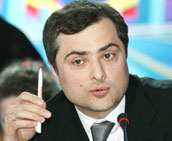 Vladislav Surkov
 About a year ago, the former Deputy Prime Minister and the head of the government apparatus Vladislav Surkov spoke with the idea of introducing an obligatory Russian language exam for officials. “We don’t know our native speech. We literally write with typos, errors: spelling, punctuation, phraseological. For officials, I think we must enter an exam in the Russian language. We are even introducing such an exam, we can even pass such an exam, but can we pass it ourselves? After all, as the state says, it greatly affects how everyone says. In all eras, as a rule, the canons of the language were determined by the state. The official and writer are the creators of the classical language. And now the protection of the Russian language, its purification, its correct use are gradually lost in the state apparatus. This needs to be urgently corrected. It seems to me sometimes: this task is that in the documents entering the signature, proper commas are placed - more difficult than holding the elections. I have now told all the departments: take correators for myself. Learning to write in Russian! " - Surkov said in an interview with Vedomosti.
The Russian language has not yet been so compulsory, but from knowledge of the Constitution, officials seem to not get out. It, in general, is right: it is strange that a person entering a civil service does not know the basic law of the state. Depending on the position, he may not be a genius in the field of jurisprudence or a great economist, but any basic things would like the officials to know.
It is another matter that such events are often turned into clean profanity - as approximately advanced training courses for the same employees of various devices. They are not interested in it, the teachers are not interested in it, that's all simple and “serving the number”, so that the authorities are behind.
However, another is more dangerous-knowledge of the Constitution is weakly or even does not guarantee that someone will observe the Constitution. Nothing prevents our parliamentarians, for example, to periodically introduce or even adopt anti -constitutional bills in spirit. This is the care of the text of the Basic Law, which is demonstrated by the current president. Nothing again will change in terms of compliance with rights and freedoms if freedom (some freedom of assembly) is clamped by laws or even by-laws and departmental instructions. The Russian constitution, with all the beautifulness of the text, remains in many ways a declaration, but not by law. And no exam will cure this from this-practice is not at all the same as a theory. And in practice, we have a completely different basic law - the law of powerless lawlessness and political expediency.